
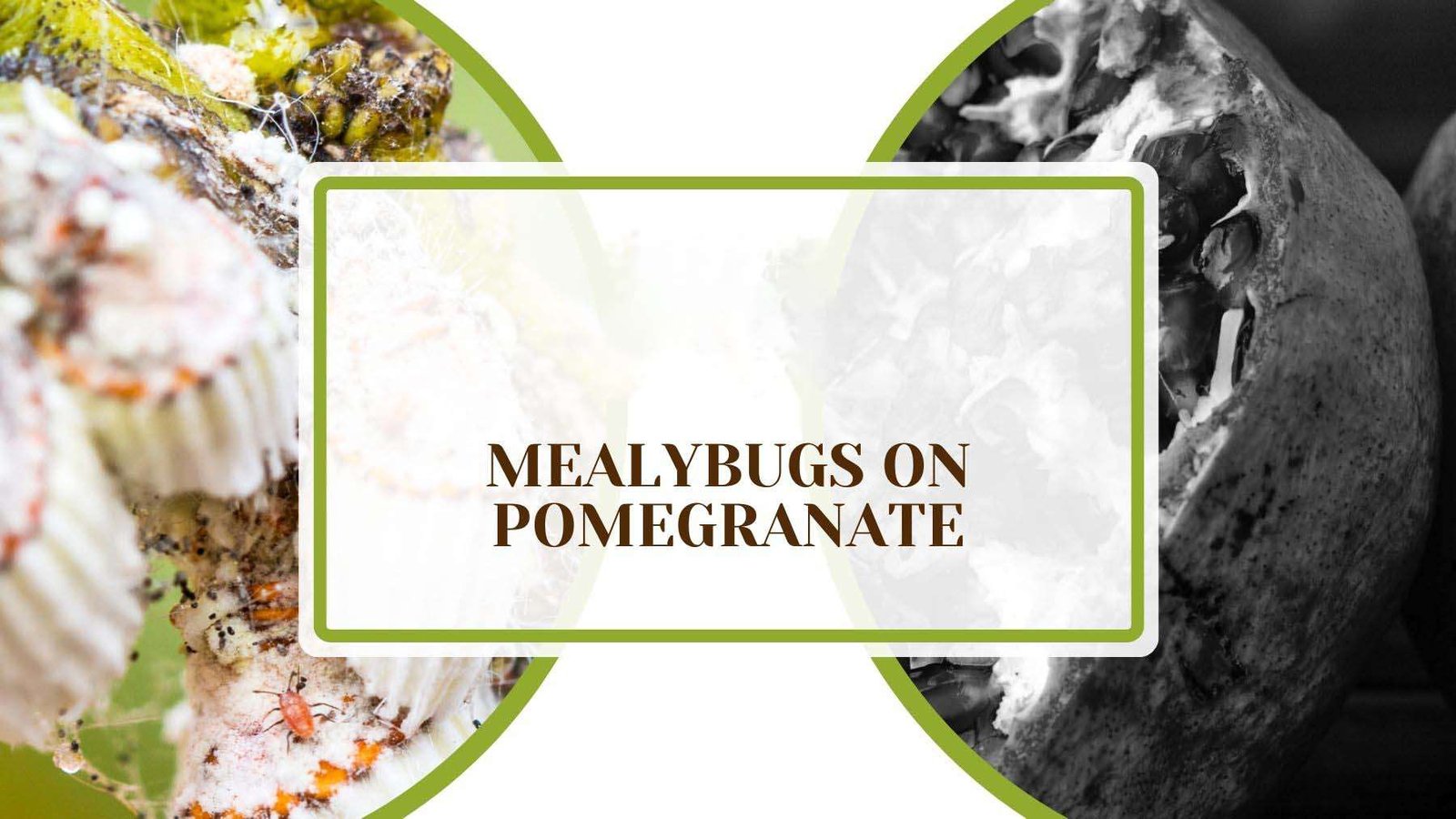
Mealybugs on pomegranates can transform flourishing trees into fragile ones in a few days. Therefore, you must act when you spot these cottony white pests.
So, now let’s discuss some effective strategies to kill mealybugs and restore your pomegranate plants.
What Causes Mealybugs on Pomegranates?
Mealybugs on pomegranates are caused by strong winds and warm climates. Their population can boom quickly if your garden has no natural predators. Furthermore, mealybugs are attracted to plants with lush green foliage and can be brought into the garden by infested plant material or tools.
– Warmth: A Mealybug’s Best Friend
The pomegranate mealybug’s scientific name is Planococcus citri. They thrive in temperatures between 62 to 80 degrees Fahrenheit, often coinciding with the thriving period for pomegranates. This makes your trees a prime target during warm months.
– Mealybugs Hitch a Ride
Mealybugs can also get introduced to your garden inadvertently. They can hitch a ride on you or come with new plants bought from infested nurseries. They’re tiny, so missing them during a casual inspection is easy.
Ensuring thorough checks on new plants before introducing them to your garden is necessary.

– Ants: Unintended Accomplices
Ants are another cause. They don’t directly lead to a mealybug infestation but can undoubtedly exacerbate the problem. When mealybugs feed on plants, they secrete a sugary substance called honeydew which ants love.
As a result, ants protect mealybugs from predators. A thriving ant colony around your tree could signal a looming mealybug problem.
– Strong Winds: Another Thing That Keeps Mealybugs Moving
Winds can also help in the transfer of mealybugs and many other soft-bodied insects. Being lightweight, mealybugs can get carried by the wind from one plant to another.
If the mealybugs see your lush plants during their flight, they will try to “land” on them. The reason is that they are attracted to juicy leaves and can’t resist the temptation to drink cell sap/juice.
– Ineffective Predators
Predatory insects like ladybugs, lacewings, and parasitic wasps usually keep mealybug populations in check. However, in some cases, these predators may not be present sufficiently, causing a spike in mealybug populations. Understanding these causes allows you to manage and prevent mealybug infestations easily.
How To Eradicate Mealybugs From Your Pomegranate?
To eradicate mealybugs from your pomegranate, start by physically removing the bugs. You can also use a hose to wash off the tree. Natural remedies like applying baking soda solutions can also work. If the infestations are severe, you may have to use insecticidal soaps or chemical pesticides.
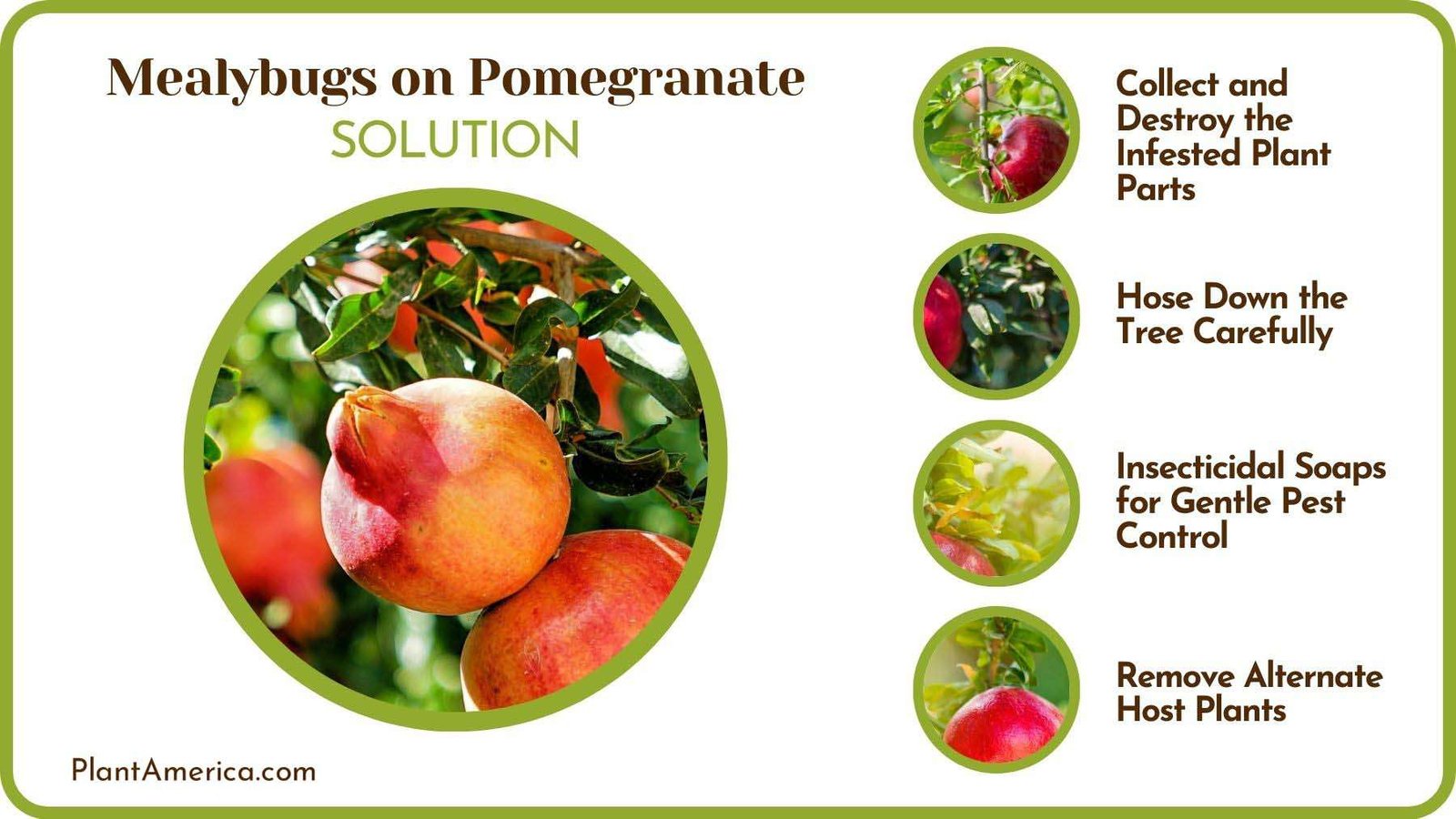
– Collect and Destroy the Infested Plant Parts
Identifying and isolating the infection is the first answer whenever someone asks us, “How to get rid of pomegranate bugs?” The signs are usually conspicuous – yellowing leaves, curling twigs, and the white, cotton-like masses that are the mealybugs themselves.
Use sharp tools to cut off these affected parts. After pruning, gather all the infected material and seal it in a plastic bag. Dispose of this bag far from your garden, or better yet, incinerate it, ensuring the complete elimination of these pests.
– Hose Down the Tree Carefully
A strong water spray can dislodge many of the mealybugs from your pomegranates. People generally prefer a bug blaster or a hose to do it. If you don’t have any, you can then use a spray bottle. Note that you should spray the leaves undersides first and then wherever you see these pests.
Doing this early morning is best, as it gives the pomegranate plenty of time to dry out and prevent fungal growth. If you do it at night, the water will stay in the soil, which is bad for the plants as it can lead to root rot.
Also, remember that- while hosing down helps, it might not remove all mealybugs, especially those hiding in nooks and crannies. Therefore, it is better to use other methods after you wash away the visible mealybugs.
But if the infestation is light, then a high-pressure water spray is enough to get rid of all the bugs.
– Insecticidal Soaps for Gentle Pest Control
Insecticidal soaps are a gardener’s best friend when battling mealybugs and other pests. These are not your typical household soaps but are specially formulated concoctions designed to kill pests while being gentle on your plants. Usually, they’re created from fatty acids mixed with potassium salts. These go through the pests’ waxy cover, damage their cell and make them die.
A wide range of pests, including the citrus flat mite, the pomegranate fruit borer, and leaf-footed plant bugs, can be effectively controlled using insecticidal soaps. Gardeners prefer them because of their non-toxic nature to humans and pets.
The application is simple. Mix the soap with water per the label’s instructions and spray it on the infested plants. Be sure to mist both sides of the leaves, the branches, and the stem. Repeat the application every 4 to 7 days until you no longer notice any signs of pests.
What’s great about insecticidal soaps is that they work well and are kind to the environment. They don’t leave any harmful residue behind and break down naturally over time.
However, note that beneficial insects might also be affected if they come into direct contact with the soap. Therefore, it is best to apply it during the early morning or late evening when these beneficial insects are less active.
– Remove Alternate Host Plants
Sometimes, other plants in your garden may play the unintended role of a host to pests, nurturing them before they launch an assault on your pomegranates. So, if you want to protect your pomegranate tree, consider all the plants grown near it.
Are those plants hosting nasty bugs that could bother your pomegranates? If you remove these plants, you’re keeping bugs away from your pomegranates. We know taking out a plant is hard, but sometimes your garden must stay healthy.
Go for plants that don’t easily get the pests that harm your pomegranates. This will cut down the pest numbers and lower the chances of an infestation.
– Release Cryptolaemus Montrouzieri Near the Site of Mealybug
Using natural predators is a part of pomegranate IPM (Integrated pest management). One such beneficial predator is Cryptolaemus montrouzieri, often known as the mealybug destroyer.
Native to Australia, this small, black beetle with a brownish head is a potent foe of mealybugs. Adult beetles and their babies love eating mealybugs and can help a lot in controlling their numbers.
Releasing these beetles where mealybugs are present can deal with this problem. Experts suggest letting around ten beetles loose for each tree and ensuring they have enough food to grow and have babies.
– Apply Horticultural Oil To Impact Bugs’ Life Cycles
When mealybugs or pests like pomegranate mites launch an assault, horticultural oils are another reliable line of defense. These oils are super pure, and when you spray them on bugs, they stop the bugs from breathing and suffocate them.
What’s cool about horticultural oils is that they work at all bug life stages, from eggs to grown-ups. Not just that, they’re safe for use on most fruit trees.
To apply:
- Mix the horticultural oil with water as per the instructions on the label and spray it on the affected plants.
- Ensure you cover all areas, especially the undersides of leaves, where pests often hide.
- Repeat the application every few days until you see a reduction in the pest population.
As with any pest control method, timing and consistency are key. You can apply horticultural oil during the cooler parts of the day, like early morning or late evening.
Remember, though, that horticultural oils can harm some beneficial insects and cause leaf burn in hot weather or when applied in high concentrations. So, use them judiciously, keeping an eye on your plants for any signs of distress.
– Give Baking Soda Solution a Chance
Baking soda is another household item you can use. This one’s for you if you are looking for safe options to avoid harsh chemicals.
What you need to do is:
- Add a teaspoon of soda to a bottle and then pour a liter of water.
- Then, add 2-3 drops of liquid soap. It will help the solution stick to the bugs.
- Spray this on the mealybugs. This messes up their insides, and they die over time.
Do this every few days consistently until the bugs are not there.
– Do the Chemical Pesticide Control
Sometimes, when natural remedies do not work, you need to use chemicals. Several pesticides for pomegranate work well to bring the bug population under control. But remember, safety first!
Always follow the instructions on the label, as it will guarantee that you’re using the pesticide correctly and safely.
Now, let’s talk about a pomegranate pesticide schedule. Timing is everything. Some pesticides work best at certain stages of a pests’ life. Others work best at certain times of the year. Following a schedule can help you use these pesticides at their most effective times.
The right pesticide and the proper schedule can give your tree the protection it needs. It is especially true when other methods haven’t worked. So, keep this option in your back pocket.
– Don’t Forget Cultural Control
Cultural control is all about prevention. This way changes how you look after your tree to make it not so interesting to bugs.
First, check out the UCANR pomegranate tips. These methods for growing pomegranates are tried and true. These are about trimming, watering, nutrient-feeding (fertilizers), drainage, soil type, and other similar topics. Doing these things can make your tree less tasty to bugs.
The next step is to think about pomegranate problems. Bugs like mealybugs, mites, and borers can infest the plant. Similarly, Cercospora fruit spot also causes a considerable yield loss. Knowing the common pomegranate pests and diseases can help you spot trouble early.

Finally, cultural control is about your entire garden. It’s about how the different parts work together. If the garden is diverse and in good shape, it can stop pests and diseases.
That’s why cultural control focuses on these things too:
- Daily garden cleaning
- Weed removal
- Balanced watering
That is how you make your garden safe from bugs and diseases. Remember, these methods take time to show bug removal. But over time, they can save you trouble and time.
Now you have a bunch of ways to deal with mealybugs on your pomegranates. Try these methods at the same time to make sure there is no pest infestation on your trees.
Conclusion
With the right strategies, the infestation can be effectively managed in no time. Here are the main takeaways:
- First and foremost, be observant. Regularly check your pomegranates for signs of infestation, like white cottony patches or a decline in overall tree health.
- Rely on physical removal methods like hosing down the tree and disposing of infested plant parts.
- Explore natural remedies, including the application of baking soda solution and horticultural oil.
- Try biological control measures by releasing beneficial insect pests like Cryptolaemus montrouzieri.
- If the infestation is severe, use chemical pesticides. Follow a proper pesticide schedule and always prioritize safety.
Remember, the intelligent way to deal with mealybugs is to use multiple methods together for fast results. So armed with this knowledge, you can ensure that your pomegranate tree stays healthy, productive, and free from mealybug infestation.