
Mealybugs on hydrangeas can be a garden nightmare that sneaks up on you, turning those vibrant, beautiful blooms into sickly, struggling plants. Well, fear not because the solution might be simpler than you think.
Please stick with us as we dig into the proven strategies. You only have to follow them to keep your Hydrangeaceae family plants healthy and mealybug-free.
Why Are There Mealybugs on Hydrangeas?
There are mealybugs on hydrangeas due to a combination of factors that provide an ideal environment for them to breed and multiply. These include improper watering practices, introduction through contaminated plants, and favorable environmental conditions.
Sometimes, lack of natural predators can also lead to mealybug infestation.
– Improper Watering Practices
When discussing improper watering, it’s not merely about the amount of water; it’s about the method and frequency. Mealybugs, like many pests, thrive in specific conditions, and over-watering creates an environment conducive to their growth.
When the soil remains overly saturated for extended periods, it reduces the amount of oxygen available to the plant’s roots. While this in itself can be detrimental to the hydrangea’s health, it also weakens the plant’s defenses against pests.
Secondly, mealybugs are drawn to the moisture, as it offers them sustenance and protection. The dampness shields them from the sun and provides them with the right conditions to reproduce. So, when you add more water, you’ll most likely see mealybugs in your garden.
– Introduction Through Contaminated Plants
Introducing a new plant to your garden or home is always exciting. However, it’s also an open door for pests, especially if these plants haven’t been properly inspected or quarantined. Mealybugs can hitch a ride on these new additions, and once they’re in a new environment, they can quickly spread.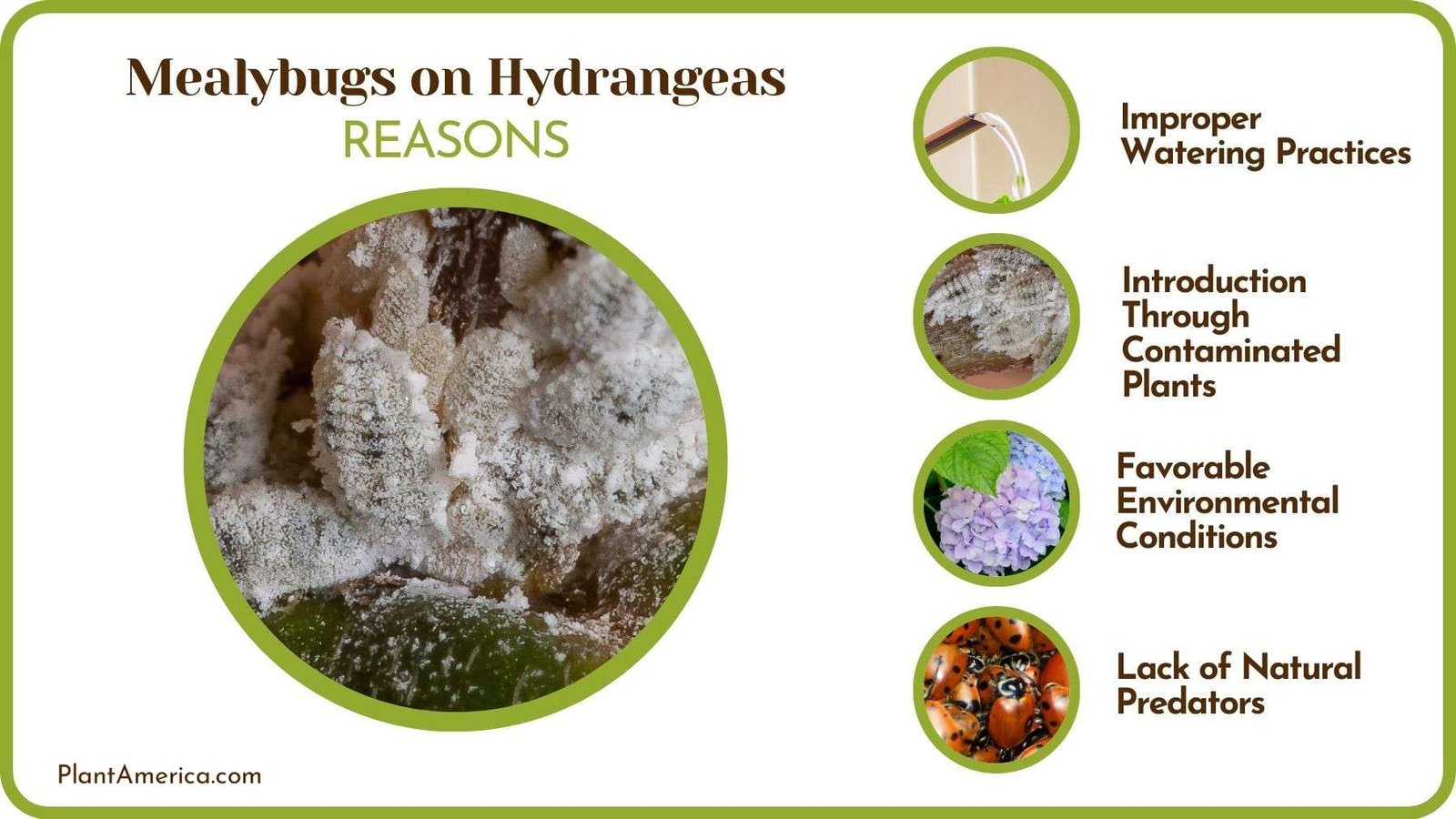
– Favorable Environmental Conditions
Mealybugs are more prevalent in certain environments. They prefer warmer climates and are particularly active during the warmer months. A rise in temperature can expedite their life cycle, allowing them to reproduce more rapidly.
Moreover, high moisture levels also play a significant role. Mealybugs extract the sap from plants, and a humid environment ensures they don’t dry out and can continue their feast. In such conditions, their population can explode, turning a minor infestation into a significant issue in a short period.
– Lack of Natural Predators
Insects like ladybugs like to eat mealybugs. But in gardens where the natural balance has been disturbed, the population of these predators might be reduced. When this happens, mealybugs, without their natural checks and balances, can flourish and wreak havoc!
How To Get Rid of Mealybugs on Hydrangeas?
To get rid of mealybugs on hydrangeas, use a Bug Blaster and sticky bands first. If the mealybug population is high, use insect-killing soaps, diatomaceous earth, hot pepper sprays, and horticultural oils like neem seed oil. If the mealybug population increases, apply pyrethrin-based insecticides.
– Identify The Mealybugs and Their Infested Areas First (For Better Treatment)
Garden enthusiasts often ask themselves, what is eating my hydrangea stems? Unfortunately, Hydrangeas can sometimes fall prey to mealybugs, who like to suck leaf juice. However, spotting them early can prevent plant damage.
Look for white spots or fuzzy creatures on the underside of leaves. These are the first signs that mealybugs might be feasting on your hydrangeas. These tiny insects suck the hydrangea sap with their mouthparts. This action leaves a trail of spots, which you can see easily.
It’s essential to know that mealybugs aren’t the only potential problem for your hydrangeas. White spots might also indicate other issues. For instance, powdery mildew or white fungus on hydrangea stems can be mistaken for mealybug damage. A closer inspection will reveal the difference: fungus usually spreads more evenly and lacks the cotton-like texture of mealybug residue.
Mealybugs leave a distinct trail as they consume sap. Due to this, you will most likely see gray to white edges on hydrangea leaves.
– Use Bug Blaster Technique To Knock Out Bugs
A Bug Blaster is a gardener’s tool that can be your first defense against mealybugs. But depending on the level of infestation, you may need to use this “Bug Blaster” method several times a week. However, note that you must be consistent. Otherwise, the mealybugs will return and harm your plants again.
There’s more- a bonus to using the Bug Blaster is that the forceful spray can also help wash away pathogens. They can cause diseases like root rot and leaf spot, which means you will protect your garden if you use a bug blaster. So, go for this method, as it ensures that your hydrangeas stay healthy while the mealybugs are sent packing.

– Sticky Banding: Put Slippery Bands of Polyethylene
Another innovative and non-toxic approach to getting rid of mealybugs is using sticky banding. Here’s how to do it:
- Selecting the Material: You’ll need slippery bands of polyethylene, which can be found at most gardening stores. Ensure the bands are wide enough to wrap around the stems of your hydrangeas.
- Application: Wrap the bands around the stems, ensuring they are snug but tight. The slippery surface will make it difficult for the mealybugs to climb up the stems. You can now understand that mealybugs can’t climb to reach leaves and flowers. Thus, they will be safe from the ferocious feeding.
- Monitoring and Maintenance: You must check the bands regularly, replacing them if they become damaged or dirty.
– Coat Infested Areas With Insect-Killing Soap
When dealing with mealybugs on your hydrangeas, pesticide soap is a trusted, gentle, and highly effective solution. You can purchase ready-made insecticidal soap or make your own by mixing a mild liquid soap with water. Spray the mixture onto the hydrangea leaves, covering the top and underside where mealybugs often hide.
Applying the soap in the early morning or late afternoon is best. The reason is that you should avoid treatments when it is hot. Remember – heat can cause the soap to dry too quickly. Moreover, following the instructions is essential, as too much soap can harm plants. Always test a small area first to ensure leaves respond well.
– Sprinkle Diatomaceous Earth on the Infested Areas
Diatomaceous Earth (DE) is a lesser-known but incredibly effective method to eliminate mealybugs on hydrangeas. It is a fine powder that feels like flour to humans but acts like shards of glass to insects. When mealybugs come into contact with it, the DE cuts through their exoskeleton, causing them to dehydrate and die.
Wearing a mask to avoid inhaling the fine particles, gently sprinkle the DE on the leaves and stems. Cover the areas where mealybugs are most likely to be found. A thin, even layer is all you need.
DE works best in dry conditions, as rain or watering can wash it away. If you apply DE, be mindful of the weather and your watering schedule to ensure it remains effective. Like soap, DE can be used with other techniques to form a well-rounded defense against mealybugs.
– Get Help From Hot Pepper Spray
Hot pepper spray is another weapon to add to your arsenal if you’re dealing with stubborn little white bugs on hydrangea. This solution works because it uses the heat from peppers, which mealybugs hate. How do you make and apply pepper spray?
- Blend a handful of hot peppers with a few cups of water and strain the mixture.
- Spray this directly on the mealybugs. Make sure to cover the entire plant, focusing on the underside of the leaves where the little white bugs often reside.
- While making and applying hot pepper spray, always wear gloves, a hat, and goggles to avoid skin irritation.
Hot pepper spray is an affordable and organic solution you can make at home. However, it can deter beneficial insects, so use it cautiously and only where needed.
– Apply Horticultural Oils Directly on Bugs
Horticultural oils, including neem oil, can be powerful in your fight against mealybugs. These oils work by smothering the insects. It disrupts their feeding, which will make them too weak to move. But that’s not all – they also offer broad protection against a range of common hydrangea pests, including:
- Aphids
- Slug
- Spider mites
- Scale insects
- Hydrangea scale
- Vine weevils
- Japanese beetles
- Other bug species.
Mix the horticultural/neem oil with water according to the product’s instructions, then spray it thoroughly on your hydrangeas, ensuring it reaches the nooks and crannies where pests might hide.
Use these oils when temperatures are below 90 degrees Fahrenheit to avoid damaging the plants. It’s because heat reduces its effectiveness, which will waste all of your efforts. Moreover, they can potentially harm certain plants, so always test on a small area first. Also, remember that overuse can lead to oil residue buildup, which may impact plant health.
– Go For Pyrethrin-Based Insecticides
The pyrethrin-based insecticide is another effective product we recommend you use to combat mealy bugs. You can buy ready-to-use pyrethrin spray from garden stores. Spray it on all areas of the hydrangea.
However, you must pay particular attention to the undersides of the leaves and the stems. Ensure you have proper protection while using these insecticides.
As pyrethrins break down quickly in sunlight, applying them in the late afternoon or evening is best. Repeat every few days until you see no more signs of mealybugs. Also, apply this insecticide with care. It is because it can still harm beneficial insects.
– Use Aluminum Foil Reflectors To Deter Bugs
Using aluminum foil reflectors is an unconventional yet surprisingly effective method to eliminate mealybugs. Mealybugs prefer shaded, damp areas. But if you reflect light will foil, you will make it uncomfortable for mealybugs to live.
Do these steps:
- Get aluminum foil and put it around the base of your hydrangeas.
- Confirm that the shiny side must be up.
The foil will reflect light directly on the leaves and stems. The mealybugs residing there will have no choice but to leave the garden and go elsewhere.
Aluminum foil reflectors are a simple, low-cost, and chemical-free way to combat mealybugs. However, they may not be sufficient for severe infestations, so they should be used with other methods. Moreover, you can also use foil reflectors with other treatments. For example, using them with pyrethrin-based insecticides can help tackle more stubborn infestations.
– Apply Citrus Peel Spray if You Prefer an Organic Approach
Look no further than citrus peel spray for an eco-friendly, homemade solution to combat mealybugs. The reason we are suggesting it is that it is entirely natural. Plus, you can make it with a few steps.
You can trust the citrus peel spray because it contains d-Limonene- a natural compound toxic to mealybugs. Do these steps:
- Soak citrus peels in water for a couple of days to make the spray.
- Strain the solution and spray it directly onto the mealybugs on your hydrangeas.
- Coverage is critical; the solution must directly contact the pests to work effectively.
The spray is safe for most plants, so don’t be worried. But always test it on a small portion of your plant before completing the application to ensure your hydrangeas don’t have an adverse reaction.
– Keep Doing Appropriate Gardening Practices
Here are a few tips to ensure your plants stay thriving against pest invasions:
- Regular Monitoring of Plants: Make it a habit to examine your hydrangeas daily for early indications of mealybugs. If you spot signs of mealybugs or other pests early, you can act fast before it becomes a big problem.
- Proper Watering and Feeding: Overwatering and overfeeding can make your hydrangeas more attractive to pests. Make sure to give your plants the right amount of water and food. Each type of plant has its own needs, and meeting them can help keep your plants healthy.
- Pruning: Regular pruning helps maintain good airflow around your plants, which makes your garden less attractive to mealybugs.
- Quarantine New Plants: Before introducing new plants to your garden, quarantine them for a few days to ensure they’re not carrying any pests.
- Clean Garden Tools: Regularly clean your gardening tools to avoid accidentally spreading problems from one plant to another.

Conclusion
To sum it up, swift action is the key when you notice mealybugs on your hydrangeas. Luckily, many DIY and commercially available solutions can help you get rid of these pests and ensure your plants’ safety, which are:
- Keep looking for white spots on the underside of hydrangea leaves to detect infestation early.
- When the infestation is small, use diverse treatments, like Bug Blaster, sticky banding, and insecticidal soaps.
- If you spot more bugs and hydrangea mites, go for diatomaceous earth, hot pepper sprays, and horticultural oils.
- In severe infestations, apply pyrethrin-based insecticides and citrus peel spray.
- Use deterrents like aluminum foil reflectors and environmentally friendly practices to maintain a balance of natural predators.
It’s that easy to wipe out mealybug infestations from your hydrangeas! You will have to do that if you want to enjoy a beautiful, healthy garden free from these bothersome pests.