
Brown tips on cordylines often mean the worst for your plant. While no assurance attempting to revive a dying Cordyline will succeed, there’s no harm in giving it a try. The typical cause for a Cordyline appearing brown is often associated with its water intake.

However, it can be linked to other problems, so let’s find out how to recognize issues and return your plant to health.
Why Is My Cordyline Turning Brown
Cordylines, prized for their exotic and palm-like aesthetic, serve as captivating architectural elements. While some varieties flourish in mild coastal climates and urban gardens, requiring winter protection, others thrive as striking houseplants.
The discoloration of cordyline leaves, turning yellow or brown, often serves as a signal that environmental conditions or care may be amiss. While some foliage may turn brown as a natural part of the aging process, with certain leaves naturally changing color and shedding, it can also indicate issues such as excessive sunlight, sudden changes in light or temperature, problems with watering, elevated salt levels in the water, and others.
Understanding and addressing these factors are crucial for maintaining the health and vibrancy of cordylines.
– Too Much Sunlight
Excessive exposure to direct sunlight or abrupt temperature changes can lead to the yellowing or browning of leaves. Only a few hours of morning sun will do just fine for your cordyline growth. Prolonged exposure to intense sunlight can bleach the vibrant color in some of the leaves with more pigmentation. The latter scenario is often observed when plants cultivated indoors during winter are transitioned outdoors.
– Poor Watering
Variations in the color of cat palm leaves may indicate issues related to watering. Yellowing around the edges may result from overwatering or waterlogged conditions, while insufficient watering or drought can have entire leaves turning yellow or brown. 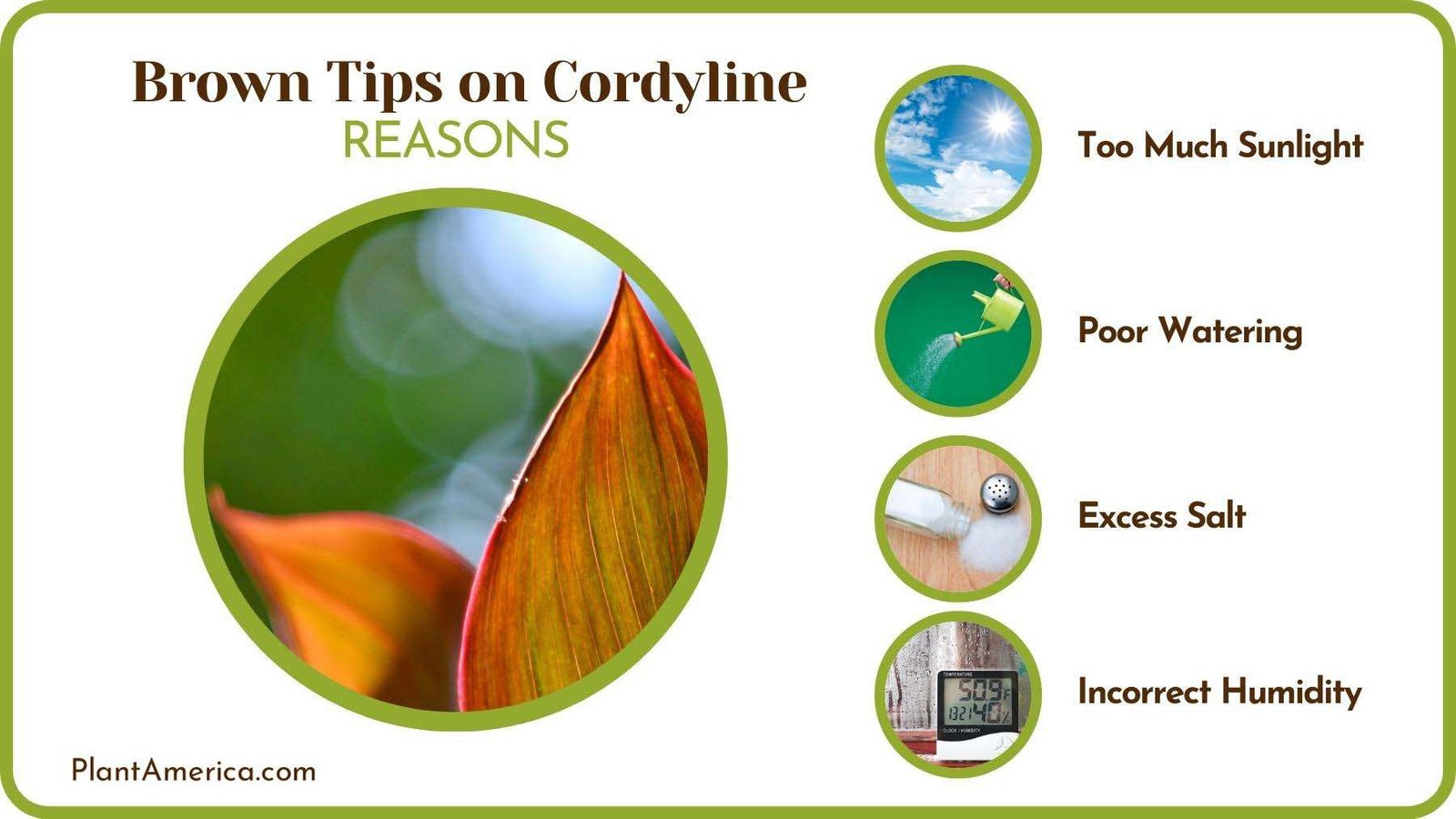 The unique characteristic of Cordylines, being robust, means they don’t exhibit wilting in the manner of many other plants.
– Excess Salt
Another potential watering concern involves the use of tap water with elevated salt levels and fluoride toxicity, leading to scorch-like damage on the leaves. Cordylines are highly responsive to the presence of fluoride in the soil or water they are exposed to.
Municipal water sources, in particular, frequently contain fluoride, triggering toxicity in cordyline plants. Symptoms of this toxicity manifest as browning at the edges and tips of the plant’s leaves. To prevent fluoride-related issues, refrain from using water containing fluoride for irrigating cordylines and avoid planting them in perlite
– Incorrect Humidity
A sensitive cordyline cultivated as a houseplant indoors might face challenges related to low humidity levels, contributing to discoloration and the yellowing or browning of leaves. Residences with central heating systems tend to be dry, and introducing humidity through misting can be a beneficial practice to emulate the more favorable conditions.
– Insect Damage
Sap-sucking insects, such as aphids or spider mites, can cause brown leaves on cordylines through their feeding behavior. These insects use their specialized mouthparts to pierce plant tissues and extract sap, which contains vital nutrients and water for the plant. The process of sap removal can lead to several issues that result in the browning of leaves:
– Fungal Infections
Yellow and brown patches on the foliage may signify a fungal leaf issue, while yellowing leaves starting from the plant’s base could be a sign of root or stem rot, hindering water transport within the plant.  Fusarium root rot is a potential concern, particularly in situations where waterlogging has been persistent.
– Potbound Issues
Browning leaves in cordylines could indicate that the plant has become root-bound. Consider relocating your plant to a larger container to assess whether this change promotes recovery if it appears to have outgrown its current space.
– Contaminated Soil
Soil contamination can occur when the potting mix is exposed to an excess of fertilizer or mineral salts, often resulting from the use of tap water or an overabundance of fertilizers. Inadequate drainage exacerbates the issue, washing away the residual chemicals.
This accumulation leads to root damage and the browning of leaves. To prevent soil contamination, try to leach containers or potted cordylines two to three times a year. Alternatively, allowing the plant to experience rainfall during the summer can facilitate natural leaching.
– Can Be Natural
Cordyline plants exhibit a variety of leaf colors, influenced by the specific cultivar or species in the garden. The leaves can range from orange or yellow, deviating from the conventional green associated with garden plants. It’s important to note that brownish hues in cordyline’s leaves don’t necessarily signal a health issue. Monitoring the plant’s overall growth is key to ensuring that leaves displaying a brown tint are indeed healthy.
– Phytophthora Leaf Spot
Cordylines are susceptible to the fungal disease Phytophthora nicotianae, which manifests in leaf health issues. This disease induces a waterlogged appearance in lower leaves and the development of brown necrotic patches. As Phytophthora advances, more leaves of the cordyline plant may succumb.
Unfortunately, there is no cure once the plant is infected with this leaf spot disease. To mitigate its spread, infected plants should be promptly removed and destroyed. The chemical Dimethomorph can aid in preventing healthy plants from contracting the disease.
– Is Your Plant Cold?
It’s not uncommon for well-established Cordylines, even those thriving for 15-20 years, to sustain frost damage that can result in the death of the upper part of the plant, leaving only the stem intact.
How To Revive Your Cordyline With Brown Tips?
While retrieving your cordyline back to health may not be feasible after huge parts of foliage have gone brown, you can try. If water is the issue, you’re in luck, as only some adjustments to your plant care regime are needed. However, you can try a few action steps to give your plant a fighting chance.
– Dealing With Water
To address overwatering, cease watering the cordyline if the soil is excessively moist. Allow the soil to dry out before resuming watering to prevent overhydration. Regular watering is essential for young plants until they mature. During the summer or if the plant is in a container, consistent watering is necessary. Insufficient water can lead to brown leaves, and to check for dry soil, ensure the surface is dry while maintaining moisture beneath.
When irrigating cordylines, opt for distilled water, rainwater, or spring water as opposed to tap water. To eliminate chlorine from the water, consider boiling it for approximately 20 minutes and allowing it to cool before watering your plants. Alternatively, leaving the water in an uncovered container for a few days will facilitate the evaporation of chlorine.
– Dealing With Frostbite
In a scenario of cold damage, remove the dead leaves and observe if new shoots emerge from the crown. If there’s no growth by summer, gently feel down the trunk to a firm and solid part, then cut it at that point.
For container plants, follow a similar approach, but there’s often a chance of new shoots sprouting from the base.
To protect your Cordylines during winter, especially those in pots or smaller garden varieties, tie the leaves together using string. This measure safeguards the crown during cold months. Additionally, you can cover smaller Cordylines with garden fleece or move them into a cold greenhouse for winter protection.
– Discard Dead Sections
While it may feel somewhat severe to strip away leaves from a struggling plant, it is a necessary step, as there is no benefit for the plant to bear dead weight. Eliminating the deceased portions not only enhances the plant’s appearance but also creates space for fresh growth. Utilize your hands for softer leaves or opt for sharp secateurs or a knife for thicker stems and leaves when performing this pruning process.
Trimming cordyline stems is crucial to stimulating robust and fresh growth, even when the plant is ailing. It can recover and generate new shoots. To prevent infections, use sharp and sanitized secateurs to remove any dead or diseased stems. When cutting the stem, it’s advisable to prune it back significantly but ensure it’s several inches above the ground. This precaution prevents new growth from being susceptible to pests and diseases when close to the soil.
– Give It Good Fertilization
A nutrient deficiency could be the reason your Cordyline is deteriorating, particularly for potted plants that can deplete the available nutrients in the compost swiftly. To support their new growth during the approaching spring and summer months, incorporate organic, general-purpose fertilizer into your Cordylines. Opting for organic fertilizer is advisable to prevent a weakened plant from being exposed to unnecessary chemical saturation.
– Monitor Your Plant
Restoring a declining Cordyline won’t be an instant process; it could take months, depending on the extent of the damage. Exercise patience, consistently provide care, and closely observe the plant to address any emerging issues promptly.
Position the plant in a location with ample sunlight and remain vigilant for signs of pests and diseases, addressing such problems at their initial stages.
Avoid rushing to remedy the issue, as impatience often leads to failure. Diagnose the underlying cause of the plant’s decline before implementing a course of action. Allow each potential solution sufficient time to demonstrate its effectiveness before considering alternative treatments.

Conclusion
Encountering brown leaf tips on your Cordyline can be distressing, but attempting to revive a struggling plant is a worthwhile endeavor. While there is no guaranteed success, understanding the potential causes of browning, such as water-related issues, excessive sunlight, or environmental factors, is crucial.
- Identifying and addressing these problems promptly can significantly contribute to the health and vibrancy of your Cordyline.
- Excessive sunlight, poor watering practices, excess salt, incorrect humidity levels, fungal infections, potbound issues, contaminated soil, and even natural variations in leaf color can contribute to the browning of Cordyline leaves.
- Reviving a Cordyline involves strategic actions, such as adjusting watering practices, protecting against frost damage, discarding dead sections, providing proper fertilization, and closely monitoring the plant’s progress.
- While immediate results may not be apparent, patience is crucial during the recovery process, which may take months.
With consistent care, attention, and a thoughtful approach, there is hope for the revitalization of your Cordyline, allowing it to flourish once again.