
Mealybugs on trees is a sight no gardener wants to see because these pests lead to a decline in plant health and overall aesthetic appeal.
But stop worrying; check out different easy ways to fight mealybug attacks in this article. Let’s delve further.
Why Are There Mealybugs On Your Trees?
There are mealybugs on your trees due to overcrowding of your trees, a lack of nutrition, or even because of over-watering. Diagnosing mealybugs on trees requires close inspection for their distinct white, cottony appearance. You will usually find them where light does not reach, which are the leaves’ undersides.
– Search for Insects That Match Mealybugs’ Description
Mealybugs like to feast on both outdoor and indoor plants/trees. Luckily, diagnosing them early can save your trees from serious harm. But to spot them, you must know what they look like.
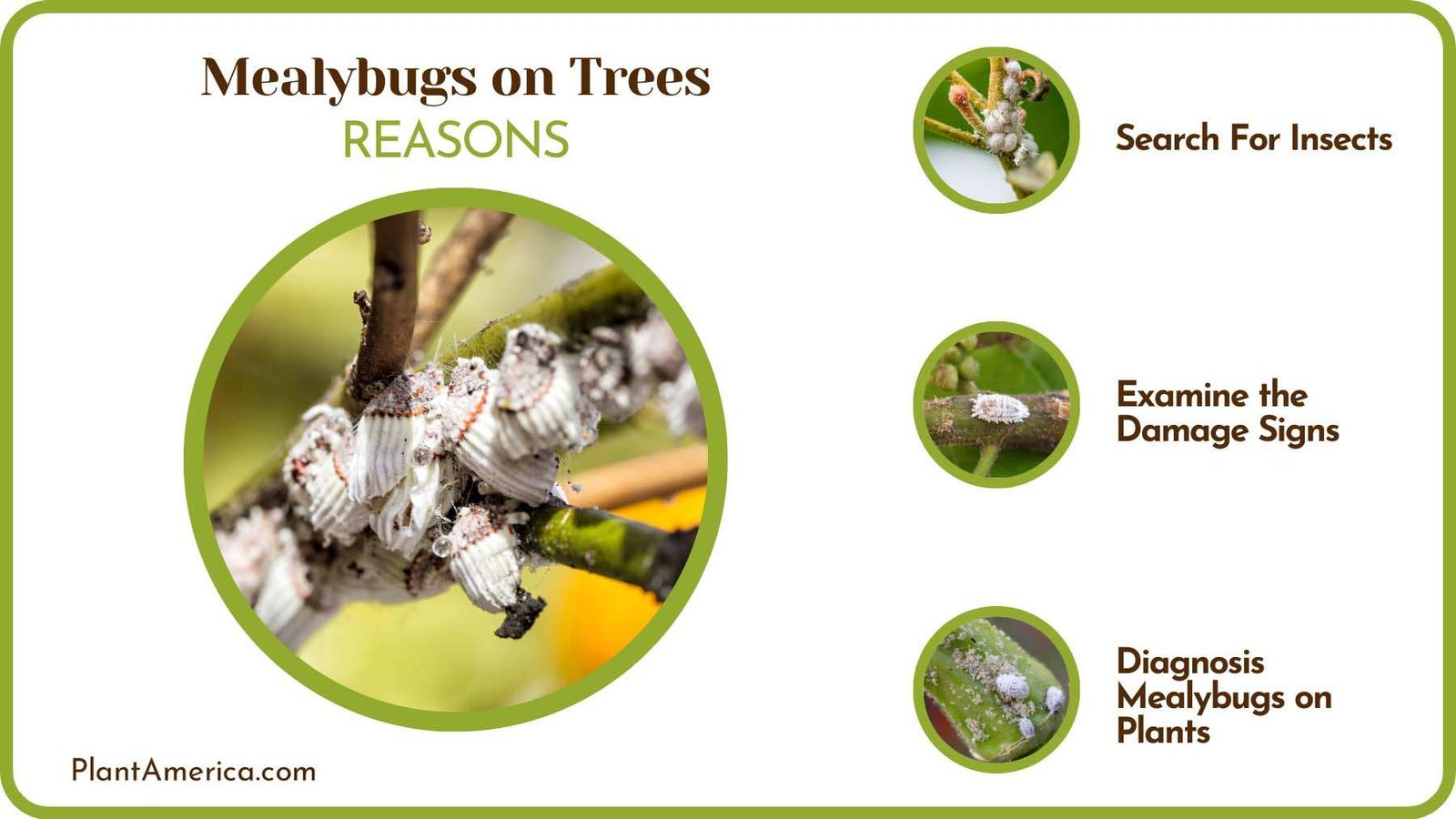
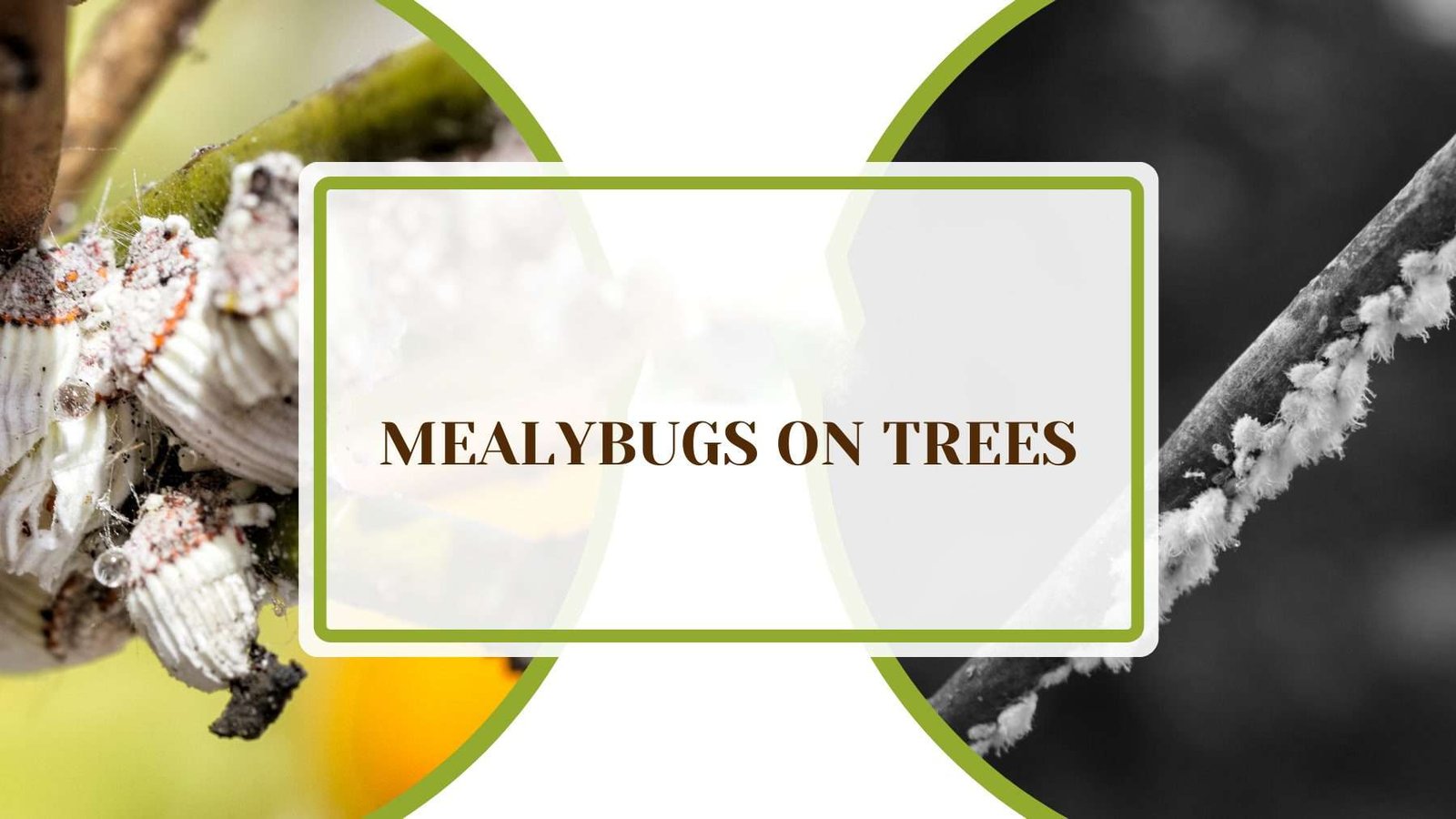
Mealybugs look like small, fluffy white cotton spots on the leaves and stems of the plants. They often group and can be seen without a microscope. The question, “Do mealybugs fly?” often arises, and the answer is no, they crawl. This can make them slightly easier to deal with as they won’t rapidly spread to other parts of the garden.
People also often ask us– “Where do mealy bugs come from,” and the answer is simple. They usually originate from infested plants brought into the garden or from neighboring infested plants.
– Carefully Examine the Damage Signs on Trees
“Are mealybugs harmful to trees?” is another frequent question. Though they might not look harmful, they can seriously damage your trees. How? Well, by drawing out sap. This action turns leaves yellow. You may also see leaves curling and slow overall tree growth.

So, if you notice any of these problems with your trees, look for mealybugs. They mostly live on the branches, roots, and leaves undersides. Furthermore, they are always in groups, so you will see more than one bug.
Remember, mealybugs won’t attack your trees all year round. They are mainly active at specific times. Outdoor plants and trees must be inspected at different times, especially during warm and humid seasons when mealybugs are most active. Indoor potted trees should be checked regularly, especially when introducing a new plant to the indoor environment.
– Call For Help If You Can’t Diagnosis Mealybugs on Plants
For severe infestations or uncertainty, consider getting professional help (contact horticulturists/pest control services). They have the tools to detect bugs. After knowing mealybugs attack your trees, you should start taking measures immediately.
How To Eradicate Mealybugs From Trees? Super Easy Ways
To eradicate mealybugs from trees, you can start with a combination of methods, but you should begin by knocking them off with water. Placing polyethylene bands is another intelligent way to stop their movements. In severe infestations, use the best insecticides as a chemical control method.
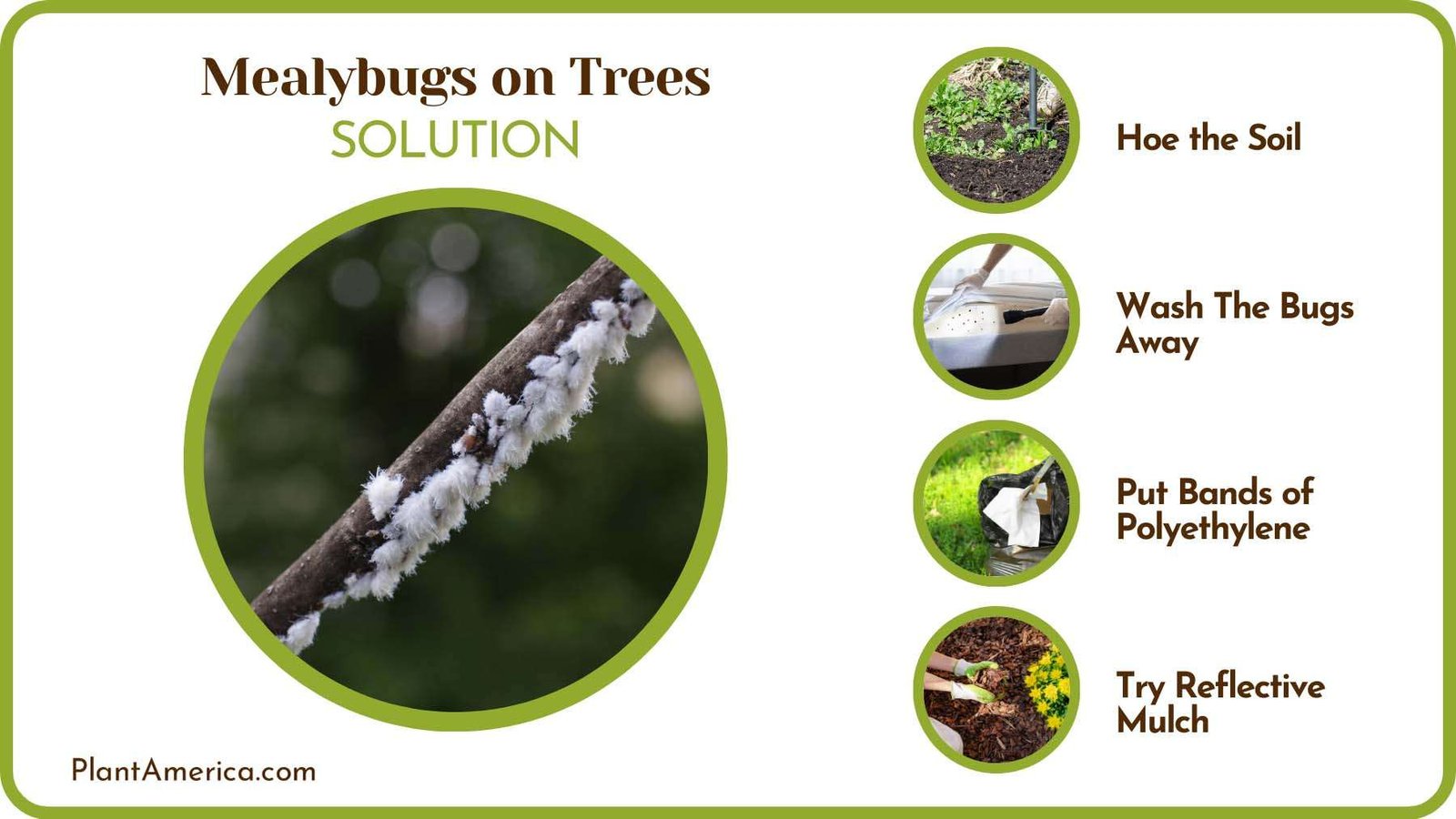
– Hoe the Soil if You See Bugs Near the Roots
Hoeing the soil is an old-school but effective method to deal with mealybugs. Most people avoid it, as it is hard work. However, manually destroying mealybug eggs can lead to great results.
Here’s how you can do it:
- Select the Right Time: It’s best to hoe the soil under the tree canopy in November. The timing is essential as the eggs are vulnerable at this stage.
- Use a Garden Hoe: A garden hoe is perfect here, as you want to turn the soil over to expose the hidden eggs.
- Dig Deep but Be Gentle: Eggs can be somewhat deep, but you don’t want to harm the tree roots. So, dig deep enough to expose the eggs but do it gently.
- Inspect the Soil: As you’re hoeing, look for the cottony clusters of eggs and remove them.
- Destroy the Eggs: Once exposed, you can crush the eggs or remove them and dispose of them securely.
Destroying the eggs means that you won’t have to deal with any new infestations in the future. You can now focus on the ones you spot on the tree.
– Wash The Bugs Away (But With Right Methods)
Rinsing the bugs off is another easy way to eliminate them. You’ll need different liquids to wash the mealybugs off the plants.
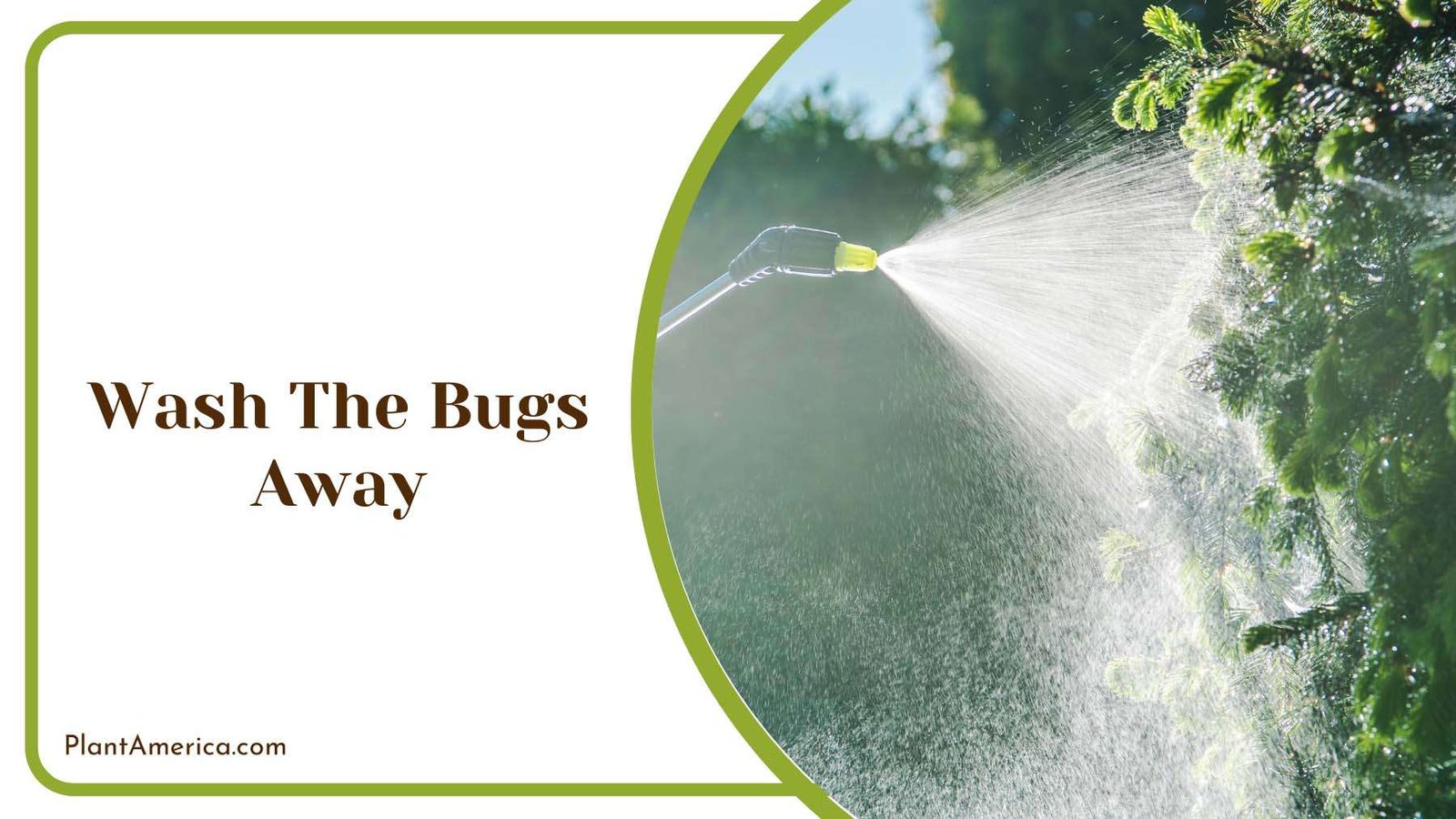
- Use Water Only First: Sometimes, water only can do the trick. A strong spray from a bug blaster or garden hose can dislodge the mealybugs.
- Try Insecticidal Soap: If water alone doesn’t work, you can use an insecticidal soap. Special soaps can dissolve the mealybugs’ waxy coating, making them weaker.
- Will Dish Soap Kill Mealybugs? The answer is yes. A mild dish soap and water solution can be an effective alternative to specialized insect-killing soaps.
- Consider Neem Seed Oil: Neem seed oil is a natural substance that can deter mealybugs. You can make bonide neem oil concentrate for this purpose. Other top oils include safer neem oil, southern ag triple action neem oil, and Monterey lg6128 70% neem oil concentrate.
- Rubbing Alcohol: In more stubborn cases, rubbing or isopropyl alcohol can be used.
– Put Bands of Polyethylene For Controlling Mealybugs
When figuring out “how to get rid of mealybugs outside,” sometimes it is better to think outside the box. One of those creative solutions is using polyethylene bands around the trunk of the affected tree.
Polyethylene bands are slippery barriers that make climbing up the tree trunk difficult for mealybugs.
Follow these steps:
- Determine the circumference of the trunk, then cut the polyethylene band accordingly, making sure it’s 1 foot wide.
- Clean the trunk area where the band will be placed. Make sure it’s dry and free of dirt.
- Apply the band around the trunk, ensuring it’s snug but tight.
- Next, use tape or string to keep the band in place.
- Check the band now and then to ensure it’s still in place and doing its job.
The bands usually stay good for about a month. Therefore, we suggest replacing them with new ones to ensure your trees remain safe.
– Try Reflective Mulch: An Unconventional Approach
Another novel way is by using reflective mulch. It can mess with the mealybugs’ navigation and deter them from settling on the trees. Reflective mulch works by confusing mealybugs.
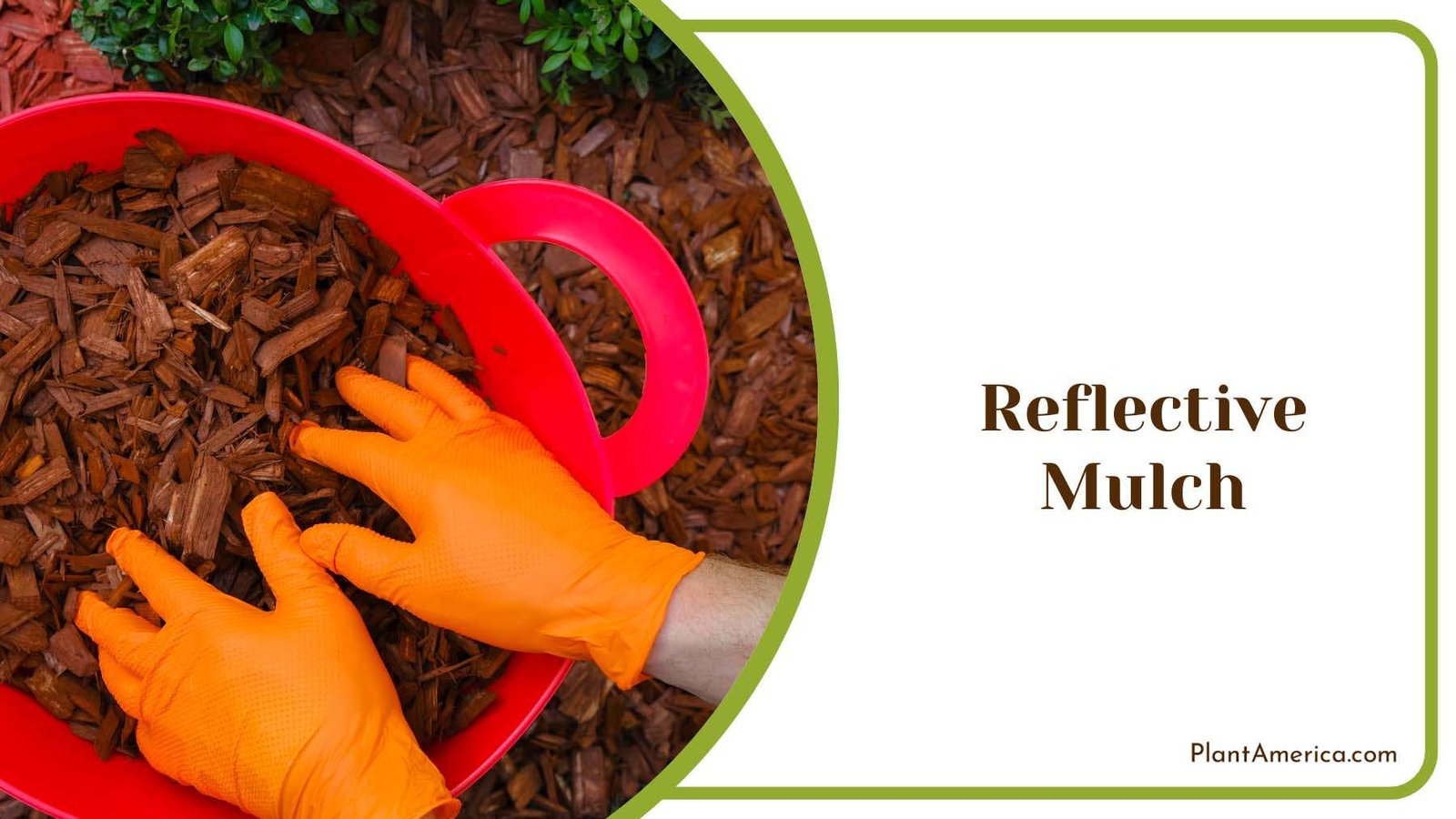
It makes it difficult for them to find places to eat and lay eggs. The shiny surface reflects light in ways that are disorienting to them.
Steps to use reflective mulch for mealybug control:
- Look for reflective mulch designed explicitly for pest control. It should have a shiny, reflective surface.
- Clear the area around the tree of weeds and debris.
- Cover the ground entirely around the tree’s base with reflective mulch.
- Use garden staples or weights to keep the mulch in place.
- Monitor the mealybug population and see how they react to the reflective mulch.
Knowing the mealybugs’ life cycle can make this method more effective. How? Well, timing the reflective mulch application to when they’re most active and likely to lay eggs can increase its effectiveness.
– Prune Branches That Touch the Ground or Nearby Trees
Mealybugs love to move around, and branches that touch the ground or other trees create convenient pathways for them.
Steps to prune effectively:
- Look for branches touching the ground or too close to nearby trees.
- Utilize sharp pruning shears or a pruning saw, depending on the thickness of the branch.
- Make sure to prune the branch at the right angle to prevent harm to the tree.
- If the cut branches have mealybugs, dispose of them properly to prevent mealybugs from spreading elsewhere.
- Watch the tree for any new branches that could cause trouble.
This pruning strategy might seem too simple to be effective but don’t underestimate its power. Combined with other methods, it can defend against severe mealybug infestations.
– Try Vacuuming If Bugs Are Reachable
Vacuuming is another quick way to control mealybugs. Do these steps:
- Get a hand-held vacuum with adjustable suction.
- Choose a narrow nozzle to reach into the nooks and crannies where mealybugs hide.
- Carefully bring the nozzle close to the mealybugs without touching the plant or tree.
- With the vacuum running, gently suck up the mealybugs without damaging the leaves or branches.
- Empty the vacuum’s contents into a sealed bag and dispose of it properly.
Since you’re using it on pests, clean the vacuum well after usage.
– Trap Cropping: An Unusual Approach
Trap cropping is an innovative and green way to tackle the mealybug problem. In this, you use certain plants that are attractive to mealybugs. Therefore, mealybugs will avoid your trees and infest the “scapegoat” plants. Then, you can treat those bugs to get rid of them.

Check out how to implement trap cropping:
- Find plants that are known to attract mealybugs more than others in your garden. Seasoned gardeners usually get orchids, succulents, and herbs for this purpose.
- Plant these “trap crops” near the main garden where you want to protect your trees.
- Regularly inspect the trap crops for mealybug infestation.
Trap cropping also promotes natural predators. The beautiful trap pants invite natural enemies of mealybugs to come and reside, further decreasing the bug population (biological control).
– Chemical Control: Try The Best Insecticide For Mealybugs
Chemical control is for severe infestations. However, you will want to find something effective against mealybugs and safe for other beneficial organisms. Most people prefer Imidacloprid systemic pesticide.
We suggest:
- Look for labels that mention effectiveness against mealybugs.
- Follow the Instructions. Insecticides should be used precisely as directed to ensure efficacy and safety.
- Monitor the treated areas to ensure the insecticide works against the pests.
Chemical control should usually be a last resort, as it is more expensive than others. However, you can use it against all garden pests (including spider mites).

– Manage Tree Garden To Deter Mealybugs
Dealing with mealybugs isn’t just about getting rid of them. You should also maintain your garden to ensure they are not welcoming to these pests.
Here’s how:
- Regularly clean leaves and other debris, as these can be hiding spots for mealybugs.
- Overwatering creates a moist environment that mealybugs love. Water your plants adequately, but don’t overdo it.
- Overfertilization can lead to succulent growth that attracts mealybugs. Use fertilizers responsibly.
- Poor ventilation can lead to increased humidity, another favorite of mealybugs. Ensure that your plants have room to breathe.
- The wrong lighting can make plants weak and more likely to be infested.
- Ensure proper lighting based on the specific needs of your trees and plants.
- Uproot weeds when you see them growing near your trees. They can protect bugs from the treatments you apply.
- Keep pets from playing in your tree garden for long. Their feces also invite bugs.
- Remember- routine inspection helps you spot issues early before they become significant problems.
It’s that simple!
Conclusion
Mealybugs on trees can be a persistent and frustrating problem, but with the right strategies and understanding, they don’t have to ruin your garden. Here’s what you need to remember:
- Utilize methods like hoeing the soil, rinsing the bugs, and using polyethylene bands for physical control.
- Eco-friendly solutions like reflective mulch, vacuuming, and trap cropping are also effective.
- Consider chemical control with the best insecticides for targeted eradication.
- Manage the overall health of your tree garden to avoid conditions that support mealybugs.
That’s all! Now, you can quickly eliminate mealybugs from trees.