
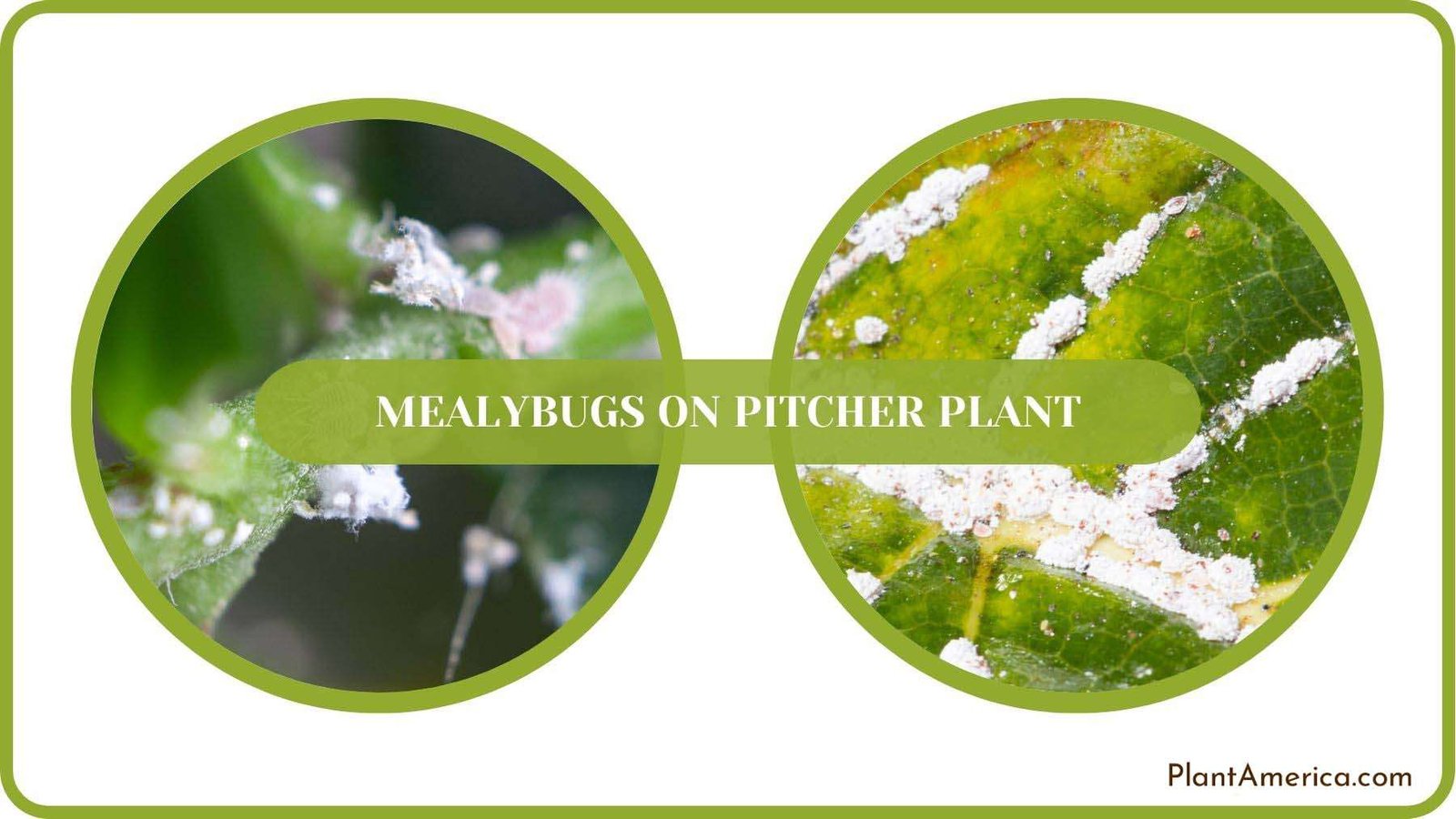
Mealybugs on pitcher plants is an issue that can catch any plant enthusiast off guard. These cottony insects can swiftly transform these spectacular carnivorous creations into feeble victims with ferocious feeding.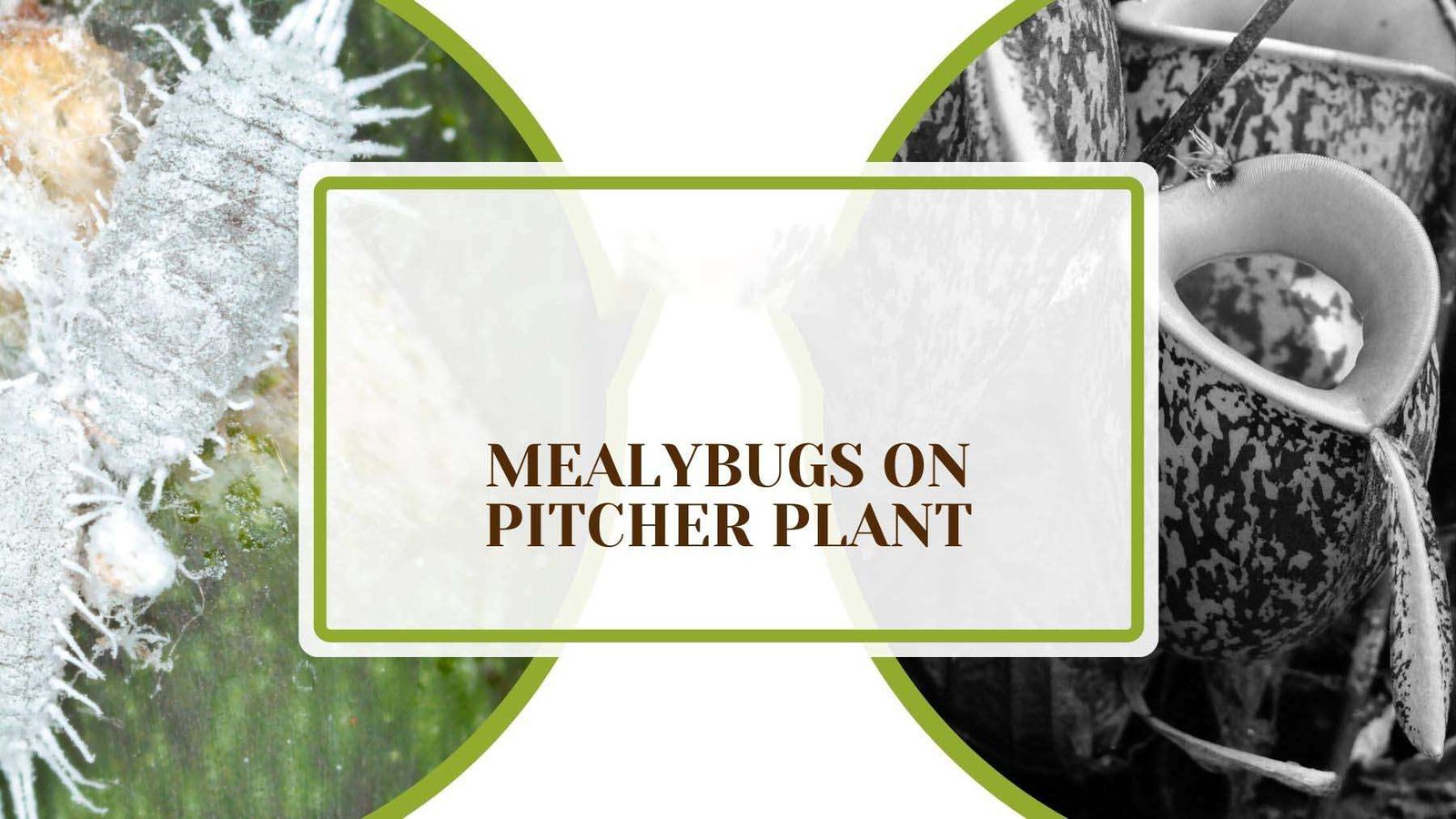 But don’t worry; you can protect your plants with the correct approach and simple methods. Join us as we delve into understanding and ultimately outsmarting the mealybug invasion.
What Causes Mealybugs on Pitcher Plants?
Mealybugs on pitcher plants are caused by an attraction to their sweet cell sap and favorable living conditions. Infested plants, gardening tools, or wind can also bring in these pests. Also, overcrowding and high humidity create an environment conducive to mealybug population growth.
– Environmental Conditions Favoring Mealybugs
The first cause to consider is the environmental conditions that favor mealybugs. These pests thrive in warm, humid environments, typically characteristic of places where tropical pitcher plants grow.
Overcrowded growing conditions also make it easier for mealybugs to spread, as they can easily crawl from one plant to the next.
– Introduction Through New Plants
An innocuous addition to your plant collection can sometimes be a Trojan Horse. Unknowingly, gardeners often introduce mealybugs into their gardens via new plants. 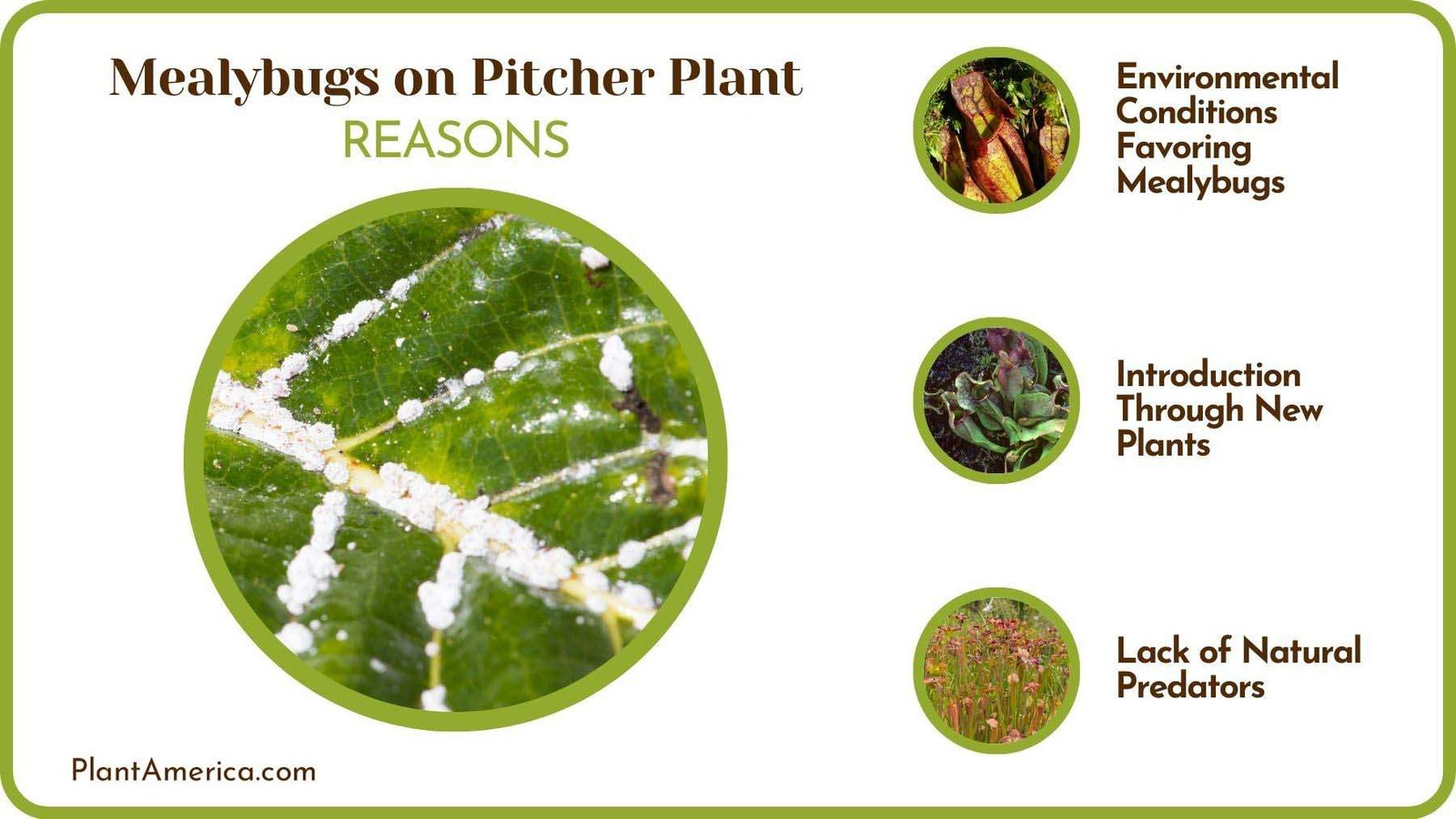 The pests could be hiding in the potting soil or clinging to the undersides of leaves, ready to spread to the rest of your plants.
– Lack of Natural Predators
In their natural habitats, mealybugs have plenty of predators controlling their population. But these predators may be absent in our gardens, allowing the mealybug population to increase and excrete sooty mold.
Interestingly, mold on pitcher plants can indicate a mealybug infestation. Mealybugs secrete honeydew, which coats the plant surface and provides a breeding ground for sooty mold fungus. Luckily, removing mealybugs from your plants is straightforward.
How To Get Rid of Mealybugs on Pitcher Plants?
To get rid of mealybugs on pitcher plants start by manually removing the bugs using a water spray. Next, apply natural remedies such as neem oil or an isopropanol-detergent solution. Always ensure your garden is weed-free, and consider repotting if bugs have infested the soil.
– Do the Water Spray Method
The water spray method is highly effective against these pests. It works well on pitcher/nepenthes plants and carnivorous varieties such as venus flytraps, trumpet pitchers, and butterworts. This approach involves using a strong jet of water to dislodge the mealybugs from the plant.
Here’s how you can employ this technique:
- Identify the infestation: Inspect your plant thoroughly, paying attention to the tops and undersides of the leaves, the stems, and the soil around the plant.
- Prepare your spray: Fill a spray bottle with clean water. Ensure that the spray nozzle is set to emit a strong, direct jet of water.
- Spray the plant: Spray all the infested areas with water. Be sure to maintain a reasonable distance to avoid damaging the plant.
- Repeat if necessary: The water spray method is a gentle treatment, so you may need to repeat it several times to rid your plant of the pests completely.
Remember that while spraying water can work, it might not get rid of a significant infestation. When things are really bad, using this method first can be helpful before trying any other treatment, such as using chemical pesticides.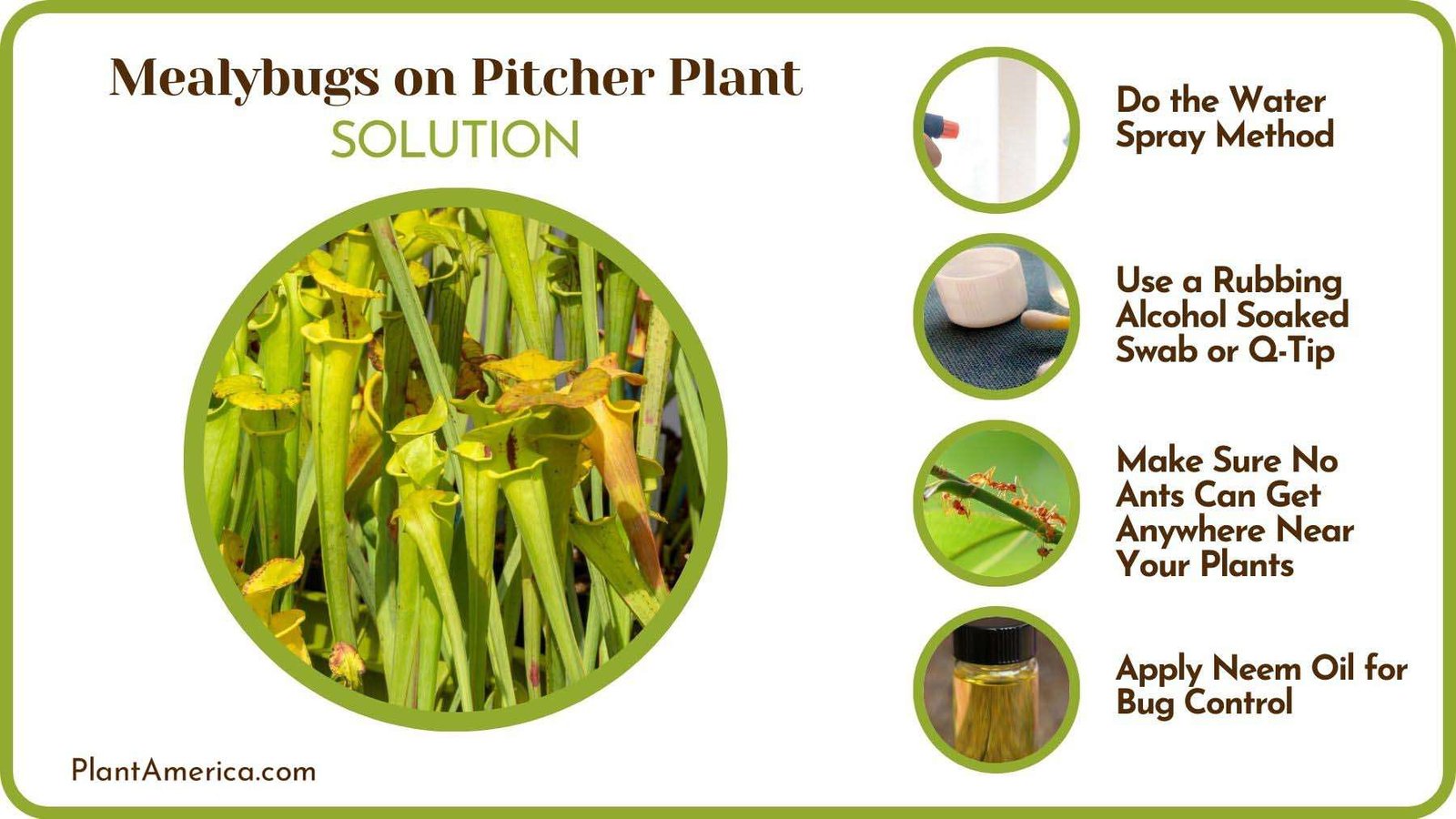
– Use a Rubbing Alcohol Soaked Swab or Q-Tip
An essential tool in your mealybug combat arsenal is something as simple as a cotton swab dipped in rubbing alcohol. Rubbing alcohol/isopropyl alcohol is a strong method of killing mealybugs. It breaks down the waxy stuff that keeps mealybugs safe, so they dry out and die.
This method is effective against mealybugs on pitcher plants and works remarkably well for mealybugs venus fly trap infestations and carnivorous plants aphids.
Here’s how you can use this method:
- Prepare your tools: Dip a cotton swab in a solution of 70% rubbing alcohol. If the infestation is severe, you can use a soft toothbrush or paintbrush to remove bugs.
- Apply to the mealybugs: Gently dab the mealybugs with the alcohol-soaked swab. The goal is to coat each mealybug with a thin layer of alcohol.
- Let it work: Leave the alcohol on the mealybugs for a few hours. The pests should begin to turn brownish as the alcohol takes effect.
- Rinse the plant: After a few hours, rinse your plant gently with water to remove any remaining alcohol.
- Repeat as needed: For heavy infestations, you may need to repeat the process multiple times over several days.
Rubbing alcohol is generally safe for most plants, but it’s a good idea to test it on a small area first to ensure your plant doesn’t have an adverse reaction. If your plant seems fine after a day or two, you can treat the entire plant.
– Make Sure No Ants Can Get Anywhere Near Your Plants
Ants and mealybugs have a teamwork deal. Ants keep mealybugs safe from enemies, and in return, ants feed on honeydew – a sweet stuff mealybugs make. To ensure the success of your mealybug eradication efforts, you must ensure no ants can get anywhere near your plants. Here’s how you can do this:
- Locate the ant trails: Identify where the ants are coming from and where they’re going. This can help you know where to focus when you’re trying to control ants.
- Try ant baits: Using ant baits is an excellent way to deal with ants. The ants carry the bait to their home, which helps get rid of all the ants slowly.
- Use barriers: You can also put stuff that ants don’t want to walk through, like diatomaceous earth or petroleum jelly, to keep ants away from your plants.
- Keep your area clean: Ants are attracted to sweet substances, so quickly clean up any food or drink spills. Also, regularly clean pots and plant stands to remove any honeydew deposits.
Regularly monitor your plants and their surroundings for signs of ant activity.
– Apply Neem Oil for Bug Control
Neem oil is a strong and safe insecticide for carnivorous plants. It works by messing up the pests’ life cycle, stopping them from growing up. It also smothers them and prevents them from eating, so they die.
That’s why it’s a good choice for getting rid of pests, and it’s safe for almost any plant in your garden. Here’s how you can use neem oil to combat mealybugs:
- Prepare the solution: Mix 2-4 drops of neem oil with a liter of water and a little dish soap.
- Apply to your plants: Spray your plants thoroughly with the neem oil solution, ensuring that you cover both the top and underside of the leaves, stems, and even the surrounding soil.
- Repeat as necessary: A one-time application won’t suffice. Apply the solution once a week for at least a month to eliminate all the mealybugs, including their eggs and larvae.
- Monitor your plants: Look for any signs of mealybug activity, and reapply the solution if necessary.
Remember, when doing neem oil carnivorous plants treatment, it’s best to spray in the early morning or late evening when the sun isn’t too intense. In that way, you can prevent leaf burn.
– Try a Solution of Isopropanol and Detergent
Another powerful weapon in your mealybug-fighting arsenal is a solution of isopropanol, commonly known as rubbing alcohol and detergent. This solution works well on mealybugs and is also suitable for dealing with thrips on pitcher plants and other usual pests. How it works is by melting the waxy cover that protects these bugs.
This makes them dry out and die. Here’s how to prepare and use this solution:
- Prepare the solution: Mix equal parts of isopropanol and water, and then add three drops of liquid dish soap.
- Apply the solution: Using a spray bottle, thoroughly coat the affected areas of your plant with the solution. Make sure to cover the leaves and stem’s tops and undersides.
- Let it work: Allow the solution to sit on your plant for a few hours.
- Rinse off the solution: After a few hours, rinse your plant with water to remove any remaining solution.
- Repeat as necessary: For severe infestations, you may need to repeat this process multiple times until all the pests are eliminated.
Always test the solution on a small part of your plant first to ensure it doesn’t react adversely.
– Repot if the Bugs Are Also in Soil
Sometimes, despite your best efforts, mealybugs might have infested the plant and the soil. When this happens, a more drastic action might be needed: repotting. Repotting involves moving your plant to a new pot with fresh soil, free from mealybugs and their eggs.
It’s a very important part of “pitcher care” that helps your plant stay healthy and without pests. Here’s how to do it:
- Prepare a new pot and soil: Choose a pot of appropriate size for your plant, and fill it with a fresh, sterile soil or potting mix ( that is suitable for carnivorous plants).
- Remove the plant: Carefully remove your plant from its current pot. Try to disturb the roots as little as possible during this process.
- Inspect and clean the plant: Check the plant thoroughly for any remaining mealybugs. If you find any, remove them manually or use a spray of isopropyl alcohol and detergent.
- Plant in the new pot: Put the plant in the new container and fill it with sterile soil.
- Water generously: Water your plant thoroughly after repotting to help it adjust to its new environment.
Repotting can stress out plants, so giving them extra attention is really crucial. Monitor it closely for a few weeks and maintain optimum conditions for its growth.
– Keep Your Garden Weed Free: (Carnivorous Plants Pest Control)
Weeds or unwanted plants can be more than just an unsightly nuisance in your garden. They might also have bugs like mealybugs. This can become a way for them to move to your plants. That’s why making sure your garden doesn’t have weeds can control pest infestation.
Weeds steal your plants’ resources (nutrients, water, and sunlight), so removing them keeps pests at bay and helps your primary plants thrive.
Here’s how to maintain a weed-free garden:
- Manual removal: Regularly check your garden for weeds and remove them as soon as they appear. Pull them out manually, ensuring that you remove the entire root system to prevent regrowth.
- Mulching: Mulching is a great way to suppress weed growth. It stops weed seeds from growing by covering sunlight and keeps soil damp, suitable for your plants.
- Use a weed killer: If weed infestation is severe, consider using a weed killer. However, select one that’s safe for your plants and the environment.
- Plant densely: If possible, plant your pitcher and other garden plants close together. This makes it harder for weeds to grow.
Having a garden without weeds makes your plants grow better and keeps pests away.
Conclusion
Removing mealybug on pitcher plants can be tough, but you can do that. If you use the proper techniques, you can make sure your carnivorous plant garden grows well without any bugs, so always remember to:
- Stay vigilant and regularly examine your plants for any signs of problems.
- Use natural methods like water sprays, alcohol-detergent solutions, neem oil, and vinegar solutions as your first line of defense.
- Maintain proper plant care practices such as repotting when necessary and keeping your garden weed-free.
Lastly, you should be persistent with whatever strategy you are using. Getting rid of mealybugs can take some weeks, but if you keep at it, you can bring your garden back to being healthy and full of life!