
Chinese evergreen brown tips are a common concern among plant enthusiasts, but with proper care, you can revive your plant’s lush green appearance. It happens due to dry soil and low humidity, so fixing these problems can help you maintain the plant’s health.
However, doing these “fixes” wrong can worsen the condition even further. Stick around to learn how to help your evergreen plants stay vibrant correctly!
What Causes Chinese Evergreen Brown Tips?
Chinese evergreen brown tips are caused by dehydration and low humidity near the plants. Exposure to the sun can also kill the leaf tip cells, leading to browning. Moreover, if pests attack your garden and feast on the leaves, you’ll see discoloration on the tips.
– Dry Soil: Not Adding Enough Water
Chinese Evergreens or Aglaonema plants draw water and essential nutrients from the soil through their root system. When the soil dries out, it becomes challenging for the plant’s roots to function. This causes the plant’s water and nutrient deficiency, leading to brown leaf tips.
Confirming if dry soil is causing brown tips on the leaves is relatively straightforward. Begin by gently poking your finger or a wooden stick about an inch deep into the soil. If the soil feels dry at this depth, your plant needs watering.

– Low Humidity: Another Reason Behind Aglaonema Brown Tips
Chinese or aglaonema plants have adapted to thrive in areas with high humidity levels, where their leaf tips can easily absorb moisture from the air. However, the surrounding air can become significantly drier in indoor environments with lower humidity (especially during the winter months).
As a result, the plant will face difficulty maintaining adequate leaf moisture. When this happens, the leaves can get dehydrated, and the tips turn brown.
To confirm whether low humidity is the cause of brown tips, you can use a simple tool called a hygrometer. Ideally, aglaonema plants prefer humidity levels around 50 percent or higher.
– Exposure to Sun: Sunburn
Chinese Evergreen silver bay plants cannot tolerate high-intensity sun rays. When exposed to prolonged or intense sunlight, the leaves can heat up. When this happens, the water starts to evaporate, causing dehydration.
Moreover, leaf tip cells also begin to die when high-UV rays fall on them. As a result, you’ll see brown spots on the tip.
– Pest Attack
When you see Chinese Evergreen leaves turning yellow and brown, pests, like spider mites and mealybugs, can be culprits. These tiny creatures feed on the plant’s sap (cell fluid), leading to yellowing, wilting, and browning of the affected leaves tips.
To confirm if a pest attack is responsible for the discoloration of the leaves, carefully examine the plant. Look closely at the undersides of leaves and along the leaf veins for any tiny, moving creatures or the presence of fine webbing.
You may also notice honeydew (a sticky substance) on the leaves. If you spot any of these signs, it’s a strong indication of a pest issue.

– Air Pollutants
Chinese Evergreens are sensitive to air pollutants like smoke, chemicals, and fumes. The contaminants can clog the leaf pores, stopping processes like photosynthesis, transpiration, etc. When this happens, discoloration starts at the tips and moves inwards.
How to Treat Chinese Evergreen Brown Tips
To treat Chinese Evergreen brown tips, focus on watering, as a well-hydrated plant can handle the stress better. It’s also critical to ensure the roots stay healthy, as the water and mineral uptake depend on them. Furthermore, if you see pests in your garden, eradicate them with insecticidal sprays.
– Water Chinese Evergreen Properly: Focus on Hydration
Like most plants, Chinese Evergreens rely on water to survive and thrive. Adequate hydration ensures that your plant’s cells remain turgid, which can handle stress better.
Here’s how you can go about it:
- Check the Soil: Before watering, stick your thumb or a wooden stick about an inch deep into the soil. If it feels dry, it’s time to water. If it’s still moist, hold off for a bit.
- Water Thoroughly: Give your plant a good soak when you do water. Make sure water seeps down to the root zone. Empty the saucer under the pot if there’s excess water after a few minutes.
- Avoid Overwatering: While it’s crucial not to let your plant go thirsty, it’s equally essential not to drown it. Chinese or aglaonema plants prefer slightly moist soil but not soggy conditions, which can lead to root rot.
- Use Room-Temperature Water: Water your plant with room-temperature water to prevent shocking its roots.
By giving your evergreen plants the right amount of water and ensuring that the soil remains consistently moist, you can fix the leaves’ brown tips.

– Ensure the Roots Keep Growing
Roots support plants by absorbing water and minerals. So, when they thrive, your plant is better equipped to overcome issues like brown tips.
The problem is that your Chinese Evergreen may outgrow its current pot over time, leading to cramped roots and poor growth. When this happens, repot your plant to a bigger container.
Follow these points from houseplant care guides:
- Choose the Right Pot: When repotting, select a pot/container that’s slightly larger than the current one. This allows root expansion while preventing over-potting (which can lead to waterlogging).
- Inspect Root Health: During repotting, take the opportunity to check the condition of your plant’s roots. Healthy roots should be white or tan, while brown or black roots may indicate issues like root rot. Trim away any damaged roots to encourage new growth.
- Provide Adequate Drainage: Ensure the new pot has proper drainage holes, as we don’t want to create waterlogged conditions for the roots. Also, always use a well-draining soil mix suitable for the Evergreens.
- Fertilize Wisely: The evergreens benefit from a balanced, water-soluble fertilizer diluted to half strength. We suggest applying it every 2-4 weeks during the growing season (spring and summer).
Remember that healthy roots translate to healthy leaves and a thriving plant overall.
– Change the Soil if It Looks Bad
Another vital step in treating Chinese Evergreen brown tips is addressing the soil condition, especially if it looks unhealthy or deteriorated.
Here’s what to do if the soil looks bad:
Visual Inspection: Examine the top layer of your Chinese Evergreen’s soil.
The signs of deteriorating soils are:
- Compaction
- Formation of crust
- White deposits on the surface.
If you notice any signs or suspect mineral build-up, do the following:
- Prepare New Soil: Choose a high-quality potting mix suitable for aglaonema or Evergreens. Ensure that it has good drainage properties and is well-aerated.
- Remove the Plant: Carefully remove your Chinese Evergreen from its current pot, not damaging the roots.
- Gently Shake Off Old Soil: Shake or lightly brush off the old soil from the root ball to prevent over-potting.
- Repot with New Soil: Place your plant in a slightly larger pot with proper drainage holes. Fill the pot with the fresh potting or soil mix and gently pack it around the roots.
- Water Thoroughly: After repotting, water your Chinese Evergreen thoroughly to settle the new soil.
Changing the soil will give your plant a fresh start, which will ultimately help it grow green leaves.
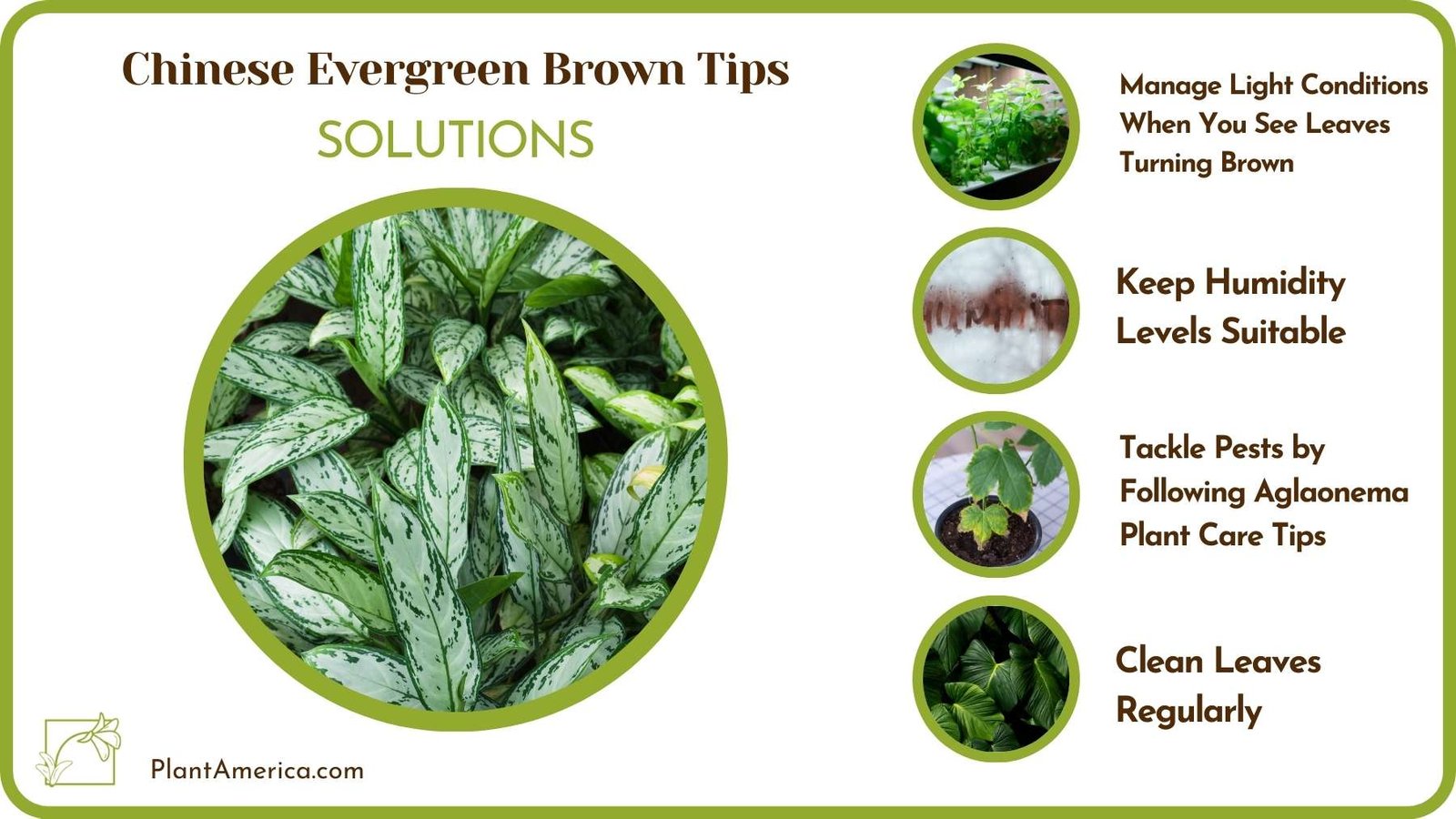
– Manage Light Conditions When You See Leaves Turning Brown
Chinese Evergreens have a preference for bright, indirect light. Such light helps plants do photosynthesis, which maintains the leaves’ color.
Here’s what to remember:
- Indoor Light: Place your Evergreen in a spot where it receives filtered or indirect light. This means positioning it near a window with sheer curtains or where it doesn’t get direct sunbeams.
- Outdoor Placement: If you decide to move your Chinese Evergreen outdoors during the warmer months, ensure it’s in a shaded area or under a tree canopy.
- Monitor Light Exposure: Pay attention to how much light your plant gets throughout the day. If you notice it’s receiving direct sunlight, consider relocating it to a shadier spot to prevent sunburn and brown tips.
– Keep Humidity Levels Suitable
Aglaonema/Evergreens love a bit of moisture in the air. When the air is moist, leaves stay hydrated, happy, and healthy.
Simply do these things to keep the humidity right:
- Misting: Give your plant a light misting with room-temperature water. Just a spritz or two can help (don’t overdo it).
- Humidity Tray: Place a tray with water and pebbles near your plant. It will add moisture to the air when the water starts to evaporate.
- Grouping Plants: If you have other plants, grouping them can create a mini-humid microclimate.
By monitoring the humidity and making these small changes, you can create a more comfortable environment for your Chinese Evergreen and prevent those brown tips from showing up.
– Tackle Pests by Following Aglaonema Plant Care Tips
Pests like spider mites and mealybugs can sometimes find their way to your plant and cause trouble. They feed on its fluid/sap, eventually forcing the leaves to turn yellow and brown. Therefore, dealing with pests is crucial to keep your plant healthy.
- Inspect Your Plant: Regularly check your Chinese Evergreen for any signs of pests. Look closely at the undersides of green and yellow leaves.
- Isolation: If you spot pests, isolate your plants to prevent them from spreading to other plants.
- Manual Removal: Carefully remove the pests by wiping them off with a q-tip or a cotton swab. Be gentle to avoid damaging the leaves.
- Natural Remedies: Use natural remedies like neem seed oil or insecticidal soapy spray to control the pest infestation. Follow the label/printed instructions on the product.
- Pruning: If the infestation is severe, you may need to prune affected leaves or stems to prevent pests from spreading.
- Regular Cleaning: Keep the area around your plant clean. Fallen leaves and debris can harbor pests, so remove them promptly.
It’s that simple. You’re giving your plants a favor by addressing pest issues promptly and effectively. Your Chinese Evergreen plants might return the favor by growing rapidly!
Clean Leaves Regularly: Best Part of Chinese Evergreen Brown Tips Care
Dust, pollutants, and grime on leaves can reduce the plant’s ability to photosynthesize and breathe. As discussed above, when this happens, tips start to turn brown. Luckily, cleaning leaves regularly can stop this from happening.
- Gentle Wiping: Use a soft, damp cloth or sponge to gently wipe down the leaves. This helps remove dust and keeps the leaves clean.
- Avoid Harsh Chemicals: Avoid leaf shine products, as they might contain harsh chemicals. A simple wipe-down with water is usually sufficient.
By following these Pink Chinese Evergreen care growing tips, you can ensure your Chinese Evergreen remains vibrant and healthy.

Conclusion
All in all, Chinese Evergreen can turn brown when it faces different stresses, like dehydration, low humidity levels, etc. Here, we explained how to tackle these problems and ensure your plants flourish. Let’s have a look at the summary:
- Proper Hydration: Water your Chinese Evergreen correctly, ensuring the soil remains moist but well-draining.
- Soil Quality: Change the soil if it looks bad or deteriorated, providing your plant with fresh, nutrient-rich substrate.
- Suitable Placement: Protect your plant from direct sun rays to prevent sunburn and brown tips.
- Humidity Maintenance: Keep humidity levels suitable by misting and using humidity trays.
- Tackle Pests: Regularly inspect your plant for pests, isolate it if necessary, and employ natural remedies to control infestations.
By implementing these solutions, you can create an ideal environment for your Chinese Evergreen, helping it thrive and remain free from brown tips!