
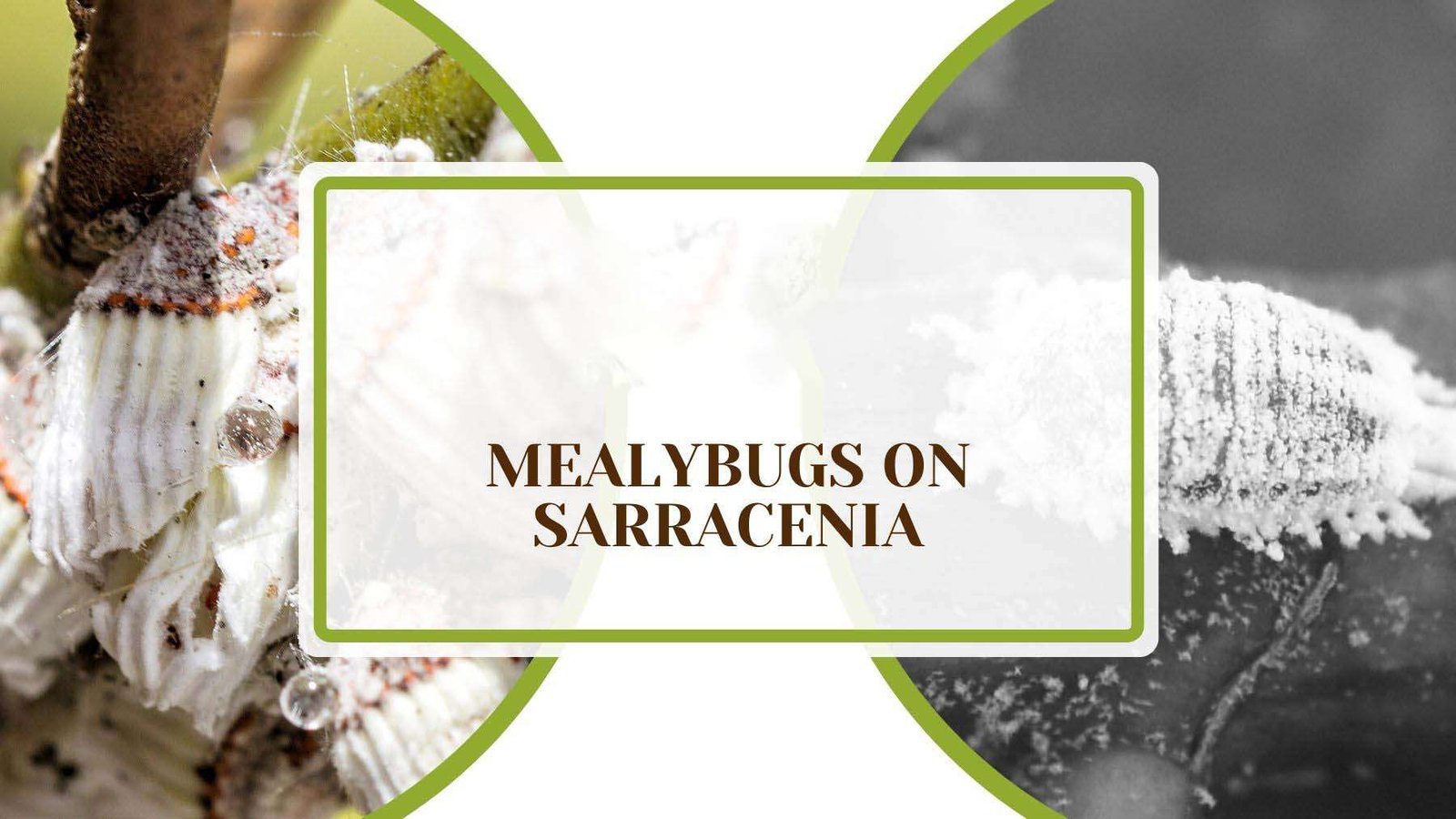
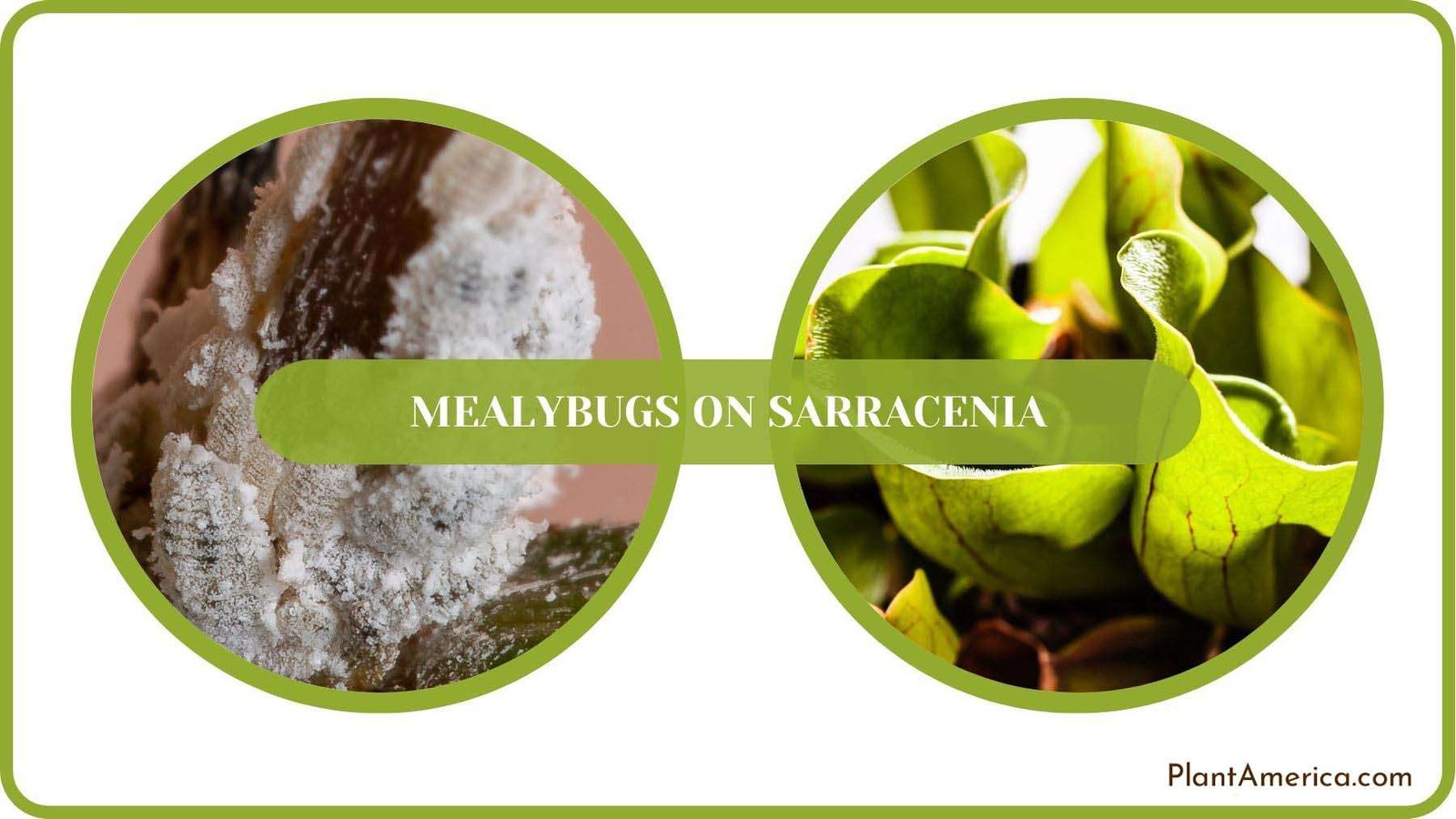
Mealybugs on Sarracenia, is a problem no pitcher plant enthusiast wants to have. These tiny menaces can turn your vibrant plants into a sickly sight.
Therefore, quick action is the key here. Don’t worry; if you read this guide till the end, you can tackle these white pests easily.
How Mealybugs Damage Sarracenia?
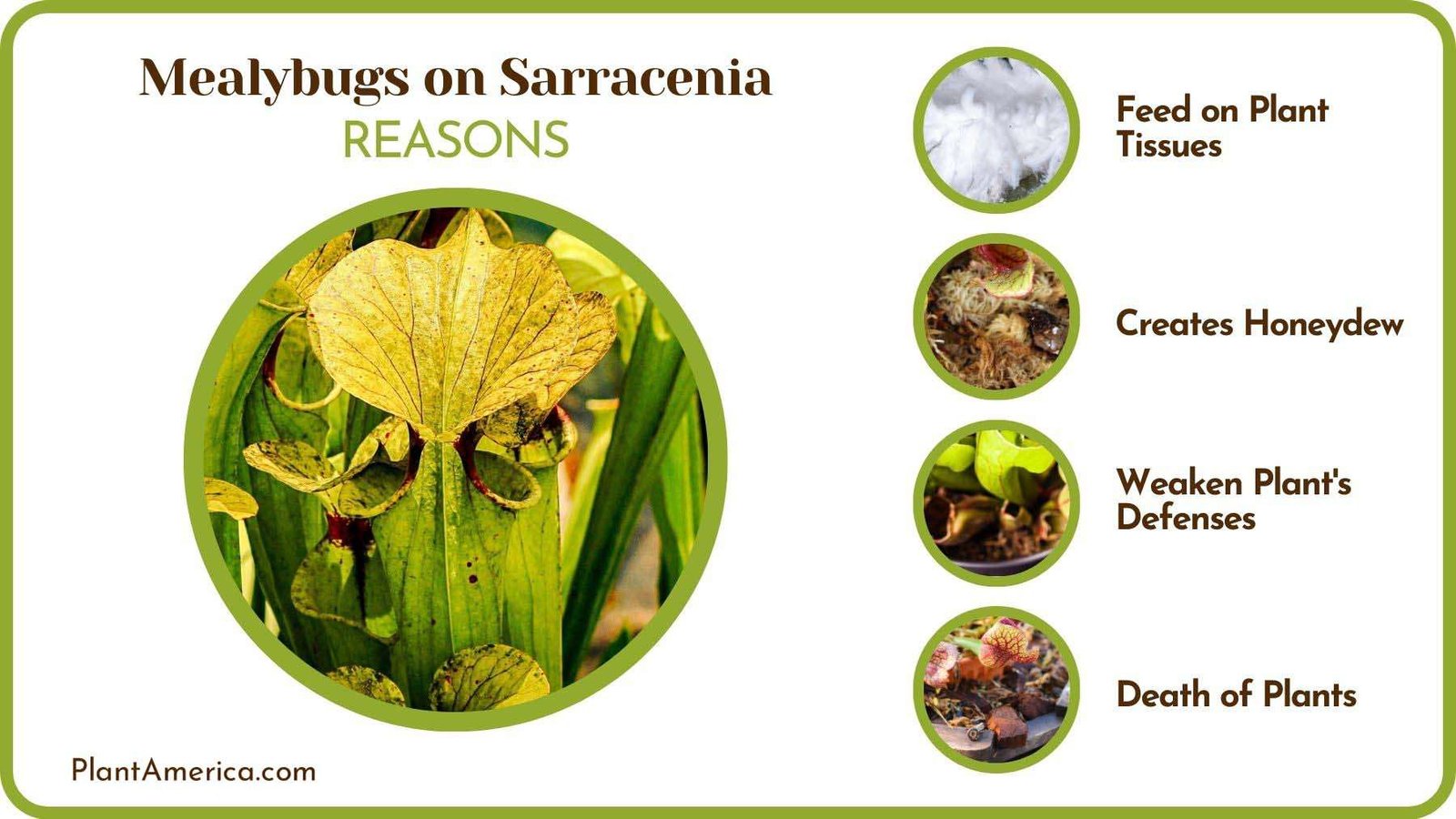
Mealybugs damage sarracenia by feeding on its tissue, and as they do, they leave behind this sweet stuff called honeydew. It can encourage fungal growth, hurting plants even more. Over time, the plants will start to get weak and will ultimately die.
– Feed on Plant Tissues – Biggest Damage
Mealybug is one of the most common pests on carnivorous plants (like the pitcher plant). They insert their stylets (essentially long, straw-like mouthparts) into the plant cells and draw out the nutrients. It makes the plant weak, and you might not even be able to recover it later on.
– Creates Honeydew
While mealybugs dine on your sarracenia, they excrete a sweet substance known as honeydew. Although it may not sound harmful, this sticky byproduct coats the plant’s surface. If this happens, plants will stop performing physiological functions.
Furthermore, honeydew encourages the growth of sooty mold fungus. The problem with it is that it blocks sunlight and inhibits photosynthesis. So, your pitcher plants (or any other) will weaken with time. You may see wilting and leaf dropping in most cases.
– Weaken Plant’s Defenses
As mealybugs feed on sarracenia, the plant’s overall health deteriorates. Due to this, the plant’s ability to fight off sickness gets weaker, leaving it open to even more infections.
– Death of Plants (If Infestation Becomes Severe)
While carnivorous plants are resilient, a severe mealybug infestation can lead to their demise. The cumulative impact of lost nutrients, a weakened defense system, and the stress of secondary infections can be too much for the plant to handle. In some cases, the plant will ultimately die.
How To Eliminate a Mealybug Infestation From Sarracenia?
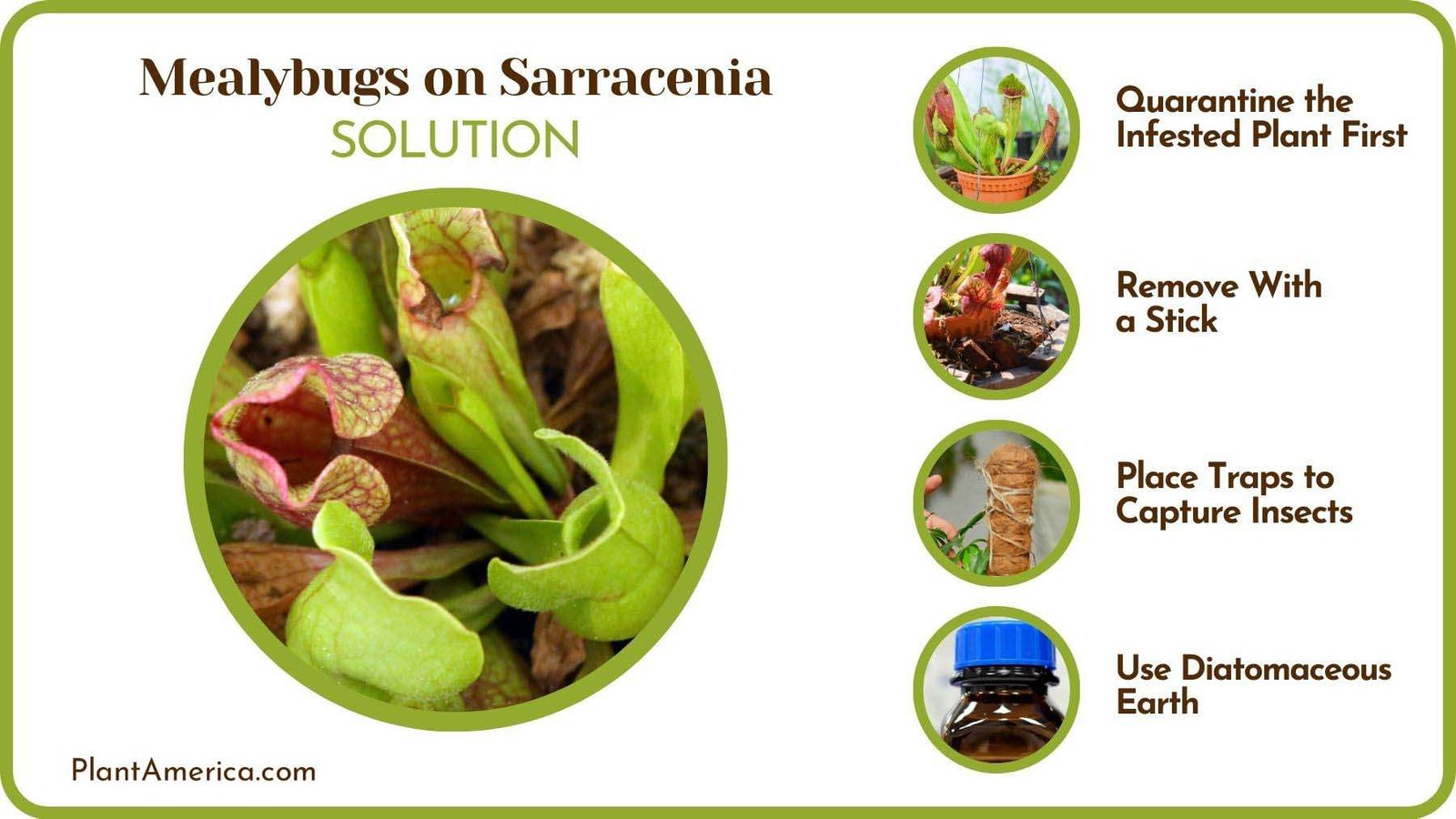
To eliminate a mealybug infestation from sarracenia, start by isolating the infested plant, physically removing the bugs, and using traps. It is also better to apply diatomaceous earth or a vinegar solution. If the mealybug infestation is severe, use insecticidal soap or systemic insecticides.
– Quarantine the Infested Plant First
Well, you’ve noticed mealybugs on your sarracenia. The first thing you should do is quarantine the infested plant, including those close to it. Mealybugs can quickly spread to neighboring plants, such as Venus flytraps, which means they can invade the whole garden if you don’t treat them.
- Identify the infested plant.
- Carefully move the plant away from others.
- Isolate it in a different area.
Doing this will give you two benefits– you can easily protect the remaining garden pests and eradicate the bugs. However, this method only works if the infestation is detected early. Late detections might mean the bugs have already spread, making the process more challenging.
– Remove With a Stick
Mealybugs can be physically removed from plants. You can dislodge these pests from your sarracenia using a small, soft stick, like a toothpick.
- Find a small stick, toothpick, or cotton swab.
- Gently scrape or wipe off the mealybugs.
- Repeat until you remove most of them.
- Remember to be gentle.
However, it’s not always 100 percent effective (especially if the infestation is severe). So, monitor your plants, even after removing the bugs.
– Place Traps to Capture Insects – An Old But Effective Strategy
Using traps to catch those insects is another old method to fight off mealybugs.
Here’s how you can do it:
- You can find sticky traps at your local garden center or online. Or, if you’re feeling crafty, you can make your own with bright yellow cardboard and petroleum jelly.
- Place the traps near the affected sarracenia plant. If you put them far off, they won’t catch any bugs.
- Monitor your traps regularly. Once they’re filled with mealybugs, replace them.
Remember to get traps from a reputable source. The reason is that some low-quality ones lose their “stickiness.” As a result, the mealybugs can escape easily.
– Use Diatomaceous Earth
Diatomaceous earth is a super fine, chalk-like powder made from fossilized remains called diatoms. This powder is highly effective against mealybugs, and here’s how to use it:
Make sure you’re buying food-grade diatomaceous earth. You can easily find it in garden stores or online.
Dust the sarracenia plant’s soil with a thin layer of diatomaceous earth. Be sure to cover the undersides of leaves and stems where mealybugs love to hide. Remember- Diatomaceous earth must be reapplied after heavy watering or rain, as it works best when dry.
No doubt, Diatomaceous earth is effective against mealybugs. But keep in mind that it loses its effectiveness in wet conditions. Second, it’s not selective and can harm beneficial insects as well. So, remember to use it as a part of a more comprehensive plan to tackle the mealybug problem on your pitcher plants.
– Vacuuming Can Work
Using a vacuum might sound odd, but it’s a clever way to deal with a mealybug problem.
Here’s how it works:
- Get a small handheld vacuum and ensure it has a bag to contain the pests.
- Opt to vacuum during the cooler parts of the day, such as in the early morning or evening. Mealybugs are slower during these times, making them easier to catch.
- Dispose of bugs after each vacuuming session to prevent re-infestation.
We recommend this method when the mealybugs are small in number. Vacuuming is unsuitable for severe infestations as it might not capture all bugs, especially those living inside the plant or soil.
It can also be time-consuming and may inadvertently harm delicate plants like sarracenias if not done carefully.
– Remove the Infested Leaves
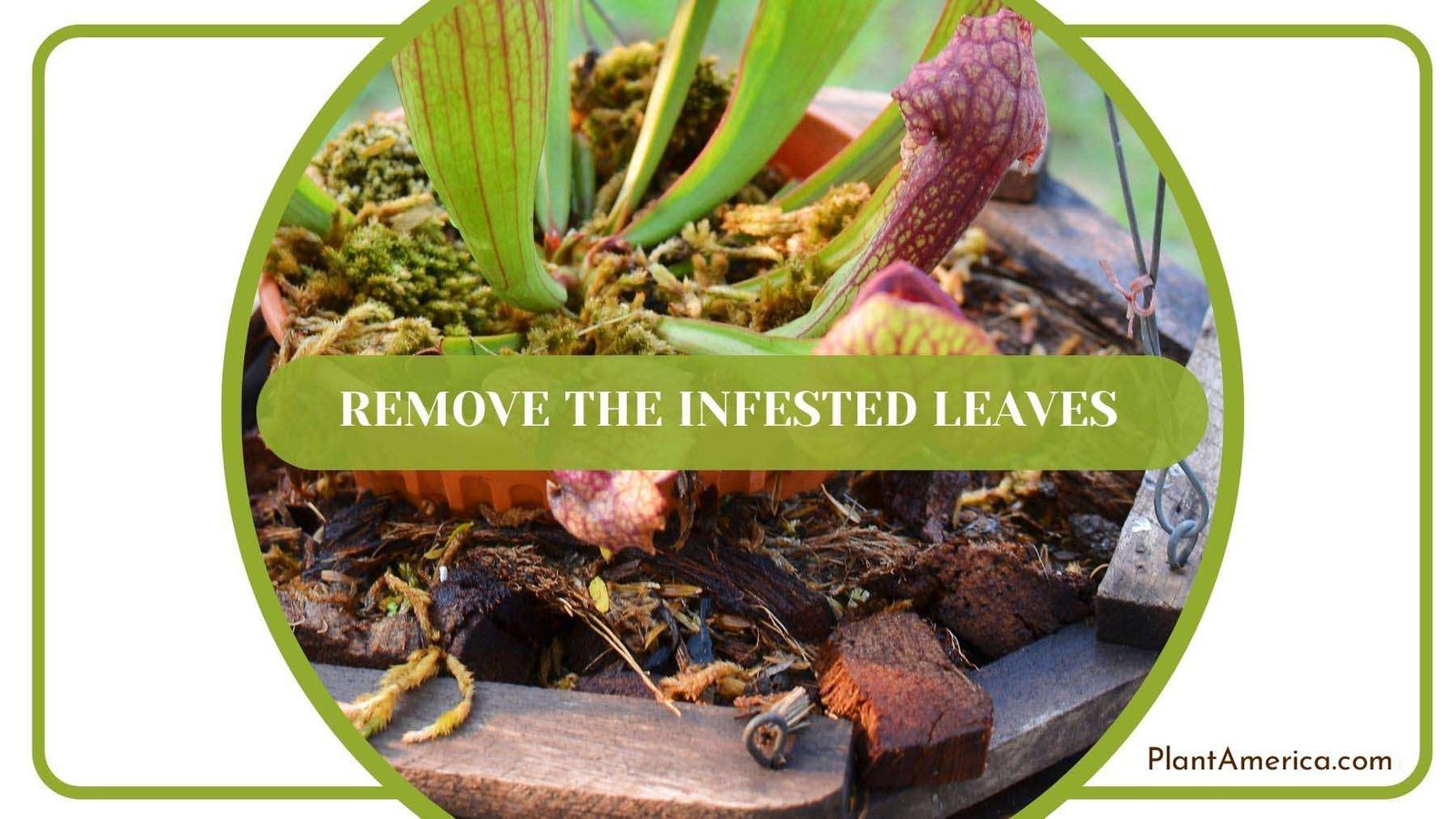
Physically removing and destroying infested leaves is a simple yet powerful method to control mealybugs.
Here’s how you go about it:
- Look for leaves covered in white, cotton-like substances. These are likely to be mealybugs or their eggs.
- Carefully cut off the infected leaves or parts of the plant with a sharp, sterilized tool. Make sure to minimize harm to the healthy parts of the plant.
- Place the removed parts into a bag, seal it, and dispose of it away from other plants to prevent the infestation from spreading.
- Sterilize your pruning tools after each use to avoid transferring mealybugs to other plants.
But the problem is that it might not be feasible for heavily-infested plants with few healthy leaves. Also, these tiny creatures might escape detection if they hide in the sarracenia’s soil or crevices. Therefore, we recommend you do other controlling methods with this one.
– Spray Vinegar Solution
A vinegar solution can be a simple yet effective method to combat mealybugs and carnivorous plants fungus gnats. Here’s how to use this method:
- Mix white vinegar and water. We suggest making a balanced mixture to avoid damaging the plant.
- Spray the solution directly onto the affected parts of the sarracenia, ensuring the bugs are thoroughly soaked. Be cautious not to oversaturate the soil, which might cause root problems.
- If the infestation persists, repeat the process every few days until all signs of mealybugs are gone.
Despite being eco-friendly and cost-effective, spraying a vinegar solution isn’t foolproof. It may not eliminate mealybugs, particularly if the infestation is severe. Additionally, vinegar might harm the plant if applied excessively, so careful application is crucial.
– Try Pesticidal Soap
For more stubborn mealybug infestations, pesticidal soap is a great choice. It’s also a popular way to handle those annoying fungus gnats sarracenia plants. A pesticidal soap works by puncturing the outer skeleton of pests. When it happens, they can’t survive and eventually die.
Here’s how you can apply this method:
- Purchase a ready-made pesticidal soap or make your own by mixing mild dish soap with water. Always test a small amount on your plant before fully applying to avoid plant damage.
- Spray the soap solution generously on the infested plant, ensuring you reach the undersides of the leaves and other hidden areas where mealybugs might hide.
- Avoid applying during the heat of the day to prevent leaf burn. It is better to do it weekly until the mealybugs are entirely eradicated.
– Apply Systemic or Commercial Insecticides
In cases where mealybugs have staged a severe invasion, systemic or commercial insecticides like Bayer advanced rose and flower insecticide can come to the rescue.
Here’s how you can go about using insecticides:
- Opt for a product specifically designed to combat mealybugs. Bayer advanced insecticide is a good option, but always read the product instructions carefully.
- Follow the product’s instructions for dilution and application. Usually, you’ll need to spray the insecticide directly onto the plant early in the morning.
- After application, monitor your sarracenia for any remaining mealybugs. Reapply the insecticide as directed by the product’s instructions until the infestation is under control.
Despite their effectiveness, insecticides have some downsides (if you are not careful). They can potentially harm pollinators in your garden. Therefore, if you are growing plants that require pollination for fruit development, we suggest using any natural method to address mealybugs.
Also, if you use insecticides a lot, the bugs might get used to them, and it’ll be harder to deal with later on.
Moreover, chemical insecticides can also hurt you if you are not careful with their applications. If you inhale the fumes, your lungs can get affected, So always wear a mask, a hat, and goggles when you apply them. Also, it is better not to go near a sprayed area for 24 hours after pesticide application.
– Tidy Up the Garden Daily
Most people don’t like to do daily garden maintenance, but it is super crucial. If you do it, there won’t be any fungus gnats nepenthes, fungus gnat larvae, and mealybugs Venus fly traps left. Keeping the garden tidy makes it unattractive to pests.
Here are the steps to follow:
- Remove dead leaves and flowers: Regularly dispose of dead plant materials, as these can attract pests and provide them with a place to breed.
- Monitor your plants: Check your plants daily for signs of mealybugs or other pests. Detecting these pests early can significantly reduce their infestation.
- Proper watering: Overwatering can lead to increased fungus gnat problems, so be sure to water your plants only as needed. Let the top layer of soil dry out before watering again.
- Clean up water trays: Standing water can also attract pests, so empty and clean plant trays regularly.
Keeping up with regular garden maintenance is just a good idea all around. It helps your garden look nice, and it keeps everything healthy.
Conclusion
To wrap it up, dealing with mealybugs on sarracenia might seem challenging, but it’s doable. Here are the essential steps to keep in mind:
- Monitor your plants regularly to catch any infestation early.
- Don’t hesitate to act, whether through physical removal, application of insecticidal soap, use of traps, or insecticides.
- Regular cleaning keeps the bugs away and removes the places where they might lay eggs.
- Regularly check your plants, reapply treatments as necessary, and adjust your care routine to keep pests at bay.
In a nutshell, if you stick to these simple steps, you can protect your plants’ health and keep those mealybugs under control.