
“Mealybugs on my lily” — the phrase no gardener wants to utter. These unwelcome pests can transform your once-vibrant lilies into wilted, sorrowful sights within an alarmingly short period.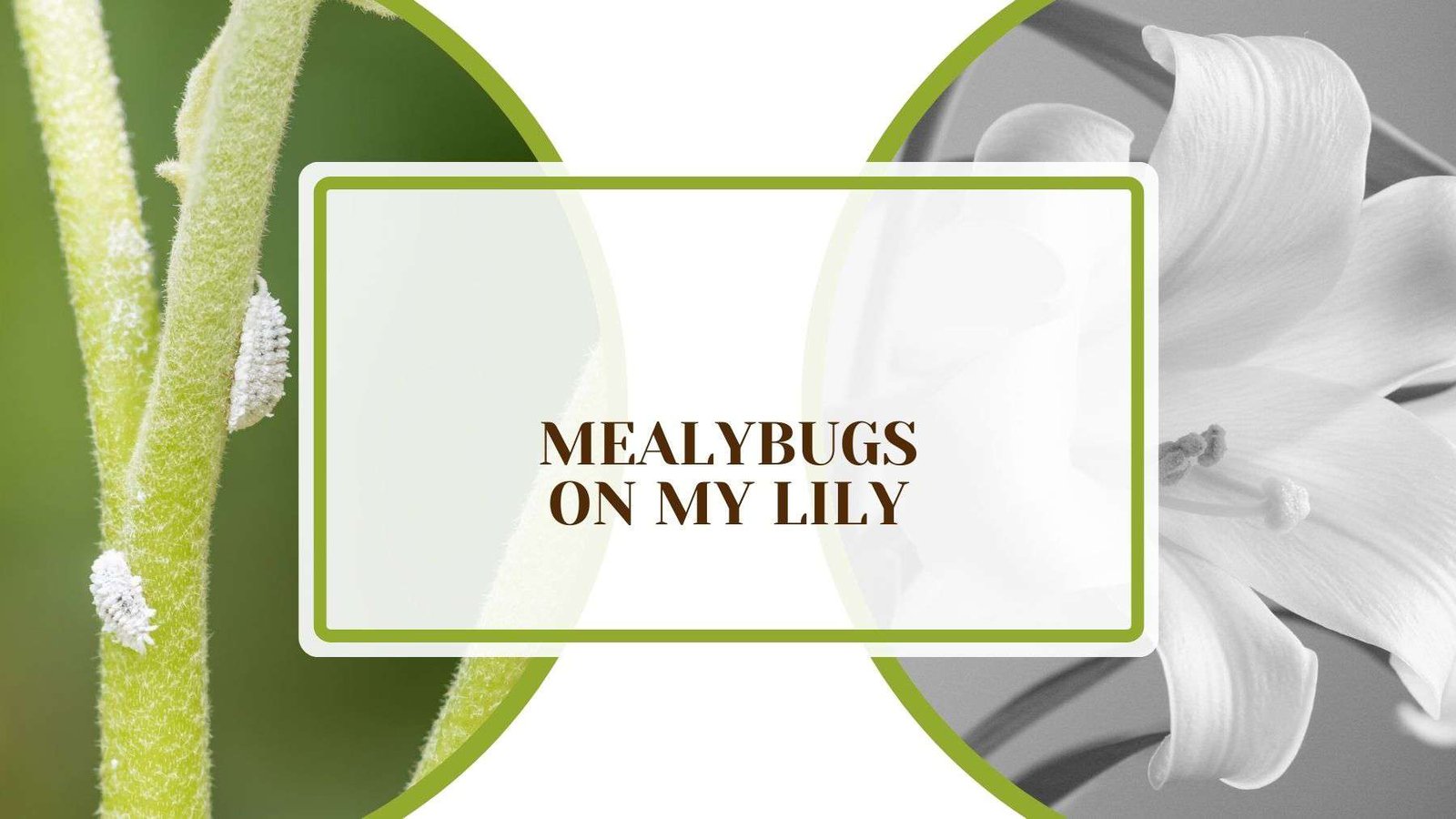
However, these bugs are easy to eliminate, which you will learn here. So keep reading to learn how to easily save your lilies from mealybug attacks!
What Causes Mealybugs on Your Lily?
Mealybugs on your lily are caused by high humidity and the mosaic virus. If you feed nitrogen fertilizers excessively, the lush green leaves of lilies will also tempt the bugs to attack. In some cases, bringing a mealybug-infested plant home can also start an infestation in your garden.
– Specific Weather Conditions That Mealybugs Like
If there’s one thing bugs as mealybugs enjoy, it’s a very damp or humid space. In these damp conditions, mealybugs breed fast, laying eggs that become active, damaging baby bugs.
Similarly, hot temperatures make mealybug eggs hatch quicker and help baby mealybugs multiply. This quick growth can cause many of them to appear rapidly, turning your lilies into a busy city of bugs we don’t want.
So, understanding how weather affects mealybugs is crucial to keep their population in check.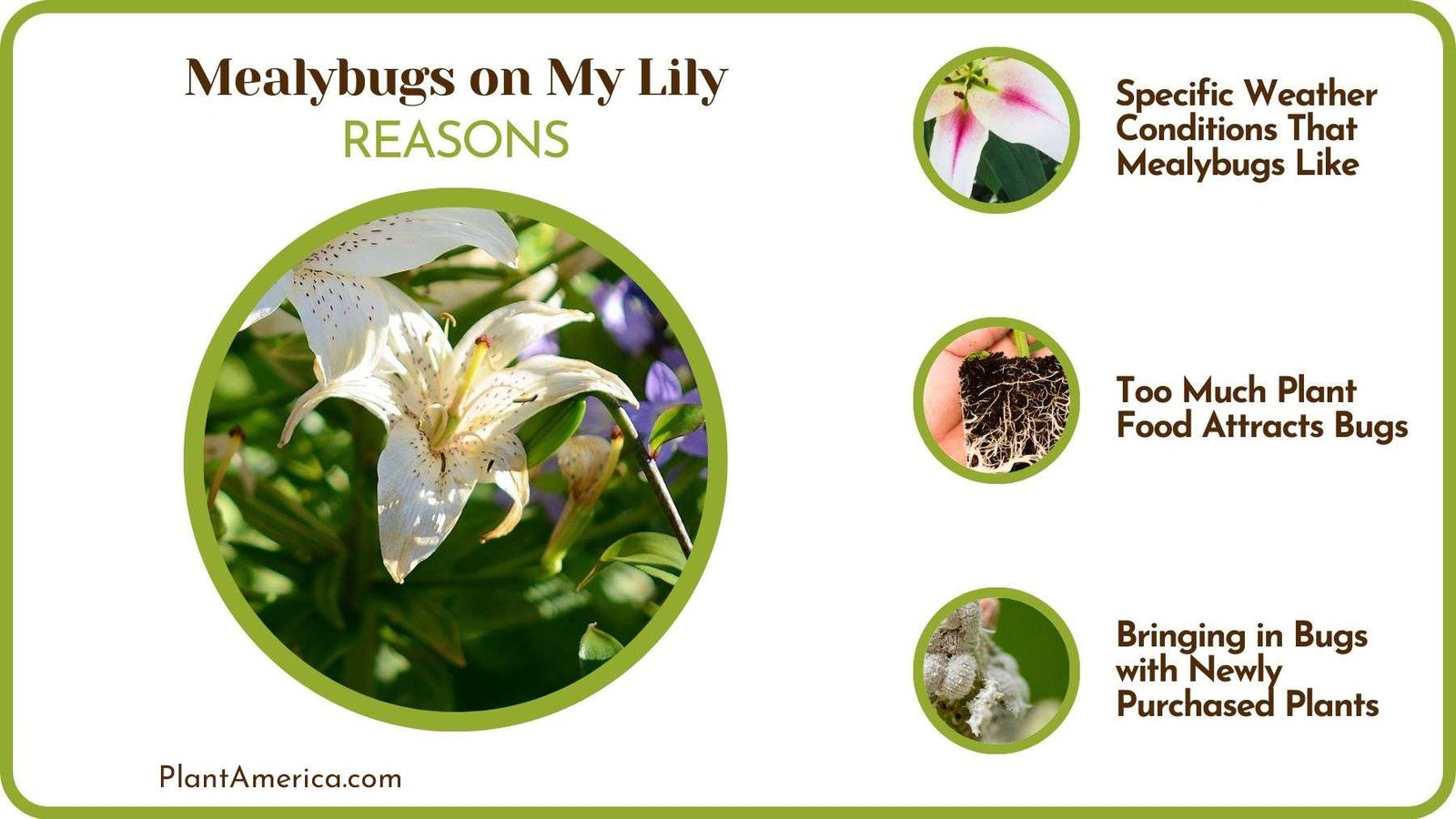
– Too Much Plant Food Attracts Bugs
When we use too much of some types of plant food or fertilizers, especially those rich in nitrogen, we may accidentally invite pests like mealybugs. The reason is that nitrogen makes the plants extra green. Mealybugs like this color, so they come running toward such plants.
– Bringing in Bugs With Newly Purchased Plants
Finally, when we purchase plants, we might accidentally bring mealybugs into our lily plants. If we move lilies to those plants that already have bugs, we are letting bugs infest the lilies.
Furthermore, we can bring mealybugs to our garden using tools and equipment that are not clean.
How To Get Rid of Mealybugs From Lilies?
To get rid of mealybugs from lilies, start with a multi-faceted approach. Start by controlling ant infestations and using home remedies such as an onion and garlic spray. For even more persistent infestations, consider a beneficial insect release or hot pepper spray.
If these methods fail, go for a hydrogen peroxide solution and pyrethrin-based insecticides.
– Ant Control: A Preemptive Strike Against Mealybugs
Ants and mealybugs have a mutually beneficial relationship — ants feed on the honeydew produced by mealybugs, and in return, they protect the mealybugs from predators. Therefore, targeting ants disrupts the safety net of mealybugs, making them more vulnerable.
You can use organic ant baits to control their infestations. Remember, less ant activity means fewer mealybugs and healthier lilies.
– Apply a Hydrogen Peroxide Solution
When you spot lots of mealybugs on plants, then it is better to try something potent. Right now, thousands of gardeners are already using hydrogen peroxide to kill common peace lily insects such as fungus gnats that often plague indoor plants.
Here’s how you can make a hydrogen peroxide solution at home:
- Mix 3 percent hydrogen peroxide and water in 1:1 (equal parts).
- Pour the solution into a spray bottle.
Mist the infested lilies with the solution, ensuring you cover all surfaces, especially the undersides of leaves where mealybugs often hide.
Hydrogen peroxide acts by breaking down into water and oxygen, thereby killing mealybugs and their eggs through oxidation.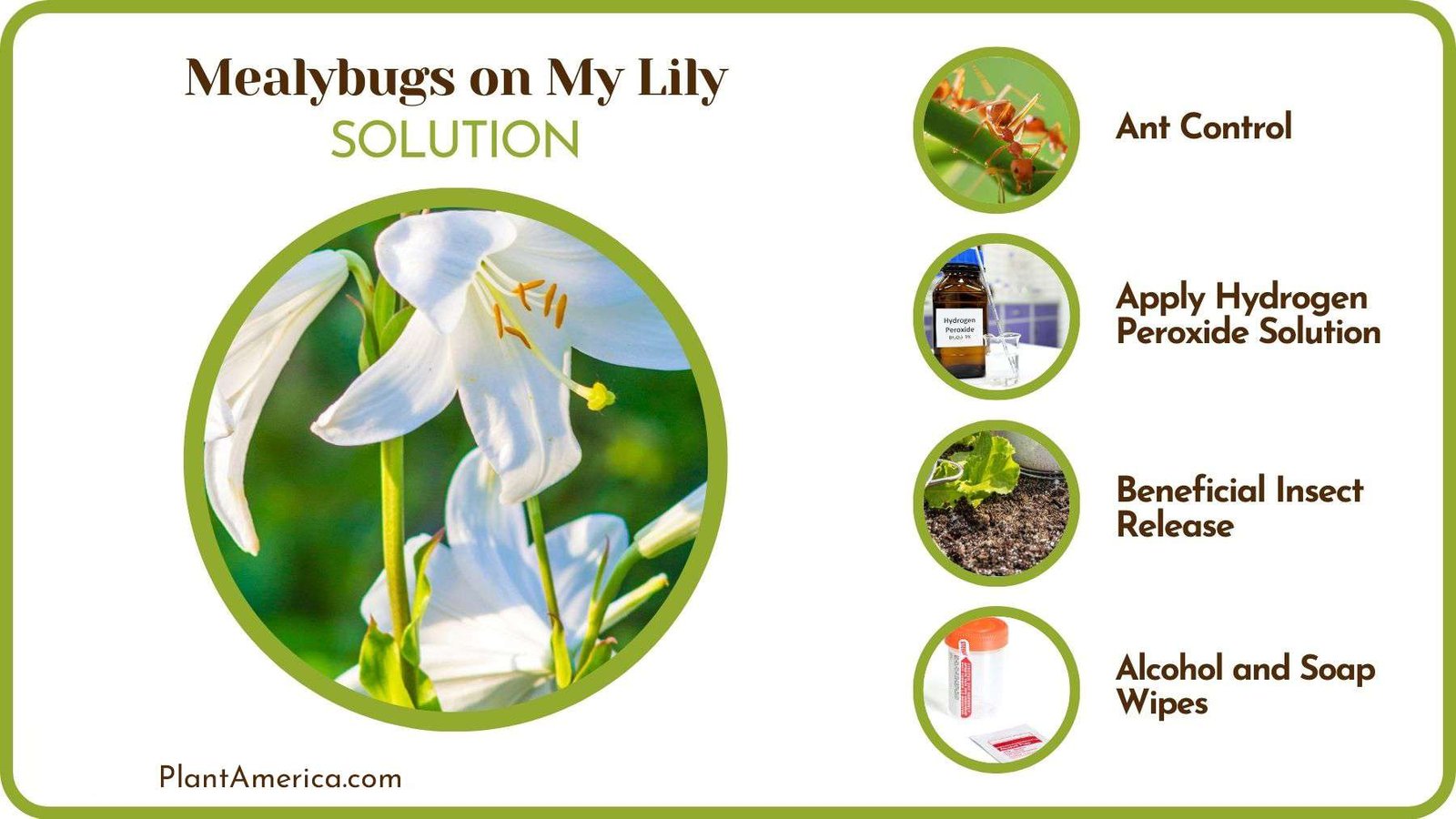
– Beneficial Insect Release: Nature’s Own Pest Control
There’s something nice about letting nature do its thing. When trying to control pests, one of the best and most natural ways is to let helpful insects do their job.
Some insects, like ladybugs, lacewings, and certain kinds of wasps, are natural enemies of mealybugs. These insects eat mealybugs, lowering their numbers without using chemical pesticides. So this method is for you if you’re wondering “how to get rid of peace lily bugs without harsh chemicals.”
But remember that this method takes some time. The helpful insects may take a bit of time to control all the mealybugs.
But there’s another good thing about using helpful insects: they’re always working. Unlike sprays or wipes that you use once and then they’re gone, beneficial insects keep looking for mealybugs to eat as long as they’re in your garden.
– Alcohol and Soap Wipes: The Mealybug Nightmare
Another powerful weapon in your arsenal against mealybugs is alcohol and soap wipes.
Here’s how to do it:
- Mix dish soap with isopropyl alcohol or rubbing alcohol in 1:2 (one part soap, two parts alcohol).
- Add this mixture to a bucket or bottle of water.
- Dip a soft cloth, q-tip, or towel into the mixture and gently wipe the leaves of your lilies, paying attention to the undersides.
The combined action of soap and alcohol effectively removes and kills bugs. Soap disrupts the protective waxy coating of mealybugs, making them vulnerable. Alcohol, on the other hand, dehydrates the pests, effectively killing them.
For heavier infestations, consider an insecticidal soap. The insecticidal soaps are specifically formulated to kill pests, including mealybugs, without causing harm to your plants.
– Try Hot Water Treatment To Prevent Bugs
Sometimes, the most straightforward ways are the best, which is also valid for getting rid of mealybugs. A method that’s becoming more popular these days is treating plants with warm water.
To do this, make a warm water bath, keeping it between 110-120 degrees Fahrenheit (43-49 degrees Celsius). Put the plant with bugs in this water for about 15 minutes. This warm water bath will remove the mealybugs and won’t hurt your plants too much.
But remember that this method is better for tougher plants, and delicate plants may not like it. It’s a good idea to try it on a small part of the plant first or only use it if nothing else works. After the treatment, let your plant cool down and dry off in a cool, airy spot.
– Cold Treatment Is Effective As Well
Like hot temperatures can kill mealybugs, chilly temperatures can also prevent mealybugs from infesting. To do this, fill a spray bottle with cold water and give the plants with bugs a good spray.
The water spray will knock the mealybugs off, and the cold temperature can kill or slow down these bugs. However, this might not work so well for larger bug infestations and might need to be used with other ways to get rid of the bugs.
It’s crucial to remember to let your plants dry out well after this. The extra water needs to be removed properly to stop root rot, a problem that often happens in plants that get too much water.
– Onion and Garlic Spray: Kitchen’s Plant Care Remedy
One of the effective organic remedies to ward off mealybugs is to utilize the natural insect-repelling properties of onion and garlic. This potent spray indeed works against mealybugs, but you can also use it against a broad spectrum of other peace lily pests and diseases.
Here’s how to make it at home:
- Blend a whole onion and two garlic cloves with a bit of water.
- Strain the liquid and dilute it with enough water to make the smell strong but not overpowering.
- Spray your lilies, paying particular attention to the underside of leaves and stem joints where mealybugs love to hide.
The pungent smell of garlic and onion is a deterrent for many pests (like bugs and spider mites), effectively reducing their population. However, since this solution might have a strong odor, it’s best suited for outdoor plants or well-ventilated indoor areas.
– Essential Oil for Stubborn Infestations
Essential or horticultural oils are another natural remedy that has proven effective in controlling plant pests like mealybugs and spider mites. Oils like neem, rosemary, and eucalyptus possess pest-repelling properties and can kill pests on contact.
However, using essential oils requires careful handling as they can harm plants if undiluted.
Here’s a safe way to use essential oils against pests:
- Mix 8-15 drops of essential oil (exact quantity is mentioned on the bottle) with a quart of water and a spoonful of soap. The soap helps the oil mix with the water and stick to the plant’s surface.
- Shake/stir the mixture well.
- Spray this solution on your lilies (especially those parts where you see mealybugs).
Neem seed oil is the first choice of seasoned gardeners. The popular ones that you can get from any gardening store are Bonide neem oil concentrate, Southern ag triple action neem oil, Harris neem oil, 100% cold pressed and unrefined for plant spray, Natria 706250a neem oil spray, and Dyna-gro pure neem oil.
– Beneficial Fungi Works Too
If you’ve ever noticed tiny bugs in peace lily soil, don’t panic. Instead, start preparation of beneficial fungi treatment.
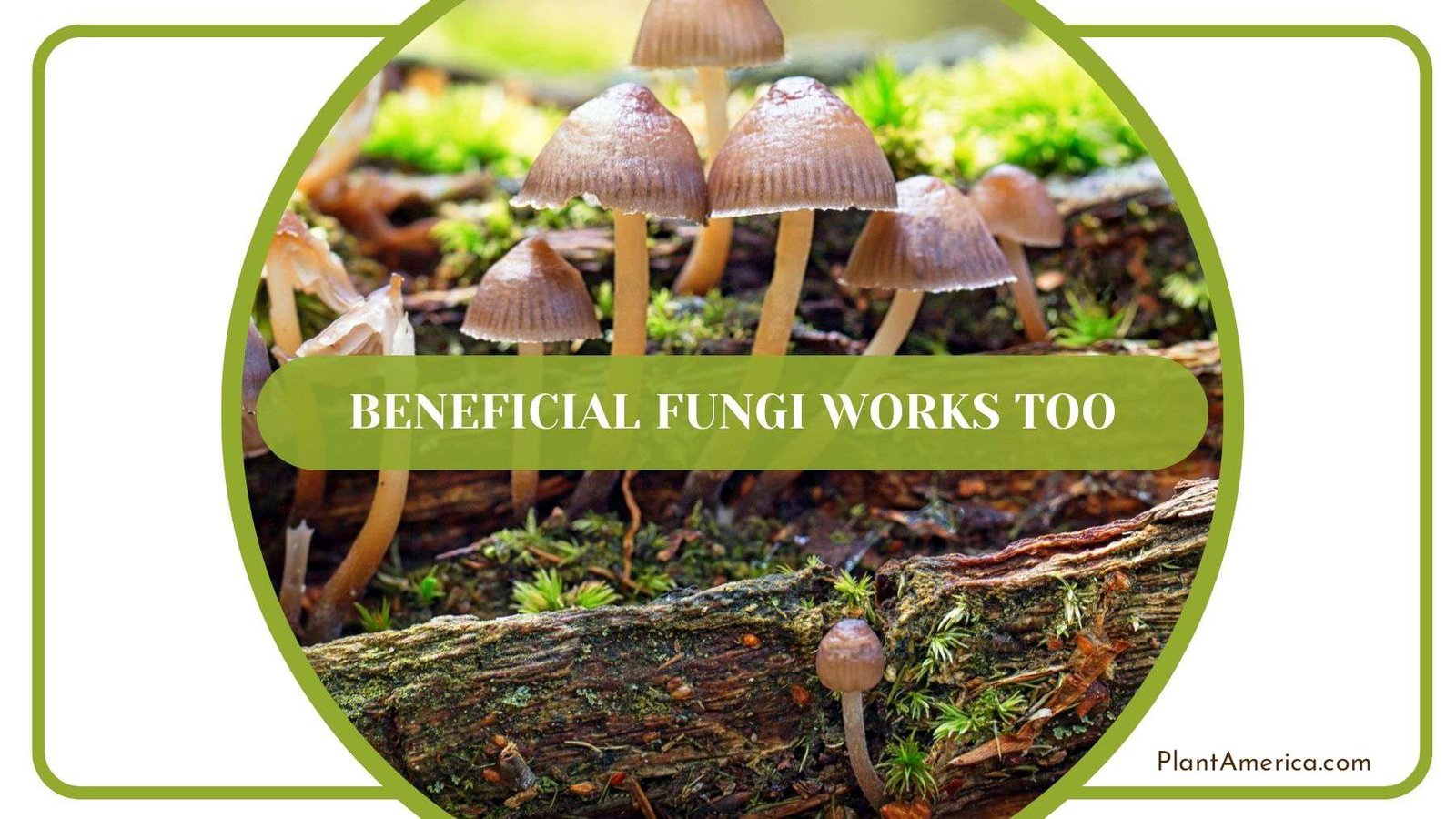 Beneficial fungi are microorganisms that can parasitize or otherwise disrupt the life cycle of insects like mealybugs. These fungi are often found naturally in soil, but you can also purchase them for pest control.
Two famous, beneficial fungi are:
- Beauveria bassiana: A well-known insect-pathogenic fungus that can infect mealybugs.
- Metarhizium anisopliae: Another fungus known for parasitizing various insects, including mealybugs.
After getting beneficial fungi, you can apply them in two ways:
- Soil Drenching: Mixing the fungal spores with water and applying them to the potting soil where mealybugs are present.
- Foliar Spraying: Spraying a liquid suspension of the fungal spores directly onto infested plants’ soil, leaves, and stems.
– Use Hot Pepper Spray (But Cautiously)
Did you know that the same hot peppers that add spice to your food can also help in your fight against scale insects on peace lily and mealybug infestations? Hot pepper spray is a natural insecticide that can be made easily at home to effectively deter pests.
To make a hot pepper spray:
- Blend two hot peppers with a clove of garlic and a cup of water.
- Strain the mixture, add it to a quart of water, and your hot pepper spray is ready.
- After this, mist it on your plants and monitor its effects.
– Go for Pyrethrin-Based Mealybug Sprays/Insecticides
Pyrethrin is a bug-killing chemical from the pyrethrum plant., which works by messing with the bugs’ nerves. But, because these are chemical sprays, they should only be used as a last option. It’s essential to use them carefully by following the instructions on the bottle so you don’t hurt good bugs or damage your peace lily plants.
If you use a spray with pyrethrin, remember to wear protective clothing and ensure the area is well-ventilated when you apply it. Also, keeping children and pets away from the area until the spray is dry is a good idea.
Remember — every method has its use, from helpful fungi to spicy pepper spray or even stronger chemical treatments. The key is to change your approach based on how many bugs there are and always think about the health and happiness of your lilies first.
With the proper knowledge and tools, you’ll be ready to keep your peace lilies healthy and bug-free.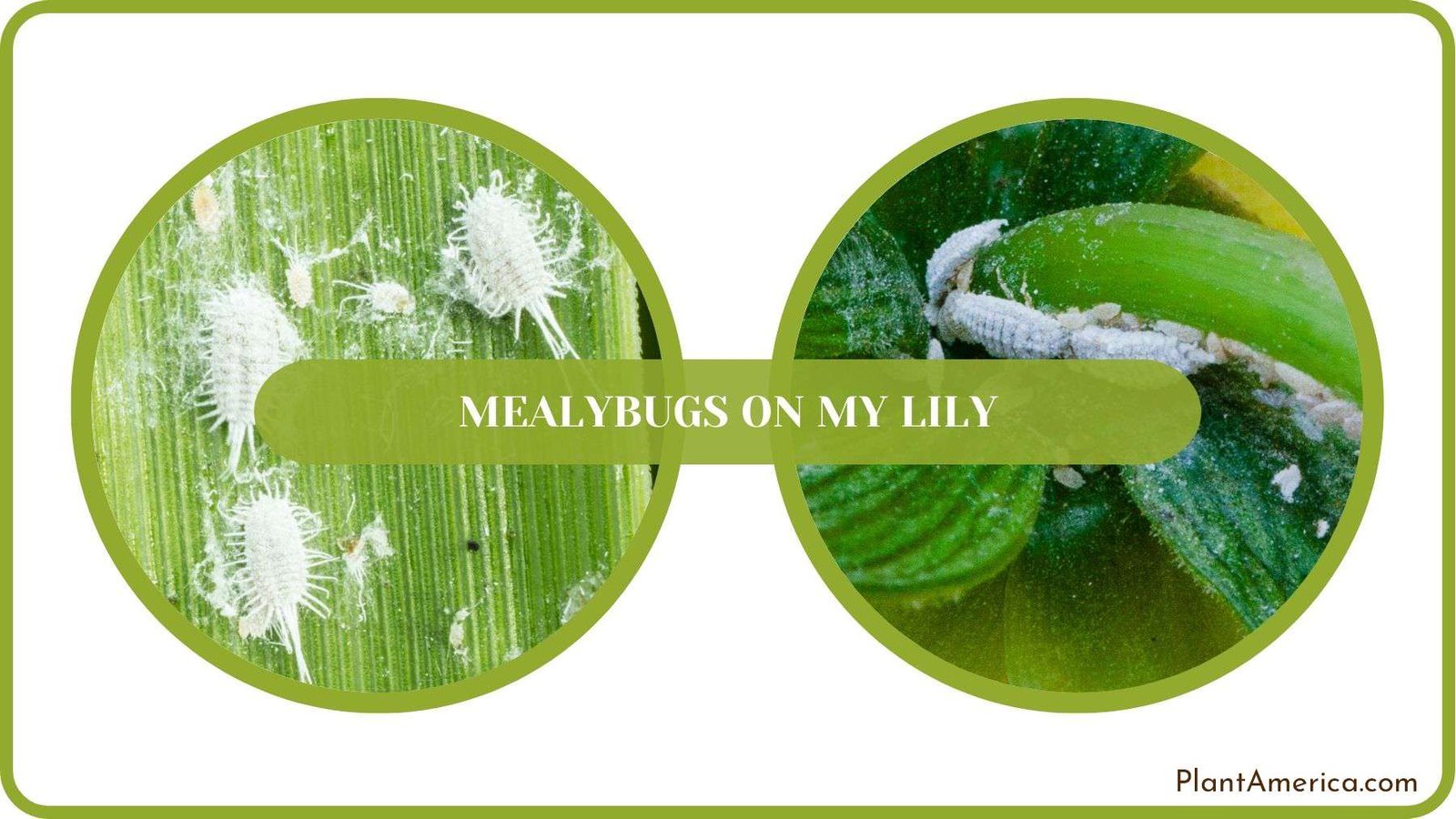
Conclusion
Mealybugs can wreak havoc on your beautiful peace lilies if left unchecked. We recommend many treatments in this blog to keep your peace lilies healthy:
- Maintain vigilance and regularly inspect your lilies for signs of mealybugs or other pests.
- When possible, utilize natural remedies like hot water or cold treatments, onion and garlic sprays, essential oils, hot pepper spray, and beneficial fungi.
- You should also take proactive measures like introducing beneficial insects and applying pest-repellent sprays.
- Consider stronger treatment options like pyrethrin-based insecticides if faced with severe infestations, using them carefully and responsibly.
That’s all. So, stop everything and stick to these points to make your garden free of mealybugs.