
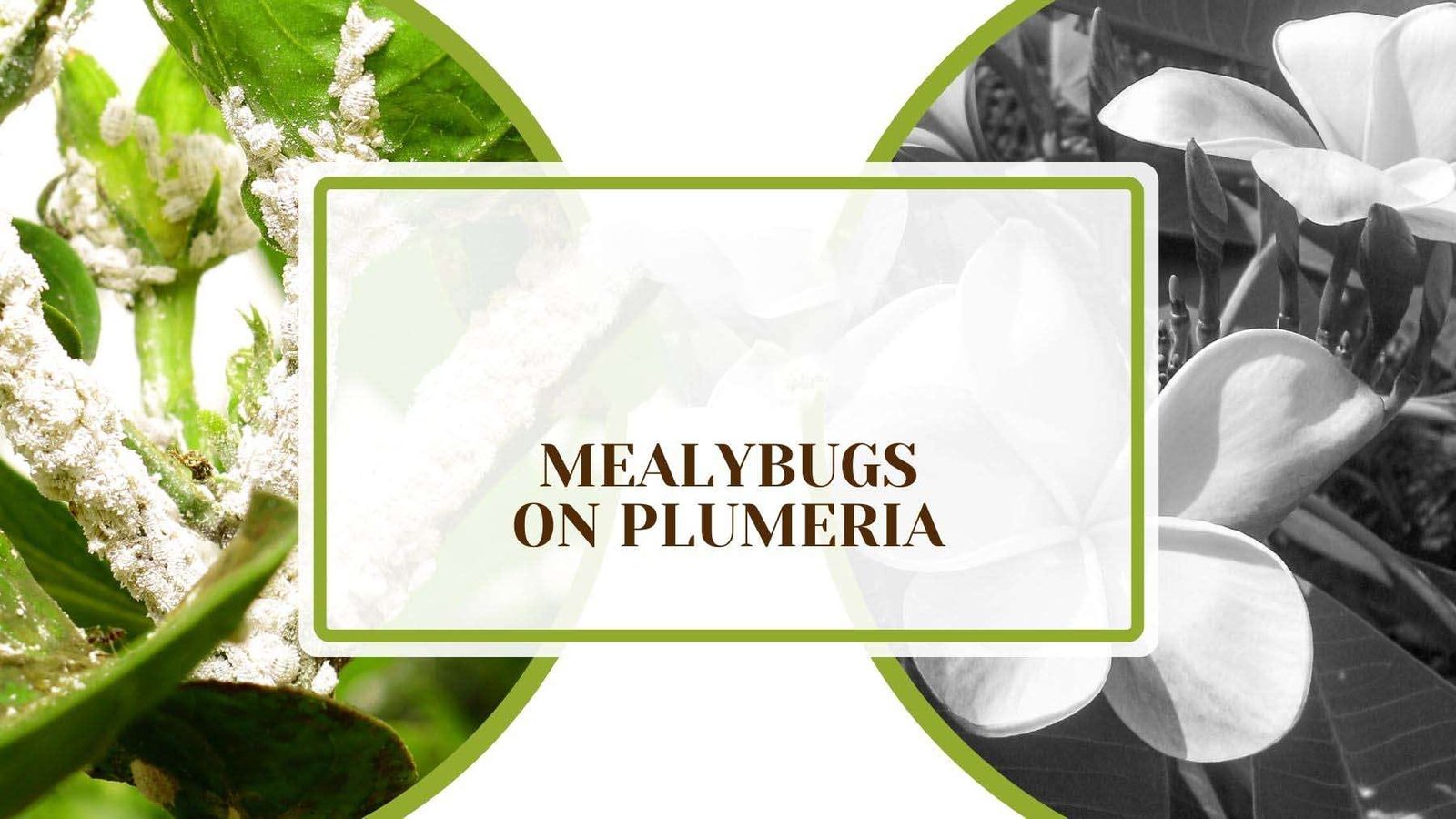
Mealybugs on plumeria is a topic that gardeners dread but often grapple with. These pests kill a once-flourishing plumeria plant of the Apocynaceae family. But the good news is there are ways to fight back and save your plumeria plant.
Let’s discuss how to protect your plumeria from these pesky bugs and keep it blooming beautifully in your garden!
What Causes Mealybugs on Plumeria?
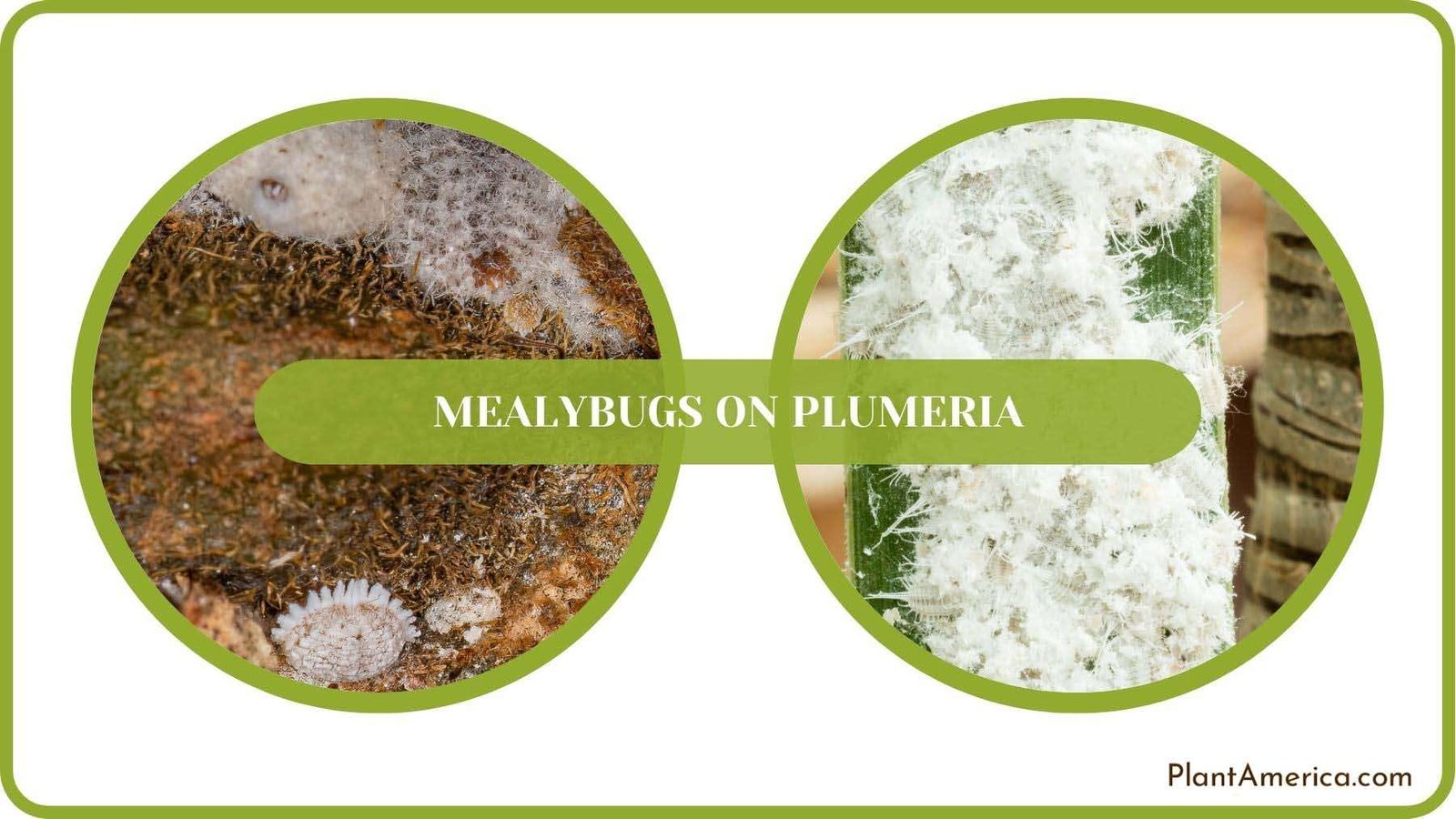
Mealybugs on plumeria are caused by overwatering or high humidity conditions. These pests can sneak into your garden through new plants and tools you bring in. They can even hitch a ride with the wind or birds. Mealybugs are primarily attracted to the sap of the plant.
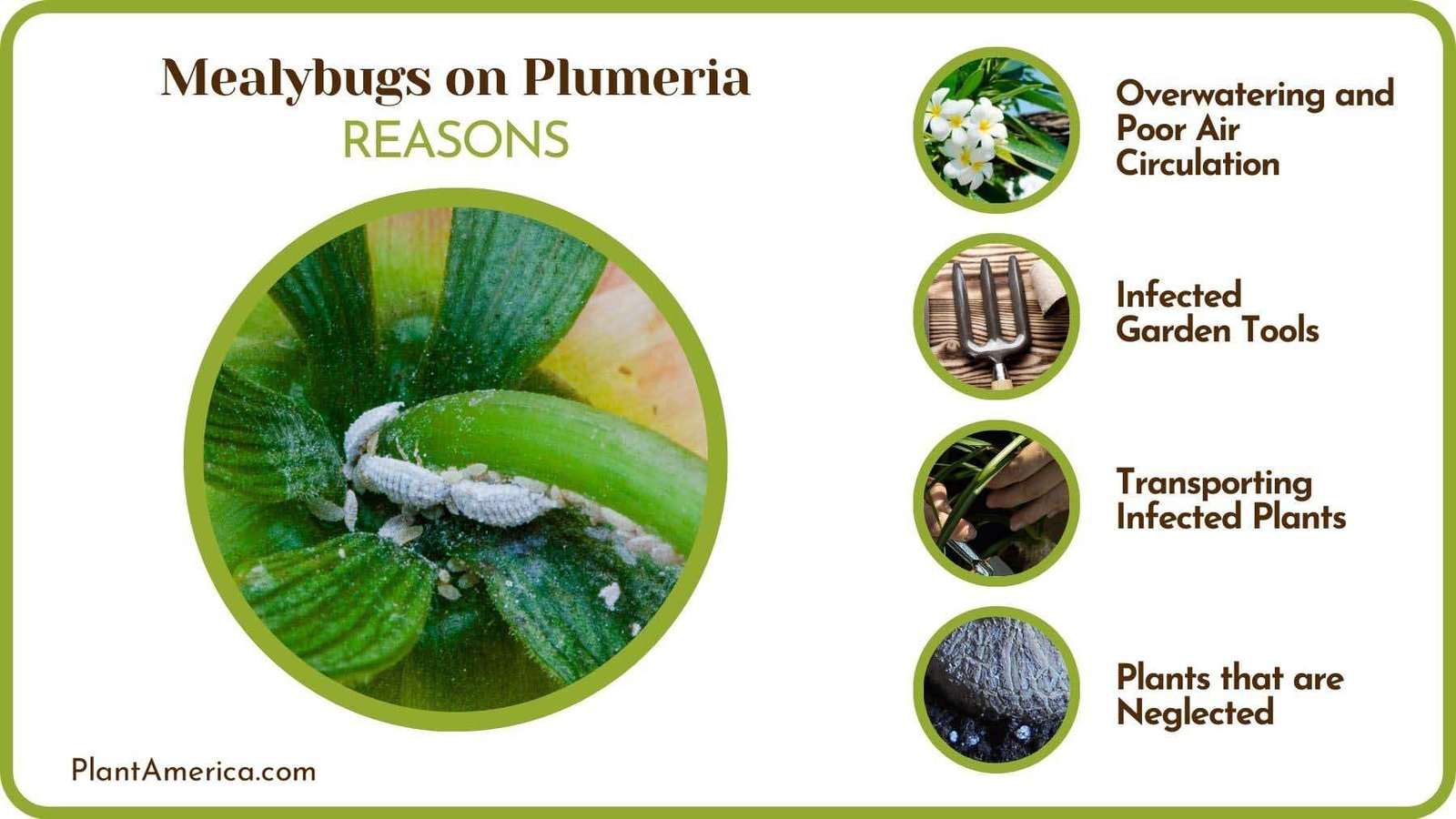
– Overwatering and Poor Air Circulation
Plumerias need well-drained soil and plenty of air circulation around them. Overwatering your plumeria or planting it too close to other plants can lead to moisture buildup, which attracts mealybugs. It’s this damp, stagnant environment that these pests love.
Also, mealybugs feel right at home in warm places, and since plumeria loves tropical environments, it’s like a magnet for them.
– Infected Garden Tools
One often overlooked cause of mealybug infestations is the use of infected garden tools. If you’ve used a pruning shear on an infected plant and then used the same tool on your plumeria, you might invite these pests. It’s like an all-access pass for the bugs to your plant.
– Transporting Infected Plants
When you bring new plants to your garden, you are all excited, but if you don’t check them thoroughly (look for white stuff on plumeria), you can bring pests with them like aphids. Infected plants can quickly introduce mealybugs to your garden. Before purchasing any new plant, you should first check for any sign of mealybugs infestation.
– Plants that are Neglected
A plant not correctly cared for is a welcome sight for pests. Mealybugs, in particular, are attracted to stressed plants due to neglect, like under or over-fertilization and inadequate sunlight.
It’s in these neglected plants that they can breed freely and then eventually make their way to healthier plants like your plumeria. Fortunately, protecting your plants from these white bugs is easy.
How To Get Rid of Mealybugs From Plumeria Plants?
To get rid of mealybugs from plumeria plants, start by removing heavily infected leaves and treating the plant with rubbing alcohol. Cleaning the plant with a water hose can also help dislodge and remove mealybugs from the plant’s surface. Treatments like neem seed oil and insecticidal soap are also effective.
– Carefully Remove Badly Infected Leaves Into Trash Bags
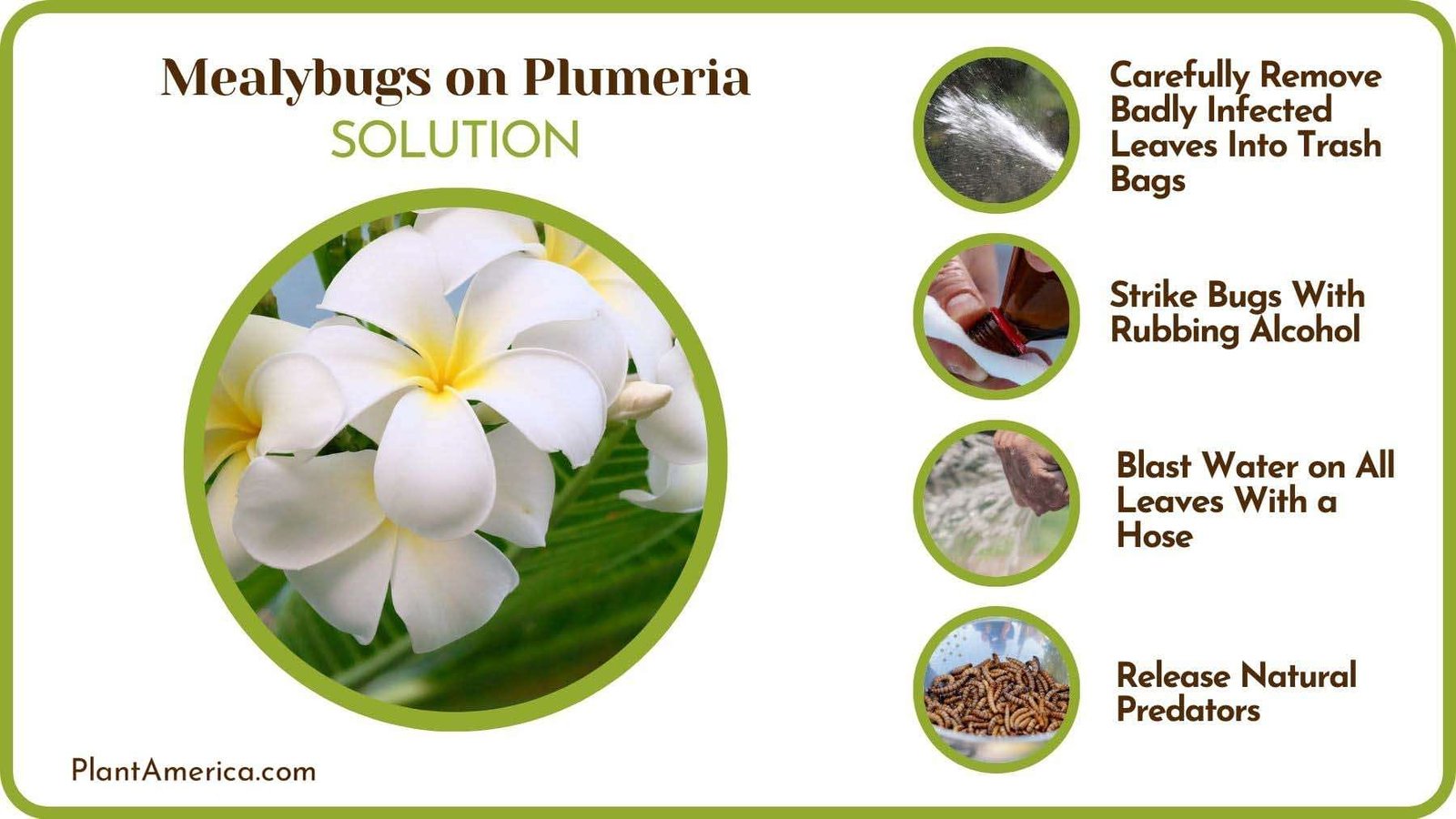
The first step to reclaiming your plant from these pests is carefully removing these infested leaves. Put on gardening gloves and get a good hold of the infected leaf. Ensure not to shake it, as this might cause the bugs to fall off and spread to other parts of the plant or garden.
With a firm grip, gently detach the leaf from the plant. Immediately place it into a trash bag, sealing it securely to avoid any escapees. Once you’ve removed all the visible signs of infestation, double-bag the trash bag to ensure none of these little invaders manage to break free. Dispose of it promptly, preferably away from your garden area.
– Strike Bugs With Rubbing Alcohol
If you see mealybugs wandering in your garden, you have to take strict measures. Once the badly infected leaves have been disposed of, it’s time to move on to the survivors. This is where rubbing alcohol comes into play.
Alcohol dissolves the mealybug’s protective wax coating and dehydrates them. This can cause their death. You’ll need some rubbing alcohol and a spray bottle to do this method. Regularly spraying the affected plants with rubbing alcohol can help control mealybug populations and protect your garden.
First, fill a spray bottle with 70 percent rubbing alcohol. You can dilute higher percentages with water if you don’t have a 70 percent solution. For instance, if you have 99 percent rubbing alcohol, you can mix it with equal amounts of water to get roughly a 50 percent solution, which should still be effective.
Spray the alcohol solution directly onto the mealybugs. Spray underneath every leaf and around the stem, where mealybugs love to hide. Be thorough and careful not to overspray, as too much alcohol can harm the plant.
Keep a close eye on the plant after the alcohol treatment. If you notice more mealybugs after a few days, repeat the process. It might take a few rounds, but with persistence, your plumeria will eventually be mealybug-free.
– Blast Water on All Leaves With a Hose
Once you’ve removed the badly infected plumeria leaves and tackled the remaining bugs with alcohol, it’s time for the next step. We’re going to clean the entire plant with a water hose. It removes any surviving mealybugs and their eggs.
Also, it cleans off the honeydew left behind by the bugs, preventing a potential sooty mold infection. Mold isn’t directly harmful to plants but blocks sunlight, impairing photosynthesis.
To blast the leaves clean:
- Gently spray water over the entire plant.
- Focus on the underside of the leaves and the stem, where bugs tend to hide.
- Ensure you spray with enough force to dislodge any remaining bugs, but be careful not to damage the plant.
Furthermore, this method can help answer “how to get rid of spider mites on Plumeria rubra.” Spider mites, like mealybugs, also dislike being disturbed and are dislodged easily by a steady stream of water.
– Release Natural Predators
While we often view insects as enemies of our plants, not all are harmful. Many natural predators can help in our fight against mealybugs. Ladybugs are one of the most beneficial ones to save your plumeria. A single ladybug can kill hundreds of mealybugs and their eggs during its lifetime.
Another beneficial insect for killing pests is lacewings. Both ladybugs and lacewings can be attracted to your garden with the right plants or can be bought from gardening supply stores.
Parasitic wasps, especially the species Leptomastix dactylopii, are also known to be effective against mealybugs. These wasps lay their eggs inside the bugs, and the hatched larvae feed from the inside.
While these beneficial insects can effectively control mealybug populations, they work best as part of a larger integrated pest management strategy. This strategy includes regular plant inspection, proper plant care, and timely intervention when infestations occur.
– Apply Horticultural Oil: An Eco-Friendly Approach
If you’re wondering how to get rid of bugs on plumeria without hurting the environment, look no further than neem oil. It operates by interfering with nutrition and reproduction, lowering their numbers gradually. Plus, it is safe for your plumeria and does not harm beneficial insects.
To use neem seed oil against mealybugs:
- Mix two tablespoons of the oil with 1 gallon of water.
- Add 2-4 drops of mild liquid soap to help the mixture stick to the plant.
- Apply the mixture to your plumeria, covering all parts, mainly the underside of the new and old leaves.
If you notice more mealybugs after a few days, repeat the process. Remember that neem seed oil works slowly, but its effects are long-lasting.
– Insect Killing Soap Works Too
Insecticidal soaps are made of long-chain fatty acids that dissolve the outer layer of pests, causing them to dehydrate and die. That’s why they are the first choice of many gardeners when they face the mealybug problem.

Now, let’s address another pest that might be bothering your plumeria – thrips. If you notice tiny black bugs on plumeria, you might be dealing with a thrips infestation. They cause damage to plumerias as they can spread viruses. Insecticidal soap is here to help!
Follow the printed recommendations and precautions to use insecticidal soap against thrips on plumeria. Typically, you would mix the soap with water and spray it onto your plant, covering all surfaces.
Repeat the application as necessary until you no longer see thrips. Remember, the soap only works when it’s in direct contact with the pests, so spray thoroughly.
– Try Insecticides For Pest Control – Suitable For Severe Infestations
If you still see dozens of mealybugs on each plumeria after doing natural treatments, then we suggest using chemical pesticides. Use the ones that are manufactured specifically for mealybugs, as they are most effective. However, chemical treatments can work on other insects too.
Sometimes, despite your best efforts, stubborn pests like scale might cling to your beloved plumeria. Scale insects are tiny, sap-sucking pests that attach themselves to the leaves and stem of your plant. They often go unnoticed until the plant starts showing signs of distress.
So, if you notice the scale of plumeria, it might be time to bring in the big guns – commercial insecticides.
But avoid overusing insecticides as they can harm helpful insects and upset the natural balance in your garden’s ecosystem.
Also, before using an insecticide:
- Read the product label carefully.
- Make sure it’s safe for use on plumeria and effective against scale.
Follow the application instructions precisely, and avoid overuse, which can lead to insecticide resistance among pests.
– Move Plants Into a More Open and Sunny Area
Consider the plant’s location if you struggle with recurring plumeria pests and diseases. A Plumeria grows best in open, sunny areas with well-draining soil. If your plumeria is in a shaded or crowded spot, it might be more susceptible to pests and diseases.
Always place your plumeria in a sunny spot to encourage its growth. It also helps keep the plant dry, reducing the risk of fungal diseases like plumeria rust (where you will notice foliage turning yellow).
So, if your plumeria is underperforming or constantly battling pests, consider moving it to a sunnier, more open spot.
However, make sure to do this carefully. Plumeria roots are delicate and can be easily damaged. Prepare the new location first, ensuring it has well-draining soil and plenty of sunlight. Then, gently dig up the plant, preserving as much of the root system as possible.
Regardless of where your plumeria is located, proper plumeria care is critical. You should regularly water your plumeria and make sure to control pest infestation to keep your plant healthy.
Conclusion
To sum up, the thought of mealybugs on plumeria plants is frustrating, but with the right strategy, it can be avoided. Here are the key steps you can take to ensure your plants stay healthy and beautiful:
- Remove badly infected leaves and treat the plant with rubbing alcohol to kill mealybugs.
- You can also thoroughly clean the plant with a water hose to remove lingering pests.
- Attract natural beneficial predators like ladybugs and lacewings to your garden to control the pest population.
- Use neem seed oil and insecticidal soap as eco-friendly treatments for pests.
- In case of stubborn infestations, consider using insecticides, but only as a last resort.
If you consistently follow the steps mentioned above and take proper care, you can prevent pests on your plumeria. Happy gardening!