
Mealybugs on crotons of the Euphorbiaceae family are quite the annoying sight, but you needn’t worry as long as you’ve got this guide with you.
Today, we learn the various causes for the existence of these Croton plant bugs, and how to get rid of them and even keep them from coming back! Read more to learn effective steps and prevention methods regarding these elusive pests. Mealybugs can attack Mammy Crotons, Banana Crotons, Gold Dust Crotons, and many other Croton varieties.
Why Are There Mealybugs on Your Crotons?
Mealybugs are on your crotons due to the plant structure and foliage, its sap and nutrient-rich leaves, welcoming environment, lack of natural predators, weakened plant state, and spread from infested plants. All of these are a welcoming environment for mealybugs.
– Plant Structure and Foliage
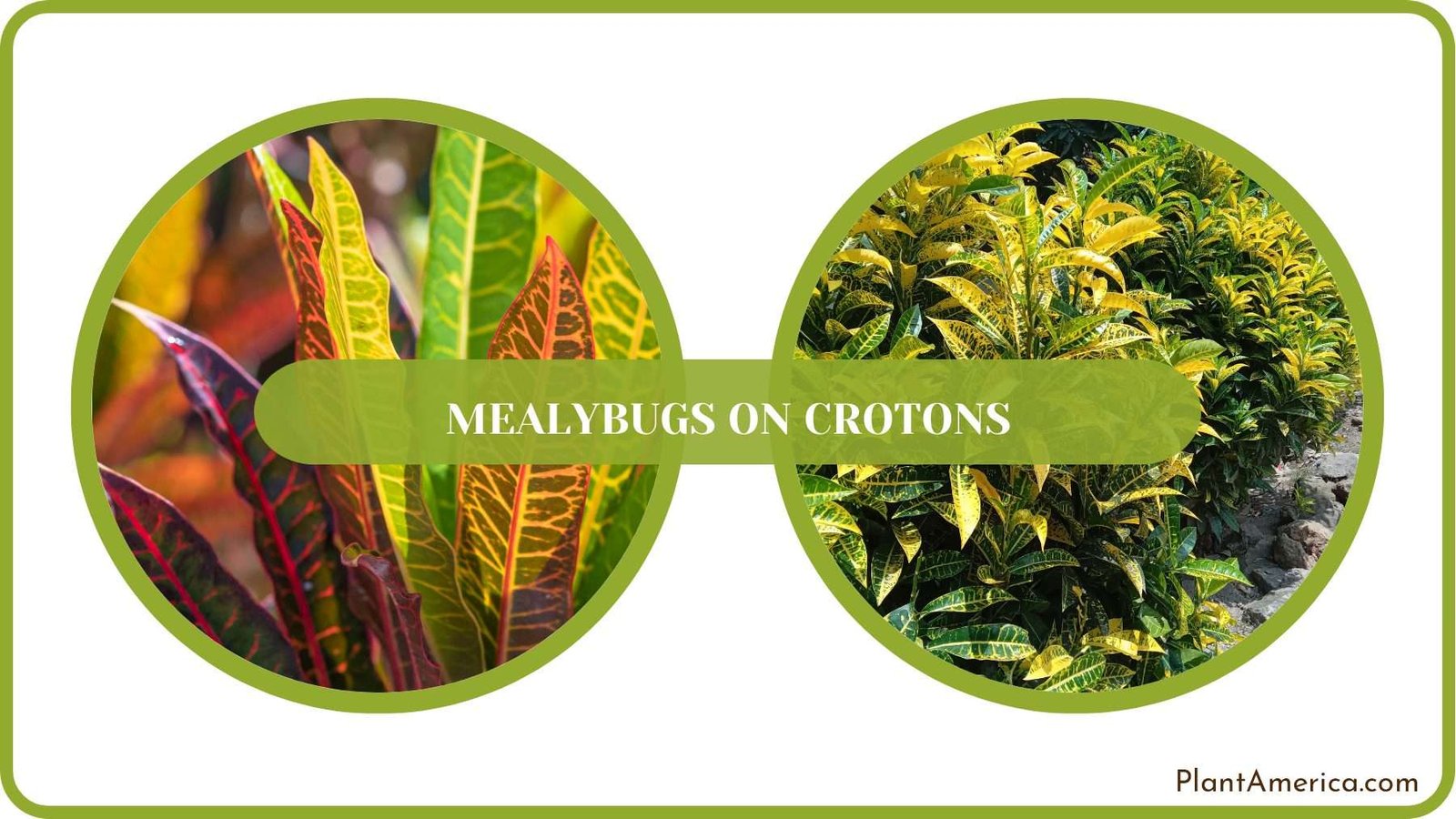
Crotons have dense and colorful foliage with various textures and crevices, providing ideal hiding spots for mealybugs. However, this lushness can inadvertently create a comfortable haven for mealybugs. The intricate structure of their leaves, characterized by deep clefts and diverse shapes, offers perfect hiding nooks for these pests.
This situation is further compounded by their densely packed growth habit, which provides a sheltered environment conducive for mealybugs to take residence. The combination of their intricate foliage and compact growth furnishes mealybugs with ample protection against external elements.
– Sap and Nutrient-Rich Leaves
Mealybugs feed on plant sap, which is abundant in Crotons due to their lush foliage. These small insects feed on the sap found in Croton leaves, allowing them to thrive and reproduce rapidly. The sap, packed with nutrients, not only serves as sustenance for the mealybugs but also fuels their swift multiplication process. As these bugs draw sap from the plant, they weaken the overall health of the Croton. This results in yellowing, distortion, and eventual dropping of the leaves. This feeding habit, combined with their quick reproduction, can result in substantial infestations that greatly affect the plant’s look and overall health.
– Warm and Humid Environment
Mealybugs thrive in warm and humid conditions, which are often found in the natural habitat of Crotons. These pests thrive in locations where temperatures are relatively high and humidity levels are elevated, conditions that encourage their reproduction and overall proliferation, which might lead to Croton diseases. This preference for warmth and humidity aligns with the tropical or subtropical climates where Crotons naturally flourish. This inclination doesn’t solely confine mealybugs to outdoor habitats, as indoor settings maintained at warm temperatures and increased humidity, such as indoor gardens or greenhouses, can also provide an ideal breeding ground for these pests.
– Lack of Natural Predators
If the natural predators of mealybugs, such as ladybugs, lacewings, or parasitic wasps, are absent in the vicinity of Crotons, the mealybug population can grow unchecked. These predators play a vital role in regulating mealybug populations, which are notorious for their capacity to infest plants.
Without these predators to curtail their numbers, mealybugs can proliferate unrestrained, resulting in widespread infestations that compromise the health and vitality of Crotons. These predators typically feed on mealybugs, helping to maintain a delicate equilibrium within the ecosystem.
– Plant Stress and Weakened Defenses
Crotons can become stressed due to factors like improper watering, poor soil conditions, or inadequate sunlight. When plants are stressed, their natural defense mechanisms may become compromised. In the case of Crotons, stress weakens their ability to ward off pests effectively. Mealybugs, as opportunistic sap-sucking insects, are more likely to target and infest plants that are under stress. These pests exploit the weakened state of the plant, attaching themselves to the croton’s leaves, stems, and other parts, and feeding on its sap.
– Propagation and Transportation
Mealybugs can be inadvertently introduced to Crotons through various means. These pests can enter the environment through the introduction of infested plants, whether purchased or obtained from other sources.
Plus, contaminated gardening tools or equipment can carry mealybugs from one area to another, facilitating their spread. Once introduced, mealybugs can rapidly infest nearby plants, causing damage if left unchecked.
How To Control Mealybugs Found on Crotons?
To control mealybugs on crotons, isolate new plants, prune affected parts, remove pests manually, or apply insecticidal, neem, or horticultural sprays. Using these methods in conjunction with each other is a great start in preventing mealybugs and stopping them from taking over your garden..
Let’s go over each option quickly so you can decide which plant care is best for you.
– Isolation
Isolating infested Crotons is a fundamental step in managing mealybug infestations. Mealybugs have a knack for quickly spreading to nearby plants, exacerbating the problem. To tackle this problem, carefully relocate the infested Croton plant to a spot isolated from the healthy ones.
This might mean placing it in a different room, an outdoor area, or any defined space that keeps a distinct boundary between the infested and unaffected plants. This division acts as a barrier, stopping mealybugs from migrating to other plants and restricting their chances of forming new colonies.
Regularly keeping an eye on both the separated plant and its environment is essential. This watchfulness enables you to quickly spot any fresh infestations and halt their spread.
– Pruning
Pruning involves selectively cutting and removing specific parts of a plant to enhance its health and appearance. When faced with mealybug issues in your Crotons, pruning becomes a valuable technique.
To begin, closely examine your plant for heavily infested areas by focusing on the undersides of leaves, leaf axils, and stems. For this task, utilize clean and sharp pruning shears. Carefully remove these affected parts, ensuring they are kept separate from other plants to prevent mealybug spread.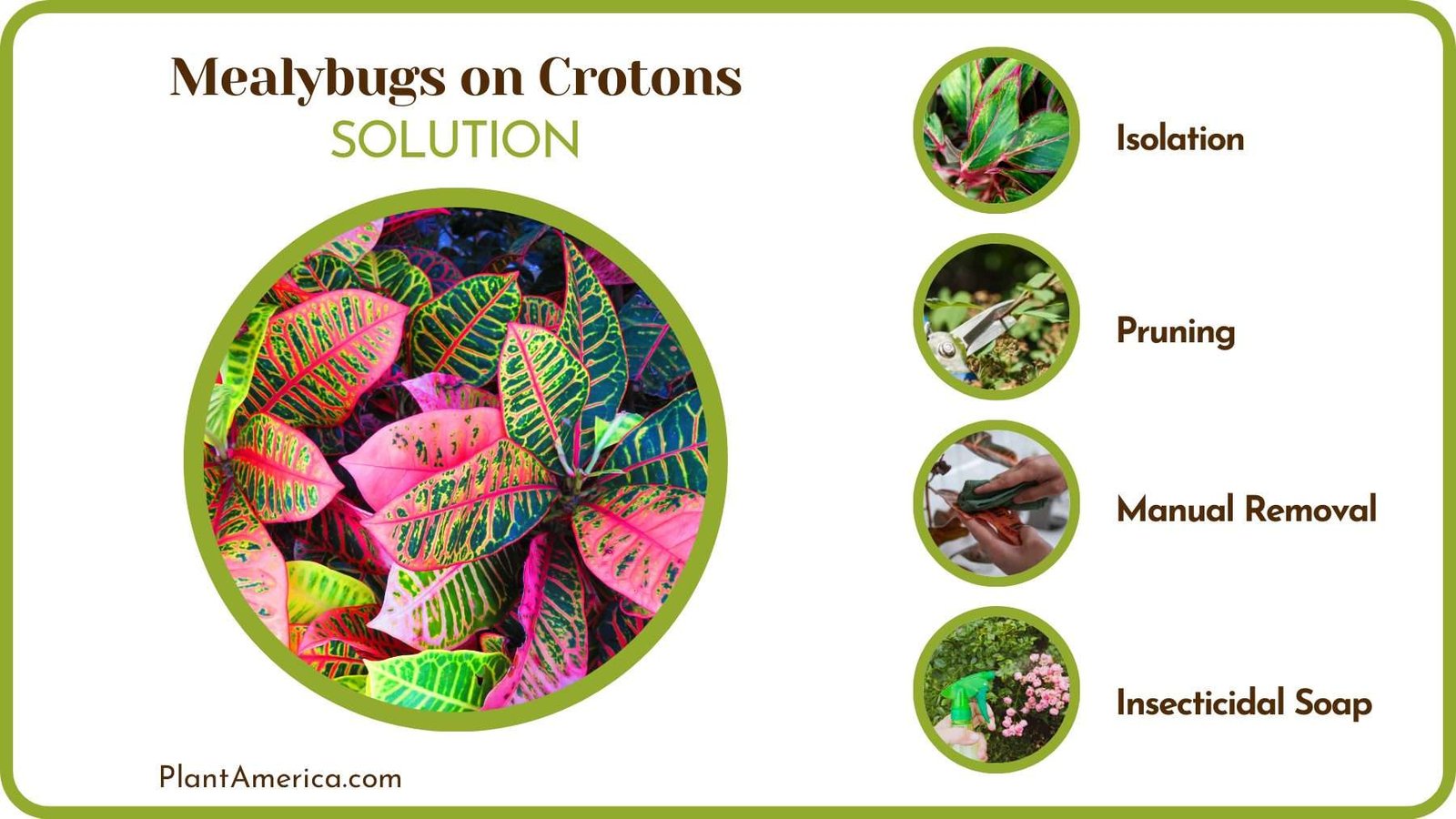 Remember to sanitize your tools after pruning to avoid unintentional pest transfer. Pruning serves a dual purpose. It not only eradicates mealybugs but also improves air circulation and light penetration. As a result, an environment less conducive to these pests is created, effectively discouraging their rapid growth.
– Manual Removal
Manual removal involves physically removing the tiny bugs on Croton plant as a direct control method. This hands-on method works best for small infestations and prevents further spreading. To do it, grab a cotton swab or soft brush and dampen it with rubbing alcohol.
Gently and thoroughly wipe the affected parts of the Croton, focusing on areas where mealybugs gather, like leaf junctions and crevices. The rubbing alcohol removes the mealybugs’ protective wax and kills them instantly. Make sure you remove both adult bugs and their young. After each swipe, get rid of the cotton swab or clean the brush to stop spreading the pests.
You might need to do this repeatedly over a few days to get rid of newly hatched mealybugs. Manual removal is a careful but effective way to lower mealybug numbers on Crotons, especially when combined with other control methods for a complete approach.
– Insecticidal Soap
Insecticidal soap is a plant-friendly mealybug treatment for infestations on Crotons. This soap has been crafted with a special purpose: to disturb the cell membranes of pests like mealybugs. This disruption leads the pests to dry up and eventually meet their end. To harness the full potential of this insecticidal soap, simply mix up the solution as directed on the product.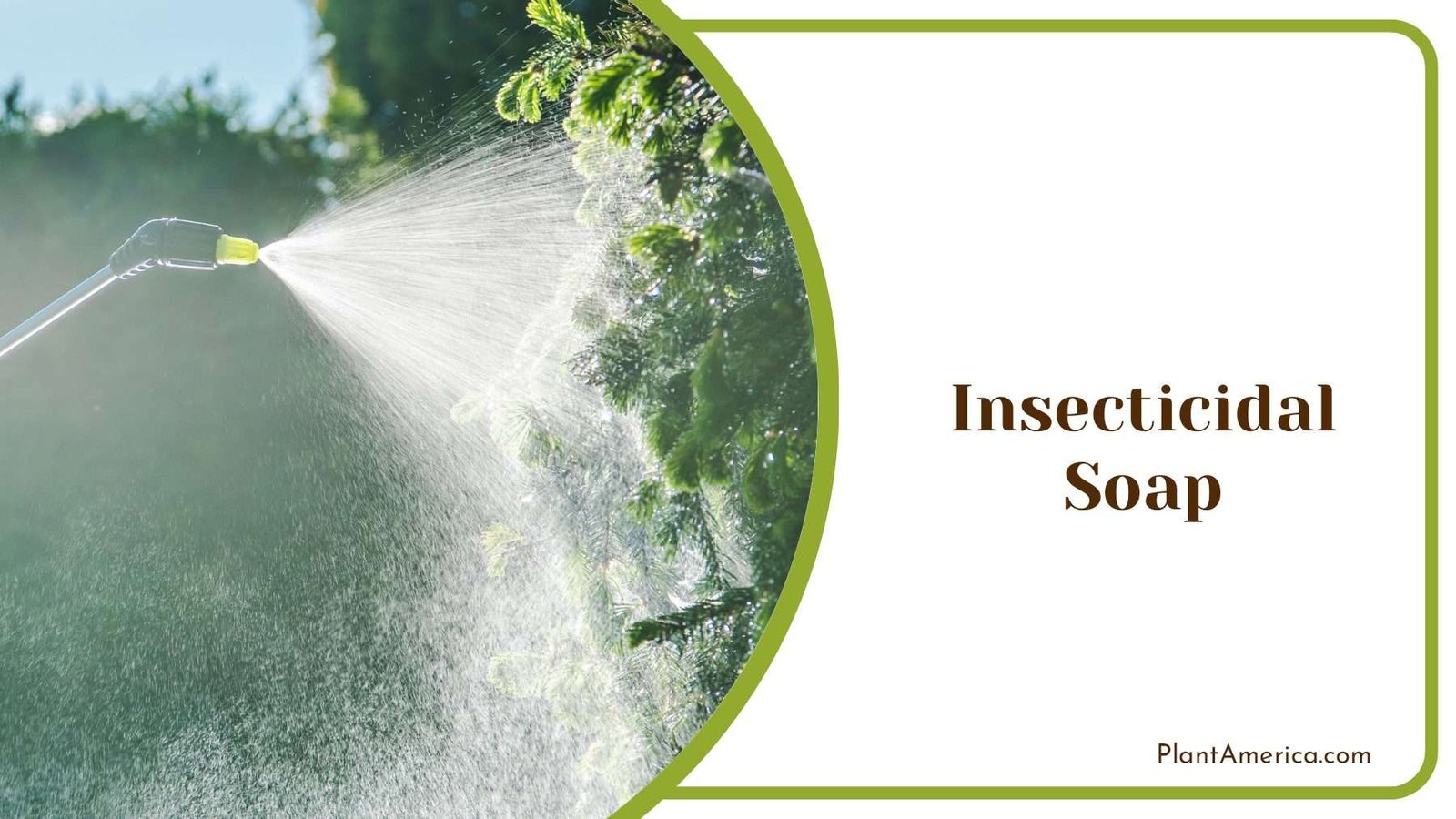 Be sure to apply it thoroughly to every nook and cranny of the Croton plant, including the undersides of leaves and the crevices of the stem. These are the spots where mealybugs tend to hide. Let the soap remain on the plant for the recommended duration, then gently rinse it off using water.
Just remember that using too much soap or making the solution too concentrated could harm the plant. This is why it’s vital to stick to the instructions given by the manufacturer. You might find it necessary to apply the soap regularly to target newly hatched mealybug generations.
Fortunately, insecticidal soap is a safe option for the environment and poses little risk to people and pets. This makes it a suitable choice for dealing with mealybugs on Crotons.
– Neem Oil
This oil, derived from the neem tree, is a natural and effective method to combat mealybug infestations on Crotons. Neem oil has components that mess with the way mealybugs grow and eat, messing up their reproduction cycle.
To use this oil, follow the instructions from the bottle and mix it properly so you don’t harm your plant. Spritz or wipe the diluted neem oil all over your Croton’s leaves, stems, and those little nooks. Neem oil isn’t just about getting rid of those existing mealybugs, it guards against future bug takeovers too.
You might have to do this regularly, especially when new leaves start showing up. And before you go all in, do a little test on a tiny part of your Croton to see if it can handle the neem oil mix.
– Horticultural Oil
Horticultural oil is a plant-safe solution used to control mealybugs on Crotons. This lightweight oil is designed to be applied easily, creating a fine layer over pests. This layer obstructs their airways and eventually causes them to suffocate. To effectively use horticultural oil, start by choosing a product intended for ornamental plants like Crotons.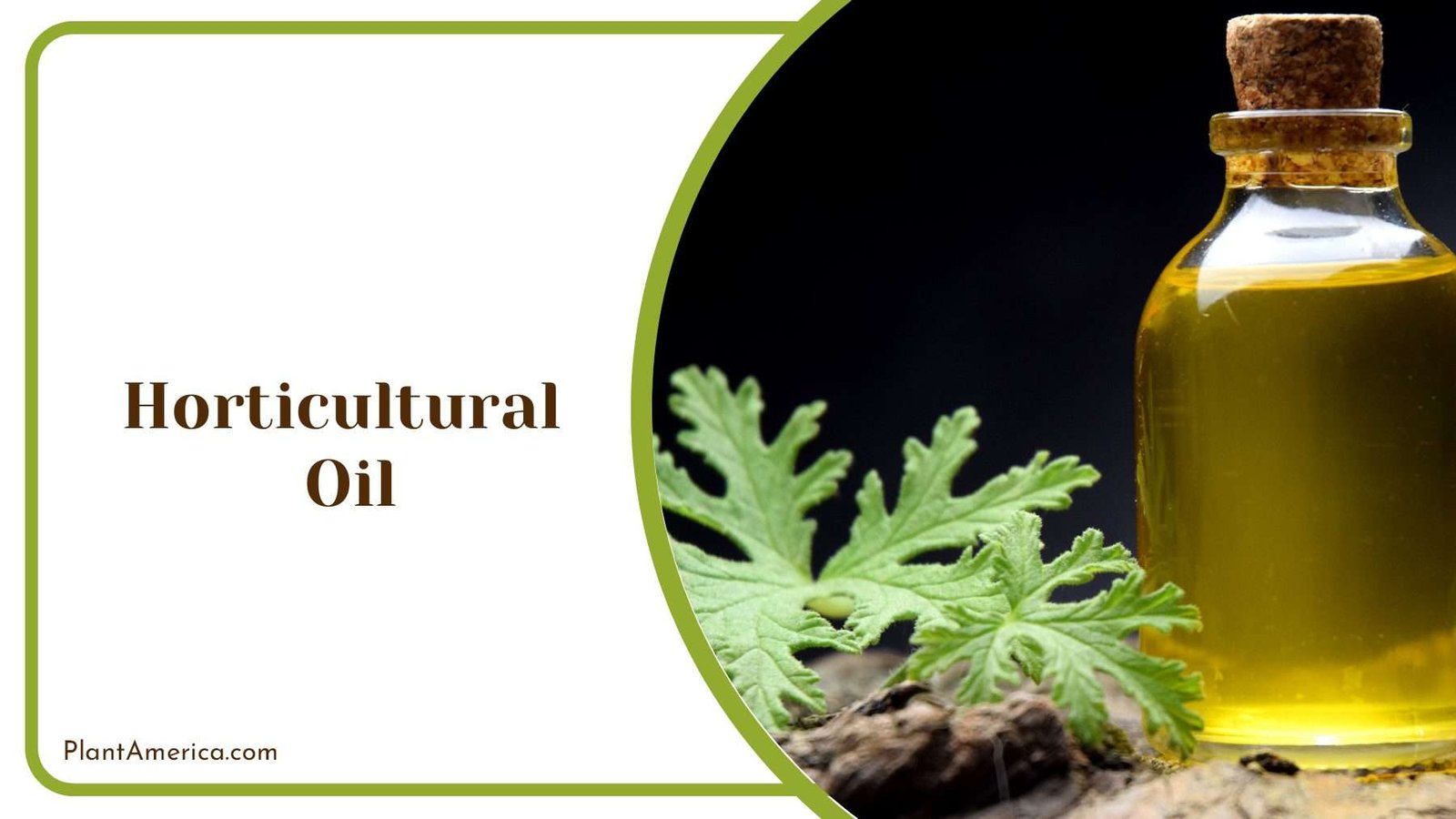 Follow the manufacturer’s instructions to dilute the oil properly and avoid harming the plant. Make sure your Croton is well-watered and stress-free before application. Using a handheld sprayer, gently cover the foliage, stems, and crevices with the diluted oil, ensuring thorough application without oversaturating, which could harm the plant.
Apply the horticultural oil during the cooler parts of the day to prevent sun-related problems. By following the recommended schedule on the product label, you can effectively manage mealybug infestations and maintain the well-being of your Crotons.
FAQs
– What Are the Signs of Mealybug Infestation on Crotons?
Signs of mealybug infestations on Crotons often manifest as white cottony clusters on stems, leaf undersides, and leaf axils. Yellowing leaves, stunted growth, and sticky honeydew secretions are also common indicators. Acting early is important to prevent further spreading in your garden or house plants.
– Can Dish Soap Be Used to Control Mealybugs on Crotons?
Yes, dish soap can be used to control mealybugs on crotons temporarily. While dish soap can work as a temporary solution, it’s not ideal. Insecticidal soap, neem sprays, and horticultural mixtures are all formulated for plant use, ensuring better efficacy without harming the Croton.
Conclusion
Let’s do a quick recap of everything we’ve covered so far about mealybugs and how to eliminate and even prevent them from invading your Crotons:
- Horticultural oil suffocates mealybugs on Crotons by coating and blocking their airways.
- Dilute horticultural oil as instructed to avoid harming the plant.
- Apply to well-watered, stress-free Crotons, aiming for thorough coverage.
- Choose cooler times of day for application and avoid direct sunlight.
- Regular application based on label instructions helps manage mealybug infestations effectively.
With these easy Croton plant care solutions right in your hands, getting rid of mealybugs and even keeping them away is a breeze!