
Apricot tree leaves turning brown occurs due to multiple causes, but the common one is disease attack. By taking disease control measures, you can protect your fruit trees.
 However, there may be some more causes, which you will learn in this guide. Read on to uncover the reasons behind this issue and find out how to bring your tree back to its best health.
What Can Cause Apricot Tree Leaves to Turn Brown? Know the Reasons
Several factors can cause apricot leaves to turn brown, but the common ones are Verticillium wilt, Eutypa dieback, and Leaf spot diseases. Issues like dehydration and salt buildup can also lead to discoloration problems. Sometimes, pest attacks can also lead to leaf brown spots.
– Verticillium Wilt
Verticillium Wilt is a common fungal disease and the leading reason behind the browning of apricot leaves. The disease-causing fungus can live for many years and usually infects when it gets humid.
Once it attacks a tree, it stops water and food from going to the leaves. This makes the leaves change color. (they turn yellow). But, if the tree gets sicker, you might see red apricot tree leaves turning brown in winter.
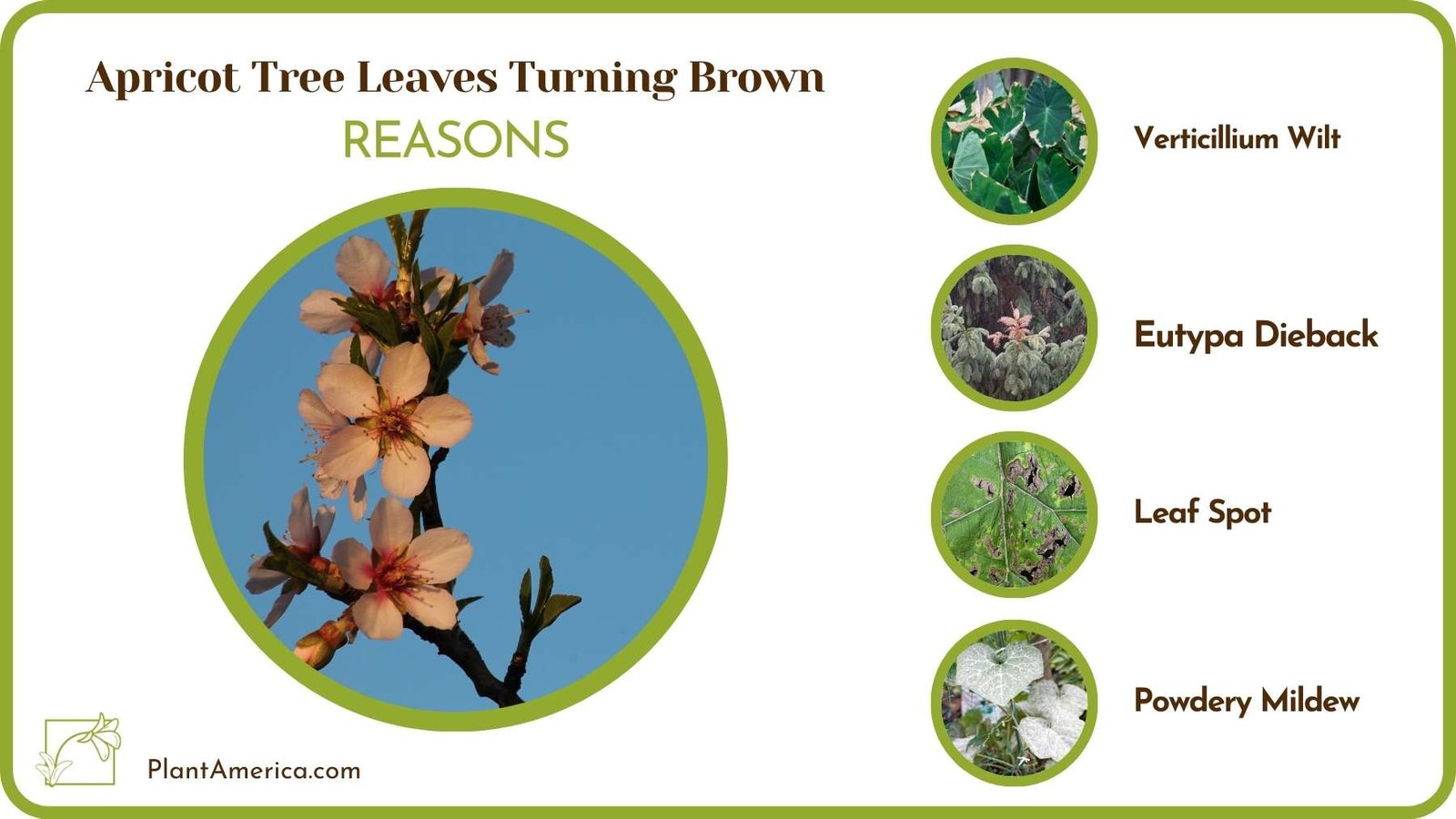
It’s tough to know if your tree has Verticillium Wilt at first. Why? At first, it looks like the tree is just thirsty or has some root damage. But if you cut a small part of the branch and see a dark line inside, the tree is under fungi attack.
– Eutypa Dieback
Eutypa Dieback is another reason your fruit tree’s leaves might turn brown. It’s also a fungal disease that occurs when you don’t do gardening properly. It usually attacks when we do improper pruning (leaving an open cut on the branch).
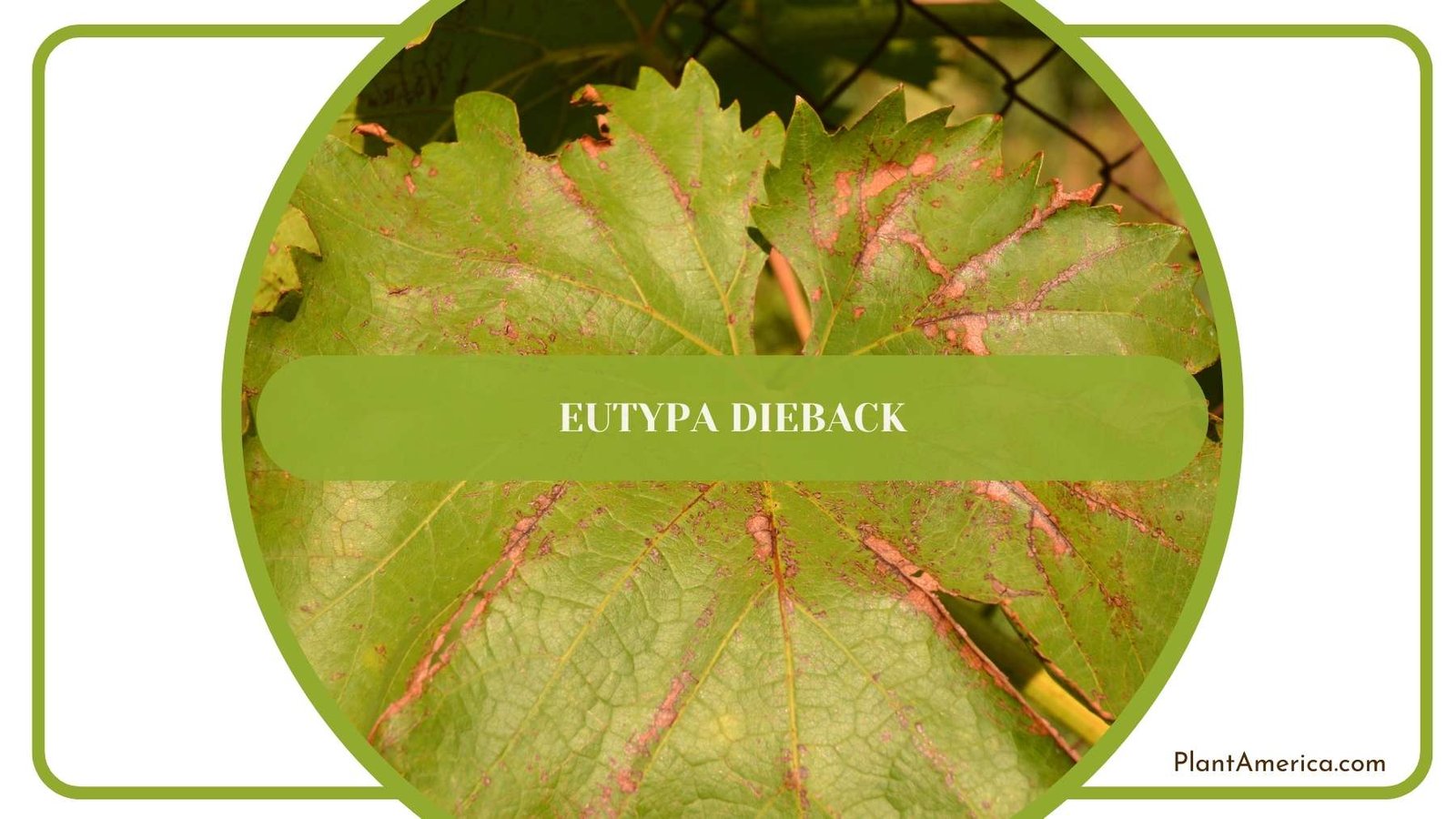
Some leaves might look smaller or a bit curly. If the tree gets sicker, those leaves turn brown. But how can you know if it’s Eutypa Dieback? Some parts of the branch go inwards in cold times, like late winter or early spring. These parts can also look wet or sticky.
– Leaf Spot
If you’re noticing different spots on your tree leaves, it could be due to a condition called Leaf Spot. This problem arises from various fungi or bacteria. It starts as tiny black or brown spots; as time passes, these spots can get bigger and merge. The areas around the spots might turn yellow, and the leaf can fall off before its time.
So, if you see this sap, especially around spotted leaves, there’s a high chance your tree suffers from Leaf Spot.
– Powdery Mildew
Have you seen a white, powdery substance on the tree leaves? That’s a clear sign of Powdery Mildew. It’s a common apricot tree leaf disease that occurs due to fungi. In fact, the white powder you see is a fungus.
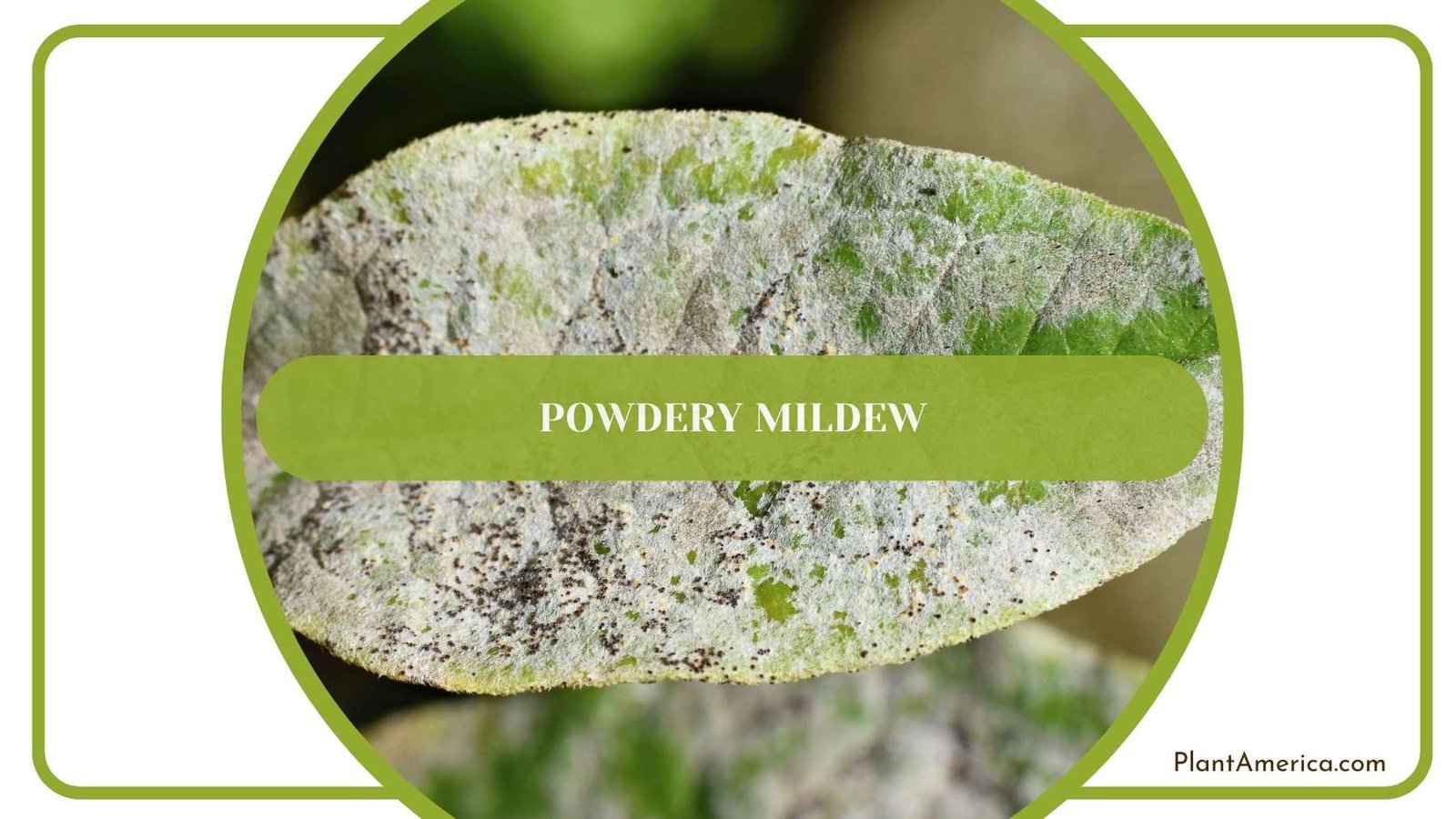
It sits on the leaf surface, feeds on the leaf, and makes it weak. Over time, the leaves can turn yellow, brown, or even red. They can also curl up or look twisted in some cases.
One thing about Powdery Mildew is that it loves humid weather. So, if it’s been wet and warm lately, watch out for this white powder on your leaves. Also, it tends to grow more in shaded areas. Trees that don’t get a lot of sunlight might face this problem more.
– Brown Rot
Rot is a sneaky problem that many fruit trees often face. It’s caused by a fungus that attacks apricot fruit directly. What starts as small brown spots on the fruit can quickly become a mushy, rotten mess if left unchecked.
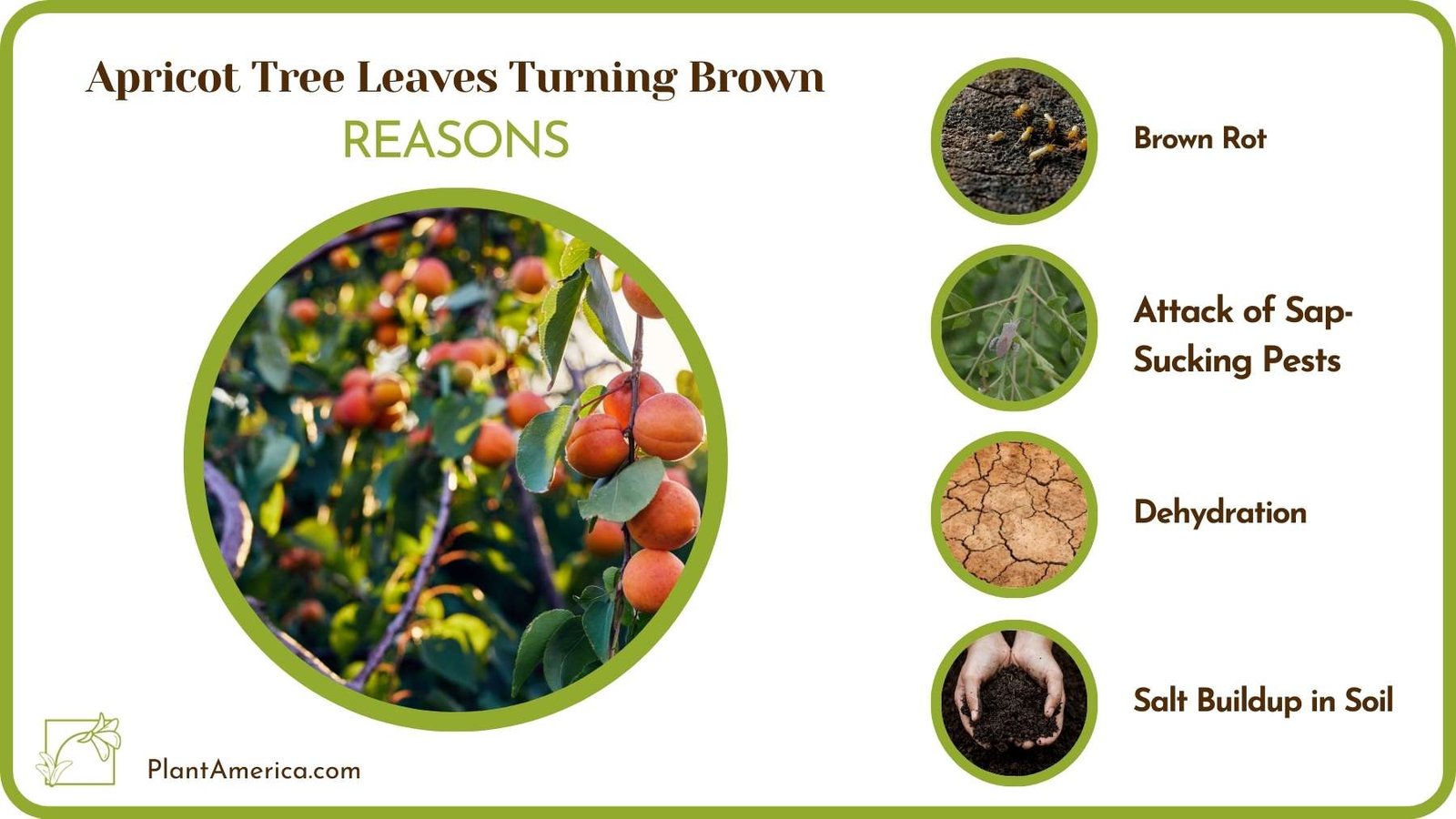
The leaves aren’t safe, either. They can develop brown patches, which might lead to the leaf drying up and falling off. The worst thing? The spores of this fungus can stay in the soil or fallen fruit, waiting for the next season to attack again.
– Attack of Sap-Sucking Pests
Apricots often become the target of sap-sucking pests. These tiny bugs land on the leaves and suck out the sap (cell juice), the tree’s lifeblood. Due to their attack, you might see yellow patches, curled edges, or even holes. The leaves can become weak, turn brown, and fall off with time.
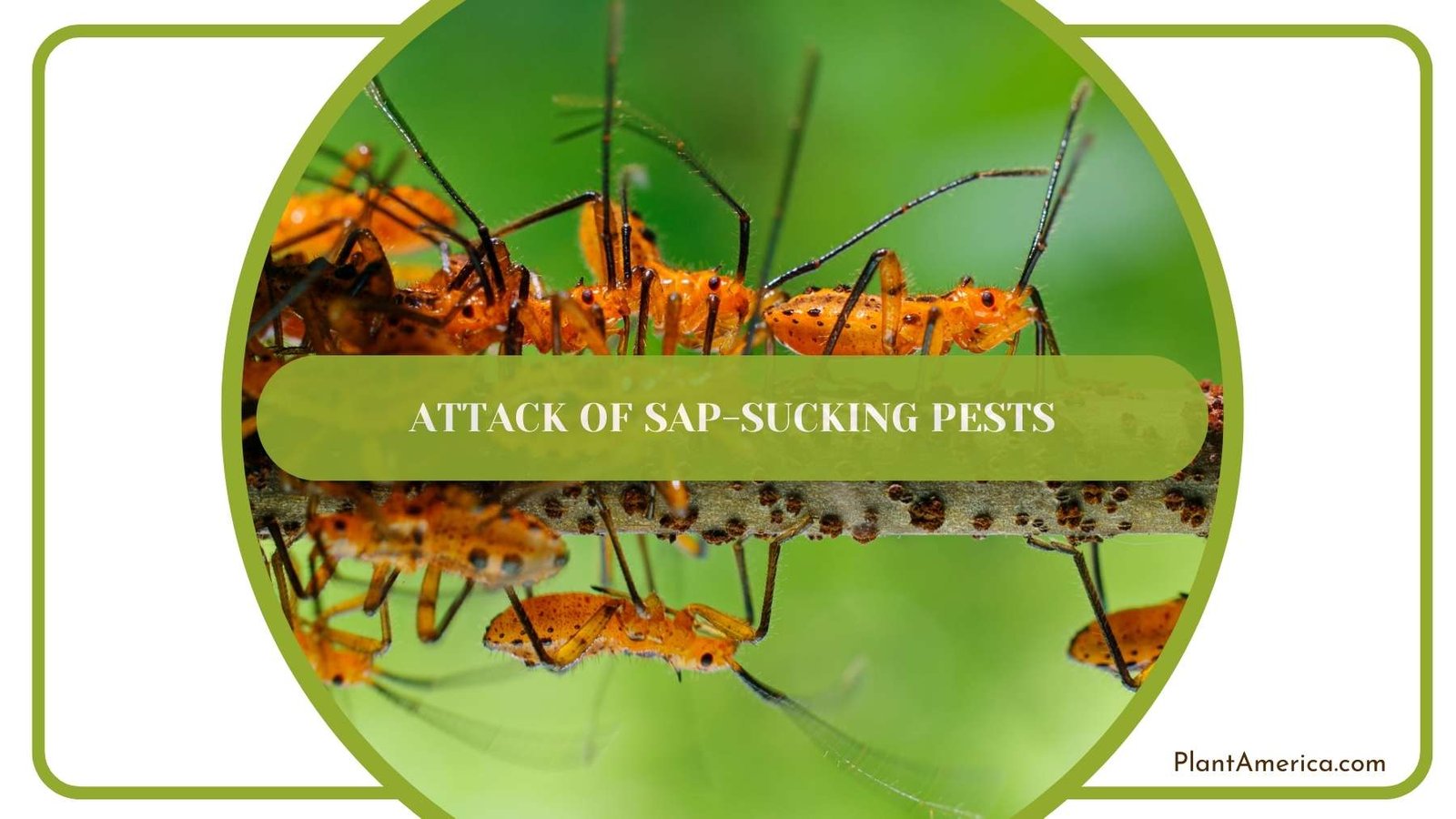
Common sap-sucking pests include aphids, spider mites, and scale insects. If you see a group of tiny bugs on the underside of the leaves or notice a sticky substance (their waste), your tree might be under insect attack.
– Dehydration
A common sight, especially during the hotter months, is apricot tree leaves turning brown in summer. This browning can be a sign that the tree is dehydrated or thirsty. But how does dehydration show itself?
Initially, the leaves might look droopy or hang down. As the lack of water continues, the edges of the leaves might turn crispy and brown. Over time, the entire leaf could take on a brown shade and fall off the tree prematurely. So, water appropriately when you see apricot tree losing leaves in summer.
The effects don’t stop at the leaves. The fruit might become smaller and less juicy. In the worst cases, the lack of water can cause stress to the entire tree, making it weak and more susceptible to diseases and pests.
– Salt Buildup in Soil
When the salt concentration gets too high, it pulls water away from the tree’s roots. This process can mimic the signs of dehydration. When this happens, the leaves might look withered, turn brown at the edges, and eventually fall off.
Note that a white, crusty layer on the soil’s surface is one sign of salt buildup.
How to Save Apricot Trees From Going Brown?
To save apricot trees from going brown, prune affected leaves first. If disease is the reason, apply suitable fungicides and follow proper watering techniques. It’s also crucial to manage soil health, especially to counteract salt buildup. Furthermore, regularly inspecting for pests is also vital.
– Start by Pruning the Brown Leaves
If you wonder how to save a dying apricot tree, pruning can be your first line of defense. It has multiple benefits:
- Enhance Health: Removing the damaged leaves and any affected branches ensures the infection doesn’t spread to other parts. This keeps the rest of the tree healthy and can prevent further decline.
- Better Resource Allocation: When the dying or dead parts are removed, the tree can better focus its resources on the healthy portions. This encourages new growth and helps the tree recover faster.
- Ventilation: Proper pruning ensures better air circulation, which can prevent fungal infections and keep pests at bay.
- Aesthetics: A well-pruned tree looks healthier and more pleasing to the eye. Seeing their tree refreshed can be a rejuvenating experience for the gardener.
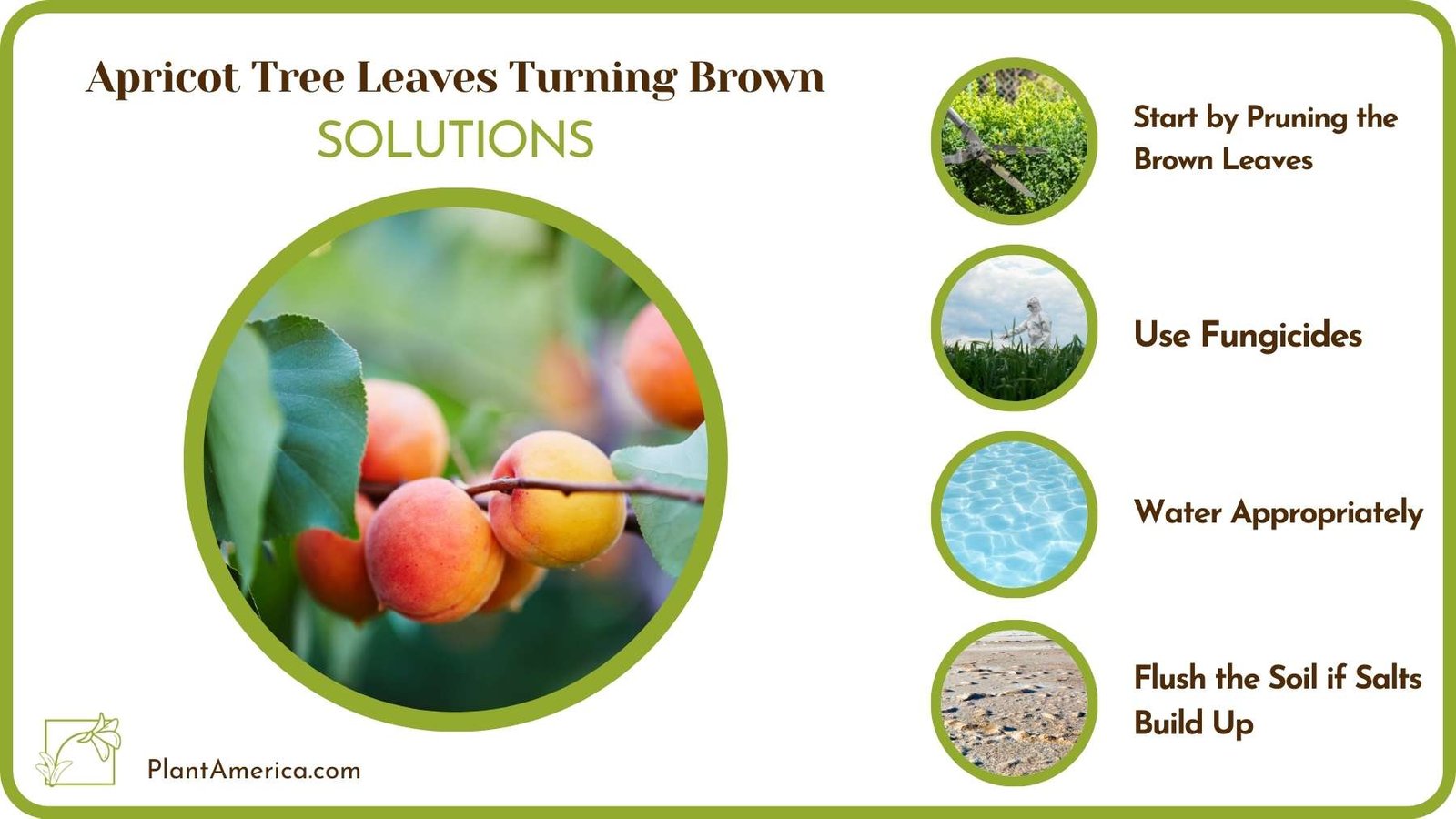
Here’s how to prune effectively:
- First, get clean and sharp pruning shears to ensure clean cuts.
- Next, remove leaves that are more than 50 percent brown. You can cut out only the damaged portion if the leaf is only slightly affected. Ensure you don’t hurt ripe fruits in doing so.
- For branches, make sure to cut at an angle, slightly above a bud or joint.
– Use Fungicides
Fungal infections can be a real menace for trees. Diseases like Rot, Leaf Spot, and Powdery Mildew can cause the leaves to turn brown and die. Addressing these issues with fungicides immediately can save your tree from severe damage.
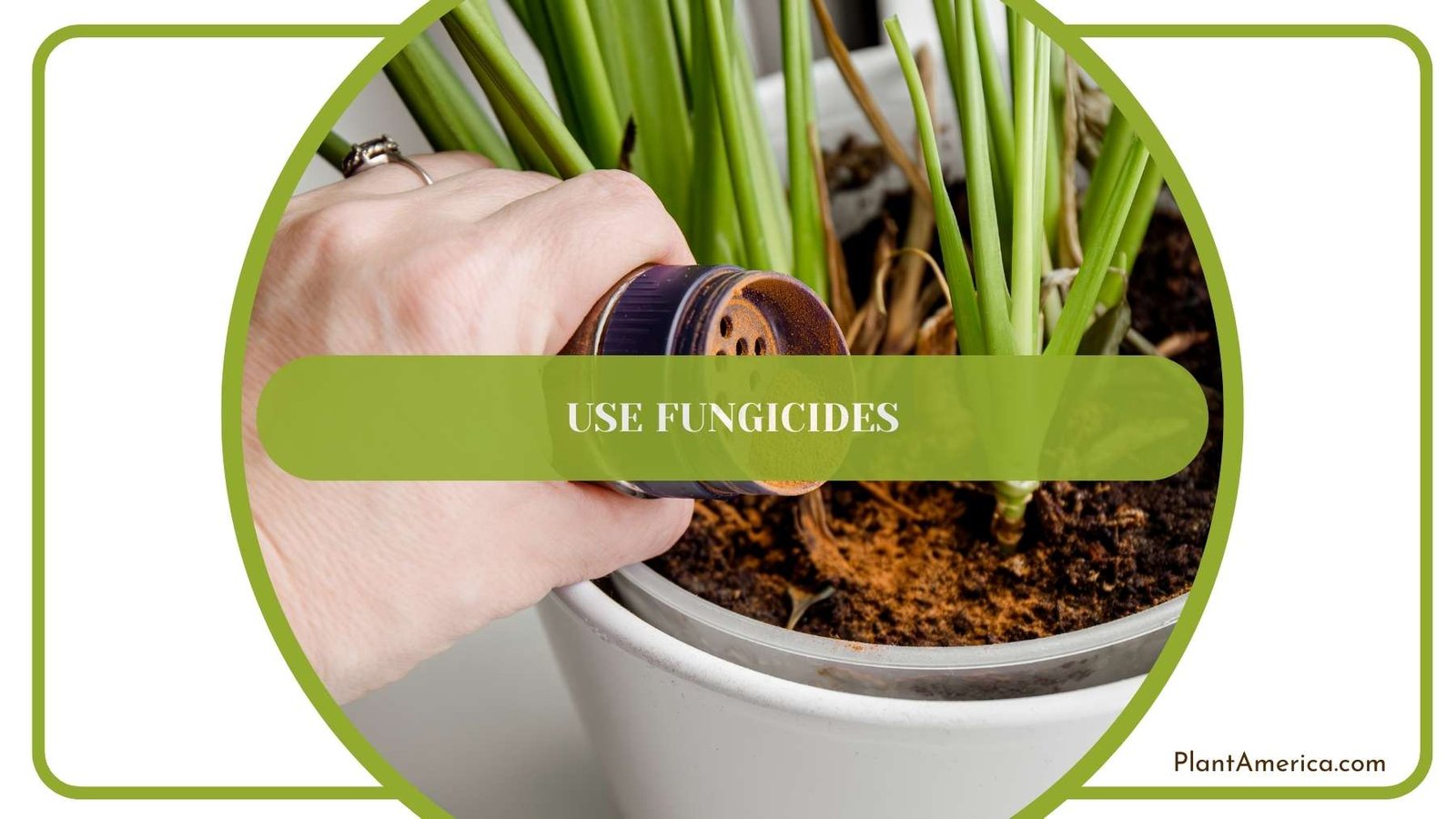
To use fungicides effectively:
- Identify the disease. Knowing what you’re up against helps in choosing the suitable fungicide.
- Follow the manufacturer’s instructions. Too much or too little can be ineffective and can harm the tree.
- Spray the fungicide evenly, ensuring all tree parts are covered, especially the undersides of leaves where pests and fungi often reside.
If you’re using fungicides as a preventive measure, it’s usually best to start in early spring. However, keep an eye on the weather. Rain can wash away the fungicide, so applying it on a clear day is better.
– Water Appropriately
Watering is fundamental to the health of any plant, and trees are no exception. However, the manner and frequency in which you water your tree can influence its well-being significantly.
To water your tree garden effectively:
- Check the Soil: Before you water, it’s essential to check the soil’s moisture level. Insert a finger about 2 inches into the soil. If it feels dry, it’s time to water. If it’s still moist, wait a day or two.
- Moisten Root Balls: When you do water, ensure you provide enough so that it reaches the deeper root zones. This encourages the roots to grow deeper, ensuring the tree’s stability and access to moisture during hot periods.
- Mulch Around the Tree: Adding a layer of mulch around your tree can help retain moisture and stabilize the soil temperature. It also prevents rapid evaporation of water in hot weather.
– Flush the Soil if Salts Build Up
Salt buildup in the soil can be a silent tree killer. Therefore, addressing this problem is also crucial.
- Check for Signs: White or crusty soil surface, poor growth, or browning leaf edges can indicate salt buildup.
- Flushing the Soil: This process involves drenching the soil with water to wash away the salts. To do this, water the area around your tree heavily, allowing the water to seep deep into the ground. Repeat this a couple of times with breaks in between.
- Drainage is Essential: Ensure your tree’s planting site has good drainage. Flushing will be ineffective if the water (and salts) can’t drain away.
- Reduce Fertilizer Use: If you regularly use fertilizers, consider reducing the amount or frequency. Over-fertilizing is a common cause of salt buildup.
– Deal With Pests
While pests can be challenging, there are ways to manage and control their presence.
- Identify the Culprit: Before taking any action, it’s essential to identify which pests are affecting your tree. Common pests for apricots include aphids, scale insects, and mites.
- Neem Oil: This natural pesticide is safe for plants and humans but lethal to many pests. Spraying a diluted neem oil solution can deter pests and prevent infestations.
- Beneficial Insects: Introducing beneficial predatory insects like ladybugs and lacewings can be an eco-friendly way to tackle pests. These insects feed on common pests and can help maintain a balanced ecosystem.
- Physical Barriers: Netting or tree wraps can deter larger pests like birds or rodents.
- Regular Inspections: Check your tree regularly for signs of pests. Catching a problem early can make it much easier to manage.
- Avoid Chemical Pesticides: These can harm beneficial insects and affect your tree’s health. If you must use them, choose environmentally friendly ones and target specific pests.
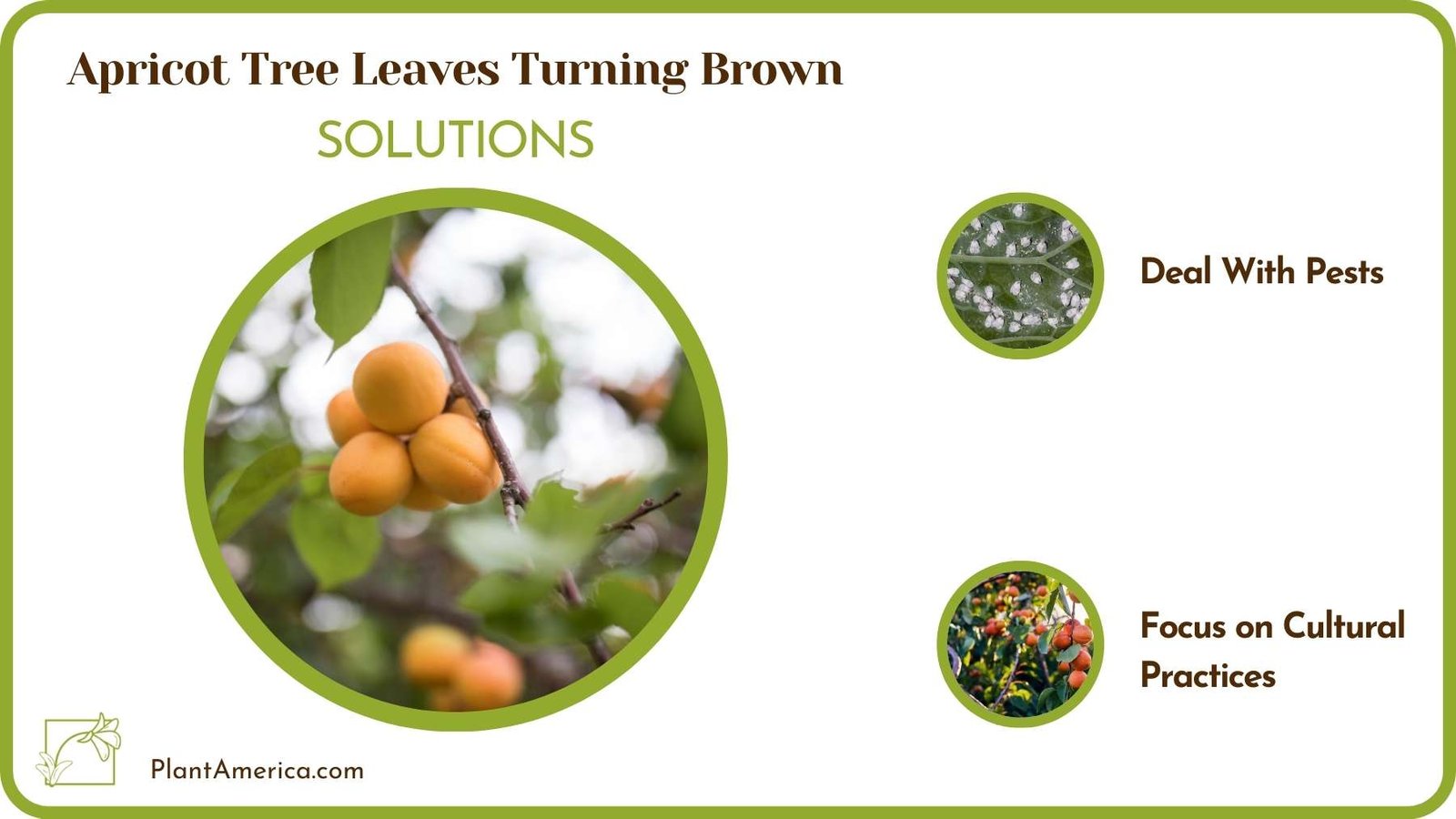
– Focus on Cultural Practices
Good gardening practices, often called “cultural practices,” can prevent many issues before they start. These practices are holistic approaches to gardening that ensure plants grow in the best possible conditions.
Embracing cultural practices:
- Right Plant in the Right Place: Ensure your tree is planted in a location that suits its needs. Consider factors like sunlight, soil type, and drainage.
- Regular Pruning: Apart from removing diseased or dead parts, pruning helps increase air circulation, reducing the chances of fungal infections.
- Cleanliness: Regularly remove fallen leaves, fruit, and other debris around the tree to reduce the chances of pests or diseases.
- Fertilization: Use a balanced fertilizer that provides all the essential nutrients. Over-fertilizing or using a lopsided mix can lead to imbalances and stress the tree.
- Watering Technique: As mentioned earlier, deep watering helps maintain consistent soil moisture. Avoid overhead watering that can leave foliage wet and prone to fungal diseases.
- Soil Health: Ensure your tree is planted in well-draining soil. Incorporate organic matter like compost to enhance soil texture and nutrient content.
Doing these things will protect your apricot from many other diseases, like armillaria root rot, bacterial canker, phytophthora root, shot hole disease, etc. So, keep doing cultural practices, and you will enjoy top-quality fruit yield in the end!
Conclusion
Apricot leaves can turn brown due to various causes, such as diseases, pests, or even salt buildup in the soil. If you’re looking to safeguard your tree from these challenges, consider the following:
- Prioritize regular pruning and remove affected leaves.
- Use fungicides to protect against diseases.
- Ensure consistent and deep watering techniques.
- Manage soil health to prevent salt buildup.
- Regularly inspect for pests and take action as needed.
That’s it! These preventive and responsive measures will help ensure your fruit tree remains healthy and you enjoy a top-quality apricot yield!