
The Anthurium Pedatum of the Araceae family is one of the best choices of houseplants to own. if you are seeking to decorate your home, office, or workspace with a plant. Unlike other houseplants, which require conditions like a tropical paradise, this Anthurium variety can survive and thrive in far less optimal environments.
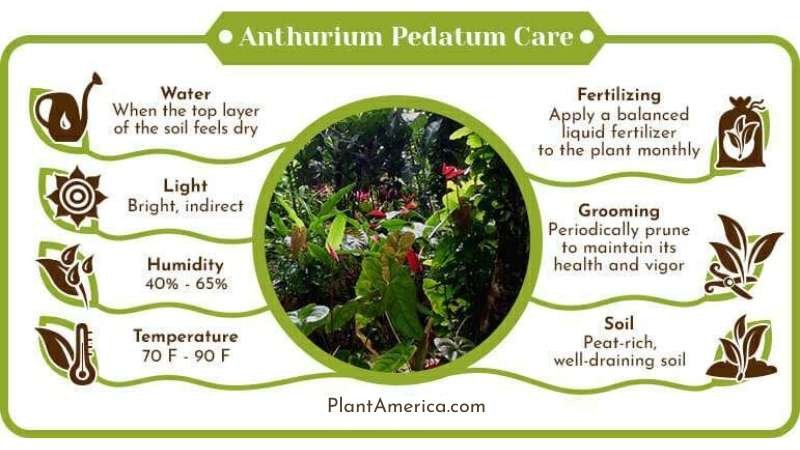
This comprehensive guide on caring for Anthurium Pedatum has all the necessary information you need before owning and taking care of this plant. So if you need assistance starting and propagating this Anthurium genus plant, you’ve come to the right place.
What is the Anthurium Pedatum Plant?
The Anthurium Pedatum is found in tropical jungles. It is a member of the Araceae Juss family with the genus Anthurium Schott. It’s known as the “Golden Bird of Paradise” with a web-like venation pattern on the petioles and rachis, and its leaves are long and broad; having enormous, bell-shaped blooms, and they live for a very long time.
Anthurium Pedatum Plant Care
These plants are incredibly simple to grow in any potting soil or soil mixture containing some perlite or other drainage material. You should cultivate this plant in your garden because it requires so little care. Review this quick summary to get a sense of what’s to come before we get into the specifics of this care guide.
 Water Requirements
If you set your Anthurium in an area with little to moderate light during the day, you won’t need to water it as regularly. While most plants want to dry out entirely before watering, seasoned gardeners find that Anthurium should not be allowed to do so for optimal results.
So, water your plant in accordance with the climate of the area where you are growing it. If the Anthurium you’re growing gets a scheduled dose of weekly watering, the results will soon look promising.
In order to obtain better results, you would have to test the soil’s moisture level using your finger. Observe if the top layer of the soil feels dry to the touch and no soil grains cling to your finger; your Anthurium plant needs water. However, bear in mind that the Anthurium detests moist soil when watering. Root rot can creep up if the soil is constantly wet.
 Light Requirements
People who commit to growing an Anthurium find that it is not overly picky about receiving a lot of bright indirect light. Instead, you may start by taking care of the light in the sense that having in mind how an Anthurium can flourish in a setting with diffused light. In such a setting, the plant spends most of its time indoors and away from the south and west windows.
We advise positioning a blazing light directly above the plant to provide the best care for Anthurium. Because of this, your Pedatum may survive in a home with low to moderate light levels, consider keeping the plant behind a translucent curtain if it is placed on your balcony, on your porch, or maybe somewhere with light shade, where it will receive light, but in an indirect way.
 Soil Requirements
The optimal conditions for Anthurium growth are peat-rich, well-draining soil. Blends with peat are more efficient in lessening soil compaction. The soil will get stronger and more nourishing as a result over time. Additionally, a peat blend will provide greater water absorption, which leads to a more productive crop.
Having this mixture, you will be giving your plant the best care, and your plant will flourish as a result, and thrive because it is living in healthy soil. Furthermore, you may even want to be mindful of how in colder temperatures, you’ll see that they keep growing once you get an Anthurium. Therefore, selecting particularly porous soil is essential for long-term health.
 Temperature Requirements
Once more, the Pedatum does not require a lot of heat; temperatures between 70 and 90 degrees Fahrenheit are ideal (21-32 degrees Celsius). This Anthurium can also be cultivated at roughly 70 degrees Fahrenheit, just like other Anthuriums (21 degrees Celsius).
However, it is fairly adaptive to your surroundings as long as you don’t have extreme temperatures. Keep an eye on your body temperature to prevent it from dropping too low. Remember that is very important to keep the Anthurium at a comfortable and temperate temperature throughout the year for optimum health.
During the growing period, particularly when the temperature increases, Anthurium appreciates a light misting. Mist the plant early in the morning to produce dews that enhance the impact. However increased water droplets can produce too much moisture, which might be deadly to the plant.
 Humidity Requirements
When it comes to humidity requirements, Anthurium is regarded as a picky plant. It is advised to maintain a medium to high humidity level in the home for the best maintenance of Anthurium.
The range of humidity is 40 to 65 percent. If you can’t quite duplicate this organically, consider using a humidifier. One indication that anything is wrong with your Pedatum is browning or yellowing on the crowns of the leaves. In USDA hardiness zones 11 through 13, it can survive the best.
 Fertilizing Requirements
Maintaining a Pedatum requires little maintenance; fertilize it according to the same schedule as you would practically all other Anthuriums. To do this, apply a balanced liquid fertilizer to the plant monthly. But if you give your Anthurium the proper attention, you’ll see it thrives. If this happens, you can increase fertilization frequency to twice a month.
The majority of Anthurium growers will vouch for the fact that this species does well even when it is not in bloom. A reliable, high-quality liquid fertilizer will therefore encourage the new growth of vegetation.
 Pruning Requirement
This plant can benefit greatly from pruning. The most thrilling aspect is that you’ll enjoy it for a lot longer. Since it requires a lot of labor to revive Anthurium plants with faded blooms and wilting leaves, the plant can use that energy to produce fresh blossoms and foliage if you get rid of them.
An Anthurium Pedatum must be periodically pruned to maintain its health and vigor. You can prune this plant at any time of the year. You’ll need the following equipment to trim your Anthurium:
- pruning shears or razor-sharp scissors
- goggles and gloves
The steps you must take to prune your Anthurium successfully are as follows:
Remove any leaves that are yellow or brown first. If they are stubborn about falling off, use your pruners to cut them off. The simplest way to get rid of fading blossoms is to cut off the stem at the base of the plant. It prevents the plant from devoting all of its energy to creating seeds rather than a stunning new blossom.
Next, consider the Anthurium in its entirety. Remove any leaves that don’t look like they belong on the plant. These are all the ones that are either excessively huge or have an odd growth angle. Just be careful not to remove every leaf from the plant; at least four should still be attached. Always use alcohol or bleach to sterilize your pruning equipment to prevent the spread of disease.
Propagation
The propagation of Anthurium is pretty straightforward. Apply this technique the same way you would for any other Anthurium plant.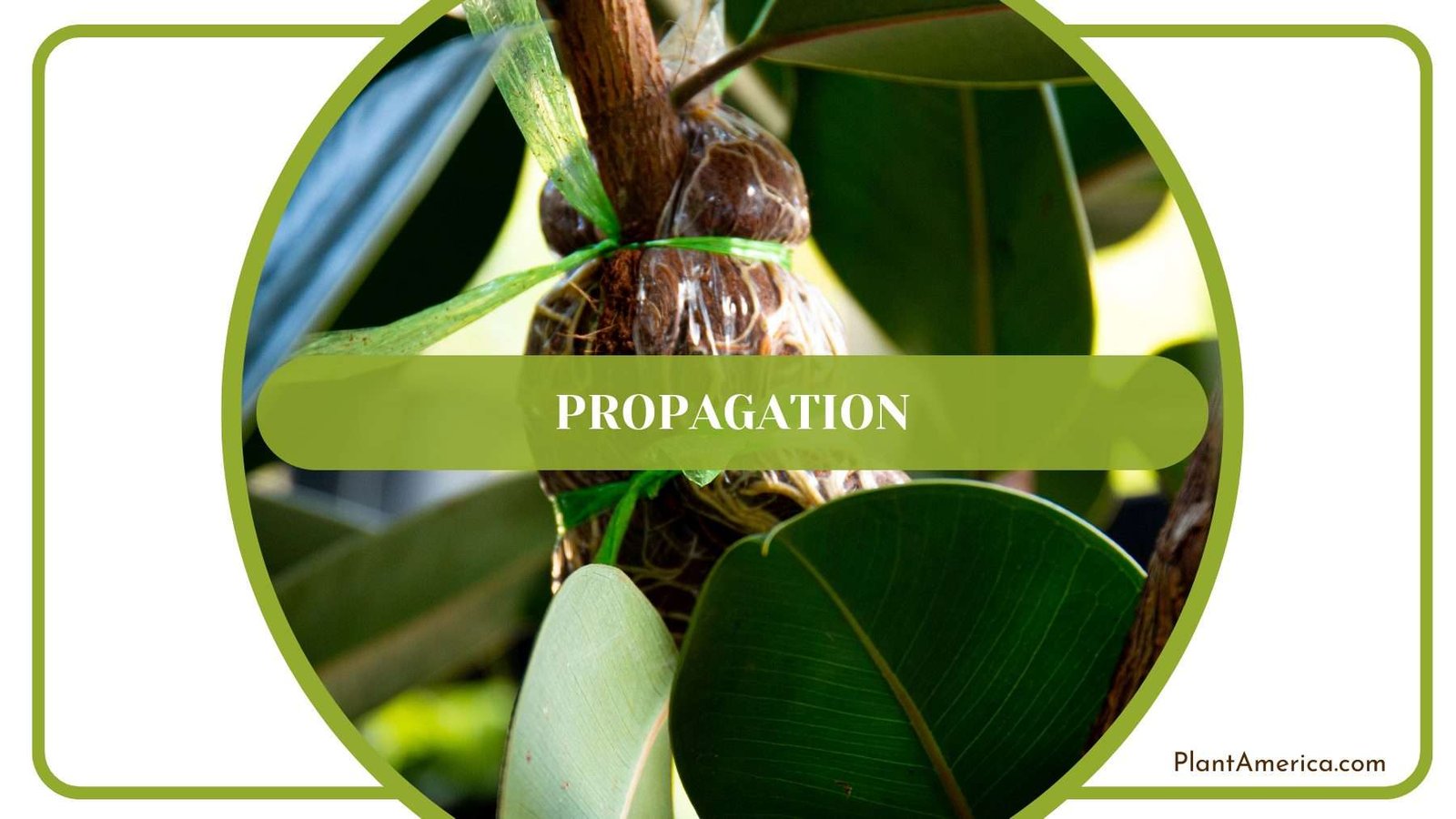
It entails selecting an Anthurium branch carefully and raising it until it has reached maturity. Propagation is more successful when using a potting mixture from the same components as the original Anthurium plant.
– Propagation Through Roots
In all honesty, Anthurium is one of the simplest plants to propagate through its roots. All you have to do is begin by choosing the sturdiest branch of your Anthurium. It describes a plant with observable roots at least half an inch long. This branch must be removed from a healthy Anthurium’s outer crown area.
Cut the offset with pruning clippers or a sharp blade from the base of the parent plant. Place this offset in an Anthurium pot with improved peat moss soil. Gently pat the soil mixture to bury the lowest inch of this branch deeply.
To secure your offshoot as it grows and to preserve the roots, drive a stake into the ground. Make a knot to fasten the shoot to the stake. Water your Anthurium until you observe water dripping from the drainage holes in its pot. Place your Anthurium branch in filtered light, and maintain the soil moisture to monitor its growth.
An Anthurium has incredibly spectacular blooms. A three to four inches long, greenish-to-yellow spathe is produced along with the bloom. It also features a spadix, which is frequently purple.
The Anthurium leaves can spread to approximately six feet in width and reach a height of two to three feet (0.6 to 0.9 meters) (1.8 meters). When the foliage is young, it has a heart-shaped shape, and as it ages, it takes on a lobe-like look. Because of its well-known showy and gorgeous green foliage, the plant is well-known.
Problems
– Rhizoctonia Root Rot
When conditions are too wet, Rhizoctonia can cause damage and spread to the leaf tips of Anthurium as well as the roots and bottom stems. Small, weak stems are brittle, vulnerable to waterlogging, and unable to support the weight of the plant. Avoid overstressing your plant to avoid Rhizoctonia root rot.
The fungicides that make up strobilurin can also treat this condition. Remove sick plants and waste from the potting mix to prevent the disease from spreading further. As for a remedy for the root tot, you may start by getting rid of the plants with serious infestation right away.
To efficiently treat Rhizoctonia species, use Medallion 50W. Use copper-, benomyl-, or mancozeb-containing fungicides to treat bacterial and fungi infections.
– Bacterial Wilt
A common ailment called bacterial wilt is brought on by foliage yellowing. It quickly spreads throughout the plant, causing the leaves and stems to change color from green to brownish-bronze.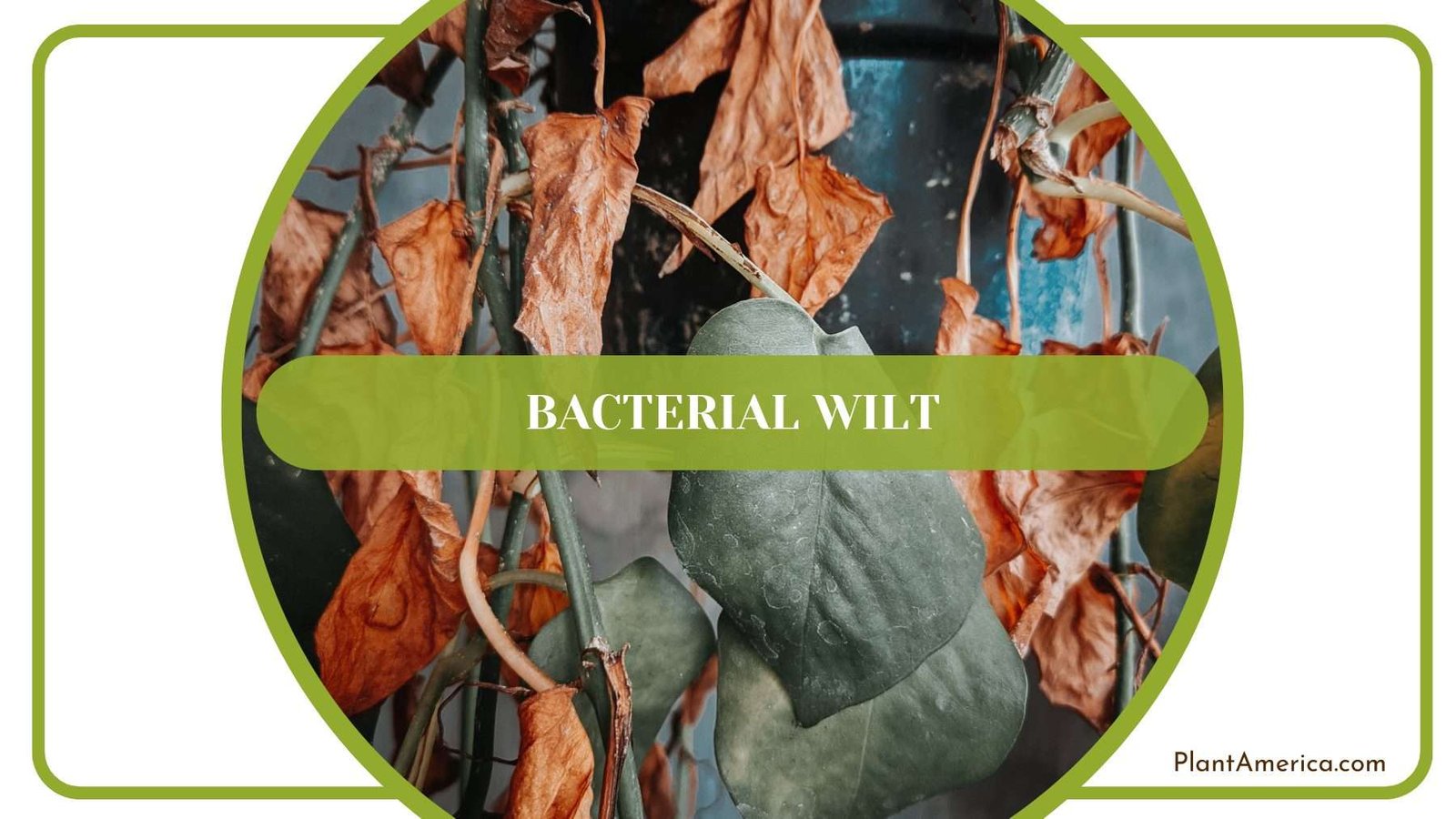
Bacterial wilt can cause problems in a hot, humid climate because withering happens quickly. Don’t dig up sick dirt during the summer. Fungicides with a phosphorus basis are quite effective in treating this illness. To get rid of bacterial wilt, you have to begin by employing a fungicide with phosphoric acid as its main ingredient.
– Bacterial Blight
This plant becomes contaminated by germs that appear all over the leaf edges. The most common adverse effect of bacterial blight is the rapid development of yellow patches around the leaf ends into lifeless V-shaped wounds.
A leaf can also be destroyed by bacteria if it sustains an injury during trimming or if insects consume the leaf tissues. When harvesting blooms, these germs are capable of passing through the wounds.
The best fungicide mixture can be used to fight bacterial blight. Every seven to ten days, spray your plant with fungicide two to three times. Bacterial blights can be treated by putting Agromycin on the soil.
Preventative Measures
- Always purchase plants from a reputable supplier or merchant.
- Follow the watering plan to keep the humidity and moisture levels at the proper levels.
- Install an electric humidifier to adjust the level of indoor humidity as needed.
- Ensure adequate drainage holes are in the plant pot to let any extra water out.
– Aphids
Pests known as aphids can be found in various hues, including brown, green, red, white, and black. They are stalking insects that use their eating mouthparts to puncture the Anthurium’s body and obtain juice.
Poor growth, a horrible black sticky film on the Anthurium, and yellow and changing foliage could all be signs of aphid infestation. As they consume, they produce a gooey fluid called honeydew, which quickly gets contaminated with black sooty mold. Additionally, viruses can spread through aphids, many of which are fatal. If the worst happens, the plant perishes.
Nonetheless, it is not difficult to get rid of them and see your plant growing and thriving, all you have to do is begin by setting up yellow sticky traps nearby your plant to draw pests in and capture them. Wash the plant with a cotton ball dipped in 98 percent isopropyl alcohol to effectively kill the bugs. If that is impossible, an alternative is to wash the Pedatum with a bar of insecticidal soap or warm, soapy water.
– Mealybugs
White insects called mealybugs create a white protective powder to aid with camouflage. They prefer to reside in the plant’s safety, such as the junction of branches or the underside of leaves.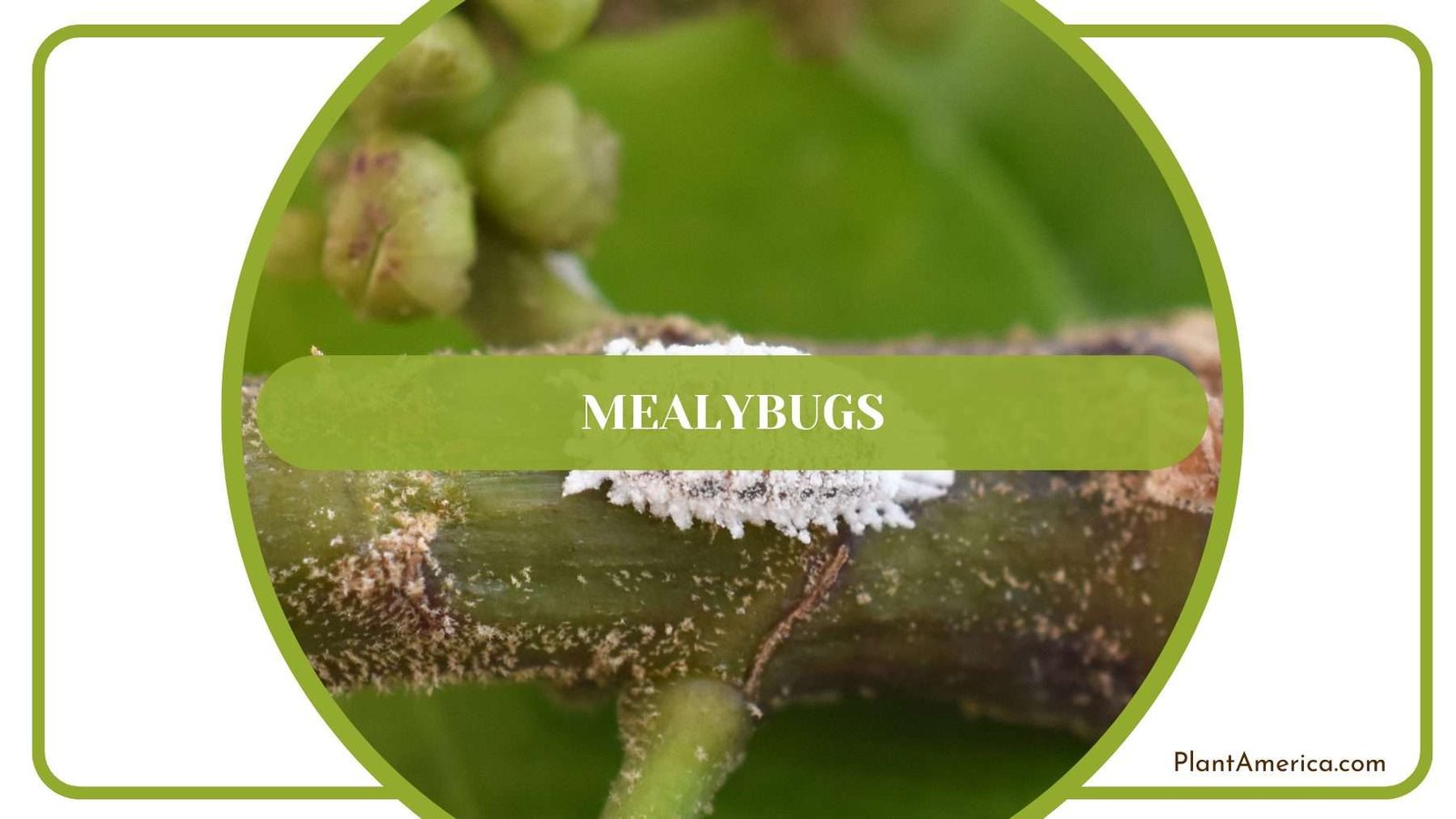
They feed on an Anthurium plant’s food, cell walls are consumed, and Anthurium’s fluids and organic elements are used up. Mealybugs may be to blame if your plant appears withered and you’ve tried watering it multiple times without success.
The beginning of fading foliage, which happens when leaves are short of food and water, is another sign. It will eventually die if you don’t treat your plant for mealybugs. You may want to apply Neem oil all over the plant after soaking a cotton ball.
– Thrips
Because they are so little, it may not be easy to see thrips with the naked eye. Any smudgy reddish-brown discoloration is one sign of thrips infection. The thrips’ waste products appear as black dots on the plant. Thrips can also be seen in anthuriums with uneven foliage or blooms that fade before opening.
The plant must be thrown away if the pest infestation is severe. However, you can use insecticidal sprays or rubbing alcohol to treat the bugs while they are still small. When facing such a pest infestation, keep in mind that you can use Pyrethrin insecticidal spray can be used to eliminate hazardous pests, but to avoid major harm, read the manufacturer’s instructions first.
However, before buying, check the new plant for indications of a pest infestation. Do not bring grasses, twigs, or cuttings from the garden inside. A commercially available, certified Aphid-free potting mix will guard against aphid invasion.
Concerning toxicity, Anthurium isn’t all that different from other tropical plant species. You heard correctly! Anthurium is an active calcium oxalate crystal-containing plant noted to be toxic. You will have to ensure that you or your pets avoid coming into contact with the calcium oxalate that seeps out of saps and wounds on stems and leaves.
Take the measures mentioned above, and you’ll be on your way to having a gorgeous plant that produces magnificent green leaves, adding that wow factor to any place it’s in.