
How to transplant sedum of the Crassulaceae family the right way takes a bit of skill that not everyone can flawlessly execute.
 But don’t worry! We’ve got the goods on how you can perfect this technique. Now, let’s go right to the guide, shall we?
How to Transplant My Sedum Plants?
Transplanting your sedum is as easy as picking the right time, preparing the new homes and the sedum plant, transplanting your sedum, and finally monitoring and caring for your new transplant. Lastly, you have to ensure that there are no pests or diseases.
1. Choose the Right Time
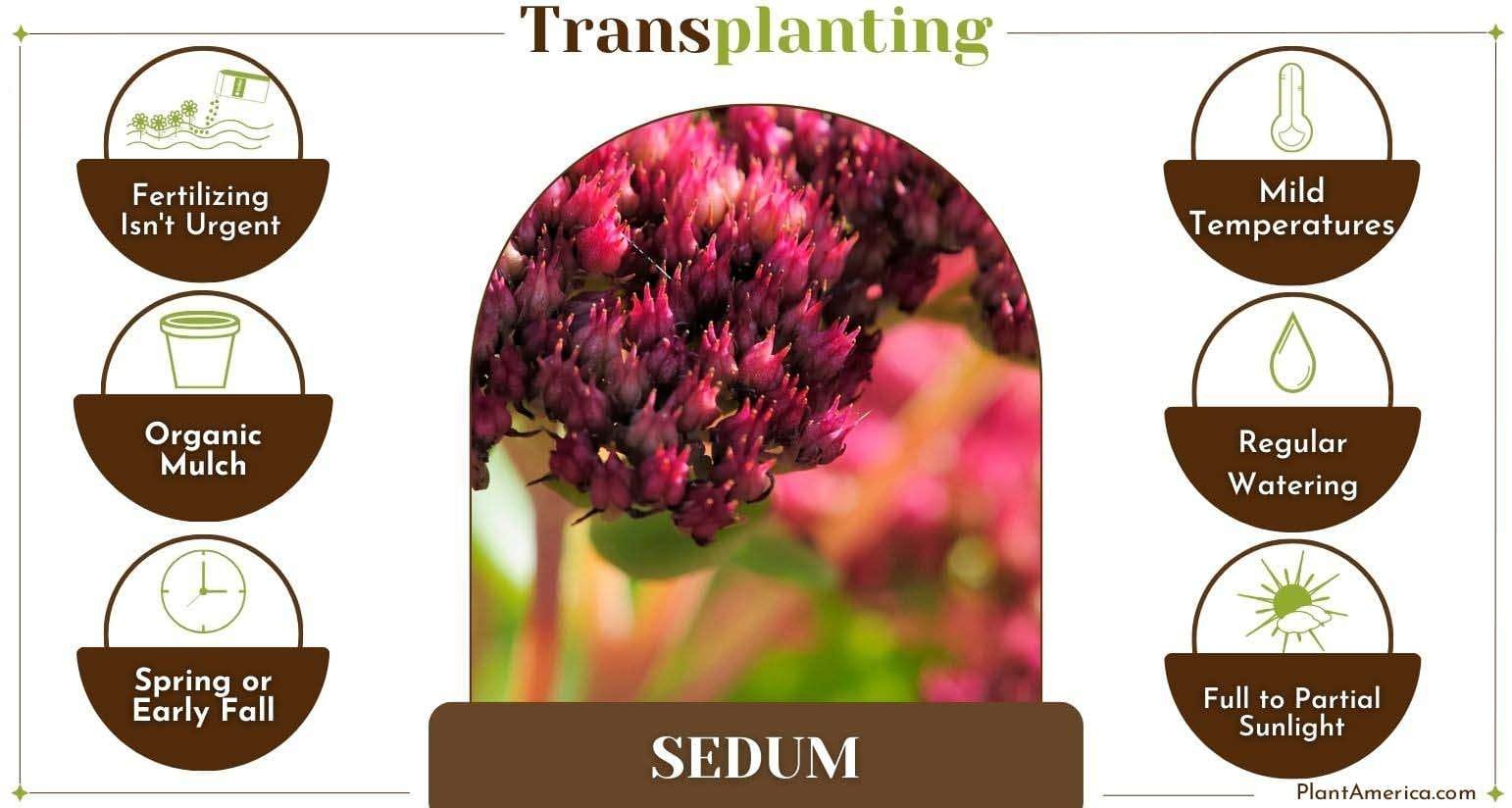
Picking the right moment to rehome sedum is vital for its smooth transition to a new environment. Like the Autumn Joy sedum, Sedums are hardy, but timing matters to reduce stress and boost their survival odds. The best time for transplantation falls in the active growing season, like spring or early fall, when the weather stays gentle and temperatures are moderate.

During these times, sedums actively grow and have the energy to recover from transplanting. Avoid moving them during hot summers or freezing winters, as extreme conditions can stress the plant and hinder root establishment. Wouldn’t you want your sedum to have the odds stacked in their favor right from the start?
2. Prepare the New Location
To ensure your sedum transplant is a success, focus on these essential steps. First, find a spot that gets plenty of sunlight, ideally full sun to partial shade. Sedums love bright conditions! Also, ensure the soil drains well so the roots won’t get waterlogged and risk rotting. Excess or standing water is the sedum root’s main enemy, so avoid it at all costs.
Next, prepare the area by clearing out any weeds, rocks, or debris that might interfere with the plant’s growth or compete for nutrients. Use a shovel or garden fork to gently loosen the soil, giving the sedum’s roots space to spread and anchor securely. Once everything is set up, your sedum will have a better chance of thriving in its new home.
3. Water the Sedum
Getting the sedum ready for transplanting is crucial. You can start by watering the plant to ensure it’s well-prepared for its new home. The water helps the roots absorb moisture, reducing the risk of sedum transplant shock. Remember to water the sedum a day or two before digging it up. This way, the roots get enough hydration. They love water, but not in excess!

Doing this makes the sedum more resilient and less stressed during the transplant. Just keep in mind to be careful not to overwater. Soggy soils will harm your sedum! Find the right balance, keeping the sedum hydrated without waterlogging the soil. With proper attention and hydration, the sedum will thrive in its new location after transplantation.
4. Dig up the Sedum
Being gentle and cautious is crucial when you’re ready to move your sedum. Begin by preparing the soil around the plant, making it easier to dig. Use a sharp shovel or garden fork to create a circular trench around the base of the sedum, encompassing the root zone.
Be careful not to damage any stems or roots at this point! Now, gradually work your way around the plant, loosening the soil to lift it from the ground. Keep the root system intact as much as possible for a smooth transition to its new spot.
If the sedum’s pretty large or has multiple stems, get some help with lifting. Handle the sedum with care to avoid harming the delicate roots. Once you’ve lifted it successfully, transplant it to the prepared location and follow the subsequent steps for a successful establishment in its new environment.
5. Trim or Divide Sedum as an Option
Trimming your sedum is essential before transplanting. It reduces stress and boosts success in its new home. Prune selectively if it’s large or overgrown. Say goodbye to dead, damaged, or diseased stems for further growth. Trim leggy or long stems to redirect energy for robust growth after transplanting.

You can also expand your sedum collection or think about propagating sedum plants now. To do this, take cuttings from healthy stems during trimming. Cut three- to four-inch stems, remove the lower leaves, and let the ends callus for a day or two. Plant them in well-draining soil, keeping the substrate slightly moist, and witness baby sedums growing.
Alternatively, you can propagate through division. Carefully separate the clump into smaller sections, each with stems and roots. Ensure each section has healthy roots to thrive independently. Plant them in desired locations, following the transplanting steps we discussed earlier.
By trimming and propagating, you improve the parent plant’s health and appearance and expand your sedum garden with complementary plants. Be gentle with the cuttings and divisions to protect the root system and increase the chances of successful propagation.
6. Transplant the Sedum
During the transplantation process, we’ll start by gently lifting the sedum from its current spot, aiming to preserve its root system as much as possible. Once the sedums are ready for transplanting, we’ll locate the newly prepared area and carefully plant sedums of your choice there.
Ensuring each sedum sits at the same depth as before is crucial. After placing the sedum in the hole, we’ll fill it with the prepared soil, ensuring no air pockets remain around the roots. Throughout this process, it’s essential to watch out and be cautious not to cause any harm to the stems or roots.
7. Care for the Transplanted Sedum
Taking care of your transplanted sedum is essential for its successful establishment and long-term health. What’s one crucial aspect? Watering! Stay consistently watering, especially during the first few weeks after transplantation.

Keep the soil consistently moist but not waterlogged to support root development and minimize stress on the plant. As the sedum adapts to its new home, it’ll need less frequent watering since it can handle dry periods naturally.
Here’s another helpful tip: mulching! Apply a thin layer of organic mulch, like wood chips or compost, around the base of the sedum. This benefits the plant by retaining soil moisture and keeping the root zone cool during scorching weather. Plus, it helps keep pesky weeds away, which could compete with the sedum for nutrients and water.
Regarding nutrients, fertilizing isn’t urgent for sedums since they are low-maintenance plants. However, if you want some growth, use a balanced, slow-release fertilizer in the spring, but be cautious not to overdo it. Excessive fertilizer can lead to too much change and reduce the plant’s hardiness.
During the early weeks, keep an eye on the transplanted sedum. Look for symptoms of stress, which can show up as a wilted appearance, yellowing leaves, or even stunted growth. If you notice any issues, address them promptly. Your quick action can make a big difference and help the plant thrive in its new environment!
8. Monitor the Sedum
After transplanting the sedum to its new spot remember to keep a close eye on the sedum for the first few weeks after transplanting it to its new place. The plant might feel stressed during this time as it adjusts to its new surroundings. How can we ensure it thrives? By providing attentive care and support! By now, you can tell that planting sedum is simple, but it’s not always easy.

Regular observation will help you spot any signs of distress or potential problems. Keep an eye out for wilting leaves, yellowing foliage, or drooping stems, as these could indicate issues with water, soil, or root damage.
Pay special attention to its watering routine to ensure the sedum takes root successfully. The freshly transplanted sedum needs a consistent water supply, so ensure it gets enough without overdoing it. On hot or dry days, you may need to water more frequently to prevent drying out. But during heavy rain, be cautious not to overwater, as this can lead to root rot.
Beyond watering, consider the environment of the new planting site. Sedums generally thrive in full to partial sunlight. Ensure they receive the right amount of light for their specific variety. Too much shade can make the sedum weak and leggy, while too much sun can cause stress and sunburn.
If you notice the sedum struggling after the transplant, take prompt action. Adjust the watering schedule, improve soil drainage, or provide some shade if needed. If you pruned the sedum during transplanting, keep an eye on the new growth to ensure it’s healthy and robust.
As time goes on and the growing sedum begins to settle in its new home, you should see an improvement in its overall appearance. Depending on the variety, look for signs of healthy growth, like new leaves, fuller stems, and possibly even flowers.
Once it’s well-established, the sedum should require less frequent monitoring, as it’s known for its resilience and ability to thrive with minimal maintenance. Just remember that each sedum variety may have slightly different needs, so get to know the specific requirements of your particular type for the best long-term success.
FAQs
Is It Okay to Transplant Sedum in the Summer?
Yes, you can transplant sedum in the summer season. But beware of extreme heat waves. If you must transplant in summer, pick a cooler day and ensure the sedum gets enough water to stay hydrated during the initial period. It’s still best to rehome sedum during spring or early fall.
What To Do if Transplanted Sedum Starts Wilting After a Few Days?
To counteract the transplanted sedum that starts wilting after a few days, ensure proper watering and avoid overwatering. Provide protection from intense sunlight if the soil is consistently moist. Refrain from fertilizing during this sensitive period. Wilting after transplantation is common as the sedum adjusts to its new environment.
Conclusion
Rehoming sedum plants is relatively easy, wouldn’t you agree? Now, let’s go over the most critical points of the article:
- Transplant your sedum plant during its active growing season, typically spring or early fall.
- Carefully lift the plant, preserve its root ball, and consider trimming if necessary.
- Place the sedum in a new location with well-draining soil and full to partial sunlight.
- Water the transplanted sedum thoroughly and monitor it for signs of stress during the initial weeks.
- Sedum can be divided during transplantation, and it can also be transplanted from containers to the ground or into pots.
We’re sure you’re excited to start your transplanting activities, so here’s to your sweet success, and may you see those gorgeous sedum flowers pretty soon!