
How to transplant oriental lilies is a common question. Ideally, the best time to transplant these lilies is in the spring. Be careful while handling the lily bulbs; choose a sunny location and provide them with plenty of water for successful transplanting.
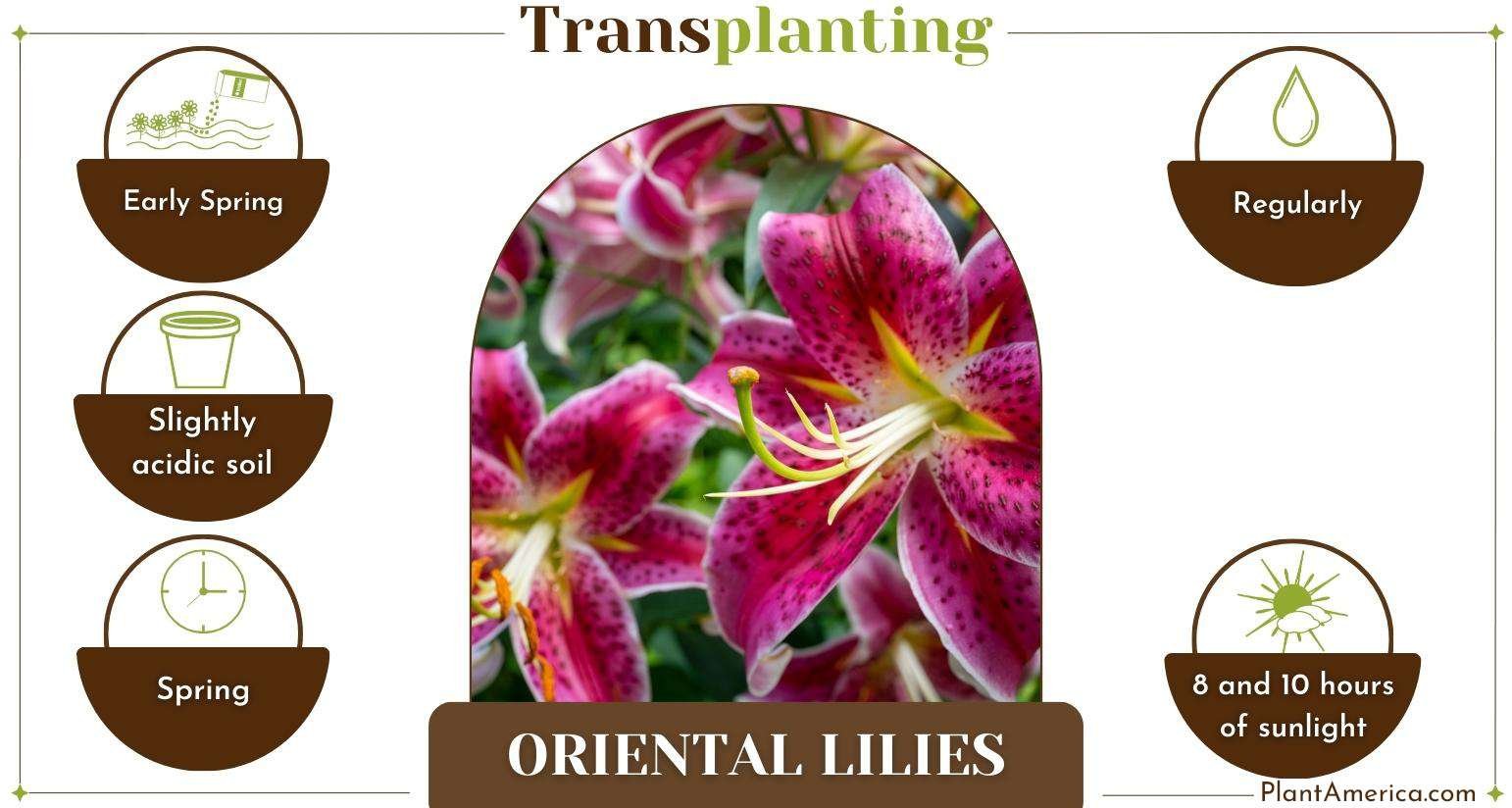 These lilies are similar to the Asiatic ones but have an incredible fragrance. They’re pretty easy to grow even if you’re a novice gardener, and our gardening team will share the best tips to guarantee the successful transplantation of these beautiful blooms.
How To Transplant Oriental Lilies In Simple Steps?
To transplant oriental lilies, you have to choose the right location and also the right time. After that, you have to dig up your lilies and divide the bulbs properly. Now, carefully plant your bulbs and start caring for them to grow them properly.
The oriental group of lilies is one of the most popular, thanks to its vivid colors and unique fragrances. Gardeners also love these plants because they can be easily transplanted without much hassle.
So, can I transplant lilies in the spring? Can you transplant lilies when they are blooming? How to transplant oriental lilies in pots?
All these questions might occur when you’re thinking about picking a new location for your oriental lilium or have just brought them from the nursery. You might also think about growing these lilies in the garden after they’ve been growing in a pot.
Oriental lily grows well in containers and can also fill the sunny spots in your garden with vibrant colors.
1. Choose The Right Location
The oriental lily is a hybrid plant with parents from China and Japan, just like the Asiatic lily. These plants can survive in different soil types if they retain average moisture. Clay soil isn’t suitable for these plants as the constant moisture can make the bulbs rot.
These lilies thrive in humus-rich, slightly acidic soil but can also grow in neutral soil. If you live in an arid climate and have alkaline soil, you can add an acidic fertilizer to help these plants grow.
Testing the soil for drainage before transplanting your lilies is essential because these plants can’t tolerate waterlogged soil. So, dig a hole 1 foot deep and 1 foot wide, fill it with water, and see how fast the water is absorbed. If the water level drops by at least 2 inches per hour, this spot will work for your lilies.
Whether you’re growing these lilies in containers or in your garden, these plants thrive in full sun. However, they can also tolerate partial shade.
Growing these lilies in full shade makes the plants leggy, and they will need stalking. This can also delay blooming and affect the number of flowers each plant grows.
The perfect spot should allow the plant to receive enough light in the morning with some protection from the intense afternoon sun. Moreover, the location should be away from drafts and strong winds to protect the plant stalks. It’s best to pick a location where your selected spot isn’t far from the plant’s original location, as these lilies don’t usually survive long-distance transplantation.
Once you’ve picked a spot where your plants can receive between 8 and 10 hours of sunlight, this can be the perfect spot for your lilies. You can also plant them at the exact previous location if you’re just trying to spread them.
2. Choose The Right Time
Choosing the right time to dig up, divide, and transplant the beautiful lilies is crucial for their survival. These lilies are late bloomers, and their flowers will likely appear in August when most bloomers have gone dormant in your garden.
Ideally, you should dig out the plants every 3 to 4 years when they’ve already established a good bulb structure. This structure will guarantee their survival once you plant them at a new location.
So, what is the best time to transplant your beautiful lilies? Can I transplant lilies in summer? Can you transplant Asiatic lilies in the spring?
You can dig up and divide these lilies in the fall and follow the same steps you’d follow if you’re transplanting tiger lilies in the spring. This is the best time to remove and grow the bulb structures at a new location.
This way, the plant will have enough time to establish and grow fresh flowers. Once you notice the foliage is turning yellow, this will be an excellent time to remove and separate your bulbs to prepare them for transplanting.
Some gardeners also choose to transplant these plants in the spring. This transplantation can still be successful, but your lilies might not have enough time to recover. As a result, they might not produce enough flowers in the next growing season.
This will work for you if the plants have already emerged from their dormancy the weather is cool, and it’s a better decision if you live in a colder climate. Your bulbs might not be able to survive the cold winter if you plant them in the fall.
Transplanting lilies in the summer when the weather is dry isn’t recommended. The excessive heat will stress the plant, and the transplantation will fail. However, if you plan to grow oriental lilium in a container to keep inside the house, you can transplant it anytime, even in summer.
3. Dig Up Your Lilies
These lilies self-propagate and can easily fill up a container or an old planting location within a few years. Dividing them regularly will keep the bulbs healthy and keep the lilies thriving.
Over time, the old bulbs stop growing new blooms, and the plant grows more bulbs. Dividing those will allow them to produce more flowers and keeps your plant thriving for years.
You should prepare the soil before transplantation by cultivating t and enriching it with compost. These plants won’t survive in alkaline soil.
Pick up a cool day to dig up the bulbs, and avoid doing this in the early morning. Wait until the weather is a little bit cool before you dig up your lilies.
Use a shovel or a garden fork to loosen the soil around the bulbs. Place the shovel about 7 inches away from the lilies’ base and press the edge at an angle. Dig the shovel about 6 inches into the soil and wiggle it until the bulbs have loosened.
If the bulbs don’t come loose, go to the other side and start digging the soil. Continue using the shovel in a circle around the bulbs until they can easily move. Ensure you don’t keep the shovel too close to the bulbs, as you might damage them.
4. Divide Your Bulbs
Gardening gloves will protect your hands from irritation before touching the bulbs. The bulbs contain irritating compounds that can cause a burning sensation, redness, blisters, and swelling. If you accidentally touch your mouth, you might feel nausea and burning in your mouth and throat.
After you’ve dug up your bulbs, you should examine them for any damage signs. Soft spots, discoloration, and mildew signs mean the bulbs are sick. These sick bulbs won’t be able to grow any blooms and can also infect the other healthy ones. As a result, it’s best to discard them.
Don’t use these sick bulbs in compost because they can harm your plants. You should burn them instead.
You must brush off the excess soil off the bulbs as gently as possible and pull the bulbs to separate them. We recommend dividing the bulbs by size since the bigger ones will bloom sooner as they’re more established. The small bulbs can take 2 or 3 seasons to grow vibrant flowers.
Separating the bulbs by hand might be a little challenging. In this case, you should use a gardening knife to cut them. Don’t forget to disinfect your knife after cutting the bulbs to avoid spreading infections. Grab the healthy bulbs and remove all the dead leaves and stems by twisting them.
5. Plant Your Bulbs
So, how to transplant oriental lilies in the fall? It’s best to plant your oriental lily bulbs as soon as possible because they can’t tolerate being left for extended periods.
If you plan on transporting them or can’t plant them right away, you can keep them in a plastic bag after filling them with moist sphagnum moss to keep them healthy. You can keep these bulbs in the fridge for up to 8 weeks, but you shouldn’t keep them with fruits and vegetables as they might release harmful gases that damage the bulbs.
When it’s time to plant your bulbs, you should dig the ground and make holes that are at least three times the height of each bulb deep and two times its diameter wide. Digging a deep hole is vital since you’ll be transplanting your bulbs in the fall, as a deep hole will protect the bulbs from the coldness in winter.
Since these plants have large dramatic flowers, they are heavy feeders like other types of lilies. Adding a 2-inch layer of compost at the bottom of the hole will increase the acidity and give the bulbs the needed nutrients to help them grow.
You can make your own compost or buy a ready-made mix and fill the hole. The compost will also provide a solid base for the oriental lily bulbs.
Place about 3 to 5 bulbs in the hole, with the pointed end where the stems grow facing up. Press the bulbs into the compost layer to help pack the roots and allow them to access nutrients. Leave at least ½ inch of space between each bulb in the same cluster.
Continue planting clusters of these beautiful plants in the same location, leaving a space between 12 and 18 inches between clusters. Combining bulbs of the same size is essential to keep your plants looking neat. This spacing will keep the planting location neat, and your flowers won’t get overcrowded for a few years.
Fill the hole with the soil you previously removed until the ground level. You can add compost to give the bulbs more nutrients. Press the soil until the ground is level and compact.
6. Caring For The Bulbs
Watering your lilies as soon as you plant the bulbs is crucial, as this will help them get established. After transplanting, you should soak the soil to a depth of 6 inches.
In the fall, you need to provide your plants with at least one inch of water per week, but it’s important to check the soil moisture because the bulbs won’t tolerate boggy conditions. In spring, you might need to water them more often. Mulching is a good decision because it can keep the soil moist.
Watch your bulbs and adjust your lily care routine depending on how they respond to transplantation. Once the first shoots start to appear, you should apply a 10-10-10 fertilizer in the early spring. Continue feeding your plants regularly every few weeks using an acid fertilizer.
You should also choose suitable companions for these remarkable plants. Lilies thrive with shallow-rooted plants that protect their bulbs and keep their roots cool. Shorter annuals like zinnias and some bulbs like daffodils can make excellent companions for the beautiful oriental lilium. You can also plant them with some perennials like columbines, peonies, and irises.
Conclusion
Oriental lily plants should be divided every few years to keep the bulbs healthy. Picking the right spot and time to plant these bulbs will keep them healthy.
- It’s best to plant the bulbs in the fall, but you can divide them in the spring if you live in a cold climate.
- Grow lilies at a location where the plants get at least 8 to 10 hours of direct sunlight.
- Bulbs should be handled with care, or they won’t be able to grow new flowers.
- Keep the soil moist and use an acid fertilizer to help the plants thrive.
Following these care tips will guarantee a successful transplantation of these beautiful plants in your garden. They can last for years with minimum care.