
Learning how to grow plants in leca is something most plant keepers want right now, as the absorbent clay pebbles don’t need water often like soil does. Moreover, leca ( “lightweight expanded clay aggregate”) is constructed with inorganic materials, so pests can’t survive in it.
Leca is baked clay balls that expand after absorbing water, and most plants grow in them well and require little care. This guide consists of simple steps to grow plants in leca and pros and cons of using it, so keep reading to find out.
How To Properly Grow Houseplants in Leca?
To properly grow plants in leca, you don’t need to add soil, but simply keep plants in these balls, in a process known as semi-hydroponics. You can use a nursery pot to add leca and a plant, and you’ll only need to add fertilizer mixed with water after that.
Leca is excellent for simplifying plant watering. Leca enables you to give your plants more regular watering while preventing overwatering. You have a lower chance of luring pests when you don’t use soil to grow your plants. Start from the basic steps to grow plants in leca.
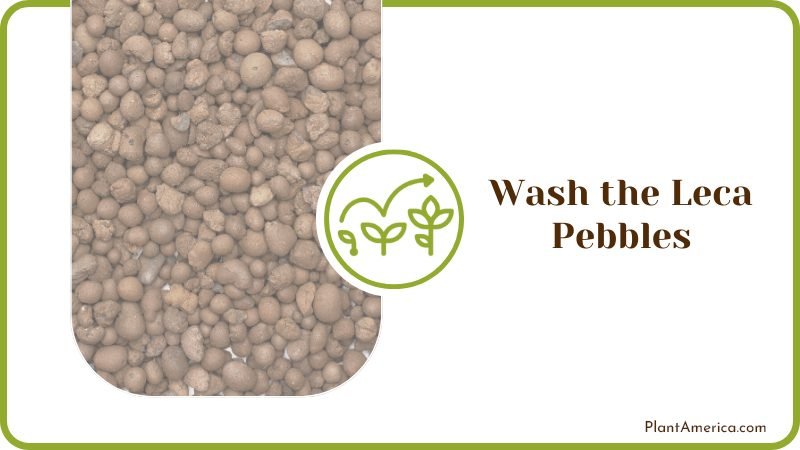
1. Wash the Leca Pebbles
For this step, you must thoroughly rinse the clay pebbles. Doing it outside your house is preferred, so the clay doesn’t get stuck in your interior drains. There will be a lot of silt, and you want it to be clear from clogging your pipes.
It’s better to use orchid pots as the holes act like a colander. Ensure they are as clean as they can get before you use them for the first time, in order to overcome the chance of bacterial growth. They must also absorb water for more than 6 hours to get primed.
Some people actually leave leca to soak for 12 or even 14 hours. You could leave leca overnight to soak if you want to ensure they take in as much water as possible.
2. Use a Cache and Nursery Pot
A pot with drainage holes in the cache or a decorative pot is better. These pots are helpful as they are friendly, sturdy, and budget-friendly. You must add a layer of leca clay balls until half of the pot is filled.
It would help if you remembered that leca plants must be maintained regularly so they don’t dry out or become too wet. When choosing a pot, make sure that it’s large enough for the plants you want to add. Also, you might want to pick something sturdier that can hold the leca material and the plants.
Some people prefer to choose transparent pots, so they can admire the leca and the plant’s roots. However, be careful if you choose a transparent pot, as many plants should not have their roots exposed to sunlight. The roots can develop algae when exposed to sunlight, and this can lead to many problems for plants.
Some plants that can have their roots exposed to light are Chinese evergreen, Dracaena, snake plants, spider plants, and bromeliads.
3. Add Some Fertilizer
You must add fertilizer once a month to your water. This is because clay balls do not have added nutrients like soil does. These plants won’t thrive, and growth will be highly stunted without it. Leca hydroponics and semi-hydroponic fertilizers work best, and you must add them to your water once a month.
The best hydroponic fertilizer for leca is a water-soluble houseplant fertilizer. When choosing a hydroponics fertilizer, ensure that leca has a pH level appropriate for the plant’s growth. It should be a little less than the soil’s level.
Also, ensure to test the dissolved salts using an electrical conductivity kit. High salt levels block the water absorption of plants. The right hydroponic fertilizer is crucial to give your plant healthy growth.
4. Transfer Plants From Soil to Leca
Transferring plants from soil to Leca is not difficult when done correctly, but it must be done carefully to prevent injuring the root system. Avoid stressful conditions like too much light, too low, or too high temperatures at this time since plants can succumb to transfer shock when they can’t acclimatize to the new growing environment. For this translocation, younger plants are typically preferable.
Rinse out any organic materials after carefully removing the plant from the soil (it’s better to do this while the soil is dry to prevent it from sticking to the roots). The soil can also harbor microbes that cause root rot. Be gentle enough not to break the roots, but abrasive enough to remove any dirt.
Give the roots up to an hour to dry. This will dry up and loosen any remaining dirt on the plant, as well as dehydrate the roots just enough so that the thirsty plants will eagerly absorb water once planted in leca.
This will also dry up and loosen any dirt that may have remained on the plant. To keep the roots out of the water and avoid root rot, ensure the buffer of a third of a container is maintained. Transitional submerged roots will be more brittle and vulnerable than usual until they adapt to their new environment.
Use a hydroponics leca fertilizer that promotes root growth during this transitional period to help the plant avoid transfer shock. Soil roots have fewer root hairs than water roots, and they will need to expand and adjust to the new space and method of nutrient delivery.
5. Propagate Plants in Leca
To propagate plants in Leca, start by planting a cutting to get started. This way, new roots will grow in the hydroponic system.

Take a stem of the desired plant with some leaves on it, place it in the prepared leca pots with fertilized water and let the plant soak it. Remember that you need to soak leca beforehand.
Final note:
The best plants for leca growing medium are Aloe vera, coleus, hoyas, monsteras, pothos, orchids, and bromeliads. Plants that have thin roots, like succulents, plants that require a lot of nutrients, and plants that thrive in moist soil don’t do well in leca.