
Euphorbia trigona of the Euphorbiaceae family, famously known as the African milk tree, is a beautiful succulent with green and purple stems. The plant can grow up to 9 feet tall, and the main highlight of this houseplant is its upright green to dark purple stems that grow leaves from the ribs.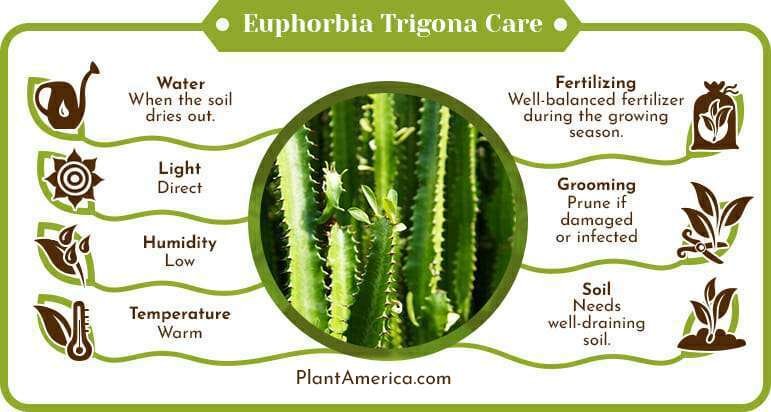
This succulent African plant is now commonly grown in home gardens and needs little care. In this comprehensive guide, you’ll learn everything you need to know about these beautiful Euphorbia genus species of succulents. Check out our care guides for the euphorbia horrida and euphorbia ammak varieties.
Quick Overview
Here is a handy table of requirements needed to keep your Euphorbia trigona happy and healthy.
| Requirements | Euphorbia trigona |
| Light | Prefers strong direct sunlight |
| Water | Water when the soil dries out; twice a week in late spring and once a week during winter |
| Soil | Needs well-draining soil |
| Temperature | Loves warm temperatures but can tolerate cold temperatures too |
| Humidity | Indoor lower humidity levels |
| Fertilizer | Enjoys well-balanced plant food once in a while, especially during the growing season |
What is Euphorbia Trigona?
Euphorbia trigona, also known as the Cathedral Cactus and African Milk Tree, is a perennial plant that belongs to Central Africa, India and Cuba. It has beautiful green and purple stems that grow upright and it is often mistaken as a euphorbia cactus or as a cactus with leaves, but it is actually a succulent. Today, this houseplant is known for thriving in the urban landscape although its original habitat is the tropical dry forests and dry deciduous forests. In India, it grows in moist deciduous forests too. It is commonly seen distributed on waste areas, semiarid zones and roadsides.
The most interesting feature of this plant is its upright stem and branches. These vary in shades of greens and sometimes turn purple too. Each branch and stem has two or three sides with ¼-inch thorns growing in pairs on the edges of the stem. This plant does not flower.
Euphorbia Trigona Care
This plant is believed to be a hybrid that can tolerate low temperatures. It prefers sandy potting mix but interestingly has a good tolerance for a variety of soils. It can be grown easily from cuttings, and the plant remains pest-free. Usually, it is planted on hedges and also grown in pots.
This African succulent is a rare plant that blooms during spring. The pink or orange flowers are a treat for the eye.
The following care guide will share detailed information about the kind of soil it prefers, watering patterns to follow, and ideal light conditions for this plant.
 Water Requirements
Euphorbia trigona looks quite beautiful when it receives good care. It needs water as frequently as other succulents do. If you want to keep your African milk tree healthy and have the best growth rate, be mindful of how much water you give it. The roots must not sit in water as overwatering kills this plant. The best method would be watering it thoroughly one day and then letting the water dry out before watering again. By doing this, you will avoid overwatering or keeping it dry for too long.
Commonly, they are considered a bit drought-tolerant and they don’t need plenty of water. Water the plant when the topsoil dries out. Watering it twice a week in late spring works best. During winters, once a week is enough.
 Light Requirements
Euphorbia trigona succulents prefer strong direct sunlight. When planting it outdoors, make sure the plant gets enough sunlight. Full to partial sun will work best for its optimal growth, so we recommend growing it outdoors instead of keeping it indoors. Make sure you do not move the plant quickly from sun to partial sun. Get it acclimatized gradually and then change the exposure of light. These plants do not tolerate low light, so never put it in full shade as your Euphorbia trigona will not grow in such conditions. The stems and branches also tend to bend towards the light source.
For even growth, the plant must get full light. If there is a limitation of options and light comes from one side only, then you can rotate your plant so that all sides get equal amounts of sunlight.
-
Rubra Variety
The Rubra variety changes color depending on the type of light it gets. Direct exposure to sunlight will turn its foliage maroon while low light conditions will turn the leaves light green. The plant will keep changing colors whenever there is a change in light conditions.
 Temperature Requirements
Euphorbia trigona loves warm temperatures but it tolerates cold temperatures too. In extreme cold, the plant stops growing. During that time, it is best to slow down on watering to reduce the risk of root rot. This plant can also tolerate temperatures that are below freezing, but prolonged exposure might affect its growth. Euphorbia trigona likes the minimum temperature to be around 20 degrees Fahrenheit.
If you are not in zones 9a-11b, and temperatures remain lower than this for a long time, then it is best to bring the plant indoors and give it maximum light to help it survive through the winter.
 Soil Requirements
Euphorbia trigona needs well-draining soil to thrive. Make sure the soil has coarse material and a sandy base. The light texture is ideal while the pH can vary from neutral to acidic. You can buy ready-made soil mix for cacti or experiment on making your own.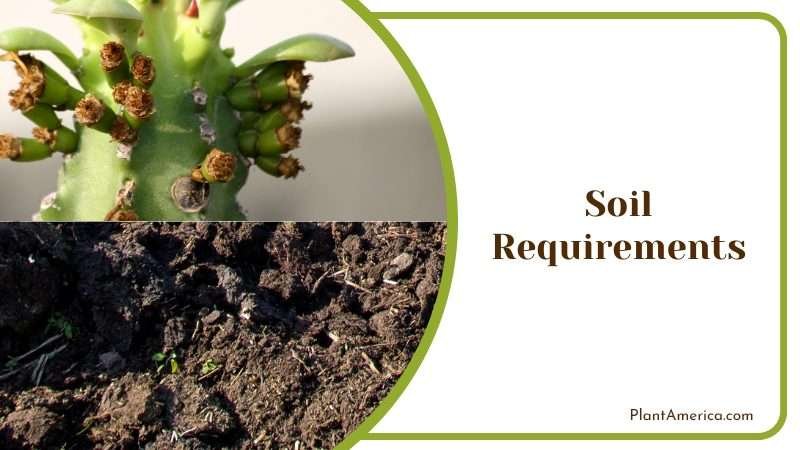 When creating your own soil mix, keep the following points in mind:
- Drainage: Should be free
- Reaction: Should be acid, neutral
- Texture: Should be light, medium
 Humidity Requirements
Indoor humidity is enough for Euphorbia trigona plants. If there is a humidifier for other plants then make sure this plant is away from it. High humidity paired with watering can be destructive for this succulent.
Do not place it close to the humidifier and avoid accidently misting this plant. In addition, grow it away from other plants indoors to keep the surroundings less humid. The plant grows tall and looks pretty on its own.
– Feeding Requirements
Euphorbia trigona doesn’t need to be fed heavily. It will enjoy a treat of well-balanced plant food once in a while, especially during the growing season. Use ready-made fertilizer or slow-release food; organic or natural fertilizers will also do the trick. Some of the organic fertilizers you can use include compost, worm castings or fish and bone meal.
– Repotting
Young Euphorbia trigona plants grow fast and may need repotting once a year. Once they mature, the growth slows down, and repotting will not be needed for two or three years. Here are a few things to keep in mind before you shift your plant:
- Transfer during the growing season and use fresh potting mix.
- Choose a pot that is 1.5 inches bigger than the previous one.
- Avoid planting this plant in an extra-large pot.
Propagation
The African milk tree or the Euphorbia trigona can be propagated by stem cuttings. Before you propagate this plant, read the care guide to pick the best potting mix and to select the right position for keeping new plants.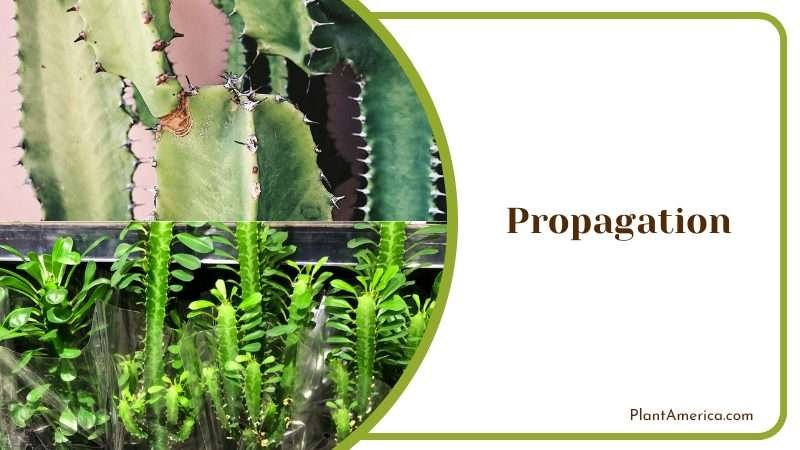 The following guide will show you how to use this method for a successful propagation.
– How To Propagate Euphorbia Trigona From Cuttings
Here is a step-by-step guide on propagating this plant using cuttings.
- Carefully cut a healthy branch or stem from the mother plant.
- Remember to use a clean knife or scissors.
- Before putting it into the soil, let it dry out for a few days to help form the callus.
- Use well-draining potting mix and water generously for the first time.
The Internet has mixed information about the propagation methods of this plant. If you read somewhere that you can propagate this succulent from seeds, or you find someone selling seeds online, ignore this information. This plant can not be grown using seeds because it does not flower.
Problems
Euphorbia trigona is a pest-free plant and may not show signs of pest infestation. If you do notice pests on it, use natural pesticides like neem oil spray, insecticidal spray or wash it to keep pests away. Here are some other signs of illnesses and their cures.
– Leaf Drop
These plants can tolerate cold temperatures for a while, but they may drop their leaves to survive it. If you placed this plant outdoors, bring the plants indoors and keep it cozy.
– Crispy Leaves
Dry spells make the plant thirsty for water and make the leaves brittle and crispy. This leads to wilting foliage and severely affects the growth of the plant. To avoid this, water regularly and as frequently as needed.
– Yellow Leaves
Too much water does not allow the soil to dry out between waterings, which causes leaf drop. Leaves turn yellow before falling off. To avoid this, monitor how frequently the soil gets dried and the plant uses up all the water. Water only when needed.
– Shrinking Stems
Shrinking stems are a sign of underwatering. Water your plants generously if you see this. You will notice that in a few hours the stems will begin to look better and more fleshy like before.
– Dying Plant
This can happen when the plant is overwatered. Excess moisture or wet roots will begin to suffocate the plant and lead to its death.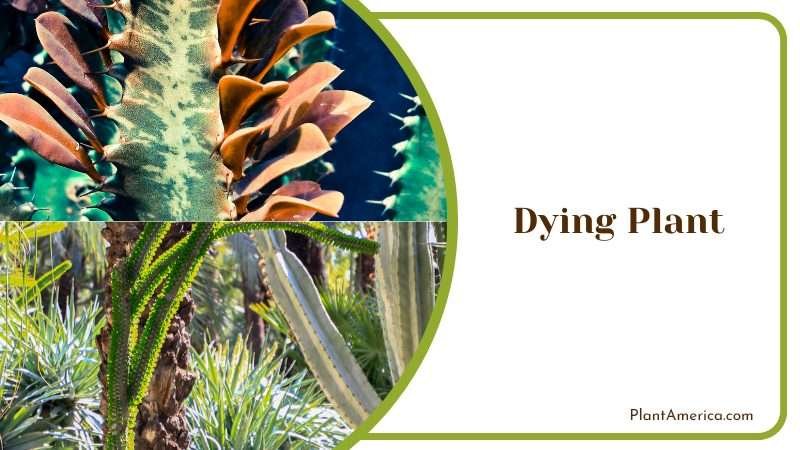 Repot the plant when you encounter this. If the damage is severe, you may have to take cuttings and grow them independently to save the plant.
– Invasive Succulent
Euphorbia trigona is widely grown in Cuba and India where it is seen to escape its cultivation site. It has the potential of being invasive if grown outdoors. In these areas, it grows in abandoned gardens, drylands and semiarid sites without difficulty. That is why it spreads on its own through cuttings and dropping stems.
– Thorns and Spines
Thorns and spines grow on the outer edges of the stems in pairs. They are small and will not scratch you severely, but they can puncture the skin and be painful. These are the plants’ ways of self-defense.
This can also cause pets and children harm, so be careful where you place them.
– Latex Sap
The sap of the African milk tree is the white milky fluid that leaks from the wounds to heal them or to keep animals and humans away from them. It is not deadly but it is toxic. Touching it can also irritate the skin and it tastes bitter.
– Pot Type
When these plants are young, they look adorable and beautiful and small pots seem to suit them. As they grow tall they will quickly outgrow the pot. Make sure they are planted in a right-sized pot and they also have the right type.
Plastic pots are lightweight and strong winds can make these tall plants fall very easily. If the pot has a strong and heavy base, it will stay in place and the plant will remain safe. Terracotta pots are the best for this type of plant.
Interesting Facts
The latex sap has two very interesting uses for the plant. You may notice the plant begin to secrete the sap if it is damaged or if there is a cut on it. This sap can irritate the skin and has a very bitter taste. Because of this, animals such as birds stay away from the plant. The toxicity of this sap keeps humans and insects away as well. It is a way of self-defense for the plant. The second purpose of this sap has to do with the recovery of the plant. When the sap dries, it seals the cut and prevents infection.
The leaves of the plant can damage easily, so wear gloves while repotting to avoid skin irritation caused by the leaking sap. If there is excess bleeding of sap because of damage, you can wash your plant with cold water to stop it.
Final note:
The African milk tree plant grows from the main stem . It keeps growing taller as one column but will occasionally grow arms or branches from the sides. It also needs to be encouraged.