
Philodendron Lemon Lime of the Araceae family is a refreshing trailing houseplant. It adds a display of vibrant shades of yellow and lime-green indoors. The vines or cascading stems can grow long and look best when trimmed.
This feature makes this philodendron genus plant perfect for pots and hanging baskets.
What is the Philodendron Lemon Lime?
The Philodendron Lemon Lime is a fast-growing plant native to America that offers air purification besides being a feast for the eye. Like other philodendrons, it is easy to take care of this plant. Gardeners love them because they make a perfect decorative species, and they grow indoors.
Philodendron Lemon Lime Care
With our carefully compiled care guide, you will be able to grow your plants successfully and enjoy the process too. Let us look at each requirement in detail:
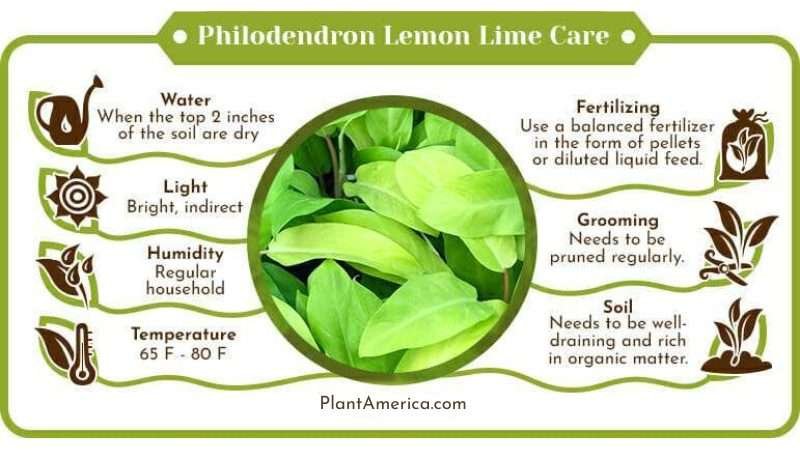
 Water
Water
Monitor Philodendron Lemon Lime watering for a few days after you bring the plant home.
Daily evaporation also depends on the season, temperature, and lighting conditions. You will learn, with time, that the answer to the first question will not be the same in every season. In summer, it is hot, and water evaporates faster, while in winter, it slows down because of the longer nights.
The answer to the second question is more important for effective watering. Never water when the soil is wet. What is your plant when the soil is slightly dry?
Overwatering
Overwatering encourages bacteria build-up in the roots, which leads to root rot. Root rot is the biggest problem with philodendron plants. Plants that suffer from soggy soil become weak fast and die.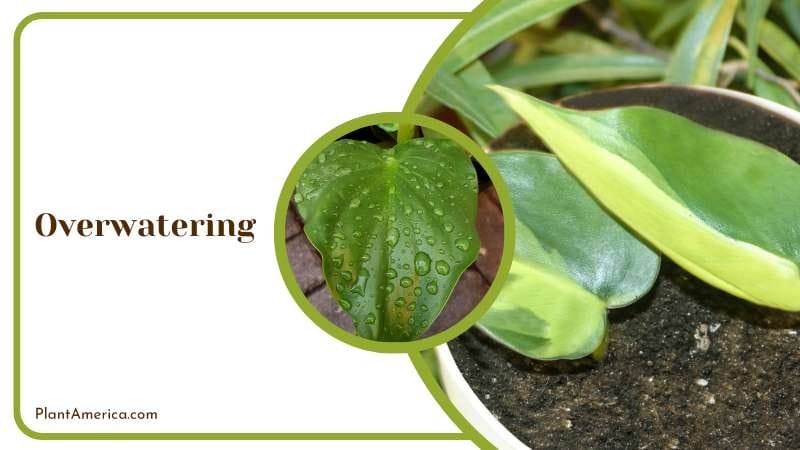
The only way to keep the plant alive is to take some cuttings and regrow.
Another ideal way to see if it is the right time to water your plants is to feel the texture of the soil. Allow most of the water to dry out before you water it again. Also, remove the water from the dish under the pots.
 Light
Light
Keep your Lime Philodendron in bright, indirect sunlight. Very strong light will scorch the leaves, while too little will result in slow or even leggy growth. A corner away from a sunny window is best.
Micans lime will survive low light settings, but it will not encourage healthy growth. Select a brightly lit room for growing this Philodendron variety. Never put them on the windowsill. Keep them away from a south-facing window too.
A spot that receives neither direct light nor shade is best for it to grow. You can elevate the pot or turn it into a hanging container to get that perfect balance too.
 Soil
Soil
The Philodendron Lemon Lime soil needs to be well-draining.
Organic matter like peat moss can help build a structure of the soil that allows the soil to remain moist but not wet. It is also essential to look at the type of pot you are using.
The pot must have good drainage. You can drill extra holes if they are not big enough or are less. Hanging baskets have good drainage usually. The terracotta pots also have pores and drain water well. Plastic pots may need extra holes.
 Temperature
Philodendron Lemon Lime thrives in temperatures between 65 to 80 degrees Fahrenheit during the day. They like the night temperatures to be somewhere around 55 degrees Fahrenheit. The highest temperature that they can tolerate is slightly above 85 degrees Fahrenheit.
Since the plant is from Mexico and Central America, it loves warmth and being cozy. Keep it away from heaters and fire. During winter, maintain the temperature. Exposure to low temperatures will stun its growth and also lead to slow recovery.
 Humidity
Regular household humidity is fine for this philodendron, but higher humidity encourages larger leaves.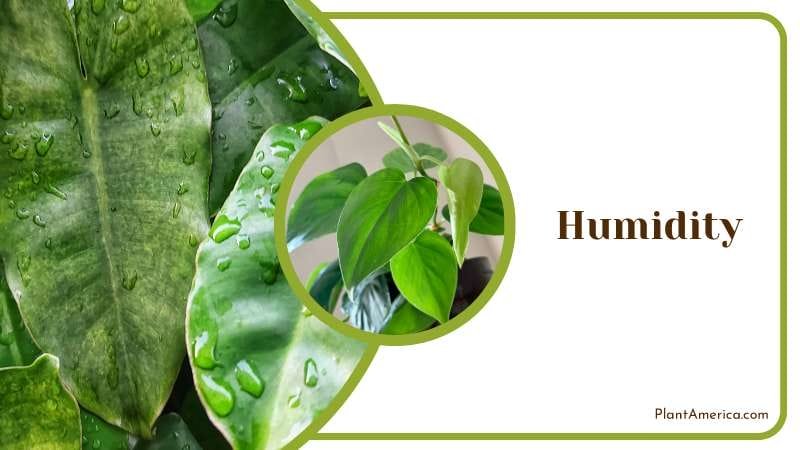
Your plant will benefit from the occasional misting. In winter, slow down on misting.
 Fertilizer
Micans lime philodendron likes liquid fertilizer during the growing months. It promotes lush green and bigger leaves. You can use a balanced fertilizer in the form of pellets or even diluted liquid feed. Reduce or stop fertilizing during winter.
Feeding it naturally or organically is even better. A treat of regular fertilizer will keep it healthy and have vigorous growth.
You can start fertilizing the plant when it is four to six weeks old with a 10:10:10 fertilizer. The ratio indicates NPK content in any fertilizer.
Propagation
Philodendron Lemon Lime can be propagated without much effort. You can adopt one of these methods to multiply your plants:
- Stem cutting propagation through water
- Stem cutting propagation with potting mix
Remember, always propagate your plants during the growing season. For Philodendron Lemon Lime, it is spring and summer. In winter, the plant likes to rest, and we must not disturb them.
Once you are ready to propagate Lemon Lime Philodendron, follow these steps for a higher chance of success. It can be an activity that you want to do with kids too. Our propagation guide below will explain each method:
– Tips for Propagating the Lemon Lime Philodendron
- Take a clean pair of scissors and cut the stem in between two leaves.
- Make sure to leave at least two leaf nodes on each section.
- Dip the end of the stem into the rooting hormone and sow it in the soil.
- Keep it in the shade for a couple of weeks and then slowly expose it to indirect light.
Alternatively, you can place the cuttings in water for a couple of weeks until you see new roots and then follow the last step.
Problems
– Wilting Leaves
Wilting leaves of the Philodendron Lemon Lime plant indicate the problem with rotting roots. When the plants are overwatered, the soil becomes clogged and loses its structure. It causes the roots to rot and damage the plants.
Take the plant out and inspect the roots. If they are decaying, you might have to change the soil or take cuttings before discarding the entire plant.
– Pale Leaves and Leggy Stems
Philodendron Lemon Lime leaves get pale and lose their vibrancy if kept in low light or shade. It needs bright indirect light. Move the plants to a better-lit location to improve their hues.
– Yellow leaves
Yellow leaves of Lime philodendron are a sign of two extremes of light. It happens if the light is too much or too little. Your plant must not be placed directly under the sun. Instead, place it under indirect light.
Micans lime philodendrons can tolerate very low lights, but that is not the ideal situation for them. It is best not to place them in dark environments.
– Curling Foliage and Brown Patches
If the tips of Lime philodendron are curling or pointing towards the ground, it is not a good sign. Early detection can help. The leaves of philodendron drop down when the soil is dry. Maintain its watering.
Brown patches on the leaves indicate leaf spot virus, which is caused by damp soil. Too much water will lead to bacteria build-up and cause brown or yellow patches on the leaves. Reduce watering and change the soil.
– Spider Mites
Spider mites can look ugly and make the foliage weak and dusty looking. Wash them away with insecticidal soap. Isolate the plant, and make sure that the mites do not land on other plants when you wash them off.
Homemade Pesticide Recipe
Here is a recipe to make your natural pesticide to fight bad insects in the garden.
– Ingredients
- Two teaspoons neem oil
- One teaspoon soap
- One liter of lukewarm water
– Instructions
- Combine all ingredients in a sprayer
- Apply the liquid weekly by diffusing it on the stems and leaves evenly
Features of Lemon Lime Philodendron
Stats and Facts
| Botanical Name | Philodendron Hederaceum Lemon |
| Common Name | Philodendron |
| Width | 10 to 12 inches |
| Height | 12 to 24 inches |
| Edible | No |
| Flowers | None |
– Origin
The Lemon Lime genus was first documented in 1832 by the Schott Institute. The Lemon Lime Philodendron is native to America. A captain discovered it on a voyage and was then brought to England. It was soon cultivated and grown there. After some time, this variant arrived in Florida, where local markets started selling it as a popular houseplant.
Other plants from this genus are Philodendron Velvet, Tortum, Bloody Mary, and the Golden Dragon.
– Name
Philodendron is a Greek word and a combination of two words. Philo means love or affection; on the other hand, dendron means tree.
Philodendron Lemon Lime has other names too. For example, its scientific name is Philodendron Hederaceum Lemon Lime. Other common names are:
Gloden Brazil
Sweetheart Vine
Philodendron Domesticum Lemon Lime
Lemon Lime Heartleaf Philodendron
Philodendron Scandens Lemon Lime plant
Philodendron Cordatum Lemon Lime
Lemon Lime Philodendron transforms in different stages of its growth. Hence, gardeners have noticed it various times, and some very unique names are were given to it:
Micans
Deviatum
Harlowii
P.acrocardium
Oxydatum
– Growth Rate
These lovely plants can grow into big robust plants. They can be trained as trailing plants or even as climbing plants. With the right temperature, humidity, light, and nutrients, you can expect it to grow as big as 24 inches.
The vine of Philodendron Lemon Lime can be trained upwards on a trellis. Pillars also become excellent support for it. People also use moss poles to guide it upwards safely. There are other varieties available too.
The Philodendron Lemon Lime Variegata adds more interest in the garden with its patterned leaves.
– Stem and Foliage
The leaves of Lemon Lime Philodendron are up to 1.5 inches wide and seven to 10 inches in length. The foliage grows larger if grown in open space. Its stems grow downwards quickly in a generous volume. The younger plants offer profound leaf growth.
The leaves grow from the base, proffering a more dense but wholesome look. Its leaves are delicate and heart-shaped. The foliage is vibrant pinkish-yellow in the beginning. However, over time, their hue transforms to lime green and neon. The plant is a long vine that is productive and usually sustains growth for a prolonged period.
– Evergreen Plant
The Lemon Lime Philodendron plant is evergreen. It grows fast and remains vigorous and charming for a long time, even in the changing seasons.
The lengthy stems of the Philodendron Hederaceum drop down, even on a medium-sized plant. They grow eight to 12 inches long when grown as a houseplant. Out in the open, they can grow much bigger. You can prune them to maintain their appearance and to manage their height.
– Flowers
Usually, the Lemon Lime Philodendron does not produce flowers. It rarely blooms outdoors. However, when it blooms, it grows ordinary white flowers, which are not considered ornamental. These flowers do not change their look with time and have a short life.
Pressure and Drought Tolerance
The Lemon Lime Philodendron vine cascades downward and is a slow-grower where there is a moderate pressure condition. It can suffer if there is rough handling and high pressure. The plant is moderately drought tolerant and can grow in warm conditions, provided its moisture and light are managed correctly.
– Durability and Disease Resistance
Besides disease carried by pests and their attacks, this plant is disease resistant. This plant is very durable as it persists for a long time.
It is perennial and can keep growing for at least two years. The vines and foliage of this plant live for years. Philodendron Lemon Lime survives even when all leaves fall off.
– Maintenance
Philodendron Lemon Lime thrives in diverse light settings but will perform best in bright indirect light. It loves well-drained soil, occasional fertilizer, and moisture. For getting a bushier plant, simply prune it.
The tropical Lemon Lime Philodendron likes warm temperatures. It purifies the air as an indoor plant. All it really needs is the regular humidity and temperature that already exists in our homes. You can also place it to grow on a trellis or allow it to trail in a hanging basket. Commonly people train it on a moss pole to direct the beautiful plants upwards.
– Dormancy
Philodendron Lemon Lime also goes dormant in winter and conserves its energy for spring. At this time, reduce watering and avoid fertilizing the plant. Misting may be needed in dry winters. Do not disturb the plant by propagating it in its dormancy.