
“How to transplant a butterfly bush” is a question all bush owners are curious about. This gorgeous flowering plant is comprised of over 150 species, all producing vibrantly colored flowers.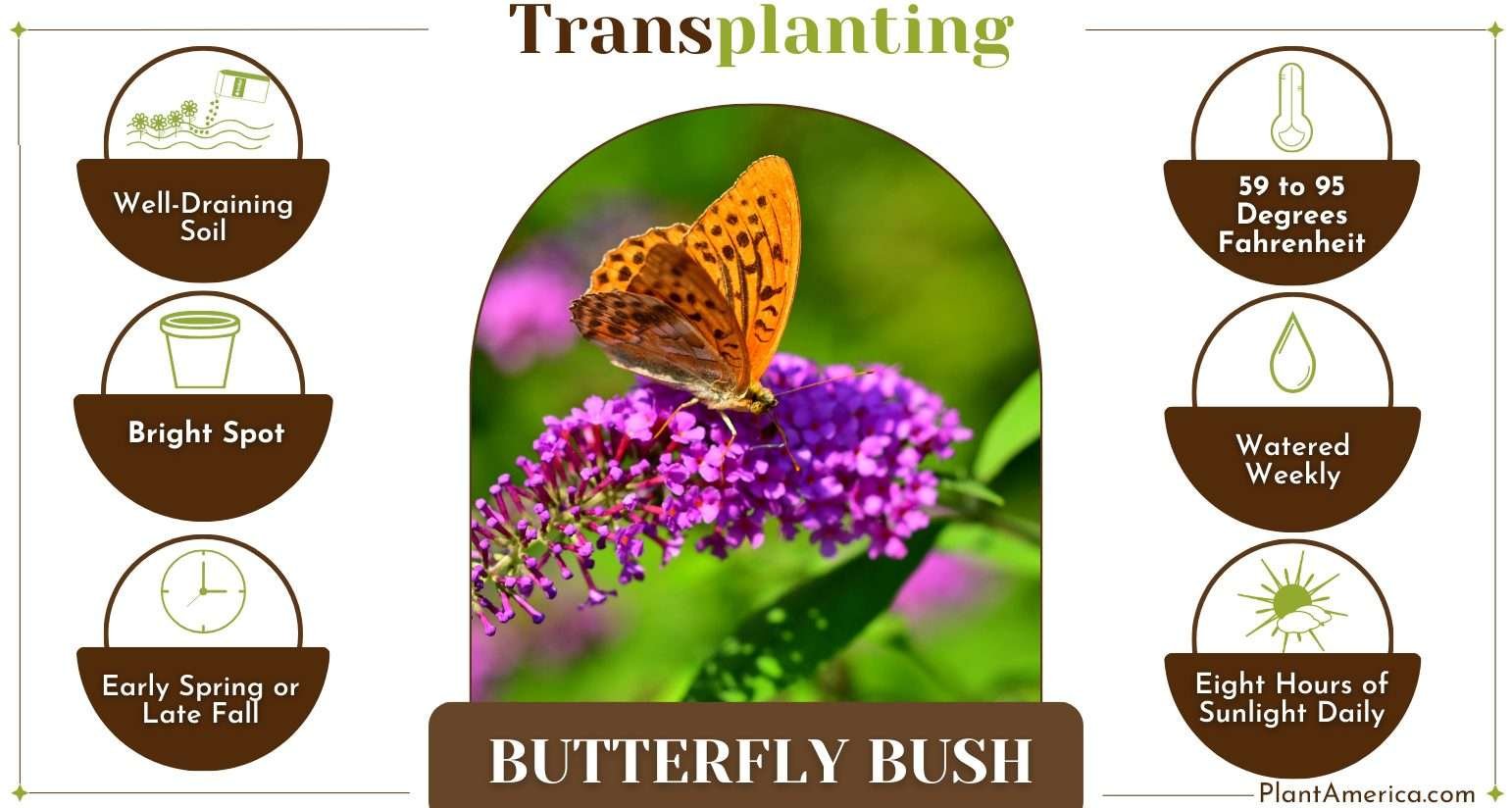
In certain states of the US, it is considered an invasive plant type that eventually needs to be cut down. But in this article, you will learn how to transplant this bush in seven easy steps.
How to Transplant a Butterfly Bush Plant in Easy Steps
To transplant a butterfly bush in easy steps, start by first pruning its foliage and underground roots. Cover the dugout roots with a burlap sack as you dig a new hole that is two times wider than the root ball but just as deep.
– Get the Tools Ready
Before you can get down to transplanting this plant, you must gather all the essential supplies and tools first. Handheld pruning shears come really in handy when it comes to removing old and diseased roots. If the shrub has grown too big, then using loppers instead of shears would be better.
An edging spade or shovel is best for digging out bushes like this one. Its bottom side is sharpened on a shallow angle, providing a wide cutting edge. Rubbing alcohol must be used to disinfect all gardening equipment before each transplantation.
This habit keeps plant infections and diseases from spreading through the tools. Diluted bleach with 10 percent strength or 70 percent isopropyl alcohol is perfect for cleaning gardening tools.
Next, you need something to transplant the bush from one place to another. Borrow a wheelbarrow from a local nursery, or use a plastic tarp instead. If there is some time before the bush is replanted, then a burlap sack will be needed to keep its roots moist.
Keep a gardening tape around and wear a hat, gardening gloves, boots, and sunscreen. Transplanting plants and bushes is no fun if you end up hurting yourself.
– Check the Soil Drainage
Drainage is critical when it comes to growing any bush, and the butterfly variety is no exception. Adjust its drainage once you have chosen the perfect spot for transplanting this bush. We have a straightforward method to check out the drainage of any soil. Dig a one-foot-deep hole in the new soil using an edging spade.
Fill this hole with water and allow it to drain naturally over time. Once it drains completely, fill it again and measure how much drainage is occurring on an hourly basis. Drainage of one to three inches per hour is good for this plant. If the drainage is less or more than this, then it needs to be adjusted.
– Prune the Bush Before Taking It Out
Pruning is best carried out before taking the bush out of its old hole. This makes it far easier to take the bush out and transport it elsewhere. Pruning also decreases the amount of leaves and branches that have to be supported by the roots. The roots are better able to adjust to their new home, reducing the risk of transplant shock.
The fast-growing butterfly bushes can be pruned a lot without causing them to die. It is okay to prune most of the bush and leave only six to 18 inches of the main stem standing. This cut-down bush will take root much faster and will regain its old size in a couple of growing seasons.
Use pruning shears to carry out this pruning, and always cut each stem at an angle. Make sure the remaining stems are healthy and the bush is not cut off more than two-thirds of its size. As always, disinfecting the tools with rubbing alcohol beforehand is a must.
– Take the Roots Out
“Can you split a butterfly bush?” is an important question that a lot of you might have. Yes, it is possible to cut and trim the root ball before taking the bush out of the soil. This might sound like a bad idea, but it actually helps you and the plant during transplantation.

Measure a circumference of about two feet from the base of the bush and use a spade to cut the roots from this point. It is totally up to you whether you want to trim the roots or not. The next step is to start digging the rest of the root ball out using either the spade or the shovel.
Push these tools on the periphery of the root ball at an angle using your foot. Push the tool’s cutting edge into the soil and then lever the soil upwards. Once the soil has been dug all around the plant, it becomes easy to pry the roots out of the soil. If there is some time before you plant the butterfly bush into its new hole, wrap the roots in a burlap sack right away. Moisten the burlap sack with water to keep the roots moist all this while.
– Dig a Hole in the Soil
It is time to shift to the new spot you have chosen for your proven winners, miss molly butterfly bush live shrub. The new hole should be twice as wide as the circumference of the root ball that has been dug out and almost as deep. The sides of the new hole better droop downwards instead of being straight.
The spade and the shovel can be used to dig up this hole. The ideal soil for this bush is loose and sandy, so digging should be fine. If you are wondering, “How deep do butterfly bush roots go?” then the answer to that is six to 12 feet deep. However, most homegrown bushes rarely grow roots that are deeper than two feet.
– Plant the Bush in Its New Place
Once the new hole has been dug, place the dugout butterfly plant into it as soon as possible. Even hardy varieties like the proven winners 4.5 in. qt. pugster blue butterfly bush live shrubs only survive a little bit of time out of the soil. Settle the roots very carefully into the hole, keeping the stem nearly vertical. The part from where the roots are growing should be at the level of the soil.

– Take Good Care of the Newly Transplanted Bush
The first couple of months after a plant transplant are crucial. It will need watering almost weekly for about six to 12 months. It helps to have a moisture meter at hand so that you find out when the bush needs watering right away.
You will also have to be careful about fertilizing the plant in the first year after transplantation. Say goodbye to organic soil-modifying fertilizers and instead use only well-balanced synthetic ones. The plant might not produce the best bloom that year, but it will regain its glory with time and care.
Factors to Keep In Mind When Transplanting a Butterfly Bush
Factors to keep in mind before transplanting a butterfly bush are that the soil must be well draining and the temperatures must be moderate. Always transplant in early spring or early fall, and do not modify the soil with organic feeds like compost, peat, or potting mixtures.
– Best Time to Transplant
The best time to transplant the butterfly bushes to another location is during early spring or late fall. The bush is just coming out of its long-standing winter dormancy in early spring, while it is about to go dormant in late fall. The bush must be almost but not completely dormant during transplantation.
Transplanting butterfly bush in the summer is not recommended because the plant’s growth is at its peak. Uprooting the plant at this time will seriously affect its growth potential and fruiting. Transplanting during winter is also unsafe because a dormant plant does not adjust to new soil easily.

– Fertilization
The soil needs of butterfly bushes are easy to fulfill. These plants need exceptionally well-draining soil that does not hold water for more extended periods. Compacted soil that retains even a little amount of water will cause its roots to rot and become prone to diseases.
That is why it is best to transplant them from clay-type soil to sandy soil if possible. While preparing the soil for them, there is no need for any additive fertilizers like compost or potting mixes. There is no need to add even the topsoil removed before digging a hole, as that can also cause drainage problems.
Of course, regular commercial fertilizers will be needed to make a butterfly bush bloom after transplant. Go for a slow-release granular formula that is buried in the soil in early spring at the time of transplant. Fertilizer once again in late spring or early summer, but no later than that.
– Watering
During the first year of its life, most of these plants like to be watered weekly. The same goes for a recently transplanted bush that must be watered weekly. The watering frequency can be safely reduced once the roots are established deep into the soil. Afterward, it is possible to water it every other week.
Most common varieties like butterfly candy lil’ lavender butterfly bush live shrub plant are drought tolerant in nature. However, it is safe not to neglect proper watering a week before and after transplanting. Rainwater is the healthiest for them instead of using tap water that is often contaminated.
– Temperature Requirements
59 to 95 degrees Fahrenheit is the perfect temperature range to grow these bushes that attract butterflies to the lawn. They adjust really well in areas with average to slightly warmer temperatures. More watering will be needed during hot summers with temperatures exceeding 85 degrees Fahrenheit.

During colder temperatures, the bush will stop growing and might go into dormancy. Any transplantation should be carried out during mild weather when it is neither hot nor cold. When transplanted in early fall, cover the bush in a sack to prevent an episode of butterfly bush transplant shock from occurring.
– Proper Place
Where to transplant this plant is a more pertinent question than how to plant a butterfly bush. This plant needs a bright spot with sandy soil to grow in. The soil and light requirements are even more important for plants that have been transplanted. If the soil is too compacted, amend it using sand and carry out proper aeration before transplanting.
– Light Requirements
Ensure that the new spot is situated in a place that receives a minimum of eight hours of sunlight daily. Refrain from transplanting the bush under larger, bushier trees that will shade it and stop it from receiving adequate light. A minimum of six morning hours is usually enough during very hot summers.
Conclusion
Let us go through a brief recap on how to transplant a butterfly bush just like a professional:
- Either transplant this bush in early spring or early fall, but never in winter or summer.
- This plant does not survive well once outside the soil, so always cover its roots with a moist burlap sack.
- Water the soil around the bush amply a day before digging to keep the roots moist and to make it easy to dig them out.
- Take care that the bush is not infested with spider mites and other bugs before transplanting.
In this article, you learned about how to divide a butterfly bush and then transplant it. Go ahead and give your bush a new home using the steps that you have just read.