
Aphids on tulips are bad news for the plant and the unlucky plant owners. Aphids can threaten the very life of the tulips of the Liliaceae family if timely solutions are not sought. Fortunately, with the right techniques, all tulip varieties can be saved.

What Are the Causes of Aphids on Tulips?
The causes of aphids on tulips are an attraction to the rich greens of the tulips, their warm environment, and the absence of natural predators. These little insects penetrate our gardens and tulip beds and feast on plant sap. Aphids reproduce quickly and can cause havoc on your tulips.
Let us now investigate the mystery behind their presence. Tulips are well-known for their beautiful blossoms but have lush, succulent leaves that attract aphids. These insects are attracted to the sensitive tissues of your tulip’s leaves and the nutrient-rich sap contained within them. The succulent quality of tulip leaves makes them an open invitation for aphids looking for food.

– Warm and Humid Environments
Aphids and spider mites flourish in warm and humid environments, which your tulip garden provides. Spring and early summer are frequently ideal times for aphids to multiply fast. Their population growth can be rapid, resulting in infestations that endanger the health of your tulips.
– Overcrowding
When tulips are planted too close together, the lack of airflow and increased humidity between plants creates an environment conducive to aphid infestations. Overcrowding in tulip beds might allow these pests to establish themselves.
– Lack of Natural Predators
Natural predators, such as lacewings and ladybugs which feed on aphids, help to control healthy ecosystems. If you don’t have these natural predators in your garden, aphid populations might grow uncontrollably, putting your tulips at risk.
– Stressing in Plants
Tulips that are stressed due to poor growing circumstances, insufficient nutrition, or disease susceptibility are more sensitive to aphid assaults. Weak plants are simpler to exploit since their defenses are compromised.
How To Get Rid of Aphids on Tulips?
To get rid of aphids on tulips, start by spraying water on them, using pesticides and insecticide solutions, or removing them manually. When the green bugs on tulips expand and start causing visible aphid damage to leaves (drooping leaves), stems, and buds, it’s time to take action.
The sooner you deal with the infestation, the higher your chances of stopping the pests in their tracks and rescuing your plants from extinction. Acting quickly will save you a lot of time and effort later on.
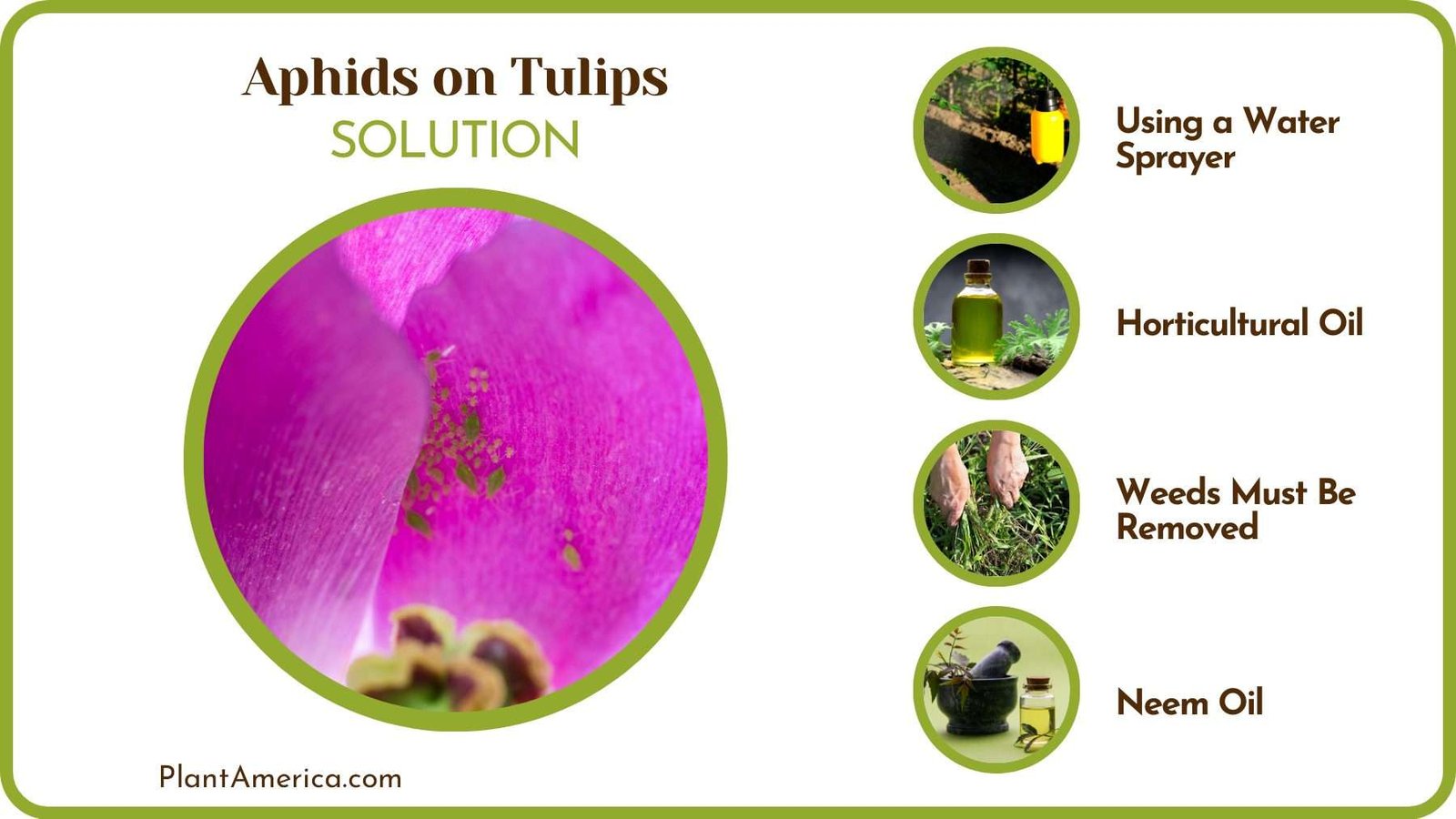
1. Using a Water Sprayer
Spraying your plants with a strong stream of water from the garden hose is the safest and quickest way to eliminate aphids. Aphids are such little, soft-bodied insects that a heavy thunderstorm can blow them away.
However aphids can return to a plant after being knocked off. For this persistent water hosing is needed. When the populations are dense, consider spraying the plant with water at least twice a day. After they are gone, you can spray them on alternate days for good results.
2. Horticultural Oil and Insecticidal Soaps
These methods are least likely to harm the environment or humans. However, you must still follow the aphid removal recommendations on the packaging. Aphids can be killed with insecticidal soaps and horticultural oil, but they must be administered frequently during large infestations because aphids reproduce so quickly.
Because these treatments only kill aphids when they come into direct contact with them, you’ll need to reapply regularly until the pests are gone. Remember to spray on the bottom of the leaves as well as the tops.
3. Aphids Can Be Crushed With Your Fingers
If you’re not the squeamish kind and the infestation isn’t so bad that it would take hours to clean up, a non-toxic way to get rid of aphids is to gently massage your thumb and fingertips over the leaves and stems of your plants wherever you notice them.
Because these insects are soft and delicate and crushed with light pressure, this method will most likely not kill every bug, but it will help your plants produce healthy leaves again. Check back in a few days to see whether the procedure needs to be repeated.
4. Weeds Must Be Removed
You may look for aphids on your plants, but these insects may also infest weeds and gain a foothold in your garden. It’s only a matter of time before they spread to your vegetables and flowers, so be vigilant about weeding around your plants.
Some weeds, including sow thistle and mustard, appear particularly appealing to aphids.

5. Attract Aphid-Eating Beneficial Insects
Begin a routine with organic aphid control products that are commercially available. Organic aphid control options are available for gardeners who want to know how to get rid of aphids naturally.
Insecticidal soap, which dries the insects out; all-season horticultural oil, which smothers the insects or their overwintering eggs; and essential oil, which makes them sick enough to quit feeding, are among these items. Remember that some of these chemicals will also kill useful insects, so use them only when other control methods have failed and only “bad bugs” are present.
6. Neem Oil
The oil’s organic ingredients repel aphids and insects such as mealybugs, cabbage worms, beetles, leafminers, ants, and several caterpillars. It may, however, repel helpful insects, so exercise caution when and where they are present.
Spray the affected areas after mixing the oil in water as per the package directions or using a ready-to-use oil spray. The oil can also be used to control many types of fungus.
7. Consider Using a Systemic Insecticide
If your aphid infestation is severe and does not improve after applying insecticidal soap, you could use a systemic insecticide like Imidacloprid to kill them. Imidacloprid can have devastating impacts on predators and pollinators, so its use should be avoided as much as possible where soaps and oils will provide adequate control.
8. Introduce Helpful Insects
Various bugs, including lady beetles, lacewings, and parasitic wasps, control aphids. Providing a habitat of flowers to supply nectar throughout the season and ground covers for a cool and protective hiding location will help attract beneficial bugs to the garden and keep the aphid population in check. Ladybugs can also be found hiding among mulch and leaves.
These natural predators are available for purchase online. If you introduce helpful bugs to your garden, avoid using a broad-spectrum pesticide because it will kill both the beneficial bugs and the aphids.
9. Use Dormant Oil
If aphids have landed on your fruit trees, use dormant oil, a commercial oil used to treat pests during the off-season, to kill overwintering eggs. Apply the dormant oil to the tree’s leaves, stems, branches, and trunk using a garden sprayer following the directions on the container. Reapply as directed by the manufacturer. It works against tulip bulb mites too.
10. Choose Plants That Repel Aphids
The odors of oregano, chive, sage, garlic, leeks, onions, and other plants can deter aphids and keep other tulip pests and diseases at bay. Plant these in garden areas where aphids have been a problem.
You can also cultivate aphid-attracting flowering plants, such as calendula and nasturtium, on the opposite side of your property to help entice aphids away from the problematic region. Companion planting is a long-term preventative strategy that may help reduce aphid populations over time.
11. Reflective Mulch
Invading insect populations are repelled by reflective mulches, which reduces the number of seedlings and small plants. Remove all weeds from your garden and cover the beds with silver plastic mulch, available in rolls from various gardening supply stores.

Bury the edges with soil to keep them in place. Cut two to four inch diameter holes in the mulch and plant many seeds or single transplants. Drippers will need to be installed beneath the mulch for irrigation. It can also help in cases where you see the tulip heads bitten off.
Mulches, when applied early, can be useful in decreasing virus spread by aphids. When temperatures rise, mulches may be removed to prevent plants from overheating or burning.
Covering pieces of cardboard with aluminum foil or spraying landscape fabric, rolls of construction paper, or transparent plastic mulch with reflective silver paint is an alternative to purchasing silver mulch.
Frequently Asked Questions
– Do Aphids Like Tulips?
Yes, aphids like tulips. Tulip aphids, Dysaphis tulipae, are little, typical aphids with relatively long, black cornicles. Tulip bulb aphids are so-called because they feed on bulbs and other ornamental plant bulbs in storage and the field. It’s also known as the iris root aphid. If you grow tulip bulbs in water you might be better protected by aphids.
– Is Vinegar Effective at Repelling Aphids?
Yes, vinegar is effective at repelling aphids and keeps future garden pests away from your fresh growth. Like dish soap, vinegar is harmful to all insects, whether they are the Japanese kind of aphids you want to get rid of or the beneficial bugs you want in your garden.
– What Do Aphids Despise the Most?
Aphids despise fragrant herbs the most out of all repellents. Aphids are deterred by planting garlic, chives, leeks, catnip, fennel, dill, and cilantro. Marigolds are also known to repel a variety of harmful pests. Find suitable companion plants for these garden improvements and put them strategically.
– What Attracts Aphids the Most?
Aphids are attracted most to mustard and nasturtium. Plant these near more expensive plants as aphid traps. Aphids will most likely attack these plants before your precious tomatoes. (Check your trap plants regularly to prevent aphid populations from migrating to your prized plants.)
– Is Vinegar Safe To Use on Tulips?
Yes, vinegar is safe to use on tulips and is recommended as a useful treatment for extending the vase life of tulips. This is because vinegar, by reducing PH and raising acidity, helps to reduce the growth of bacteria in your vase over time.
– How Can You Attract Aphid-Eating Insects?
You can attract aphid-eating insects like ladybugs, lacewings, aphid parasites, damsel bugs, braconid wasps, rove beetles, syrphid flies, and spined soldier beetles by planting plants with small flat open flowers, such as alyssum, dill, yarrow, buckwheat, sunflowers, and cosmos. Plant as many as possible to attract useful bugs.
– Do Chickens Consume Aphids?
Yes, chickens do consume aphids and bulb flies and it can be an effective aphid repellent. These bugs are a great treat for chickens, and it’s one less thing you have to worry about harming your plants. Beetle larvae, aphids, caterpillars, and Japanese beetles, are also enjoyed by chickens.
Conclusion
If you’re seeking ways to eliminate aphids permanently, you’re in luck. During these months, be on the lookout for symptoms of the insects. If you detect them, here is what to do:
- Use natural ways of tulip pest control initially, such as spraying them with water or hand-picking small clusters. Spraying or picking should be repeated every few days as needed.
- Avoid overfertilizing your plants, which offers too much soft new growth that aphids need.
- Aim to attract useful insects to help control the aphid population. Only use chemical treatment if aphids continue to harm plants.
With these solutions, you can now plant your tulips without worrying about how to control the aphids if they infest your plants.