
Aphids on pecan trees are a pressing issue that most pecan tree enthusiasts or growers have encountered at one point or another. Pecan trees, cherished for their delicious nuts and majestic beauty, are particularly vulnerable to aphid infestations due to their succulent foliage and nutrient-rich sap.

Understanding the reasons behind this attraction to pecan trees is crucial to developing comprehensive methods to combat these pests, which is what you’ll learn after reading this article.
What Are the Reasons for Aphids on Pecan Trees?
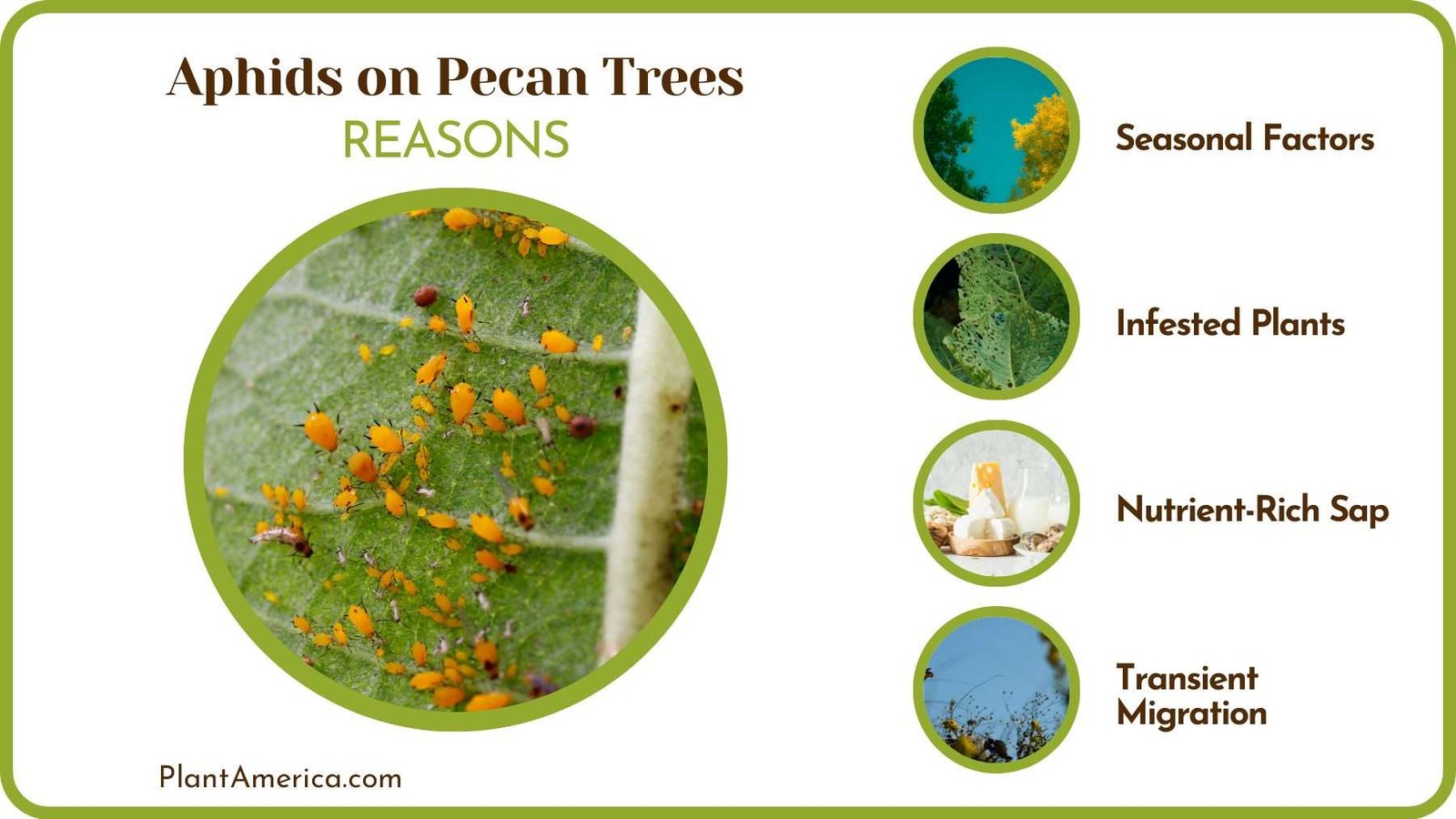
The reasons for aphids on pecan trees include seasonal factors or the proximity to other infested plants. It can also be due to the nutrient-rich sap provided, transient migration, the leaf texture and composition attracting pests, attractive pheromones, and environmental conditions.
These minuscule pests, which can quickly multiply and establish colonies on these trees, can cause leaf distortion, diminished quality of the fruit that it produces, stunted or altered growth patterns, and a general decline in overall health and productivity.
– Seasonal Factors
Seasonal changes can influence population dynamics, reproductive patterns, and behavior of aphids, leading to an infestation of pecan trees. Aphids thrive in warm temperatures, typically between 70 and 80 degrees Fahrenheit, which is usually the temperature range during spring and summer months.
Hence, conditions are most favorable for development and reproduction during this period, and pecan trees are most likely to be infested. When the right time comes, they will freely increase and take over the tree as they grow and develop.
High humidity, especially during warm weather, without proper airflow, also creates favorable conditions for aphid reproduction. Additionally, pecan buds begin to swell during this period, and new leaves emerge, serving as a potential food source for aphids whose population increases as eggs hatch and nymphs emerge.
– Proximity To Other Infested Plants
Aphids are known for their ability to move quickly from one plant to another, and their presence on nearby plants can serve as a source of infestation for pecan trees. They can be dispersed by wind, other insects, or by crawling.
Some aphid species are winged, typically as a response to avoid contributing conditions such as overcrowding on their host plants. These winged aphids can fly and spread over long distances in search of new host plants. If neighboring plants are infested with such aphids, they may fly to pecan trees and establish new colonies.
– Nutrient-Rich Sap
Aphids feed and rely on sap from plants as their primary food source, and the availability of this sap contributes to the colonization and infestation of pecan trees. These trees produce sap rich in sugars, amino acids, and other nutrients essential for aphid survival and reproduction. The sap’s nutrient composition draws aphids to feed on the foliage, stems, and tender shoots.
Once aphids settle on a host with a suitable sap source, they reproduce rapidly, and their population grows exponentially because high-quality sap stimulates the production of offspring and reduces the time required for nymphs to develop into adults.
– Transient Migration
Transient migration is a phenomenon observed in aphids involving the movement of winged species from one host plant to a nearby pecan tree. These species, such as the black pecan aphid and yellow pecan aphid, are capable of flying over several kilometers, carried by winds or currents, or assisted by other insects such as ants, and they can infest your pecan trees even when they are a bit far from the infestation location.
Factors such as population density, temperature, humidity, availability of food resources, light, seasonal changes, and the presence of natural predators can trigger the production of winged aphids and influence their migration to your pecan trees. However, when there aren’t any on your tree, you will see them growing and thriving with ease.
– Leaf Texture and Composition
The texture of pecan tree leaves, such as rough or hairy surfaces, provide hiding places for aphids, unlike smooth and waxy leaves that make it difficult for them to attach themselves. The nutrient content of the leaves can also attract aphids, as they are often drawn to leaves with higher nitrogen and amino acid content. In addition to this, you must also keep in mind that they are also attracted to pecan leaves with nutrient deficiencies as they are easy to colonize.
Additionally, some leaves emit volatile organic compounds, acting as alarm signals that attract aphids to pecan trees. Neighboring leaves can also emit these compounds and draw aphids to pecan trees.
– Attractive Pheromones
Pheromones serve as communication signals within aphid species, attracting others to pecan trees. Aggregation pheromones, for example, signal the presence of suitable feeding sites and encourage other aphids to gather and settle. If these pheromones are emitted from pecan trees, it can lead to infestation as they stress the tree.
Likewise, sexual pheromones can be emitted by male aphids from your pecan tree to attract females for mating, leading to increased aphid activity and reproduction. Additionally, aphids can leave trail pheromones using their scents to guide other aphids to food sources. These scent trails can lead aphids from nearby plants to your pecan trees.
– Environmental Conditions
Environmental factors such as drought or other biotic and abiotic factors can stress pecan trees, weakening their defense and making them more susceptible to aphid attacks. Weakened trees produce altered chemical signals or compromised defense mechanisms, providing favorable conditions for aphids to establish and multiply.
Also, consider how these pests prefer invading plants in shaded areas or lower light intensities. Hence, shaded areas within pecan tree canopies can become hotspots for their infestations as they grow. Excessive rainfall can lead to the growth of lush foliage, potentially attracting aphids. Alternatively, heavy rainfall can dislodge aphids from current hosts, causing them to seek new feeding sites on pecan trees.
What Are Ways to Free Pecan Trees From Aphids?
The ways to free pecan trees from aphids are to use pressured water, tackle them with organic methods, use different oils, and spread insecticidal soap. You must also aim to introduce predators to feed on them, spread chemical insecticides, and prune the infected sections.
Regular inspection and close monitoring of your pecan trees is a cultural practice that allows for early intervention to prevent infestations from becoming severe. This can be done by simply inspecting the leaves, buds, and shoots, mainly during summer and spring, and looking out for honeydew, ants, or aphids as typical signs of infestation.
– Use Pressured Water
If you use a strong pressure of water from a garden hose or pressure washer to spray your pecan trees, it can dislodge aphids from their foliage, making it difficult for them to climb back up. This method is best done when infestations are still in their early stages. Additionally, you can use reflective mulch and sticky traps around pecan trees to disorient and trap aphids.
– Tackle With Organic Methods
Organic methods focus on managing aphid populations on your pecan trees using natural and organic approaches, reducing reliance on synthetic chemicals. These methods include using horticultural oils, neem oils, insecticidal soap, or botanical extracts. You must also know that one of the advantages of this method is that these substances are non-persistent in the environment and are non-toxic to beneficial insects or other animals.
Botanical extracts are derived from various plant sources and contain compounds that either repel aphids or disrupt their feeding habits, growth, and reproduction. Pyrethrum, for example, is an extract obtained from chrysanthemum flowers and contains natural insecticidal compounds that paralyze aphids upon contact. You would see that they are no longer able to get away or continue growing.
In addition, Capsaicin is another extract from chili peppers that can disrupt aphid feeding and repel them from pecan trees. You can also use garlic to create an extract to deter aphids from your pecan trees. Soak some chopped garlic in water, strain, and spray on affected areas.

– Use Oils
Horticultural oils are highly refined petroleum products distilled to remove the compounds that can harm plants. Plant-based horticultural oils are also available and can be made from soybeans, sesame, or cottonseed.
These oils are best applied during the tree’s dormant season to suffocate overwintering aphid eggs and control early infestations. However, you must dilute the oil and conduct a patch test on a few of the leaves before full application to avoid burning the pecan leaves.
You may also use some neem oil, a type of organic oil that comes from the seeds of the neem tree and is a safe and effective method for controlling aphids on pecan trees. It disrupts the aphids’ nervous stem, preventing them from feeding or growing. Neem should be diluted in water before application to infestation sites on your pecan tree, and it should also be reapplied after rainfall or heavy reapplication as it fades off quickly.
– Spread Insecticidal Soap
Insecticidal soaps kill aphids by breaking down their outer protective layer, suffocating and dehydrating them. However, like the other organic control methods, they should be diluted in water following the instructions on the label. A patch test should also be conducted before application.
– Introduce Predators to Feed
The biological method of controlling aphids on pecan trees involves using natural enemies and beneficial organisms to regulate their populations. Lady beetles are one of the most common predators of black pecan aphids, as both their adults and larvae feed on aphids, consuming them in large numbers.
Several species of parasitic wasps, such as Aphidius colemani and Aphidius ervi, specifically target aphids by laying their eggs inside their bodies. When the eggs hatch, their larvae feed on the aphids from the inside. Hoverflies and their larvae actively hunt and feed on aphids at all life cycle stages.
However, they are attracted to nectar-rich flowers, so growing flowering plants near your pecan tree can attract hoverflies and help you keep their population in check. Many bird species, such as chickadees, titmice, and warblers, feed on many small insects, including aphids. Encouraging bird habitats near your pecan trees can attract these predators to keep aphids in check.
Certain fungi, such as Beauveria bassiana, can be formulated and applied as a biological control against aphids. However, some bacterial pathogens, such as Bacillus thuringiensis, can be purchased and introduced to feed on aphids on pecan trees.
– Spread Chemical Insecticides
Chemical methods should only be used as a last resort when other management strategies have been unsuccessful or when the aphid population poses a significant threat to your pecan trees. These chemicals should be used selectively and judiciously, following label instructions, using appropriate protective gear, and adhering to local regulations and restrictions.
You can apply various types of chemical insecticides and pesticides on your pecan trees to control aphid populations. However, synthetic insecticides are the most commonly used. If you do so, you must know that they contain active ingredients such as pyrethroids, neonicotinoids, organophosphates, or carbamates and can be applied as drenches or sprays to the foliage.

– Prune the Infected Sections
Pruning and thinning of pecan trees is a practical method for controlling aphids. Removing heavily infested branches, buds, and shoots reduces aphid populations drastically.
Cultural and physical methods involve non-chemical practices that create unfavorable conditions for aphids. These methods can be effective, especially when used with other pest control methods. It also improves air circulation and light penetration, as opposed to the shaded and dense conditions that aphids prefer.