
How to transplant tulips of the Liliaceae family is of paramount importance because these plants have the ability to give a good look to your landscape as they are naturally very colorful. However, the longer they stay in your garden, the higher the chances of overcrowding.
Once this happens, they may not bloom anymore so you should transplant them to another bed. This guide will help you to transplant tulips successfully because the flower can die if not transplanted well.
How to Transplant Tulips Like a Pro
To transplant tulips like a pro, you should have the tools ready, including a small hand shovel, a watering can, a garden fork, and optionally, a low-nitrogen fertilizer. Important steps include knowing the time to carry out the procedure, preparing the land, digging up the tulips, and planting them.
1. Transplant at the Right Time
Transplanting tulips while they are flowering is not ideal. They are most likely not to survive if there is any damage to the plant during the transplantation procedure. During their dormant period, tulips are easier to transplant because you only have to deal with the bulbs. Bulbs can grow solely in water as well.

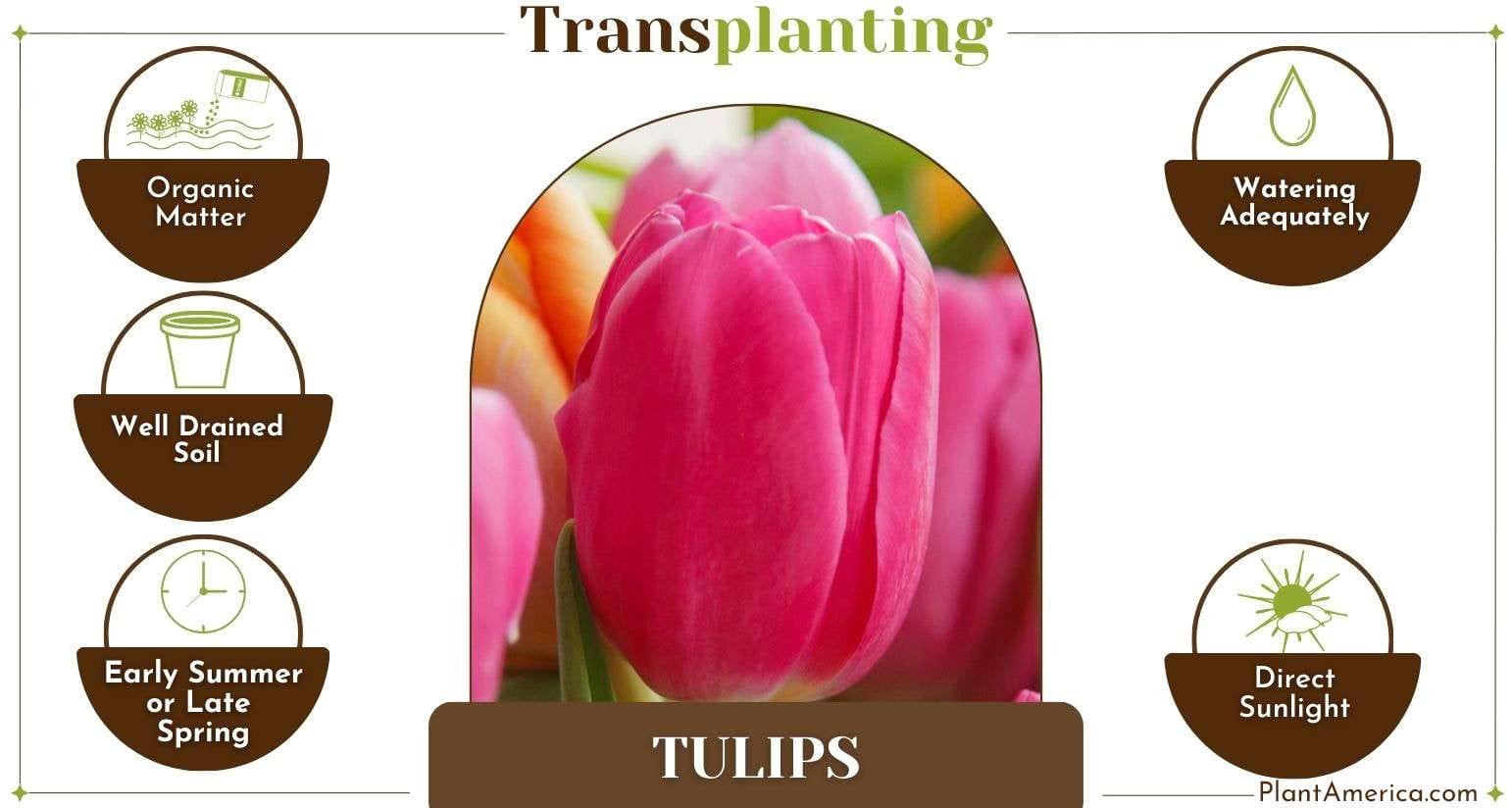
The best time of the year to transplant tulips is early summer. If not in summer, then late spring is the best, as the season transitions into summer. During late spring, the foliage is turning yellow and dying. Tulips do much better in moderately warm weather. In early summer, your tulips will have finished flowering and will be entering their dormant season so transplant shock is minimal during this time.
Always be sure to transplant at the right time, so that the bulbs have enough food to last them during their settling-in stage in the new environment before they can start flowering again.
2. Prepare the Land for Planting
It is important to prepare the soil on which you intend to plant tulips in time. You should loosen the soil, and this is best done using a spade or fork. The soil should be fertile as the plant bulbs are better able to continue growing if the soil has enough manure. They also do better where the soil is well drained and has a p.H of 6.0 to 7.0.
The risk that comes with using soils that do not drain well is the development of waterlogged conditions. If your tulips sit in water, they become more susceptible to attacks by fungal pathogens that cause diseases like root rot. If by chance, your plant gets affected by root rot and you notice this before transplanting, you can remove the rotten and mushy roots. You can then treat the remaining roots with a fungicide before transplanting your plant.
If the soil does not look good enough, you can amend it using organic matter to improve drainage and fertility. It is also vital to ensure that the space in which you are planting receives about six hours of sunlight every day. This ensures the growth of healthy plants after transplanting. Remember, your plant requires sunlight for processes such as photosynthesis to take place.
3. Prepare the Planting Holes
After preparing the land for transplanting tulips, you should then dig the planting holes. Each hole should have a depth of about 6 to 10 inches. Ensure that the soil is loose enough and has enough moisture at the time of planting. This is vital for growing tulips that are viable.

When planting tulip bulbs, you should bury them not too shallow or too deep in the hole. Maintaining the right level of the bulb in the soil contributes to the success rate of the transplantation procedure.
Always ensure that you place fertilizer or compost in the hole to aid better growth. You can also consider using mulch to conserve moisture for a long time. We also recommend that you treat the mulch with some antimicrobial preparations as bacteria and fungi may easily grow on it.
4. Dig Up the Tulips
Digging around the tulips should be done carefully. This is because if you harm the tulip bulbs, they may not survive and this negatively impacts the transplanting process. You can gently use a garden fork to loosen the soil around the bulb. Then, you can also use a small hand spade to lift the clumps of tulip bulbs out of the ground, taking care not to harm any of the tulips.

For tulips that are potted, transplanting can be very difficult, but is not impossible. Use an appropriate tool to loosen the soil around the plant, after which you can gently tip the bulb out from the pot if it cannot be lifted. Always transplant potted tulips before they bloom, because you are likely to cause more damage to the plants if they are already flowering.
5. Keep the Bulb in Water (Optional)
Some plant lovers grow tulips in water while they are waiting for planting. Bulbs that are grown in water can be taken out as soon as they begin to sprout before they are planted in the intended new space.
While placing the bulb in water before the transplantation procedure is a viable option, we recommend that you plant them in soil and let them start on their journey to recovery. Simply put, planting the bulb directly into the soil is more straightforward and relatively less cumbersome.
6. Plant Tulip Bulbs Into the Holes
After lifting the bulbs, carefully place each clump of tulips into the prepared hole. Cover the hole with soil, and make sure that you even it out with the ground. Be sure to get rid of air pockets by pressing the soil around the plant gently. You may also find it necessary to add wood mulch if there is the risk of the plants being dug up by heavy rain or wind erosion.

7. Water the Plants and Apply Mulch
Giving the transplanted tulips a thorough watering helps them to settle and survive, as they attain a better position to fight transplant shock. Water the Tulip plants at least three times a week as it helps them to develop and sprout. Consider mulching the tulips’ new location, to suppress the growth of weeds and preserve moisture. In winter, mulch acts as good insulation for the bulbs.
If you did not apply compost or fertilizer to the holes before planting, you can apply these two components at this stage to give your flower bulbs a head start on their growth.
8. Monitor the Plants
After the transplantation procedure, it may take up to two years for your tulips to regain total health and start blooming again. Patience is very important if you are working on creating a tulip garden. Be ready to provide regular care by watering at least thrice a week and fertilizing the ground to ensure good growth. The goal is to keep the tulips alive and healthy until they are able to yield beautiful blooms.

Tulip plants, just like any other plants, are susceptible to pests and diseases. They are affected by aphids, snails, slugs, red spiders, and weevils among a host of other pests. They are also affected by diseases like tulip fire, basal rot, and root rot. These pests and diseases will affect the growth and flowering of your tulips and have to be controlled before they do much damage.
You will need to make use of pesticides, both chemical and homemade to treat your tulips of diseases and pests. You may need to move your tulip posts from dense vegetation where pests may breed. There are also natural methods, like washing off aphids and introducing natural predators, which are less harmful to plants, pets, and humans. You should therefore keep a close eye on your tulips, and quarantine and treat affected plants in the early stages.
Frequently Asked Questions
– Can You Transplant Tulips After They Have Sprouted?
Yes, you can transplant tulips after they have sprouted. However, this requires extra care to avoid disrupting the plant’s growth process. Sometimes, you may have to transplant some tulips when they are already in bloom, though the flowers may wilt and die before the plant settles into the new environment.
Therefore, if you really have to transplant your tulips after sprouting or blooming, take so much care not to hurt the plant to increase the chances of survival.
– Why Might You Have to Transplant Your Tulips?
You might have to transplant your tulips to deal with cases of overcrowding after a number of seasons. This is because tulips multiply over time, so you might end up having no choice, other than digging up tulips and replanting them. Doing so increases growth potential due to more space.
Sometimes, you may want to fill up space in some parts of your garden and therefore will have to transplant tulips to that area. In some cases, you may want to create a certain color combination when your flowers are in bloom. This may need you to transplant for that reason. You may also transplant just because you want to create a new garden or want to extend the current one.
You may also transplant your tulips as a way of dealing with pest and disease attacks. For instance, transplanting plants that have been affected by root rot may save them from further damage.
– Can You Replant Tulips Without Bulbs?
Yes,you can replant tulips without bulbs. However, this is much more difficult because bulbs are the part of the plant where nutrients and energy are stored. The bulbs are the reason why tulips are able to sprout again when the time comes.
To replant without bulbs, you can get the plant stem and plant it as long as the soil is moist. When planting the stem, you should ensure that you plant at least one-third of the stem to help it take root and start growing. Make sure there is plenty of moisture and sunlight. You should also ensure that the soil type is favorable to give the plant a better chance of surviving.
Conclusion
Having gone through this guide on how to transplant tulips, you can now start moving your tulips to create a beautiful landscape when they are finally in bloom. Here is a recap of some of the main points:
- Tulips are best transplanted when they are done flowering, as they enter their dormant season.
- Tulips are best transplanted in summer.
- You should always make sure that you do not injure tulips as you transplant them because they might fail to survive in their new environment.
- Patience is of great importance when transplanting tulips because it will take them anywhere from a year to two before they start blooming again.
- After transplanting, you should continue to monitor your plant by watering adequately, applying fertilizer, and being on the watch for pests and diseases.
This guide has been specially put together for those tulip lovers who want to add a touch of vibrant color to their landscape. Should your tulips need transplanting, it is time to get going!