
Philodendron Panduriforme of the Araceae family is an ornamental Philodendron plant that is loved for its spectacular, arrow-shaped foliage. It grows as a vine and can reach a height of six feet.
What’s more, it looks similar to Philodendron Bipennifolium but the difference between the two is that the former has arrow-shaped leaves while the latter has more violin-shaped and dissected foliage.
Read on to find out all about this beautiful philodendron genus plant and its care requirements.
Philodendron Panduriforme Care
Philodendron panduriforme thrives in low to medium light and well-draining soil. Water when the top inch of soil feels dry, maintaining moderate humidity. Avoid overwatering to prevent root rot. Fertilize monthly during growing season. Prefers warm temperatures between 65-80°F (18-27°C). Regularly clean leaves to enhance photosynthesis and prevent pests.
Find all its requirements to be healthy regarding the light, water, temperature, soil mix, fertilizer, propagation, and problems below.
 Light
Light
Philodendron Panduriforme is a shade-loving plant that thrives in low to medium light conditions. It needs bright, filtered light to grow well but can also tolerate low light settings for some time. So, you should avoid keeping it in direct sunlight as it can damage the plant leaves and eventually kill them.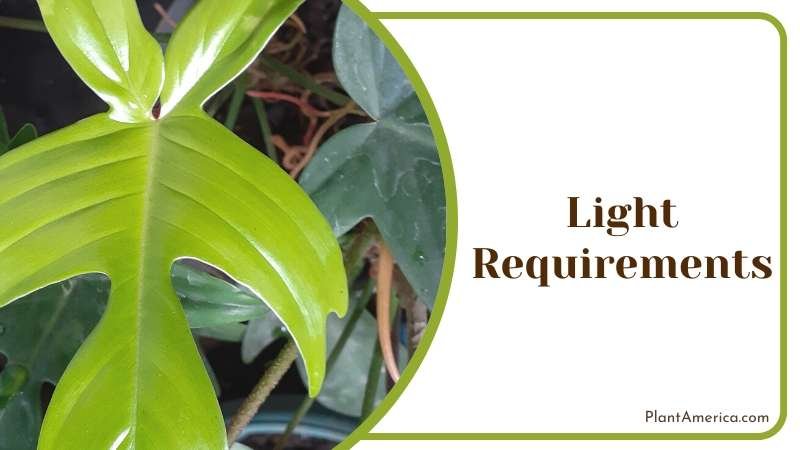
Moreover, a north or east-facing window is a great spot to keep your Philodendron where it receives bright light throughout the day.
This plant can tolerate low light conditions but if you notice your plant getting leggy and lanky, it is probably because it is not getting enough light. If this happens, shift it to a brighter spot where it receives indirect light throughout the day. Extremely low light slows down the plant’s growth and makes it prone to root rot.
 Water Requirements
Philodendron Panduriforme is a moisture-loving, tropical plant. It needs frequent watering sessions, especially during the summer months when the temperature goes up. To maintain the rich color of its foliage, in dry climates to keep the moisture levels up in summers. Then, remist the plant a few times a day. Reduce the watering frequency in the winter months and allow the soil to dry out completely before watering again.
One major problem that beginner gardeners might face with this plant is overwatering. It is one of the main causes of this plant’s death. In a bid to take care of it, we often tend to overwater it which in turn causes problems like root rot and other fungal diseases.
So, if you notice stunted growth in the plant and leaves losing color and the stems turning soft, it means that you are overwatering the plant.
A good way to check whether the plant needs water or not is using the finger-knuckle test. To effectively do it, you should put your finger in the soil till the second knuckle and see if the soil sticks to your finger. If the soil feels moist and sticky, wait and check again after a few days. When the soil feels dry to the touch, water the plant.
Finally, the frequency of watering will vary depending on the season and other factors in your area.
 Soil Mix
Philodendron Panduriforme does not have any specific soil requirements; it only needs rich and well-draining soil to grow well. Use a soil mix composed of some regular soil, sand, coco-peat, and organic compost. Coco-peat helps in retaining moisture and sand keeps the potting mix well-drained. You can also add perlite for extra drainage.
In general, keep the soil moist all the time allowing it to dry just a bit in between the watering sessions.
Philodendron Panduriforme can grow well in 100 percent sphagnum peat moss since it provides appropriate moisture without making soggy conditions around the roots. Although sphagnum peat moss is a great medium, we would recommend using it only in humid areas.
If you live in a dry climate, using sphagnum moss can be tiresome because you might have to water several times during the day in the summer months.
So, if you live in a dry climate, use the potting mix instead of sphagnum moss. However, avoid using alkaline soil to grow Philodendron Panduriforme. Use acidic soil with a pH ranging between five and six instead.
– Soil Mix Proportions
Philodendron Panduriforme soil should be well-ventilated to prevent the problems of overwatering and underwatering. Moreover, the proportion of sand, coco-peat, and soil will vary depending on the other factors in your area.
If you live in a dry area where soil tends to dry out fast in summer, so you should use more coco-peat and less sand to maintain high moisture levels in the soil. On the other hand, if you live in a tropical area where it gets humid, add more sand and less coco-peat to keep the soil well-ventilated and airy. This will help you avoid the problems of root rot and fungus.
Finally, all the excess water must drain out quickly so that it does not sit at the roots. Accordingly, you should make sure that the pot you are planting the plant in has many drainage holes at the bottom.
 Temperature
Like most other tropical plants, Philodendron Panduriforme loves warmth and high humidity. The optimum temperature for its growth is between 60 and 75 degrees Fahrenheit. Extreme temperatures can cause stunted growth.
Philodendron Panduriforme is a warm-growing plant that cannot tolerate cooler temperatures either. It is not a winter plant, so shift the plant inside to a warm spot. In the winter months, protect the plant from frost and cool temperatures as exposure to very low temperatures can cause stunted growth. You can place it back outside when the danger of frost has passed.
Avoid placing the plant in very high temperatures as it causes leggy growth and the plant becomes lanky with very few new leaves. If your leaves start losing color during the summer months and the plant becomes lanky, it could be due to very high temperatures.
To beat the summer heat, mist the Philodendron Panduriforme several times during the day and keep it in a shaded spot grouped with other plants.
 Humidity Requirements
Philodendron Panduriforme is one such Philodendron that is not too demanding when it comes to humidity. Although it loves high humidity settings, it can grow well in dry environments too.

It just needs a little bit of additional humidity if you live in a drier area. In any case, you should try to keep the humidity levels between 40 and 50 percent for proper growth and glossy leaves.
Keep humidifiers or pebble trays under the pot to maintain high humidity levels and mist the plant a few times a day in the summer months as it helps in increasing moisture around the plant. However, during the winter months, you should mist the plant once every three to four days.
On the other hand, if you want to create a humidity tray, fill a shallow tray with some pebbles, gravel, and water. Then, place your Philodendron on top of this tray. As the water evaporates, the plant will absorb moisture from the air easily.
 Fertilizer
Philodendron Panduriforme is not a very heavy feeder. Like other Philodendron varieties, it needs regular fertilization monthly to stay healthy. To keep the plant happy, use any well-balanced, liquid fertilizer monthly. A nitrogen-rich fertilizer would be excellent if you want to see larger and glossier leaves on your plant.
However, if you are using a chemical fertilizer, do not apply it to the leaves. We recommend using an organic liquid fertilizer such as a seaweed solution for best growth results. Organic fertilizers do not harm the soil and leaves and help in augmenting growth.
Moreover, do not fertilize your plant during the winter months as it does not show much new growth at this time of the year. Resume regular fertilizing from spring.
What’s more, sometimes, using excessive chemical fertilizers can cause salt build-ups in the soil. Excessive salts in the soil can burn the roots and kill the plant. To avoid this problem, drain your plant regularly with water to remove the salts from the soil. Washing the plant with water helps in getting rid of these salts.
Finally, keep in mind that you should always fertilize your plant when the soil is moist. Never fertilize the plant when the soil is dry as it causes root burn, which happens due to salt build-up.
Repotting
Philodendron Panduriforme does not need frequent repotting, so repot it every three to four years if the roots start appearing out of the soil and they take over the entire space of the existing pot.
The ideal time to repot the plant is in early spring when it can adjust to the new soil mix easily. The temperature during the spring months makes it easier for the plants to acclimatize to new soil conditions.
So, do not shift the plant in the winter months. It will take a lot of time for the plant to come back to normal growing conditions. The plant will likely go into stress and can also die.
Prepare an airy and loose soil mix in a pot one size bigger than the previous one. It should be deep enough to accommodate the plant roots. Two to three inches bigger pot than the existing one is a good rule to follow while repotting your plant.
Too much or too little space causes stress to the roots and a plant under stress is more likely to catch diseases and infections than healthy plants.
Propagation
Philodendron Panduriforme is an easy plant that is not too difficult to multiply.
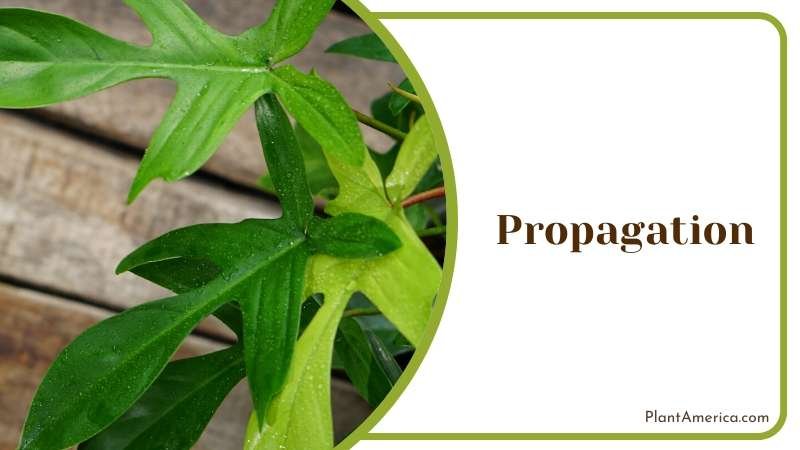
You can do it by taking stem cuttings and by the air-layering method.
– First Step: Cutting The Stems
Propagate Philodendron Panduriforme by taking three to four inches long stem cuttings and rooting them in either water or soil. The stem cuttings should have at least one to two nodes (part from where the roots emerge).
You should wear gloves and have clean pruning shears, which you can sterilize using isopropyl alcohol, to prevent diseases. After you do that, cut right below the node and place these cuttings in a jar of water or directly plant them in the soil.
– Second Part: Planting The Cuttings
Before placing the cutting in soil, you can dip it in a rooting hormone to speed up the rooting process. Moreover, to prepare the new soil mix, use a mix of regular soil, sand, compost, and coco-peat. After placing the cutting in the soil about three to four inches deep, firm the soil around the root area.
Don’t forget to wash your hands after you are done, even if you are wearing gloves.
Moreover, do not place it too deep into the soil as it is an epiphytic plant and does not like to sit too deep in there. Water it thoroughly and place it in a partially shaded spot for a few days.
Also, keep the soil moist at all times during the first few days. Once the roots form after four to five weeks, you can water it two to three times a week depending on the season and other factors.
Pinch the plant regularly to promote more branching and new growth of leaves. Pruning also helps in giving the plant a good shape and prevents it from getting lanky. If the plant’s growth slows down and it shows leggy growth, prune the branches. However, avoid pruning the plant in winter as the plant goes into dormancy in winter.
Problems
Philodendron Panduriforme is an easy-to-maintain plant but it can face some common issues like wilting leaves, yellowing leaves, and Erwinia blight. Let us discuss some of the issues that can occur in detail.
– Wilting Leaves
Wilting leaves are an indication that your plant is underwatered. Sometimes, in order to control our overwatering habits, we tend to forget to water the plant. This causes the leaves to wilt initially, and over time they fall off. Hence, maintain a regular watering schedule to prevent this issue.
– Erwinia Blight Disease
Erwinia blight is a bacterial soft-rot that affects the leaves, petioles, and stems. Soft, mushy, water-soaked lesions form on the stems and leaves.
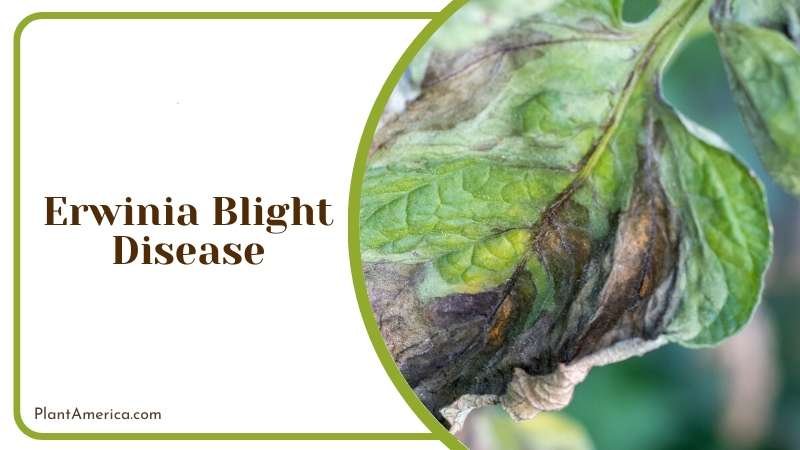
We’re not going to lie, it is difficult to cure this disease. So it is better to work on its prevention and cure. If the infection seems controllable, prune the infected leaves.
On the other hand, if you want to prevent this disease, you should only water the soil surface and not the foliage. What’s more, avoid overwatering and crowding the plants as they favor disease growth. Separate the infected plant from other plants to control the disease spread.