
Types of string plants are ones that belong to the same variety and look both elegant and trendy. These plants can be used for decorating your space, adding some greenery, or just adding to an existing collection.
So, keep reading to discover a few different varieties, how to care for them, and find which string plant may be the best one for you.
List of Types of String of Plants to Grow
1. String of Pearls

| Zones |
|
| Care |
|
| Pros |
|
| Cons |
|
Unique vining string succulents known as “string of pearls plants” are distinguished by their tiny, pea-shaped leaves. These plants are also known as Senecio rowleyanus of the Curio genus, scientifically, and when you plant them, they look stunning indoors.
Like the string of ruby succulents, the leaves are borne on trailing stems that elegantly drape over the sides of planters and hanging baskets. When you grow the string of pearl you will see how the stems can be used to propagate the plant, which grows vigorously and quickly—gaining between five and 15 inches per year—but does not survive for very long without it.
When growing one, consider putting this plant in a hanging basket like a multi-stemmed string of pearls to make it glow. Its branches can also be interlaced, and you can grow it in a dish to grow naturally into a terrestrial mat.
Moreover, a string of pearls doesn’t require much maintenance, and it doesn’t have any severe health problems, it can only have some aphids. However, it does need a lot of light year-round, and in short, you will see how this plant is beginner-friendly when you are growing it, that with a bit of water and regular care, you will have them growing.
2. String of Nickles

| Zones |
|
| Care |
|
| Pros |
|
| Cons |
|
An indigenous succulent of the tropics of Asia, India, and Australia is the string of nickels, is the plant that is known as the Dischidia nummularia, in botany. This plant is also as beautiful as the othonna capensis or the little string of pickle plant, but the string of nickels can bloom when the care needs are at their best.
The string of nickels takes its hydration and nutrients from the air, rain, or trash accumulating around it rather than from soil in its natural habitat, where it grows on other plants like trees. It is a form of epiphytes, like orchids, and air plants like Tillandsia, but these ones are more vibrant when placed.
It is advised to repot a string of nickels every year to prevent them from becoming rootbound, which can impede development because their roots require a lot of aeration to thrive. Although a string of nickels doesn’t need to be pruned, you can trim and shape them if they get too big because of how quickly they grow, or when the leaves get older and weaker..
3. Senecio Radicans
| Zones |
|
| Care |
|
| Pros |
|
| Cons |
|
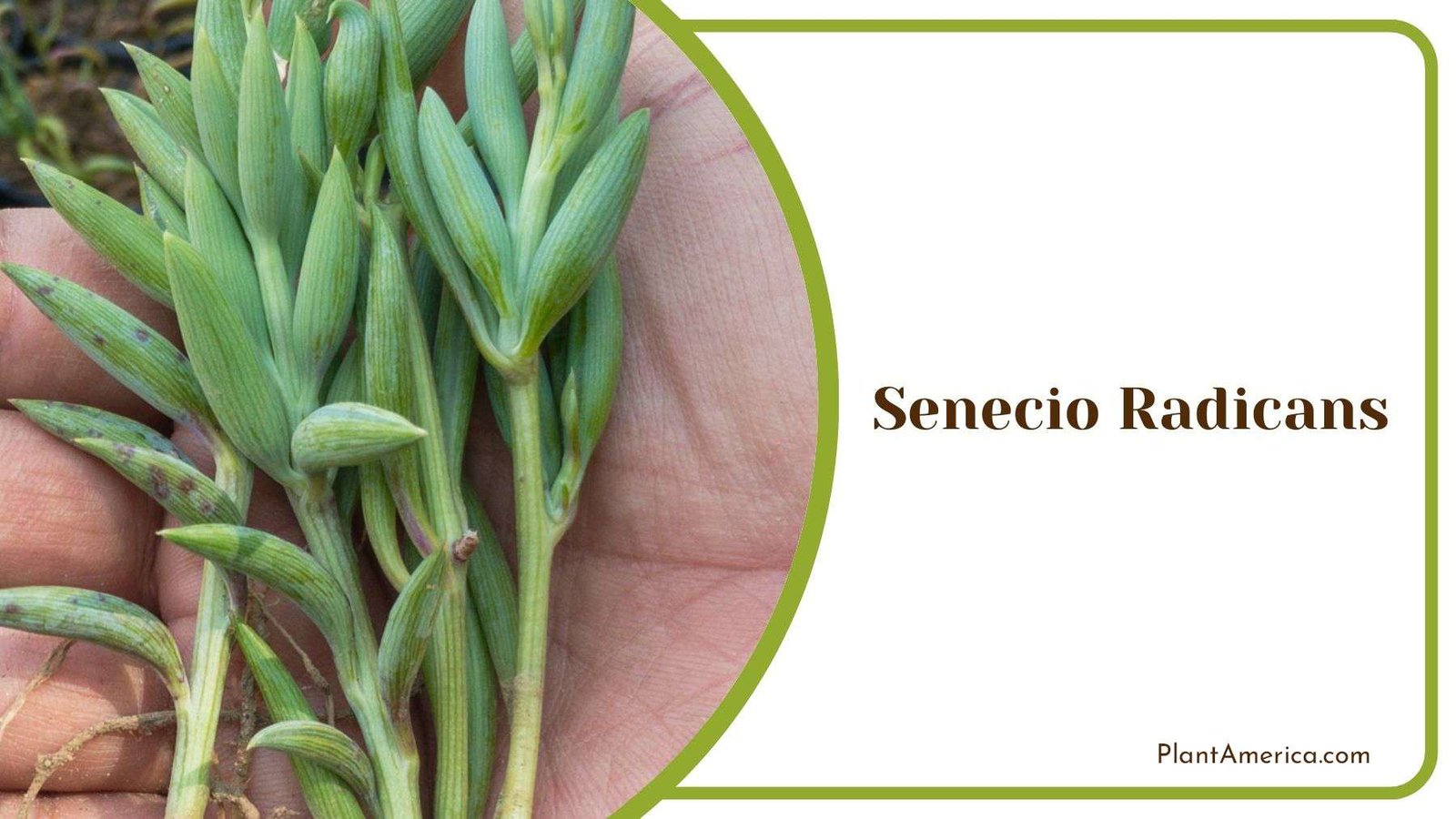
The string of bananas plant is also known as the Senecio radicans, though closely related to the well-known string of pearls succulent, is distinguished by its quicker growth and simpler maintenance.
The banana plant may be the answer for anyone who has tried in vain to maintain a string of pearls. However, you must also be sure of how it grows, because this plant thrives in simple givens, as it can withstand cold temperatures. When it grows, you will see how it will require pruning or trimming, and as such it will start growing more.
The Asteraceae family’s native South African plant, the banana plant, is distinguished by glossy, banana-shaped leaves that develop on protracted, dangling tendrils. Depending on the type of aesthetic you’re looking for, you can train this plant to grow vertically on a trellis or moss pole or use it as a hanging houseplant. Although not frost-tolerant, a banana string plant can be cultivated outdoors in succulent gardens.
The banana string plants are a low-maintenance, quick-growing succulent that both beginners and experts may readily appreciate. They don’t require routine fertilizing, repotting, or pruning because they are drought-tolerant.
Ensuring the succulent receives adequate light is crucial for producing a strong plant because they do not thrive in low-light environments, and this is the right care requirement for it to thrive. It will be content if you hang this banana plant in a window that gets plenty of sunlight and you will see how it adds beauty and significance to your house.
4. String of Hearts
| Zones |
|
| Care |
|
| Pros |
|
| Cons |
|
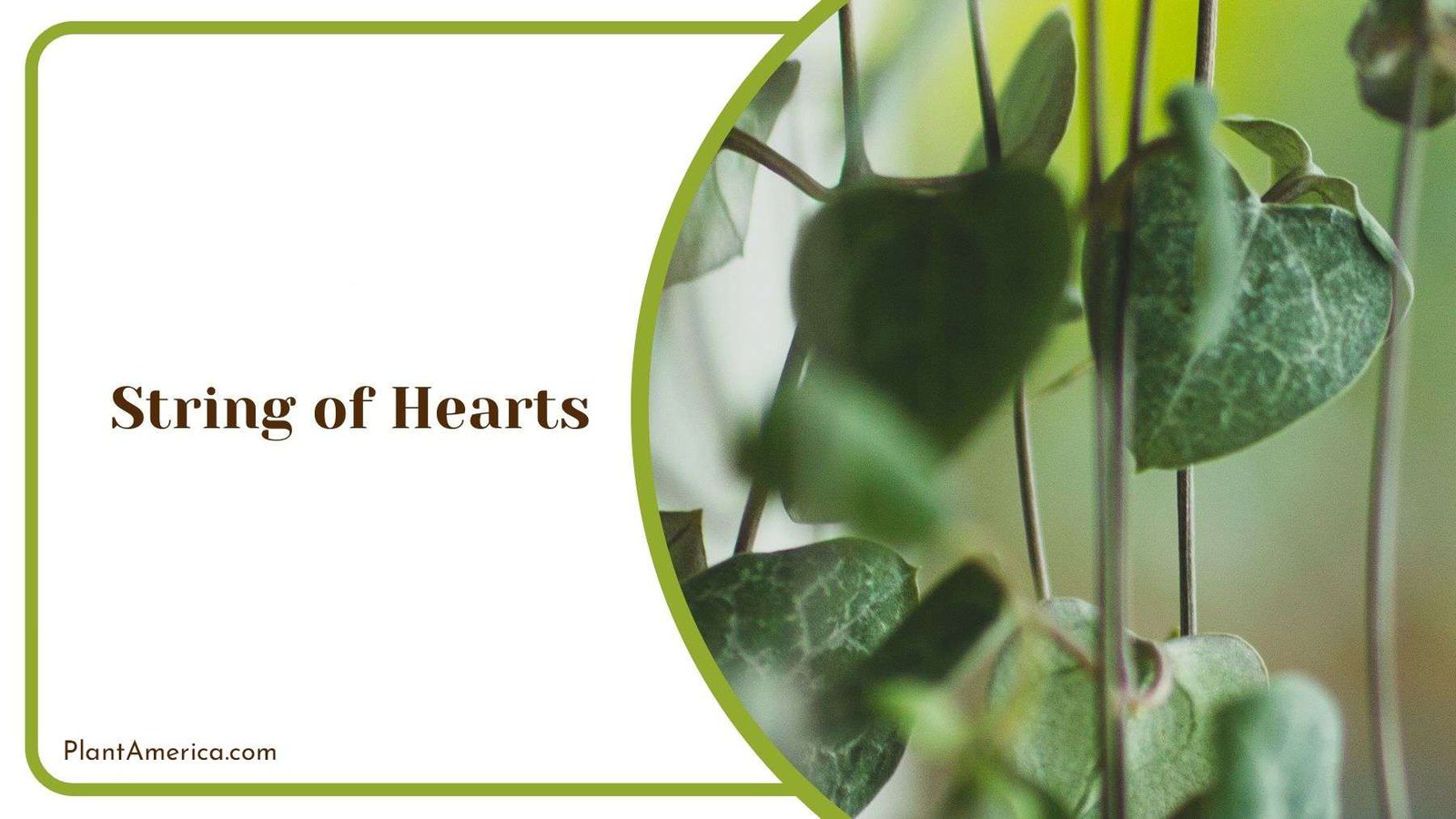
The thin, string-like tendrils have an eye-catching purple hue, and the heart-shaped, meaty, gray-green foliage has an eye-catching marbled pattern. It has to be occasionally pruned for bushier growth to seem fuller.
The variegated string of hearts, also known as ceropegia woodii, is most frequently cultivated as a houseplant, although in warm Mediterranean settings, it is also occasionally grown as a sprawling ground cover, in rock gardens, or to cascade over walls. The reason is that it adds such a nice touch and vibrancy to the place where it is located.
The indoor string of hearts plants prefers a window that faces west or south because they grow naturally best in tropical or subtropical climates, like their native South Africa. Moreover, when it grows with the right amount of sunlight, you will see how it establishes proper growth.
Theceropegia woodii plant proliferates and produces abundant flowers when given the correct warm temperatures, hydration levels, and filtered light. It is known for being hardy and makes an ideal houseplant for beginners because it reasonably tolerates periods of neglect.
5. String of Raindrops

| Zones |
|
| Care |
|
| Pros |
|
| Cons |
|
The string of raindrop plant is considerably simpler to cultivate than string of pearl plants, much like banana strings. For maximum development, provide this long trailing succulent with lots of sunlight.
This hanging succulent makes a great indoor air purifier in addition to being a great interior foliage plant. Moreover, it can be used as a great focal point, and if you place it in the right conditions, it would be the right plant to be in the center, as it is the attention-grabbing one.
One or two pots of hanging raindrops in a large room can completely absorb all of the airborne pollutants. These plants have a powerful ability to absorb harmful gases. The term “green purifiers” is sometimes used, for its significant ability.
6. Crassula Pellucida
| Zones |
|
| Care |
|
| Pros |
|
| Cons |
|
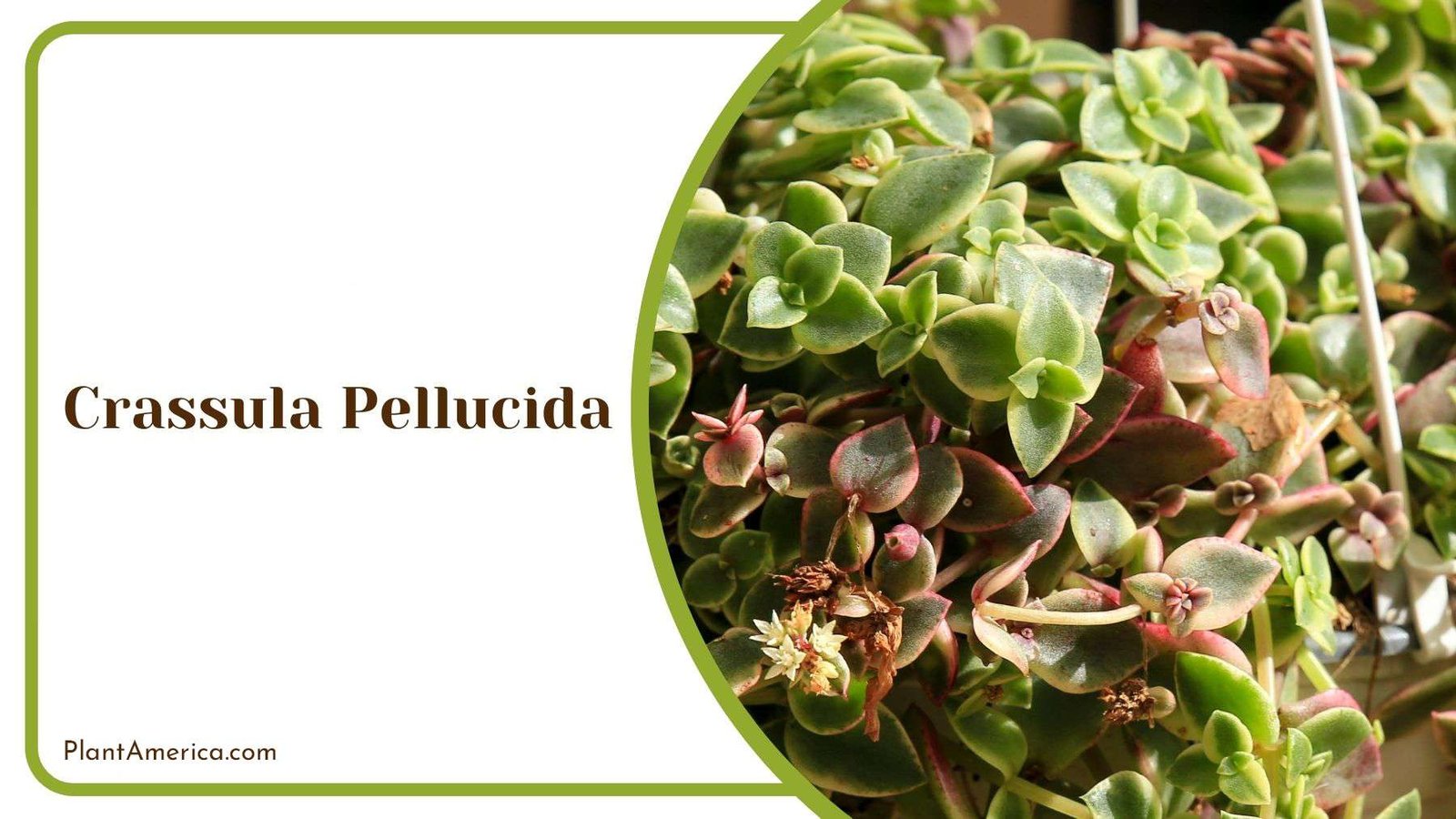
Beautiful Crassula pellucida is a low-growing, creeping, and spreading perennial succulent plant with starry flowers and ornamental leaves that grow well in containers or as a ground cover.
Although crassulas are simple to grow, they are vulnerable to fungus and mealy bugs. Overwatering will always be harmful to string succulents, so try staying on the side of too dry rather than too wet. Keep your plant out of the water at all times.
Make sure to drain any extra water after a few minutes if you water a plant from below by placing it in a saucer of water. It requires a small amount of water, or else you may see it weakening, and developing root rot or even attracting some aphids.
7. Burro’s Tail

| Zones |
|
| Care |
|
| Pros |
|
| Cons |
|
Depending on your specific species, the leaves of the succulent, herbaceous, evergreen Sedum morganianum genus are either fleshy, flat, or rounded. The plant typically stands upright and sprawls out across the ground.
Although several have been transferred to the genus Hylotelephium, the genus still contains around 300 species, alluding to the propensity of many sedum species to stretch out and sit on rocks.
Burro’s Tail loves bright inside spaces with dry soil, fresh air, shallow pots, and windowsills with at least some sun. Plants should be watered with lukewarm water, and winter watering should be minimized. You can keep your soil dry out between the times that you would be watering it; in addition, you can also try to fertilize sparingly once or twice throughout the growing season.
Although the plant is native to Mexico and the Dominican Republic, it can withstand temperatures as low as 40 degrees Fahrenheit when cultivated outside in cooler regions. Site plans for outdoor growth in well-drained soil with sun to part-sun exposure.
The plant quickly establishes itself and can endure rocky and deficient soils. It can withstand dry soil and drought thanks to its succulent leaves.
8. String of Needles

| Zones |
|
| Care |
|
| Pros |
|
| Cons |
|
A semi-succulent climbing plant called Ceropegia linearis grows a cluster of thin stems from a tuberous rootstock. The stems can reach a length of six and a half feet and are either annual or perennial.
The leaves are glabrous, rather meaty, and short-petiolate. Flowers could stay in bloom for up to six weeks and range in color from white to pale magenta. They typically bloom in the late summer to early autumn.
Even though a location with strong, indirect light is ideal, letting in a bit of early sunlight is quite helpful, particularly in the autumn and winter. Darker conditions will make lanky juvenile growth more likely, as well as the possibility of developing root rot.
Use hanging baskets to hang this plant in a sunny spot. The “drenches between droughts” rule must be followed since specimens stored on a shelf where the soil line is hidden from natural light will stay moist for longer. Due to the risk of sunburn, spend at most three hours a day in direct sunshine.
9. Rat Tail Cactus

| Zones |
|
| Care |
|
| Pros |
|
| Cons |
|
The rat cactus is a striking cactus found in Central America and southwest Mexico. The plant is named after its long, trailing stems, which are unusual and grow to around four feet when mature.
In the spring and early summer, the rat cactus blooms, and its colors are typically violet-red, while the plant will occasionally produce flowers in eccentric hues like pink and orange. When placed in a pot, you will see how the outdoor location’s aesthetics will change and thrive.
It has tubular, two-inch broad flowers that are fairly huge, just like the ox tail one. Even though it produces a lot of blooms during its late spring bloom, each one only lasts a few days at best. This tail plant should be planted in the springtime so that it has the entire growing season to establish itself.
Conclusion
These popular string plants look tremendous and are mainly easy to care for. Keep in mind:
- Most of these string succulents will thrive in sunny spots so place them on windowsills or other spaces with good access to light.
- If you want some blossoming, try growing the cactus or string of hearts to get those colorful blooms
- Plants like Burro’s soil need watering when their soil surface is visibly dry.
You now know all the related string plant varieties, and according to the ones you love most, you can easily place them outdoors, and they will add their beauty and vibrancy all around.