
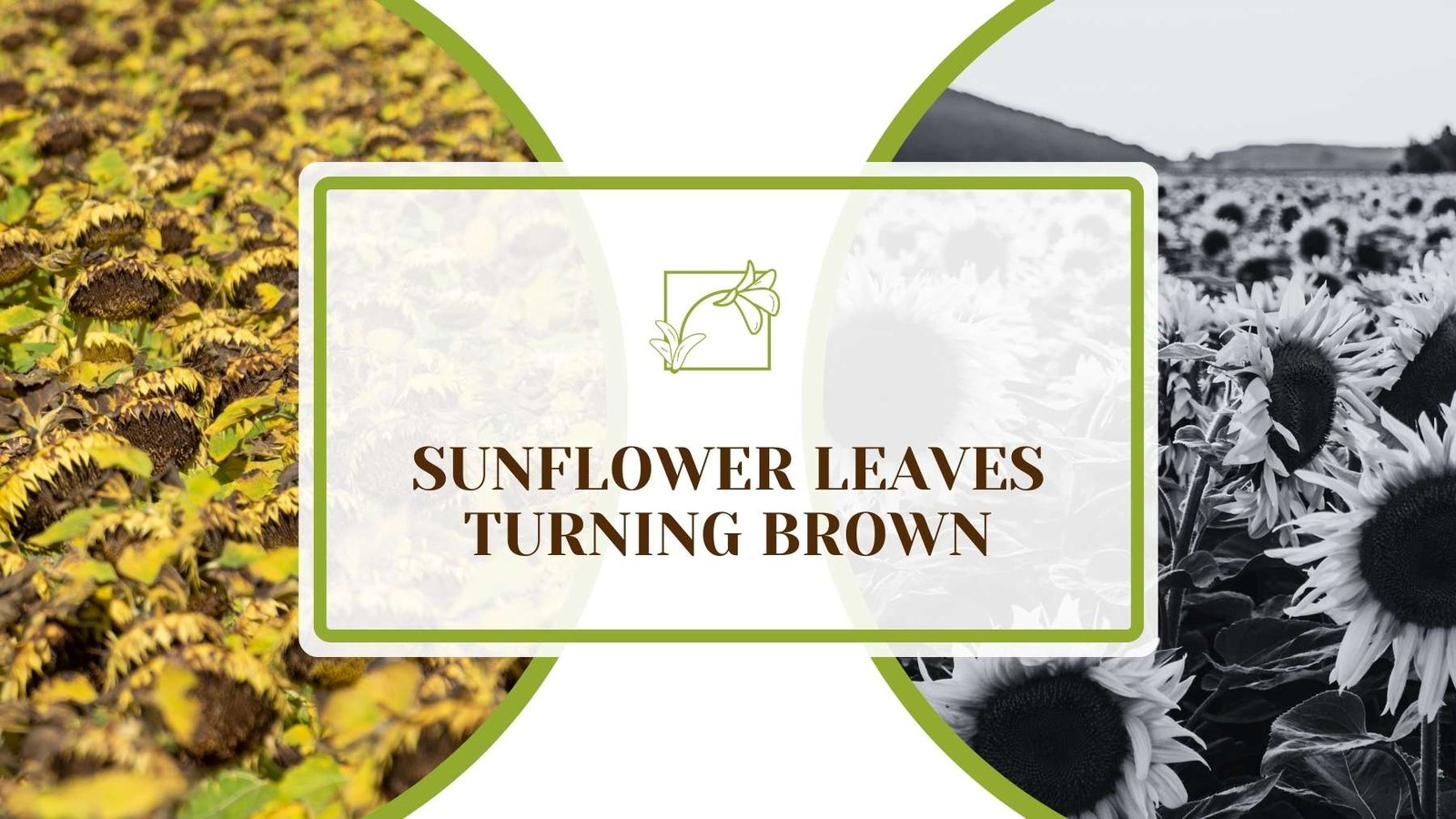
Sunflower leaves turning brown signifies your plant may be in distress. Several issues can affect vitality, from fungal infections to beetle invasions. These things can lead to plant death if you don’t act immediately.
Don’t worry; continue reading to uncover effective remedies and preventive measures that work every time.
Why Are the Leaves of Sunflowers Turning Brown?
The leaves of Sunflowers are turning brown because of fungal leaf infections, beetle attacks, and drainage problems. Sometimes, exposure to extremely high temperatures can also disturb the internal processes, which leads to browning. Proper care and early detection can help address these issues effectively.
– Fungal Leaf Infections: One of the Most Common Reasons
There are many sunflower leaf diseases a gardener might face. They all hurt the plant, and the first noticeable symptom is sunflower leaves turning black or brown.
Among these diseases, downy mildew stands out prominently. This fungus leaves a white, fluffy coating on the underside of leaves. Over time, this causes them to turn yellow and eventually brown.
The next culprit is powdery mildew. Unlike downy, this one causes a whitish, powdery appearance on the tops of leaves. Over time, the infection can lead to brown discolorations.
Another disease affecting sunflowers is leaf spot. Several different fungi types usually cause these, resulting in dark, circular spots on the leaves. The surrounding tissue might be yellow, causing the plant to look less vibrant.
Lastly, there’s fungal wilting. The name gives it away – this fungus affects the vascular system of the sunflower, causing it to wilt and turn brown. The stem might show dark streaks, and the plant’s health can deteriorate quickly.
Awareness of these diseases is crucial, as early identification can lead to more effective interventions.

– Beetle Attack: Pest Invasion
Beetle damage can hurt sunflowers in many ways, so don’t take it lightly. All stages of beetles can wreak havoc on plants. As adults, some beetles chew through leaves, creating a skeleton-like appearance. This extensive damage can reduce photosynthesis, leading to the “sunflower leaves turning brown and brown” problem.
Larvae, on the other hand, can be even more destructive. They tend to munch on the roots of sunflowers, disrupting the plant’s ability to absorb water and nutrients. As a result, the plant can’t sustain its lush green leaves, leading them to turn brown over time.
Moreover, beetles aren’t just a threat due to the physical damage they cause. They can also act as vectors for various diseases. They can inadvertently transfer pathogens when they feed on one plant and move to the next.
– Glassy-Winged Sharpshooter Feeding
The glassy-winged sharpshooter is a menace to sunflower growers. These insects feed on a sunflower plant’s sap (fluid), which can cause serious harm over time. When the glassy-winged sharpshooter feeds, it pierces the plant’s vascular system to suck out the sap. As a result, the sunflower can experience a significant loss of vital nutrients and moisture.
What’s worse, these sharpshooters don’t just stop at feeding. They also excrete a watery substance that can coat the surface of the leaves.
This residue can facilitate the growth of sooty mold, leading to further complications for the plant.
This mold can obstruct sunlight, affecting the sunflower’s ability to undergo photosynthesis effectively.
Moreover, glassy-winged sharpshooters can also transmit harmful bacteria as they feed. These bacteria can clog the plant’s vascular tissues, making it difficult for the sunflower to transport water and nutrients.
Over time, this blockage can cause parts of the sunflower to wither, ultimately resulting in leaves getting brown.
– Growing Sunflowers in an Unsuitable Pot
Growing sunflowers in a pot can be a delightful way to bring a touch of nature to your balcony or porch. However, if the pot isn’t suitable, it can lead to many problems, including brown spots.
The common issue with unsuitable pots is the limited space for roots. Sunflowers have robust root systems that need plenty of room to spread out. The roots can become tangled and constricted if confined to a small space. As a result, you’ll see brown patches on leaves.
The material of the pot can also play a role. Dark-colored pots can absorb and retain heat, especially during hot summer months. Excess heat can dry the soil quickly, leaving the sunflower thirsty and stressed. Over time, this stress can manifest in brown or yellow leaves.

– Drainage Issues
When the soil remains waterlogged for extended periods, the sunflower’s roots become starved of oxygen. Moreover, if the pot doesn’t have adequate drainage, water can accumulate, leading to root rot.
This condition prevents the roots from absorbing necessary nutrients and can cause them to decay.
The immediate signs of poor drainage are often visible at the base of the sunflower. Overly saturated soil can make the stem soft and more prone to diseases.
As the condition worsens, the effects travel upwards. After some time, you’ll notice sunflower leaves turning yellow and brown.
– Extreme Heat/ High Temperatures: One of the Biggest Sunflower Leaf Problems
Even though sunflowers, by nature, love the sun, there’s a limit to how much direct heat they can tolerate. Gardeners often wonder, “Why is my sunflower dying,” especially when they’ve ensured adequate watering. The answer often lies in the external temperature.
High temperatures cause the sunflower to transpire more rapidly, losing water faster than it can absorb. This can lead to dehydration, causing the leaves to curl, become crispy, and even discolor. But worry no more, as you can do many things to save your sunflower plants.
How to Fix Sunflowers With Brown Leaves
To fix sunflowers with brown leaves, you should treat fungal infections, manage pests organically, and ensure optimal soil drainage. It’s also recommended to keep the temperature within 80 degrees Fahrenheit if you don’t want your plants to face heat stress. Repotting sunflowers and applying suitable fertilizers can also help.
– Cure Fungal Infections the Right Way
When sunflowers show signs of fungal infections, it’s essential to act swiftly. This will stop the disease’s spread, making it easier for plants to manage the infection.
Here’s how to treat brown spots on sunflower leaves:
- Prune: Removing the affected leaves prevents the fungus from spreading to healthy plant parts. Use sterilized pruning shears and dispose of the infected leaves away from other plants.
- Increase air circulation: Ensure that your sunflowers aren’t too close together. Proper spacing helps reduce the humidity around the plants, making it less conducive for fungal growth.
- Sunflower fungus treatment: Use fungicides formulated for garden plants. Natural fungicides like neem oil can be effective. Alternatively, several commercial fungicides are specifically designed to combat common fungal issues in sunflowers.
- Avoid overhead watering: Watering from above can leave the leaves wet, encouraging fungal growth. Instead, water the base of the plant.
Your plants will get healthy within a few days if you consistently follow these points.

– Repot the Sunflower
If you suspect the container or soil is the reason behind your dying sunflower, it might be time to give it a new home.
Here’s a step-by-step guide to repotting your sunflower:
- Choose the Right Container: Ensure it has adequate drainage holes. If your sunflower is growing rapidly, choose a container slightly larger than the current one.
- Prepare the Soil: To improve drainage, you can enhance a regular potting mix with perlite or sand.
- Remove the Sunflower: Gently take the sunflower out of its current pot. If it’s stuck, try tapping the sides or gently pressing the pot to loosen the soil and roots.
- Inspect the Roots: Before placing it in the new pot, check the roots. Trim any that are decayed or overly tangled.
- Planting: Place some soil at the base of the new pot and then position your sunflower so it’s at the same depth as in the previous pot. Next, fill in with soil around the sides.
- Watering: After repotting, water the sunflower thoroughly. This helps the soil settle and ensures that the roots have adequate moisture.
- Place in Ideal Location: Initially, keep the repotted sunflower in a shaded location for a day or two. Gradually introduce it to its regular spot.
By ensuring the health of the soil and the pot, you provide a stable environment where your sunflower can flourish.
– Eradicate Pests Organically
Pests can be a significant concern when it comes to sunflower health. However, reaching out immediately for chemical solutions might not be the best approach.
Here’s how to tackle those pesky invaders naturally:
- Insecticidal Soaps: These soaps target pests like beetles and mites without harming plants. They work by breaking down the insect’s outer layer, causing them to dehydrate and die.
- Neem Oil: This is a versatile organic solution effective against various pests. When applied, it disrupts the life cycle of pests, making it harder for them to grow and reproduce.
- Beneficial Insects: Introducing predators like ladybugs and lacewings can help control aphids and other pests. These beneficial insects are natural enemies of many common garden pests, including sharpshooters.
- Diatomaceous Earth: When pests come into contact with it, it causes dehydration and death.
Don’t forget to frequently check the underside of leaves and stems. Early detection can help you manage pests before they become a significant problem.
– Focus on Enhancing Soil Drainage
Good drainage is crucial for sunflowers. It keeps the roots healthy and “stress-free,” which will keep the leaves green. To improve the drainage of your soil, follow these steps:
- Loosen the Soil: Compacted soil can hinder water movement. Use a fork or a trowel to gently loosen the soil around your sunflowers, ensuring water flows freely.
- Add Organic Matter: Compost, rotted leaves, or well-decomposed manure can improve the soil’s texture, making it more porous.
- Consider Raised Beds: If your garden has heavy clay soil, raised beds can be a solution. By elevating the soil, you naturally improve drainage.
- Use Gravel or Stones: At the base of pots or in the garden, a layer of small stones or gravel can assist with water flow.
- Avoid Overwatering: Always check the soil’s moisture level before watering. If it’s still damp from the last watering session, wait a day or two.
Ensuring optimal drainage protects your sunflowers from root-related diseases and creates a conducive environment for robust growth.

– Keep the Temperature Ideal
Temperature plays a significant role in the health of sunflowers, as it keeps the internal processes going.
Here’s what to do:
- Position Them Right: Grow sunflowers where they receive full sun, preferably 6-8 hours a day. However, place them under shade during the peak hours if the temperature is above 85 degrees Fahrenheit.
- Use Mulch: Mulching helps retain soil moisture and regulates temperature.
- Misting: Daily spraying “slightly” cold water on the leaves and soil can keep the plants happy during the summer.
- Maintain Pot-to-Pot distance: Ensure your garden plants are at least one foot away from each other. The distance will help with air circulation.
– Add Small Doses of Fertilizers to Improve Plant Immunity
To bolster the immunity of your sunflowers, it’s beneficial to feed them with balanced, slow-release fertilizers. It provides them with essential nutrients, making a healthier plant less susceptible to diseases and pests.
As a result, they can fight off fungi and bacteria better. However, it’s crucial to follow the printed/label instructions. Over and underfeeding can make the plants weak and prone to disease attacks.

Conclusion
All-inclusive, brown leaves of sunflowers indicate that the plant is facing stress like fungus attack, high temperatures, etc. But you can keep your sunflowers thriving if you do these things:
- Address fungal infections promptly with the right treatments, like pruning, fungicides, etc.
- Repot the plant if the pot is unsuitable and the soil lacks drainage.
- Do mulching and misting when sunflowers face temperature extremes.
- Reinforce plant health with judicious use of fertilizers.
With diligent care, your sunflowers can remain vibrant and resilient!