
Silver pothos of the Araceae family is a small, low-maintenance evergreen plant with lush green heart-shaped foliage. The variegated hues of silver and green make the plant a show stopper.
Whether you hang it and let it drop down its vines or train it vertically, the Silver pothos of the Epipremnum genus will bring refreshing vibes to your indoor environment. Read our complete guide to learn all the important care hacks that you need to know.
Silver Pothos Care
| Requirements | Silver pothos |
| Light | Likes bright, indirect sunlight |
| Water | Overwatering kills it; Water when soil gets dry |
| Soil | Well-draining |
| Temperature | Best temperature is between 64 to 80 degrees Fahrenheit; Doesn’t tolerate extreme cold |
| Fertilizer | Organic or synthetic fertilizer during the growing season |
Who doesn’t like to add a plant with beautiful foliage at home?
Silver pothos also have elegant leaves that bring refreshing vibes to any home garden. The leaves are thick, heart-shaped, and have different shades of green with silver patches or lines on them. The leaves remain in the juvenile form when growing indoors and have a shimmery sheen on them and the arrangement is in a zigzag form.
As the Silver pothos plant matures, the leaves become pinnately lobed. The following guide will help you understand what the plant needs to grow its best.
 Soil Requirements
Silver pothos require well-drained soil for their growth.

It is good to add peat moss, charcoal, coco coir chips, perlite, pine bark, vermiculite and shredded bark to the potting mix.
Use fertile soil for Silver pothos to get charming and healthy leaves.
 Water Requirements
Water your Silver pothos when the top surface of the soil is dry. If the soil is moist, do not water your plant. Avoid over and under watering your plant because it causes your plant to be under stress. Water your plant twice a day during summer and less in winter.
 Light Requirements
The Silver pothos needs a medium to bright indirect sunlight. Place your pot near the eastern-facing window to get maximum indirect bright sunlight.
If the plant is near a window, put the curtain on to protect the plant from direct sunlight. Vines that receive adequate light climb higher, have more leaves and are generally stronger.
 Temperature Requirements
The ideal temperature to grow Silver pothos is between 64 to 80 degrees Fahrenheit. The plant can not tolerate temperatures below 60 degrees Fahrenheit. Silver pothos are sensitive to the cold, and fluctuations in temperature can damage the plant.
 Humidity Requirements
The Silver pothos plant grows best at medium to high humidity levels. The plant needs around 40 percent humidity to grow well.
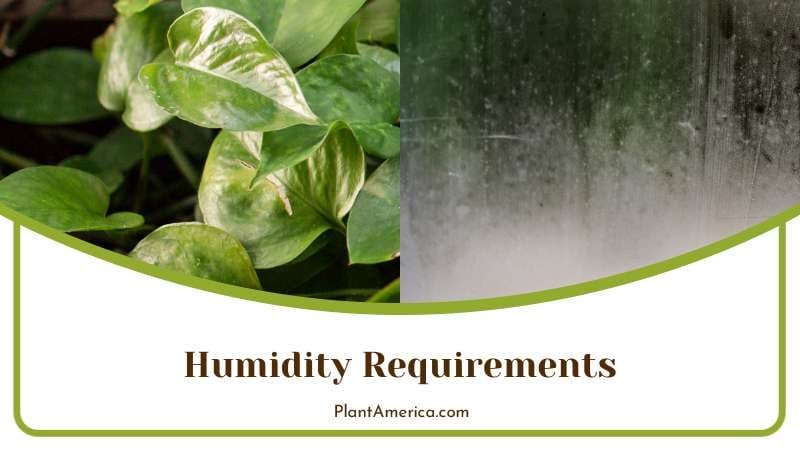
To maintain humidity, you should use the following methods:
– Misting
- Mist your pothos every day.
- Use distilled water for misting.
- Spray water over the top of the silver pothos plant.
– Pebble Tray
- You can also place your plant on a pebble tray to keep it humid.
- Place a layer of small pebbles on a tray and fill the tray with water.
- Put the pot of the silver pothos on the tray.
- The process of evaporation will help the leaves of the plant to humidify.
– Room Humidifier
To maintain humidity levels, use a room humidifier to provide higher humidity
– Location
Place your plant in the kitchen or bathroom as these places have high humidity levels
Too much humidity is harmful to the plant because it invites bacterial and fungal growth on the leaves.
Growth
Silver indoor plants can grow outdoors up to a height of 10 feet, and as a houseplant, pothos will reach a maximum of 3 feet in height. It is a low-maintenance plant and is ideal for beginners.
The plant can also grow in a hanging basket. It can trail on a moss stick or even as a climber or cascade down on a piece of furniture. Silver pothos look perfect in homes and offices. The plant is a slow grower.
Potting
Use terracotta pots rather than plastic or ceramic pots because the soil dries faster in them. Plant your silver pothos in a pot with drainage holes at the bottom so that the water will not accumulate.
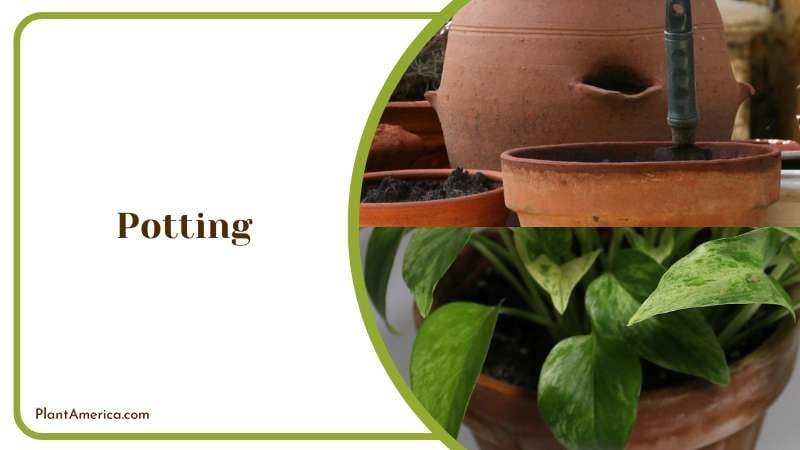
The Satin pothos grows fast in the fertile potting mix. When the plant starts to outgrow its pot, the roots will come out and the plant’s growth slows down. It is then time to transplant your plant into a new pot.
The new pot should be bigger and have drainage holes at the bottom to reduce overwatering and soggy soil issues. The best time to repot your plant is in early spring because it is the growing season where plants grow faster.
-
Steps to Repot the Silver Pothos
When you repot the plant, follow these simple steps:
- Choose a bigger container than the old one.
- Carefully take the silver pothos plant out of the pot.
- Brush off the extra soil that is attached to the roots.
- Check the roots and trim some parts that are decaying or diseased.
- Take a new pot and put in the potting soil, leaving some space at the top.
- Place the plant and fill the pot with soil.
- Water the plant thoroughly.
 Fertilizer Requirements
You can give an extra dose to your Silver pothos to grow well. Feed your Silver pothos with suitable fertilizers once a month. Always add fertilizer in the growing season, which is summer or spring.
Avoid fertilizing your plant in winter because the plant is in the dormant or resting phase during this season.
Pruning
Prune your Silver pothos to give them a bushier look. Trim the stem if it’s leggy, and remove damaged, discolored, dead or diseased leaves and stems with the help of sterile, sharp scissors.
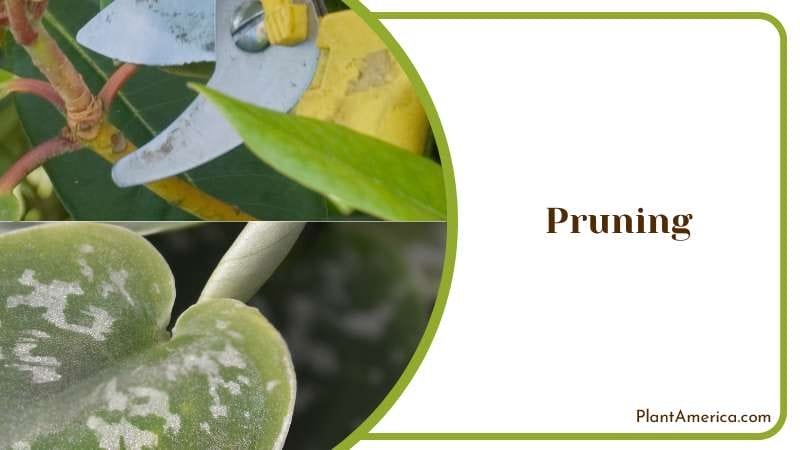
Spring is the best time for pruning the plant because it is the growing season.
– Flowering
Silver pothos bloom rarely. The flowers grow in summer with small berries on them. Flowers form from a spike known as a spadix and appear in a bright green color with a purple shade around the spadix.
Propagation
The best and the easiest method for the propagation of the Silver pothos plant is the stem cutting method.
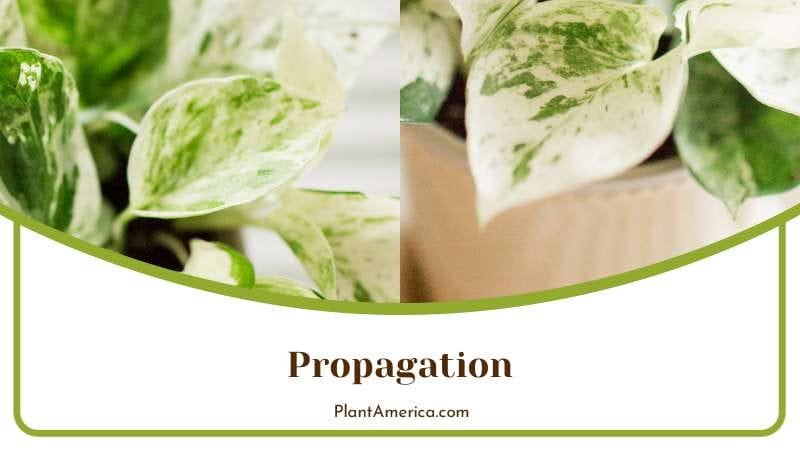
Take note that you have to use sterile scissors for cutting the stem.
– Stem Cutting Method
Here is a simple step-by-step guide to help you with stem cutting:
- Pick a healthy stem of the plant.
- Remove the stem just below the node.
- At least one node must be present in the cutting.
- Put the cutting in a jar filled with water.
- Change the water weekly or when the water becomes murky.
- After about four weeks, roots will appear.
- Plant the new plant in a container with fresh potting mix.
– Water Propagation Method
Water propagation is simple if you follow these steps:
- Cut a stem with at least one node attached to it.
- Put medium warm water into a container.
- Put your cutting in water, making sure the node is inside the water.
- Silver pothos can also grow in water for a couple of months.
– Soil Propagation Method
Propagate your plants directly in soil by following these steps:
- Pick a healthy stem and cut it, making sure it contains at least one node.
- Prepare the potting mix.
- Add perlite and peat to the potting mix.
- Plant your cutting in the pot.
- New roots will develop after a month. If not, check what to do if no roots grow from cutting.
You can also propagate the Silver pothos plant by air layering.
Problems
The plant is susceptible to attacks by some pests.

Scales and spider mites damage the plant, chew the leaves, and form holes in the leaves.
– Spider Mites
Spider mites make webs on the stems and leaves of the plant. These bugs like to feed on the sap of the plant and kill the plant.
– Scales
Scales look like small, brown bumps on the stem. They are white, yellow, green and reddish-brown in color, and their body is oblong with a scale and spiky mouths. They stick to the stem and leaves and suck the sap from the plant.
– Mealybugs
Mealybugs are small and look like cotton balls. They move slowly on the plant and lay around 600 eggs on the leaves and stems.
– Aphids
Aphids are tiny insects that are black, yellow, brown, green or pink in color. They are present on the inner side of the leaves.
-
Solutions
Immediately handle the problem of pests. Separate the infected plant from others because it can easily contaminate the others. If the infestation is too high, repot the plant immediately.
If you neglect this problem, it can spread and damage the whole plant.
Use the following methods to treat these pests:
- Spray neem oil
- Wash with insecticidal soaps
- Rub alcohol with a cotton ball
– Loss of Variegation
Silver variegation is one of the unique properties of the plant. When the plant gets insufficient light, it may lose its variegation.
-
Solution
When the plant is losing its variegation, change the location of the plant. Select a spot where the plant will get indirect bright light.
– Root Rot
Silver pothos are sensitive and can undergo root rot. The main reason behind root rot is overwatering the plant.

When the root of the silver pothos rot, the plant’s stem and the foliage become black and mushy.
-
Solution
Prune the decaying roots and repot the plant into fresh and sterile soil. Discard mushy and black stems.
– Soft Brown Roots
The roots of a healthy plant are white in color and firm. When the roots of healthy silver pothos rot, they become brown.
-
Solution
Improve the watering routine and avoid overwatering at all costs.
– Leggy Vines
When the plant has long and leggy vines, this indicates that the plant is getting low light.
-
Solution
Trim the leggy leaves to encourage the bushy growth of the plant.
– Yellowing of Leaves
The change in the color of the leaves indicated the plant’s health. When the roots of the plants start to rot, the leaves become yellow.
-
Solution
Do not overwater your plant. Remember to check the soil before watering the plant. If there is dampness, avoid watering.
– Brown Foliage
The leaves of the silver pothos can turn brown when the plant gets low humidity or you have over-fertilized the plant.
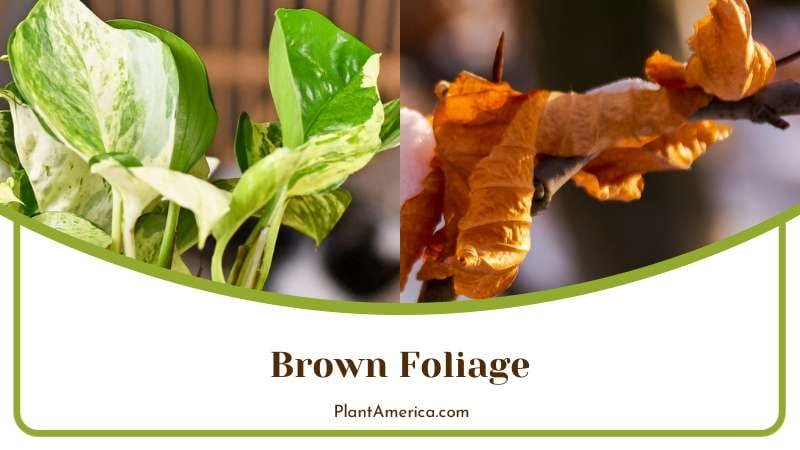
Leaves can also turn brown when the plant is placed outside in bright sunlight for long.
-
Solution
Check your plant when the leaves are turning from dark green to brown. To provide humidity to the plant, mist your plant regularly. Prune the brown leaves and stop fertilizing the plant for a month if the leaves turn brown because over-fertilizing, which causes the leaves to lose color.
Keep your plant under shade when it is outside for long hours because direct sunlight damages the plant.
– Yellow Leaves
The cause of this plant’s dark green leaves turning yellow is overwatering.
-
Solution
Don’t water your plant when the soil is still moist. If the potting mix remains soggy for long, you need to change the potting mix.
– Brown and Burned Foliage
When you over-fertilize your silver pothos, the salts in the fertilizer build up in the soil and form brown or burned leaves.
-
Solution
It is better to flush the extra soil with water every three to four months to wash away the salts.
– Toxicity
Silver pothos are toxic to pets and humans. The plant contains calcium oxalate crystals, which are poisonous. When pets ingest the leaves, it will irritate their mouth, throat and skin.