
Prayer plant brown tips often indicate a need for changes in the care routine. They can result from many issues, such as unwise watering, exposure to hard water, root problems, or even external factors like low humidity.

Identifying these causes is the first step to restoring the plant’s vitality. Stick with us as we unveil these reasons and guide you toward a rejuvenated prayer plant (Maranta leuconeura).
What Causes Brown Tips on Prayer Plants?
Brown tips on prayer plants can be caused by improper watering and poor water quality. Sometimes, root stress and pest attacks can also lead to browning. Furthermore, if you don’t do anything to maintain humidity and temperature, the leaves will become brown eventually.
– Unwise Watering
When you see prayer plant leaves curling and turning brown, it means you haven’t added water correctly. Here’s why improper watering can lead to those undesired brown tips:
Dampness: Overwatering leads to waterlogged soil, which, in turn, can cause the roots to suffocate and become ineffective. As a result, they won’t be able to draw water and nutrients, making plants weak. Remember that a soft and fragile plant will have brown patches on the tips.
Root Rot: This is a direct consequence of overwatering. When the soil remains wet for too long, harmful fungi find it an ideal environment to grow. These fungi attack the roots, causing them to decay – a condition known as rot. Once this sets in, the plant cannot absorb the essential nutrients it needs, leading to brown tips.
Underwatering: On the other end, not giving your prayer plant enough water can cause it to dry out. The result? The leaf edges will first become brown and then crispy.

– When You Don’t Consider Water Purity: Adding Hard Water
Hard or impure water is another potential cause of brown tips in plants. Such water contains a high mineral content, which can accumulate in the soil over time. Eventually, this buildup can interfere with the plant’s ability to absorb water and minerals, leading to symptoms like prayer plant yellow leaves and brown tips.
Often, tap water contains additives like chlorine and fluoride, which, while safe for us, can harm plants. Over time, these chemicals can lead to leaf burn, showing up as brown tips.
– Root Issues: Not Focusing on the Root’s Vibrancy
Roots’ health directly impacts the overall well-being of the entire plant. When they encounter issues, it often manifests as visible “distress” in the plant’s foliage, like brown leaf tips. Especially if you’re noticing “prayer plant brown tips indoors,” the root tissues are more likely to be stressed.
Here are the major root problems:
Root Bound: When a plant’s roots outgrow their pot and start circling the bottom, it’s termed “root-bound.” This confines the roots, leaving them limited space to expand and absorb nutrients. The cramped conditions can impede the plant’s growth and lead to visible distress, including browning of the tips.
Decomposition: Root rot isn’t the only concern. Dead roots, organic matter, or decaying leaves can sometimes accumulate at the pot’s base. This decay can release harmful compounds, affecting the healthy roots and, subsequently, the foliage.
Physical Damage: Roots can get damaged during repotting or if any sharp object pierces the soil. Damaged roots can become more susceptible to infections and struggle to provide the plant with nutrients and water.
Imbalance of Beneficial Microbes: Healthy soil is a complex ecosystem of beneficial microbes, which breaks down organic matter and makes nutrients more accessible to the plant. An imbalance or lack of them can stunt root growth and lead to nutrient deficiencies, often as browning or yellowing of the tips.
– Dry Surroundings (Low Humidity)
The prayer plant, native to tropical regions, has a natural affinity for humid environments. However, the plant can show signs of distress in indoor settings or arid climates, and you’ll see “prayer plant crispy leaves.”

Let us explain. When the air lacks moisture, it tries to find it elsewhere, often drawing it from the plants. As a result, the leaves get water-stressed and start to discolor. In most cases, you’ll see prayer plant leaves turning yellow and brown.
There are different ways to confirm if your plants are facing humidity stress:
Leaf Check: One of the most straightforward methods is regularly checking your plant’s leaves. If they feel dry, crispy, or brittle to the touch, it’s a sign that the surrounding air might be too dry.
Hygrometer: This instrument measures the humidity in the air. You can accurately read the air’s moisture level by placing a hygrometer near your plant. A reading below 40 percent typically indicates that the air is too dry for the plant.
Watering Frequency: If you need to water your plant more often than usual, it could be a sign that it is losing too much moisture to the dry air around it.
– Frost Damage (Temperature Extremes)
When exposed to cold drafts or freezing temperatures, a plant can sometimes face frost damage. When this happens, you might notice the prayer plant brown tips turning yellow.
Symptoms of Frost Damage: Initially, the leaves may become limp or wilted. As the damage progresses, affected areas turn dark and watery. Over time, these spots dry out and become brown or black.
– Giving Plants Too Much Light
While plants undoubtedly need light for photosynthesis, too much of a good thing can lead to problems. The prayer plant is no exception. While it loves bright, indirect light, exposing it to the sun can cause its leaves to get scorched. If not addressed, this can be identified when the leaves turn brown at the tips or edges (eventually leading to entirely brown leaves).
Initially, leaves might exhibit a bleached look or pale color. With prolonged exposure, these patches dry out and turn brown. The damage is irreversible, but future harm can be prevented by adjusting the plant’s location.
– Pest Infestation
One of the most notorious pests for prayer plants is spider mites. These tiny critters sap the plant’s juices, leading to various symptoms, including brown tips.
Identifying Mites: They are minuscule and might require a magnifying glass to spot. Furthermore, if you see fine, silvery webs between the leaves, it indicates mites. Infested leaves might appear speckled or stippled.
Moreover, this pest also loves to feast on many other plants, like Goeppertia warszewiczii, ctenanthe burle-marxii, goeppertia insignis, calathea orbifolia, pin-stripe calathea, and peacock plants. So, if you have these ones in your garden, the chances of mite attacks are higher.
Plant enthusiasts can ensure their gardens remain vibrant and healthy by understanding these potential challenges and being proactive in care. Let’s see the details!
How to Fix Brown Tips on a Prayer Plant
To fix brown tips on a prayer plant, you should adjust watering techniques based on the situation, promote healthy root growth, and maintain optimal humidity levels. It’s also recommended to promptly ensure appropriate light and temperature and address any pest problems.
– Water According to the Situation
Watering is not just about quantity but timing and method. We suggest you do it this way:
Check the Soil First: Insert a finger about an inch into the soil before watering. If the top layer feels dry, it’s time to water.
Bottom-Watering:
- Instead of pouring water onto the soil’s surface, place the pot in a tray filled with water.
- Let the roots absorb moisture from the drainage holes.
- After 20-30 minutes, remove any excess water.
This ensures the roots get adequate moisture without drenching the plant.
Morning Watering: Water your plant in the early morning. This allows excess water on the leaves to evaporate throughout the day, reducing the risk of fungal issues.
Seasonal Adjustments: Plants generally require less water during the winter months. Adjust your watering schedule based on seasonal needs to avoid over-hydrating the plant.
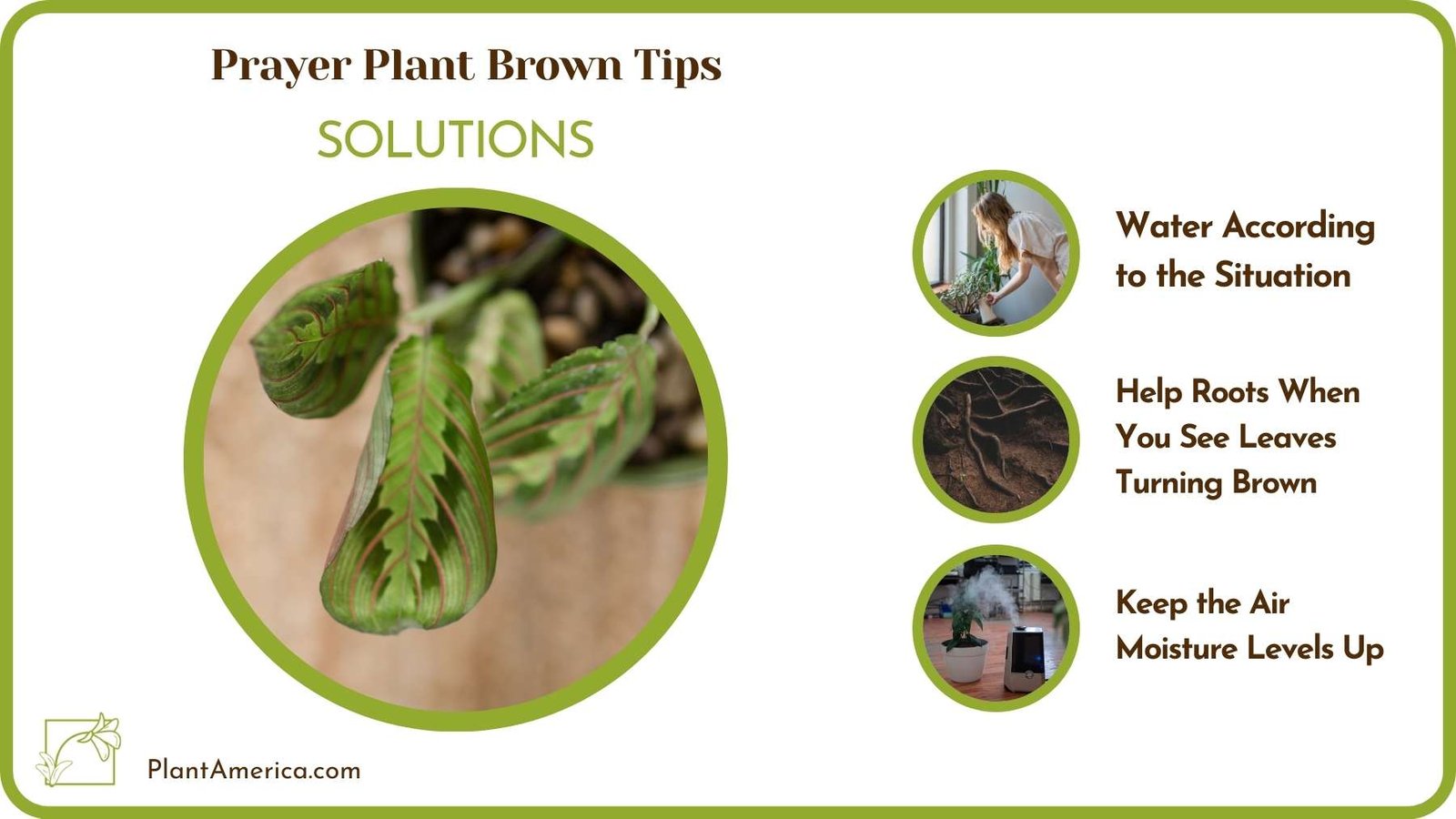
– Help Roots When You See Leaves Turning Brown
Healthy roots are crucial for a thriving plant. If you suspect root issues, consider the following measures to foster robust root growth:
- Changing the Pot: If the plant has outgrown its pot or the soil has gone bad, consider repotting it. This provides the roots with more space to grow and breathe.
- Improve Drainage: Ensure the pot has sufficient drainage holes. This prevents waterlogging, which can cause root rot.
- Root Pruning: In case of damaged or rotted roots, trim them away before repotting. This can stimulate healthier root growth.
- Use the Right Soil Mix: A well-draining soil mix enriched with organic matter supports root health. Consider adding perlite or sand to enhance drainage.
- Avoid Over-fertilization: Excess nutrients can stress the roots. Always follow the recommended dose and frequency when fertilizing.
– Keep the Air Moisture Levels Up
Maintaining proper humidity is crucial for the prayer plant, as it thrives in a humid environment. Here are five practical ways to elevate humidity:
- Grouping Plants: Placing several plants together creates a micro-environment with higher humidity due to the collective transpiration.
- Humidity Trays: Place your plant on a tray filled with water and pebbles. As the water evaporates, it increases the surrounding air’s moisture level.
- Room Humidifiers: A room humidifier can help maintain optimal humidity, especially during dry winter or in air-conditioned rooms.
- Regular Misting: Spritz the plant’s leaves with distilled or rainwater regularly. However, ensure the leaves don’t remain wet for prolonged periods to avoid fungal issues.
- Bathrooms and Kitchens: These rooms typically have higher humidity due to showers and cooking. Consider placing your plant in these spaces if feasible.

– Focus on Light and Temperature
For those practicing prayer, plant brown tips care, light, and temperature play pivotal roles in maintaining the vibrancy of leaves. Let’s discuss how to manage lighting conditions first:
- Focus on Filtered Light: Prayer plants thrive in indirect, filtered light. Consider placing them near a north or east-facing window shielded by sheer curtains.
- Avoid Direct Sunlight: Sunrays can scorch their leaves, leading to brown patches. Always keep them away from direct afternoon sun.
- Rotating Regularly: Rotate your plant every few weeks to ensure all sides receive even light exposure.
- Artificial Lighting: If natural light is limited, fluorescent lights can help fulfill their light requirements. Keep the duration of light exposure consistent, especially if you’re using artificial lights.
Now, check out what to do to keep the temperature within ideal range:
- Avoid Temperature Fluctuations: Sudden temperature drops or spikes can stress the plant. Ensure a stable environment using heaters, fans, or placing your plants in warmer spots.
- Keep Away from Drafts: Windows, doors, or air conditioning vents producing drafts can harm the plant. Always choose a stable location.
- No Frost Exposure: Protect your plants from frost by using frost sheets/covers.
- Monitoring: Regularly use a thermometer to ensure the temperature remains within the plant’s preferred range.
– Get Rid of Insect-Pests
A thriving plant requires consistent plant care tips and vigilance against pests.
Here are measures to protect your prayer plants:
- Inspect Regularly: Check the undersides of leaves and stems for any signs of pests. Early detection can make treatment easier.
- Neem Oil: This organic solution can deter a range of pests. Spray it on affected areas every week until the infestation is gone.
- Insecticidal Soap: This can be used to treat mild pest problems. Ensure it’s suited for houseplants.
- Remove Affected Parts: If only a few parts of the plant are infested, prune those sections away.
- Isolation: If one plant is infested, quarantine it immediately to prevent the pests from spreading.
No stress will be left for prayer plants when you do all these measures. As a result, they will continue thriving and shine in their original colors!

Conclusion
Prayer plant brown tips arise from various factors, from water issues to pest problems. However, you can tackle this problem by following the suggestions in this guide. Here’s the summary:
- Keep soil adequately hydrated by following the bottom watering method.
- Ensure optimal lighting and temperature conditions by placing your plants in the right spot/location.
- Maintain adequate humidity with the help of humidifiers and misting.
- Regularly inspect for pests and address any infestations immediately with neem oil or insecticidal soaps.
Always remember that dedicated care keeps your prayer plants lush, vibrant, and free from brown tips.