
Philodendron Micans of the Araceae family also known as Velvet Leaf Philodendron, is one of the most beginner-friendly tropical plants you can grow in your home. Versatile, inexpensive, easy to find, and even easier to care for, it combines an exotic vibe with the classic esthetics of its smooth, velvet foliage.
We know it’s probably unfair on your other plants to pick favorites, but once you grow your own Philo Micans, we’re sure you’ll agree: this philodendron genus houseplant does tick all the boxes. Let’s find out more!
What Is a Philodendron Micans?
A Philodendron Micans is a tropical vining plant native to Central America and the Caribbean. It is a variety of Philodendron Hederaceum or the heartleaf philodendron. Popular due to its dark green, velvet foliage, Philo Micans can thrive in any home and grow as a climbing or hanging plant.
Philodendron Micans Care
Philodendron Micans may be a bit underrated, but it’s one of the most rewarding varieties of philodendron you can grow in your home. It’s also a low-maintenance houseplant that’s perfect for beginners. Let’s take a look at the care requirements needed to keep this plant happy.
 Water
Water
We recommend that you water your Philodendron Micans when the top inch of the soil feels dry to the touch. This plant enjoys soil that is evenly moist but not soaked. It will forgive you if you forget to water it for a couple of days but can be very sensitive to overwatering.
If the soil is kept constantly wet, it will start to harbor harmful pathogens, and the plant’s root system can be badly damaged by rot.
On average, you can water your Micans once a week throughout the growing season. Wait until the top inch of the soil is dry, then give the plant a good soak. In winter, you can cut back on watering Philodendron Micans once every 10 to 12 days but always check the soil moisture first.
Keep in mind that light, temperature, humidity, the size of the pot, and the age of the plant will impact how much water it needs.
 Light
Light
Keep your Philodendron Micans in a spot with bright indirect light. How much light this plant receives will have a direct impact on its health, as well as its growth. If you keep it in partial shade, the plant will grow very slowly. However, direct sun will damage the foliage, causing faded colors and scorch marks.

If you have a room with eastern or western exposure, it will be perfect for your Philo Micans. The plant can tolerate a couple of hours of direct sun in the morning and evening.
In a room that’s facing south, we recommend keeping it at least three feet (90 centimeters) away from the window. Natural light is best for this plant, but in winter, you can give it a boost with grow lights.
 Soil
Soil
The ideal soil for Philodendron Micans should be aerated, well-draining, porous, moisture-retentive, and rich in organic matter. Achieving this may seem complicated at first, but getting the potting mix right is very easy.
The most beginner-friendly soil mix you can make yourself is combining two parts universal peat-based soil and one part perlite. This will provide support for the roots, nutrients, moisture, and, most importantly, good drainage.
 Temperature
The ideal temperature for growing Philodendron Micans indoors is between 65 and 80 F (18 to 27 C). If temperatures rise above 86 F (30 C), you may notice that the plant’s growth becomes stunted.
Similarly, temperatures below 59 F (15 C) can harm the plant. Philo Micans is not frost tolerant, and if it’s exposed to temperatures below 50 F (10 C) for extended periods, it can suffer permanent root and foliage damage.
If you want to grow Philodendron Micans outdoors, you can do so in USDA zones 10 and 11. Otherwise, it’s best if you only keep the plant outside during the warmer parts of the year.
Keep it in a part of the garden where it’s sheltered from any direct sun, and you can see some truly spectacular growth in just a few months. Remember to bring it indoors as soon as temperatures drop to 59 F (15 C) during the night.
 Humidity
Philodendron Micans is a tropical plant that loves moisture, but it’s also very forgiving of the lower humidity levels found indoors. If you can raise the humidity in your home to at least 50 percent, that would be perfect, but no worries if not.
The easiest way to keep this philodendron happy is to group it with other plants, place it on top of a pebble tray, or even just put a cup of water next to the plant pot.
You can also mist your Philodendron Micans, but only if you have excellent air circulation in your home. The velvety texture of the leaves can trap the water droplets, and if the leaves stay wet too long, they can suffer from fungal or bacterial infections.
Misting should only be used as a last resort for boosting humidity, as it doesn’t have any long-lasting effects. If you decide to mist your Micans plant, we recommend using distilled water to prevent salt and mineral spots on the foliage.
 Fertilizer
Philodendron Micans is a vigorous grower that benefits from regular fertilizer applications. Once a month, from early spring until early autumn, we recommend giving it a balanced, universal fertilizer, diluted to half the strength. The plant doesn’t need any additional feeding in winter.
 Pruning and Maintenance
Regular pruning is required to keep your Philodendron Micans in good shape. This plant grows very fast, and its vines can take over space in no time. To prune your Micans, always use a sharp, sterilized blade and never cut more than two-thirds of the plant. Keep the cut stems for propagation.

If you want to give your Philodendron Micans a contained shape and make it look bushy, here’s a neat trick you can try. Take one of the vines, loop it over the pot, place a stem section with aerial roots on the soil, and then use a few paper clips to keep it in place.
The aerial roots will grow into the soil, and after several months, you may even see new stems growing from the main one. This technique is a variation of air layering, which is commonly used to propagate aroid plants.
The velvety leaves of Philodendron Micans can attract dust, blocking the stomata and preventing the plant from producing photosynthesis properly. Once a month, we recommend giving them a rinse in the shower, using room temperature water.
– Repotting
The best time to repot Philodendron Micans is in spring or early summer when the plant is actively growing. Simply take it out of its old pot, and relocate it to a container that’s one size or two inches (five centimeters) wider. Philo Micans is not too pretentious for the type of pot you use, so you can plant it in ceramic, terracotta, or even plastic containers. If you use clay-based pots, keep in mind that the soil will dry out quicker, and you’ll need to water the plant more often.
Propagation
The easiest way to propagate Philodendron Micans is using stem cuttings. You can use this method throughout spring and summer, especially if you need to prune your Micans to keep them in shape. Here’s what you’ll need to do:
- Pick a long stem and identify the growth nodes. They are small lumps that form where the leaf petiole attaches to the stem. They also have several aerial roots, which, in the case of Philodendron Micans, can be almost four inches (10 centimeters) long.
- Sterilize a sharp pair of scissors using rubbing alcohol.
- Cut the stem a quarter of an inch above and below the growth node. To make a bushy plant, we recommend taking at least three cuttings.
- Place the cuttings in a glass of water, and keep them in a warm, bright room2 but away from direct sunlight. Remember to change the water once a week.
- Philo Micans cuttings can take a while to grow, but the bigger their aerial roots, the faster the process. On average, we recommend keeping them in water for at least a month.
- When the roots are at least two inches (five centimeters) long, you can pot the cuttings in a well-draining soil mix.
Problems
Philodendron Micans is a hardy plant that very rarely suffers from any pests or diseases.
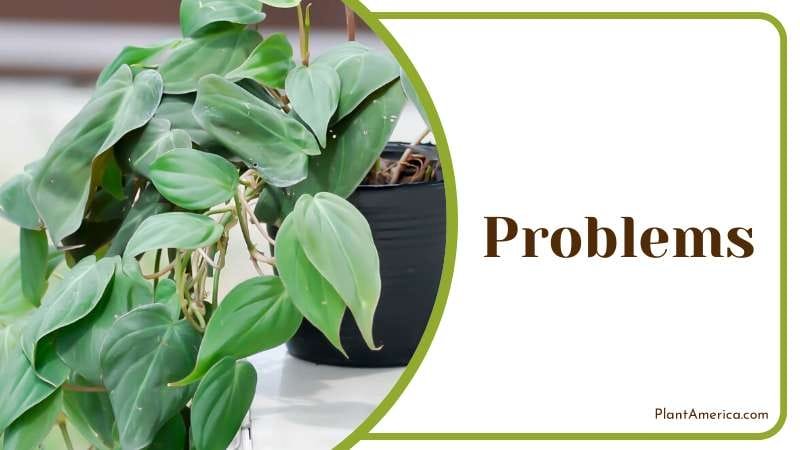
Most problems you’ll encounter are usually caused by incorrect growing conditions. Here’s what you’ll need to keep an eye out for.
– Yellowing Leaves
If the leaves of your Philodendron Micans are starting to turn yellow, that’s a sign of overwatering. Always allow the soil to dry out to a depth of one inch before watering the plant, and make sure you use a well-draining potting medium.
– Faded Leaves
This could be a sign of either pest damage or too much light. The Philodendron Micans leaves can scorch easily if the plant is exposed to direct sunlight during the hottest parts of the day. If the leaves have a pink or pale yellow hue, try moving your plant away from the window.
– Brown Leaves
If the leaves on your Philodendron Micans develop brown spots with a yellow outline, this usually indicates a fungal or bacterial problem caused by too much water. If the roots stay wet all the time, they will quickly develop root rot. This disease can be fatal for the plant, but if you act quickly, there’s a chance that you can still save it.
Start by mixing two parts water and one part three percent hydrogen peroxide, and use it to soak the soil. If you see no improvements over the next couple of weeks, take the plant out of the pot and remove as much of the soil as you can.
Inspect the roots, and use a sterilized blade to trim off any that are black and mushy. Then simply repot your Micans in fresh potting mix, and carefully monitor how much water you give your plant in the future.
– Small Yellow Leaf Spots
It’s normal for your Philodendron Micans to have a few small, yellow spots on the leaves. They are common in many philodendron species and are a type of nectar secreting glands called extrafloral nectaries. You will most likely notice them on young leaves as they unfurl, and they will naturally fade out in a couple of weeks.
However, if the leaves of your Micans are full of small yellow spots that persist even on adult leaves, this could be a sign of rust fungus. You can use a copper fungicide to treat the plant.
– Spider Mites and Mealybugs
Mealybugs and spider mites are the most common pests that can infest your Philodendron Micans. The easiest way to deal with them is to spray the leaves with a solution of four parts water and one part of isopropyl alcohol. Apply this solution once a week for a month, and the pests will be gone.
Final note:
Let’s do a quick recap of everything you need to know about growing Philodendron Micans as a houseplant: