
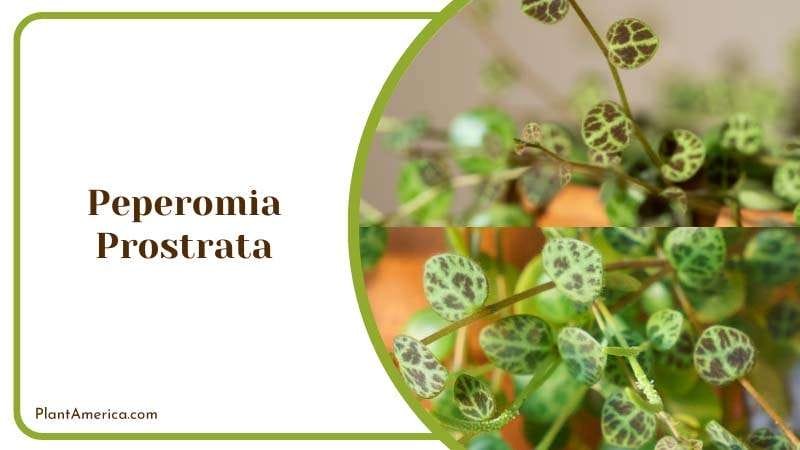
Peperomia prostrata of the Piperaceae family is a trailing, semi-succulent perennial plant that is also known as the String of turtles plant because of its strings of leaves that are fleshy and round. This lush and delicate green plant is perfect for indoor gardens.
The best thing about this Peperomia genus plant is that it doesn’t even need very high maintenance. In this comprehensive guide, we’ll be detailing the care requirements of this plant and everything else you need to know about it.
Peperomia Prostrata Care
| Scientific name | Peperomia prostrata |
| Genus | Peperomia |
| Family | Piperacea |
| Plant type | Epiphyte, semi-succulent, tropical |
| Origin | Brazilian rainforest |
| Other names | Turtle plant, Magic marmer, Radiator plant |
| Growth | Slow grower with hanging, trailing vines |
| Height | 1-4 inches |
| Leaves | Tiny, round, dark green |
| Flowers | Small spikes that are white or cream-colored |
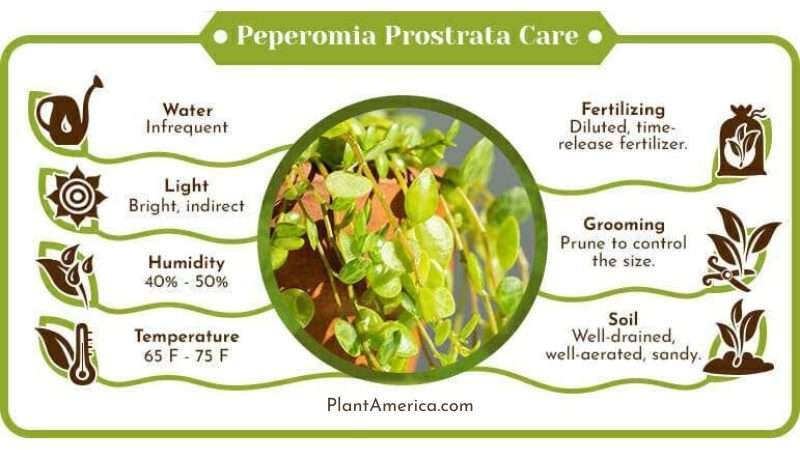
| Water requirement | Infrequent |
| Soil requirement | Well-drained, well-aerated, sandy |
| pH | Acidic to neutral (5-7) |
| Temperature requirement | Average, 65-75 degrees Fahrenheit |
| Light requirement | Medium, bright, indirect sunlight |
| Humidity requirement | 40-50 percent |
| Fertilizer requirement | Diluted, time-release fertilizer |
| Toxicity | Non-toxic |
| Propagation | By stem, leaf-cutting, water, soil, sphagnum moss |
| Problems | Mealybugs, aphids, whiteflies, black flies, spider mites, root rot, bump on leaves, yellow, brown, and dull leaves |
 Water Requirements
Water your lovely succulents when the soil gets dry. The Strings of Turtles need to be watered twice or thrice a week. Allow the top inches of the soil layer to dry out before watering again. You can check this by digging the soil up to one inch deep.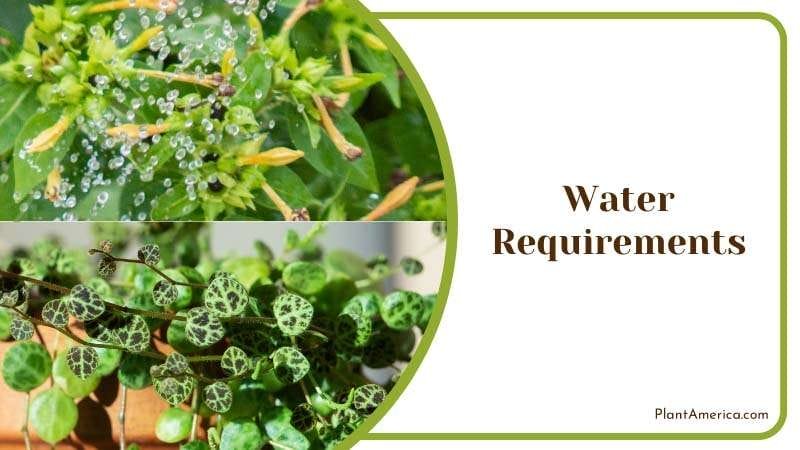
Overwatering kills this plant, so make sure you are not putting too much water in. The best method to water your plants is to soak them nicely and then allow them to dry.
 Soil Requirements
Using a well-drained soil is the most ideal for the growth of Peperomia prostrata. Add well-drained and well-aerated loose sand and grit to the potting mix. Add peat and perlite once a year to the top layer of the soil. The ideal pH of the soil should be from 5 to 7, which is acidic to neutral pH.
-
D.I.Y. Potting Mix
This succulent plant can grow in a wide range of conditions, but it is necessary to provide the appropriate soil for the health of this succulent. Here is a perfect soil recipe for succulent plants.
You need three main ingredients to have the best succulent soil:
- Potting soil
- Coarse sand
- Organic matter (perlite, pumice, peat moss)
-
Potting soil
Choose a fresh, sterile, well-drained potting mix. It is best to use porous and light soil because it does not hold moisture for long. Moisture is harmful to the roots of succulents and can cause root rot.
-
Coarse sand
Coarse sand is the best to grow succulents. This type of sand is a perfect choice because it drains fast and holds some water for long periods. Sand decreases the density of the soil and provides proper drainage.
-
Organic Matter
Use lightweight organic matter such as perlite, pumice or peat moss to the soil. The organic matter ensures soil drainage, retains less moisture, and keeps the soil airy.
The main thing to remember when making a perfect recipe for succulent soil is to add the ingredients in the proper ratio. Keep in mind that you need to ensure proper drainage, aeration and density.
You need to add 1 part of organic matter, 1 part of crushed rocks, 2 parts of coarse sand, and 3 parts of potting mix into the mixing container.
 Light Requirements
Peperomia prostrata plants require medium bright indirect light to grow. The best position for your plant is a southern or eastern-facing window. Too much bright light might burn the leaves of your plant.
This plant can also grow indoors in artificial fluorescent light.
 Humidity Requirements
The String of Turtles loves to grow in high humidity. Humidity levels between 40 to 50 percent is ideal for its growth. To provide enough moisture, mist the plant regularly, and to ensure proper humidity levels, you can place your plant on a pebble tray filled with water.
Here are a few ideas for you:
-
Pebble Tray
This method will ensure high humidity levels around your plant.
Place some equal-sized pebbles on a tray and fill the tray with water. Put your pot on top of it, making sure that the pot is not touching the water.
-
Humidifier
A humidifier also provides the ideal level of humidity for your plant.
-
Misting
Mist your plant regularly. Use a spray bottle to mist your plant several times a day. Mist the leaves so the moisture will remain in the surroundings and increase the humidity level around the plant for a couple of hours.
-
Location
The best place to provide humidity to the plants in your house is either the bathroom or kitchen. The wet environment, sinks, damp towels, and showers provide high humidity levels.
-
Terrarium
A terrarium also provides a high humidity level around the plant and creates a microclimate. The glass walls of the terrarium remove moisture from the air and increase the humidity level.
-
Group Plants Together
Group your plants together. It is a natural way to increase humidity. By placing the plants close to each other, the rate of transpiration increases and it improves the humidity level.
 Fertilizer Requirements
Fertilize your Miniature peperomia prostrata with diluted feed or time-release plant food. The growing season is the ideal time to do this. Avoid fertilizing your plant during winter and fall.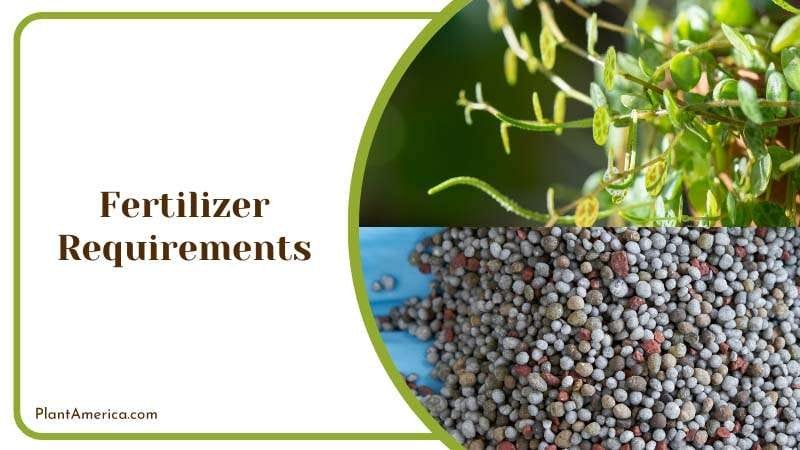
Add coco coir base, pure sphagnum, perlite, vermiculite or pumice to treat your plants in the growing season.
 Temperature Requirements
The Turtle shell plant requires an average temperature ranging from 65 to 75 degrees Fahrenheit. The vines start to wilt at lower temperatures. Room temperature is ideal for the plant but keep your Peperomia prostrata plant away from the central heating vent or air conditioner.
– Potting
Use a pot with drainage holes at the bottom. Add well-drained and well-aerated potting mix. It is best to use a terracotta pot because it allows the soil to transpire.
Repot the Peperomia prostrata to refresh the soil. Transplant your Strings of Turtle in a small container with good drainage every 2 to 3 years. Repotting should be performed in spring using a fertile potting mix.
Follow these steps to do this successfully:
- Gently remove the plant from the pot.
- Dust away old potting mix from the roots.
- Untangle the roots if they are root-bound.
- Check the roots for root rot.
- Transfer the plant into a new pot containing fresh potting mix.
- Water the plant thoroughly.
 Pruning
Prune the Peperomia prostrata plant to control the size and growth of the plant.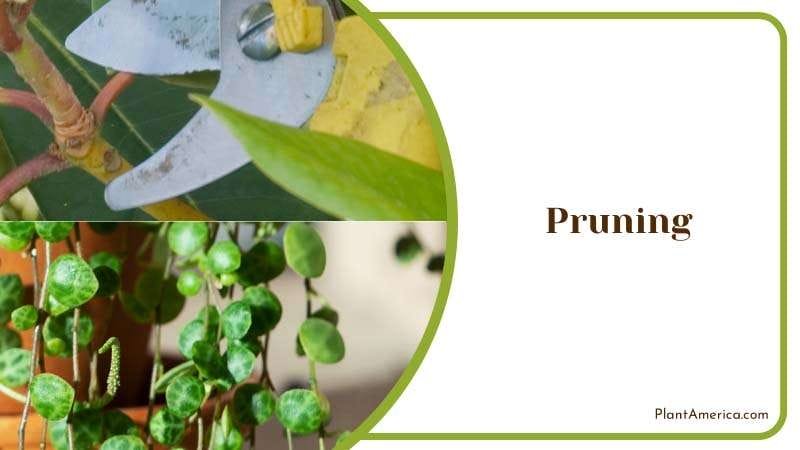
Trim the extra growing vines with special care and prune the damaged or dead leaves and stems. Use clean and disinfected scissors to avoid any infection or disease in the plant.
–Toxicity
The Peperomia prostrata plant is an ideal houseplant. It is non-toxic and safe for both humans and pets.
– Air Purification
The Peperomia prostrata plant is a good air purifier. It absorbs harmful substances such as formaldehyde, benzene, and toluene that are present in the air. The plant provides us with a healthier growing environment.
Propagation
There are several methods for the propagation of the String of Turtle plants. The ideal time for propagation is during the early summer.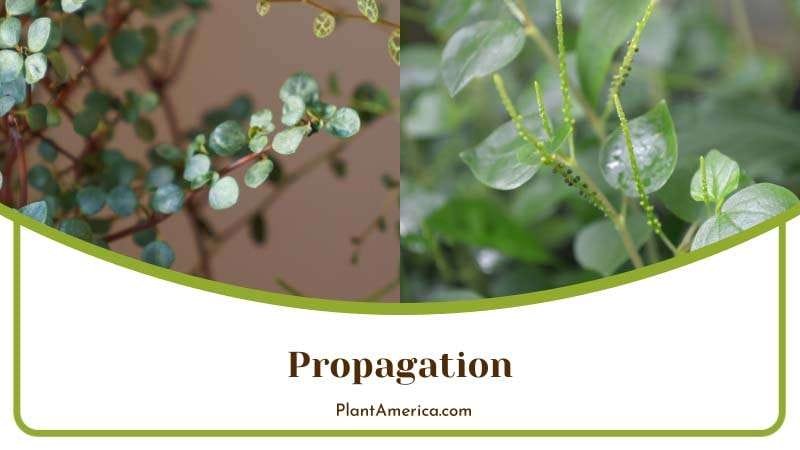
Choose the healthiest stems for propagation.
– Propagation by Stem or Leaf Cuttings
The easiest way for propagation is to take cuttings of the stem or leaf.
Follow our guide below for the best results:
- Take a disinfected pair of scissors.
- Cut a stem with at least one node attached.
- Plant the cutting in a pot with fresh, well-drained, and moist potting mix.
- Place the plant where it will get indirect bright sunlight.
- After a few weeks, roots will start to develop.
- Water your plant and continue to give regular care as explained above.
– Propagation in Water
Propagating plants in water is a very easy way to multiply your plants.
Here is a simple guide:
- Put the cutting of your Peperomia prostrata in lukewarm water.
- Replace the water after every few days and remove damaged leaves.
- After around two months, roots will develop.
- Place the newborn plant in a new pot.
- Mist the plant regularly.
- Cover the plant with a plastic bag to achieve humidity.
- Remove the bag every day for the plant to get fresh air.
– Propagation in Soil
You can propagate the plant by placing it directly on the soil surface.
Here is how to do it:
- Place the cutting on the soil surface for a couple of hours.
- This will allow the formation of callus tissues on the cutting.
- Leave the cutting in the soil until the development of roots.
- When roots are developed, transfer the cutting to a pot or hanging basket.
– Propagation in Sphagnum Moss
Here is another way to propagate your plants:
- Take some cuttings from the healthy plant.
- Place the cuttings on top of sphagnum moss.
- Cover the pot containing the cutting with a plastic bag to provide humidity.
- Remove the plastic bag daily for a few hours to let fresh air come in.
- Observe root development in the cutting.
- Transfer the cutting into new potting soil.
Problems
Pests such as mealybugs, whiteflies, aphids, black flies and spider mites can attack this plant.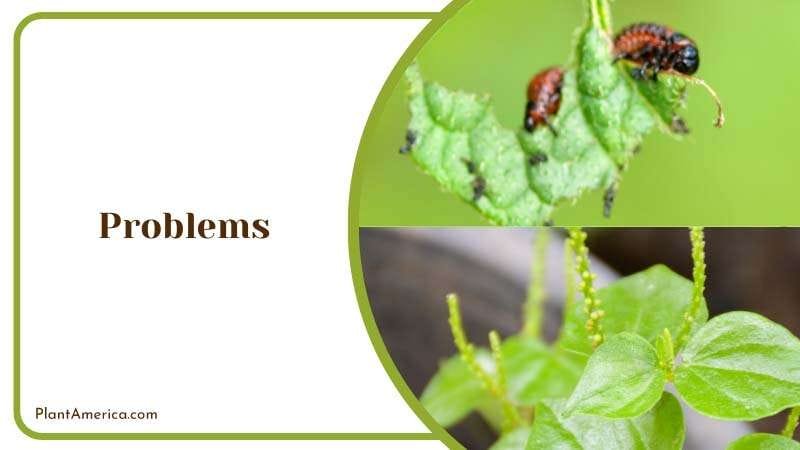
Let us look at what this may look like and learn to solve the problem.
– Mealybugs
The Peperomia prostrata plant is susceptible to mealybugs. Mealybugs are white, cotton-like bugs that appear at the bottom of leaves or stems. The cause of this pest’s invasion is overwatering and over-fertilizing.
– Spider Mites
The spider mites create delicate webs on the plants. These fine strings are present under the leaves. They suck the sap from the leaves and make them dry or discolored.
– Whiteflies
They are the flying white bugs that live under the plant’s leaves. The fly sucks the juices from the flowers and leaves and causes them to turn yellow.
There can be many simple solutions to get rid of these tiny bugs from your plants.
- Use diluted isopropyl alcohol to get rid of the pests.
- Use homemade or organic insecticidal soaps.
- Use neem oil spray.
- Move the infected plant away from other healthy plants.
– Wilted Foliage
Overwatering causes the plant to wilt. Water your plant carefully and check that the water drains out from the holes present at the bottom of the pot.
– Dull Leaves
When the Peperomia prostrata plant gets direct sunlight, it may lose its variegation and appear dull. Keep your plant away from exposure to direct sunlight.
– Bumps on the Leaves
If you overwater your plant, the potting mix will remain waterlogged and cause your plant to form raised bumps or protrusions on the leaves. It is advisable to water your plant carefully. Water the plant when at least half of the potting mix is dry.
– Root Rot
Soggy, waterlogged soil causes root rot. It starts from the roots and damages the whole plant. If the root rot problem lasts for long, it will stunt the plant’s growth.
Dry the soil and repot the plant to a new pot with fresh potting mix. Do not water your plant for the next two weeks after repotting.
Dormancy in Peperomia Prostrata
The plant undergoes the dormancy phase during winter. During the dormant period, the growth rate of the Peperomia Prostrata plant decreases, and the plant remains inactive.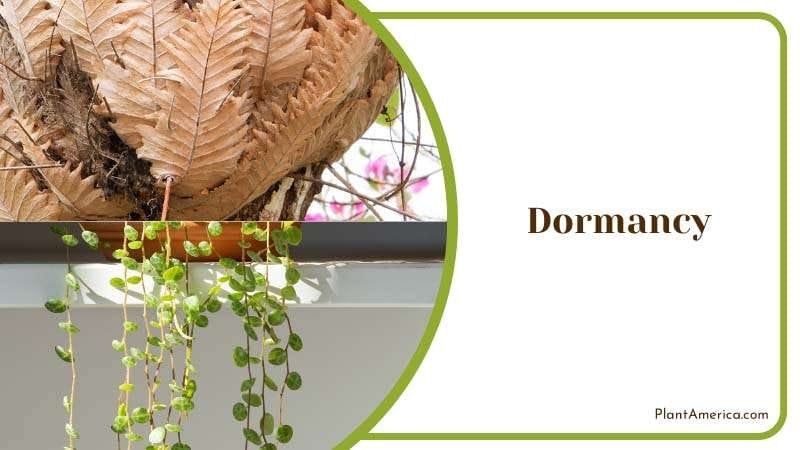
To maintain the good health of your plant during the dormancy period, you need to change the care routine for the plant. The plants become sensitive during this phase because of different factors such as:
- Decrease in temperature
- Low light
- Low humidity
– Problems During Dormancy
There are a few problems that the plant may face during the dormancy phase.
These include:
- Leggy growth
- Slow growth
- Leaf dropping
- Inadequate humidity
– Care During Dormancy
If you follow a proper care routine during the dormant period of your plant, the plant will remain healthy during this time.
- Place your plant near a window or arrange artificial light such as fluorescent bulbs.
- Do not overwater the plant. Give water to the soil near the roots only.
- Use warm water when watering your plant.
- Keep the plant away from cold wind and frost.
- Avoid touching your plant frequently.
- Do not give fertilizer to your plant because there is no growth when the plant is in the dormant period.
- Avoid repotting.
- Do not prune the plant because external stress is harmful during the dormant period.
Varieties of Peperomia
There are different varieties of plants from the Peperomia genus.
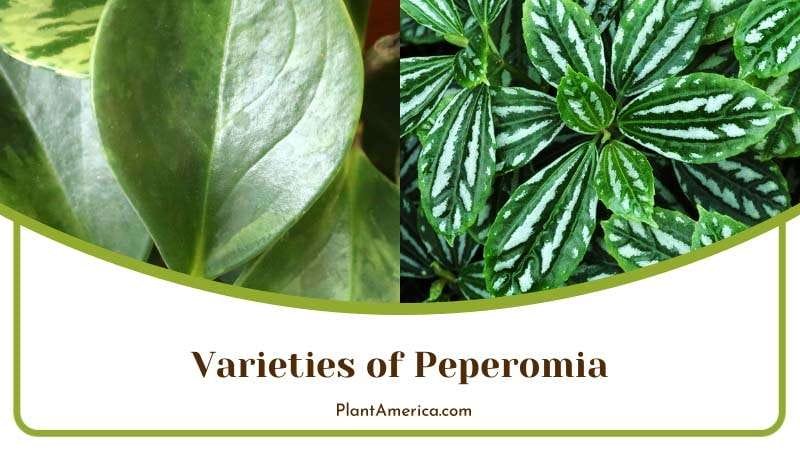
Some of them are:
- Peperomia obtusifolia or Rubber Planter Pepper Face
- Peperomia caperata or Peperomia Marble
- Peperomia clusiifolia or the Jellie plant
- Peperomia hope or a Radiator plant
Final Note:
Peperomia Prostrata is an evergreen succulent from the Peperomia genus with tiny, round, and dark green leaves. These plants can grow up to 1-4 inches in height with proper care, and they originate from the Brazilian rainforests of South America.