
Mealybugs on peperomia of the Piperaceae family aren’t a problem if you know how to deal with them. You should remove these tiny pests as soon as possible as they pose a significant threat.
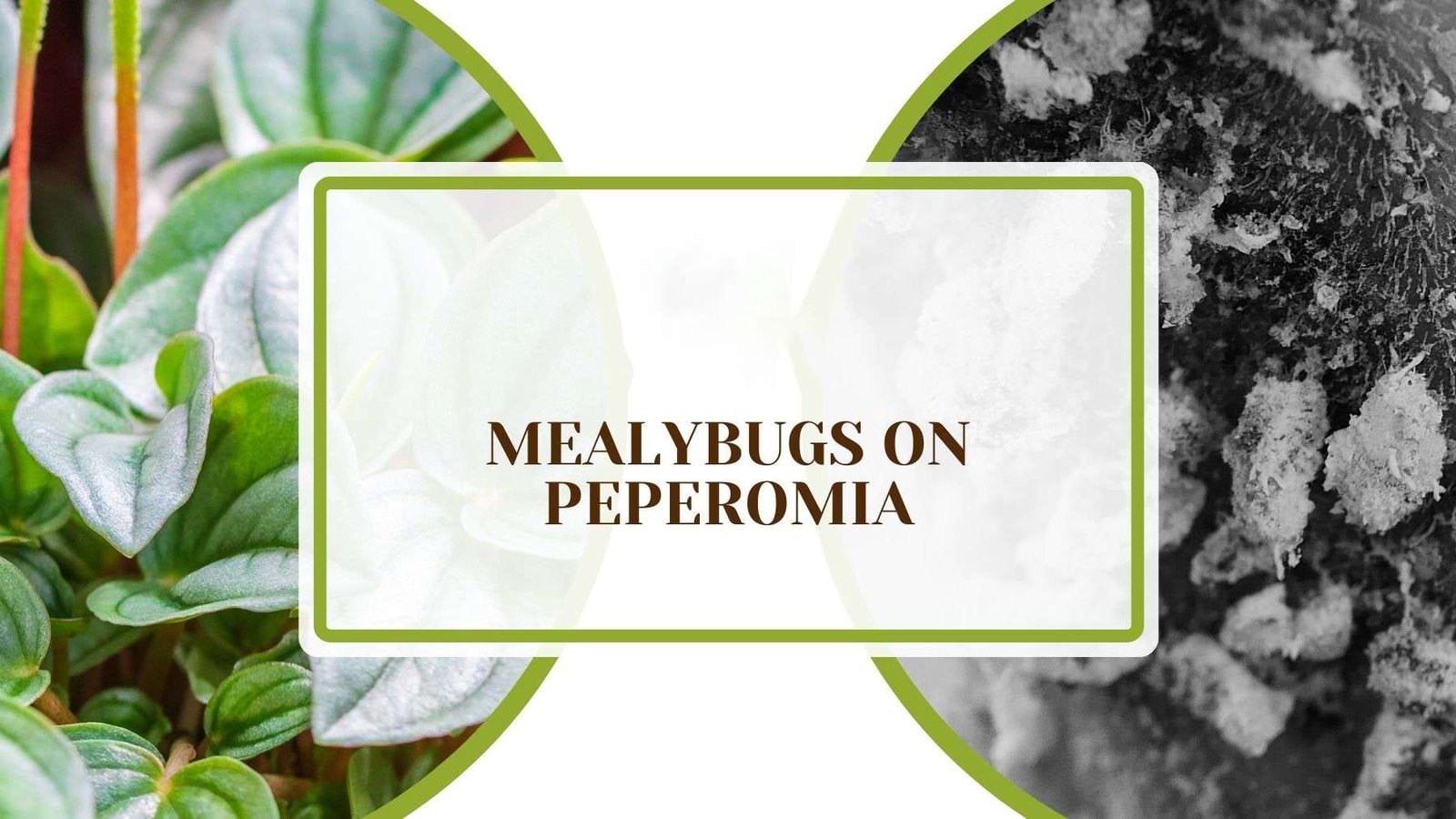
In a few days, they can turn lush, green peperomia into a wilting, discolored mess. Stay with us as we explain easy tactics to battle this damaging intruder.
Why Are There Mealybugs on Peperomia? Leading Causes
There are mealybugs on peperomia generally from nearby plants. They usually spread from one plant to another, particularly in crowded indoor gardens or greenhouses. Additionally, outdoor sources like garden tools or wind can also carry these tiny white bugs to other plants. Overwater Peperonias can easily be infested by mealybugs.
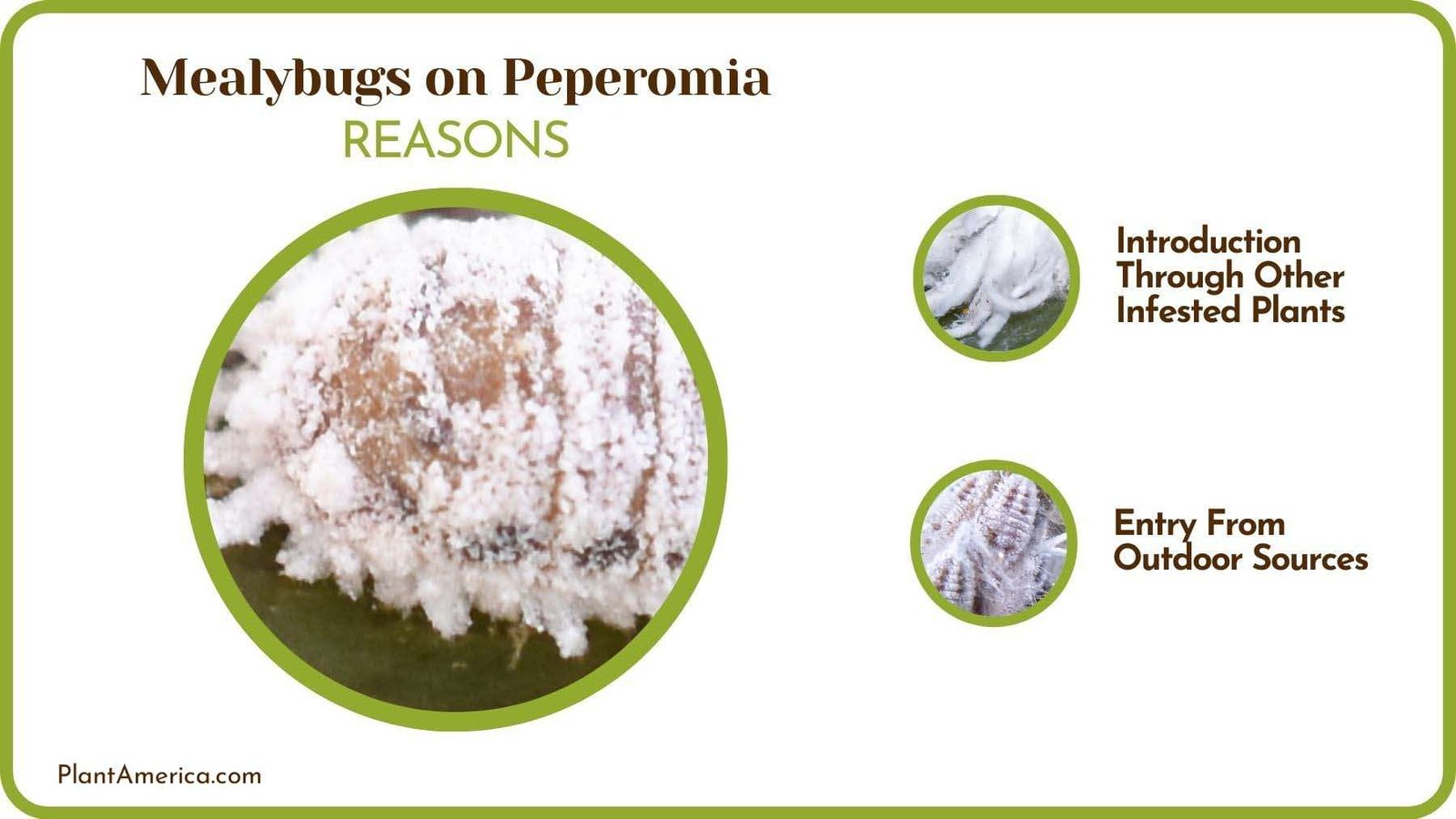
– Introduction Through Other Infested Plants
The main reason behind mealybug infestation in most cases is the new plants. If you purchase a new plant and it’s already infested by mealybugs, your whole garden can get under the bug attack.
Ever wondered, “How do mealybugs spread from plant to plant?” It’s simple. They hitch a ride. When you bring a new plant into your home, it may carry unwelcome guests, namely mealybugs. These tiny white bugs on indoor plants are experts at playing hide-and-seek, tucking away in leaf crevices or beneath the soil.
But the blame doesn’t solely rest on new plants. Even your current Peperomia plants can play host to these pests. The mealybugs could be lying low, biding their time in the soil or on the leaves until conditions become favorable for an all-out invasion.
– Entry From Outdoor Sources
If your indoor garden plants spend time outside, for instance, during the summer, they could easily pick up mealybugs. Note that these white pests can be present in the soil, air, other plants, or even garden furniture. And they don’t need an invitation to latch onto your plants.
Even if your plants don’t venture outside, you can unknowingly bring mealybugs into your home on your clothing or in bags of soil. So, be vigilant about cleaning any items that have been outside before they come into contact with your plants. That’s all about where do mealy bugs come from.
How To Stop Mealybugs From Harming Peperomia?
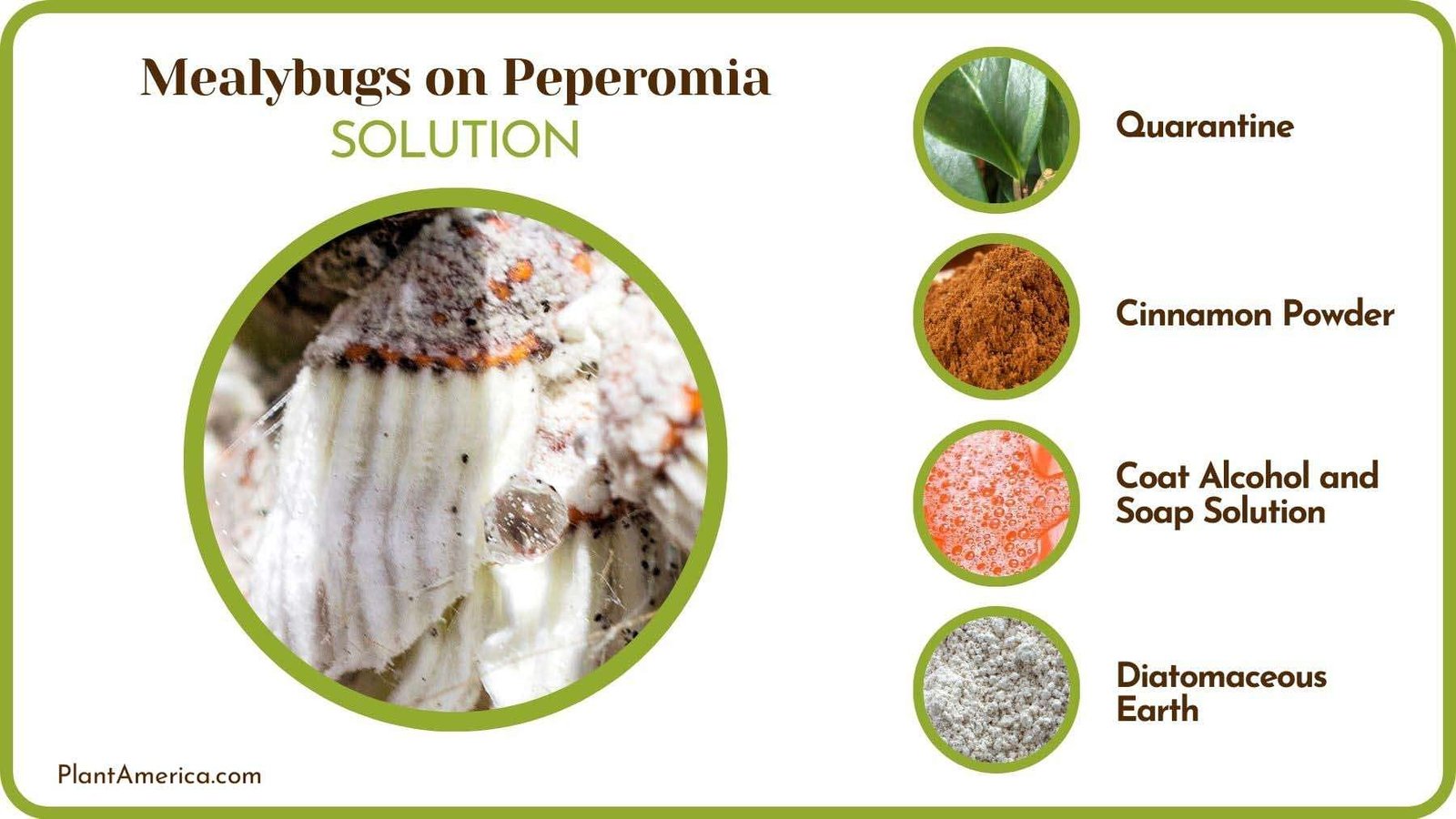
To stop mealybugs from harming peperomia, first quarantine new plants before introducing them to your collection. Then, use natural control methods such as applying cinnamon powder or a mixture of alcohol and soap. For severe infestations, commercial mealybug sprays may be needed.
– Quarantine: Maintain Social Distancing
If you notice mealybugs on plants, isolate them right away. But moving the infested plant to a different room is not enough. Regular monitoring and checking your plant for new infestations are also crucial.
Check for new mealybug activity and signs of plant health decline. If you notice pests on it(which are usually on the undersides of leaves), it might be time to take more drastic action. We will discuss what you can do later on. You should just observe your peperomia in this step.
Remember that quarantine isn’t just for plants that already have pests, though. Isolating new plants before bringing them into your home is also good. As we discussed earlier, new plants can be unknowing carriers of mealybugs. Keeping them separate for a few days or weeks can prevent a possible infestation from taking root.
– Cinnamon Powder: Spice Up Your Insect Control
Want to know how to get rid of little white bugs on plants naturally? Use cinnamon powder. Mealybugs hate its scent, so when you dust them in your garden, they will have no choice but to leave it.
To use this method, sprinkle a generous amount of cinnamon powder on your peperomia. Focus on the areas where you’ve noticed mealybugs, but don’t neglect the rest of the plant. This process won’t only deal with the mealybugs currently on your plant; it can also prevent new bugs from settling in.
Make sure to reapply the cinnamon after watering your plant or after heavy rains, as it can wash off. Additionally, while cinnamon is generally safe for plants, testing it on a small part of your peperomia first is always good. It is done to ensure that your plant won’t react negatively to the spice. Don’t worry; we’ve not heard any complaints of severe plant damage due to cinnamon powder.
– Coat Alcohol and Soap Solution
Another powerful pest control tool is a simple mixture of alcohol and soap. However, it is crucial to know how to prepare and then apply the alcohol solution.
Preparing this solution is easy: You’ll need some rubbing alcohol, dish soap, and water. Combine one part alcohol with one part water, then add dish soap. Mix it all. To apply, spray the solution onto your peperomia, paying particular attention to the areas where you’ve seen mealybugs. We also recommend misting the underside of leaves as mealybugs like to reside there.
– Diatomaceous Earth: A Natural Solution You Must Try
Consider using diatomaceous earth if you still see mealybugs or dealing with other houseplant pests like fungus gnats or spider mites. To apply diatomaceous earth to your peperomia, you’ll first want to ensure the plant is dry, as the powder is most effective when wet. Then, dust the plant with the powder.
Ensure to cover those areas where you see mealybugs. It is also better if you sprinkle some on the roots and around the pot’s rim. Note that you’ll want to reapply the powder every few days or after watering your plant, as it can easily wash off.
– Go For Petroleum Jelly if You Want a Cost-Effective Solution
We recommend the “Petroleum Jelly” method to those who are tight on budget or don’t want to spend money on buying new products. The sticky barrier formed by the jelly effectively traps the bugs and keeps them away from your plant.
To begin, apply a small amount of petroleum jelly around the rim of your peperomia’s pot. Why there, you ask? It is a common path mealybugs take when they want to invade your plant’s potting soil. When bugs try to cross it, they will get stuck and won’t be able to move for hours. You can then pick them, place them in a bag, and throw them away.
While petroleum jelly is not a standalone solution for a large mealybug infestation, it can be a useful preventive measure. It’s especially effective if you move your peperomia outdoors during warmer months or bring in new plants. The petroleum jelly barrier can help protect your plant from mealybugs attempting to hitch a ride.
– Use Heat Gun But With Care
If you own a heat gun, then you can also use it to protect your plants from mealybugs. However, it must be done carefully to avoid damaging your peperomia. The high temperature of the heat gun kills mealybugs immediately, offering a quick solution for severe infestations.
First, remember that peperomias are sensitive plants. So, keep a safe distance between the heat gun and your plant to prevent causing leaf burn. Maintaining a distance of 14 to 18 inches should be enough. The goal here is to kill the bugs, not your plant!
Start by slowly moving the heat gun over the infested areas. Be sure to focus on the undersides of leaves where mealybugs often hide. Using a lower heat setting might be helpful if your gun has one. This process should be repeated every few days until no mealybugs are visible.
Once you’ve applied heat treatment to your plant, vigilance is crucial. Look for signs of stress, such as wilting or leaves turning yellow. If you notice any abrupt changes, stop the heat treatment immediately and consider using a different method. Fortunately, many peperomia, including watermelon peperomia, peperomia obtusifolia, etc., can handle heat well.
While the heat gun method is potent, it’s unsuitable for every situation. Therefore, it’s best used with other techniques. As always, maintaining a healthy plant and preventing infestations in the first place is the best defense against mealybugs.
– Apply Commercial Mealybug Sprays
Want to know what kills mealybugs instantly? The answer is commercial insecticides. These sprays are designed with potent ingredients to effectively eliminate mealybugs from your peperomia. One popular spray is the one containing neem oil. The reason it’s effective is that it disrupts the life cycle of mealybugs right after application.
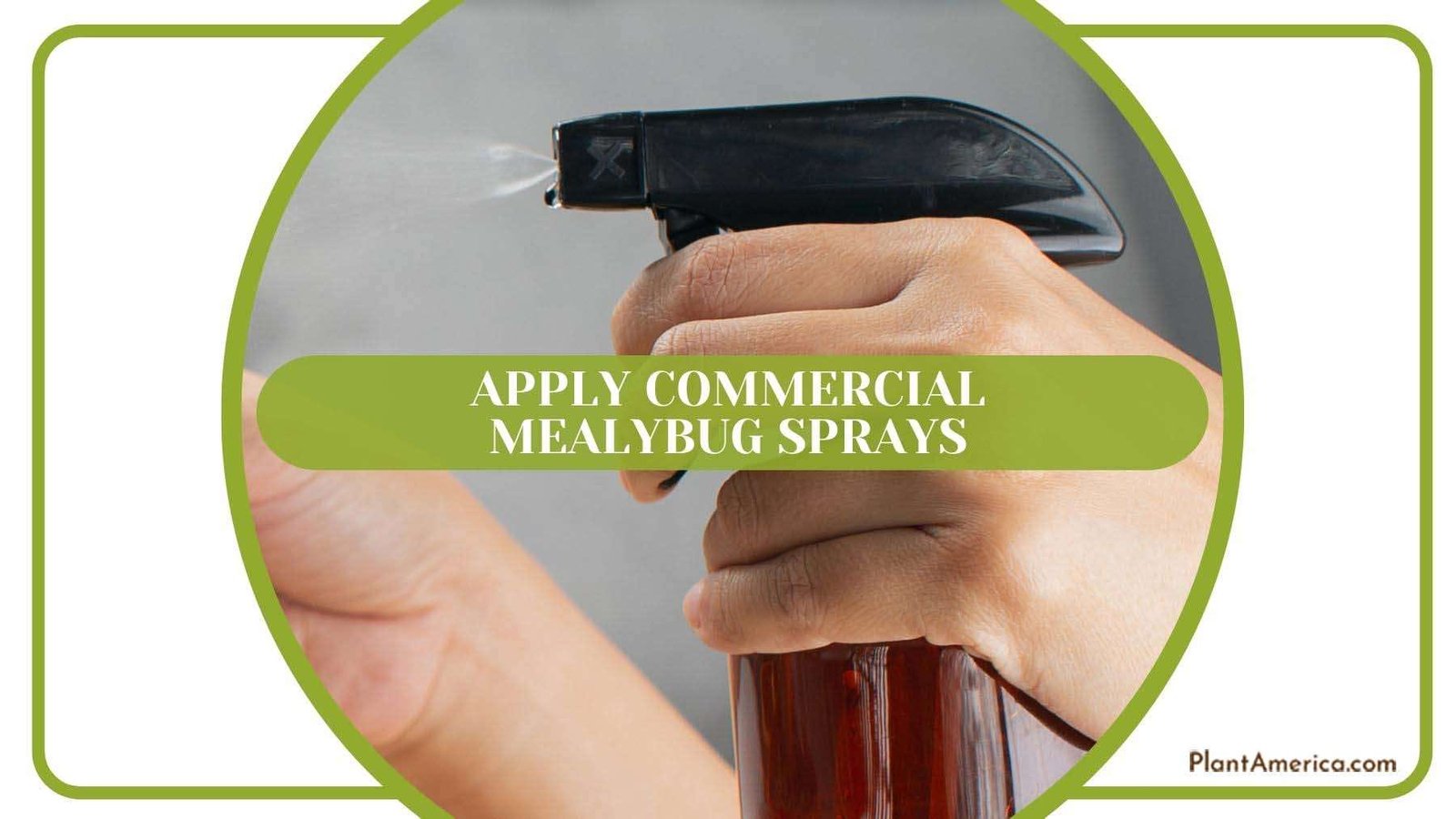
To use neem oil spray, follow the instructions on the product label. It’s usually applied by spraying directly onto the infested areas. Be sure to cover all parts of your peperomia, mainly the underside of the leaves where mealybugs like to hide. Repeat the treatment after 7-8 days for the best results until the infestation is under control.
However, while commercial sprays are effective, they should be your last option. They can sometimes harm beneficial insects or your plant if used excessively. Always use such products responsibly and opt for natural remedies where possible.
– Maintain Ideal Growing Conditions: Unlocking the Nature’s Potential
The best way to deal with mealybugs is to stop them from invading your peperomia in the first place. Keeping the right growing conditions is vital. Dive into these plant care tips to ensure your peperomia stays healthy and less appealing to mealybugs.
- Firstly, ensure that your peperomia gets plenty of light. Mealybugs hate bright light, which is why they try to live under the shade of leaves. However, it is crucial to protect plants from direct sunlight as it can cause scorching.
- Peperomia plants prefer soil that drains well to avoid fungal infections.
- Moreover, bugs are attracted to the moist medium. So, when you keep it slightly dry, you are making it less appealing to insects.
- Regularly check the plant’s roots when watering. If you notice any mushy or discolored roots, it may signify root mealybug damage or root rot. At this stage, consider taking a healthy stem cutting to start a new plant, as the existing one may not recover.
- Peperomia plants also thrive in high humidity (moist) conditions but ensure good air circulation to prevent insect infestations and peperomia diseases. For this, prune the extra parts once a month and ensure pot-to-pot distance.
- Remember to clean the leaves at least once a week, as dust can block light absorption and hinder growth. Remember- a plant showing poor growth is vulnerable to pest attacks.
In essence, a healthy plant is your best defense against mealybugs. You can significantly reduce the mealybug infestation by properly caring for your peperomia and providing it with its preferred growing conditions.

Conclusion
Dealing with mealybugs on peperomia can be challenging, but you can manage it with easy solutions. To ensure the health of your peperomia and to prevent a mealybug infestation, we suggest taking these essential steps:
- Regularly check your peperomia for signs of infestation, including sticky residue and tiny white bugs on your plant.
- Quarantine new plants before introducing them to your indoor garden to prevent the spread of mealybugs.
- Employ natural methods for mealybug control, such as cinnamon powder, alcohol, soap solution, or diatomaceous earth.
- In cases of severe infestation, opt for commercial sprays that contain neem oil or other effective ingredients.
- Maintain ideal growing conditions for your peperomia, including proper light, well-draining soil, and appropriate humidity levels.
But you have to act now, as giving mealybugs extra time will cause nothing but destruction to your garden. So, gather the tools right now and protect your garden by following this guide.