
Brown spots on orange tree leaves is a call for help by your citrus buddies. This distress occurs due to various reasons like disease attacks, over-fertilization, pest infestations, and a few other reasons that you might not be aware of.
 But don’t worry; we’ll explore these causes in detail and provide practical solutions, ensuring your orange grove thrives optimally.
Why Are There Brown Spots on Your Orange Tree Leaves?
There are brown spots on your orange tree leaves because of over-fertilization, extreme environmental stresses, and diseases like citrus melanose. Additionally, pests like the psyllid, aphids, etc., can weaken the tree and lead to discoloration. Sometimes, root issues can also lead to brown patches on the leaves.
– Issues With Watering
Did you know improper watering can lead to brown spots on citrus leaves? Yes, it does. There’s no denying that watering is a fundamental task for plant growth. However, too much or too little can be harmful. If trees receive excessive water, it deprives them of oxygen.
Without sufficient oxygen, the roots start rotting, which can be seen as browning on the leaves. Overwatering also creates an environment conducive to fungal growth. Fungi can attack the leaves, leading to those brown spots we often see.

On the other end, underwatering causes dehydration. Fruit trees have a mechanism to preserve water. When they’re not receiving enough, they might redirect water from some leaves to vital areas, causing those leaves to dry up and show brown patches.
But how can you be sure that watering is the issue? Check the soil moisture. If it’s too wet or too dry, you’ve found your culprit. Also, inspect the leaves. Fungal infections usually have distinct patterns or spread.
– Keeping the Roots Stressed
When tree roots get stressed, they don’t absorb water and minerals properly. As a result, the internal processes slow down, making it harder for the leaves to stay green. Over time, you’ll notice brown patches. Roots can be stressed for various reasons, but let’s discuss some main ones.
Another reason can be the presence of pests. Pests such as root aphids or nematodes can attack the roots, weakening and stressing them. This stress reflects on the leaves as brown spots or other discolorations.
Lastly, let’s talk about planting depth. If your fruit tree is planted too deep, it might cause stress to the roots. They need air and can’t breathe properly when buried too deep. So, how do we identify root stress?
It’s essential to check the roots. If they appear rotting, are infested with pests, or seem choked due to compacted soil, then root stress might be causing the brown spots on your tree leaves.
– Over-Fertilization
When we over-fertilize, it leads to an accumulation of salts in the soil. These salts can burn the roots, stressing the plant. This stress, in turn, is visible on the leaves as brown or yellow spots.
Moreover, an excessive supply of certain nutrients can block the absorption of others, creating an imbalance.

To confirm if over-fertilization is the reason behind discoloration, look for crusty soil or a white, salt-like substance on the surface. Also, if you’ve been heavy-handed with the fertilizer, it might be worth considering this as a potential reason.
– Disease Attacks
Citrus diseases can lead to various symptoms, and one of them is brown spots. Some significant diseases affecting orange trees are:
- Citrus Melanose: Early stages show tiny, raised spots that later merge, giving a scabby appearance to the leaves.
- Rust Diseases: Infected leaves exhibit rusty-colored bumps or patches.
- Root rot: This disease affects the roots. Infected trees show a decline in vigor, wilting, and browning of leaves.
- Citrus leprosis: Caused by a virus, it presents as necrotic spots or rings on leaves.
- Citrus canker: It’s a bacterial infection. Symptoms include corky lesions on leaves, fruits, and stems.
- Alternaria brown: This fungal disease causes dark brown spots with a yellow halo, mainly on the leaf tips.
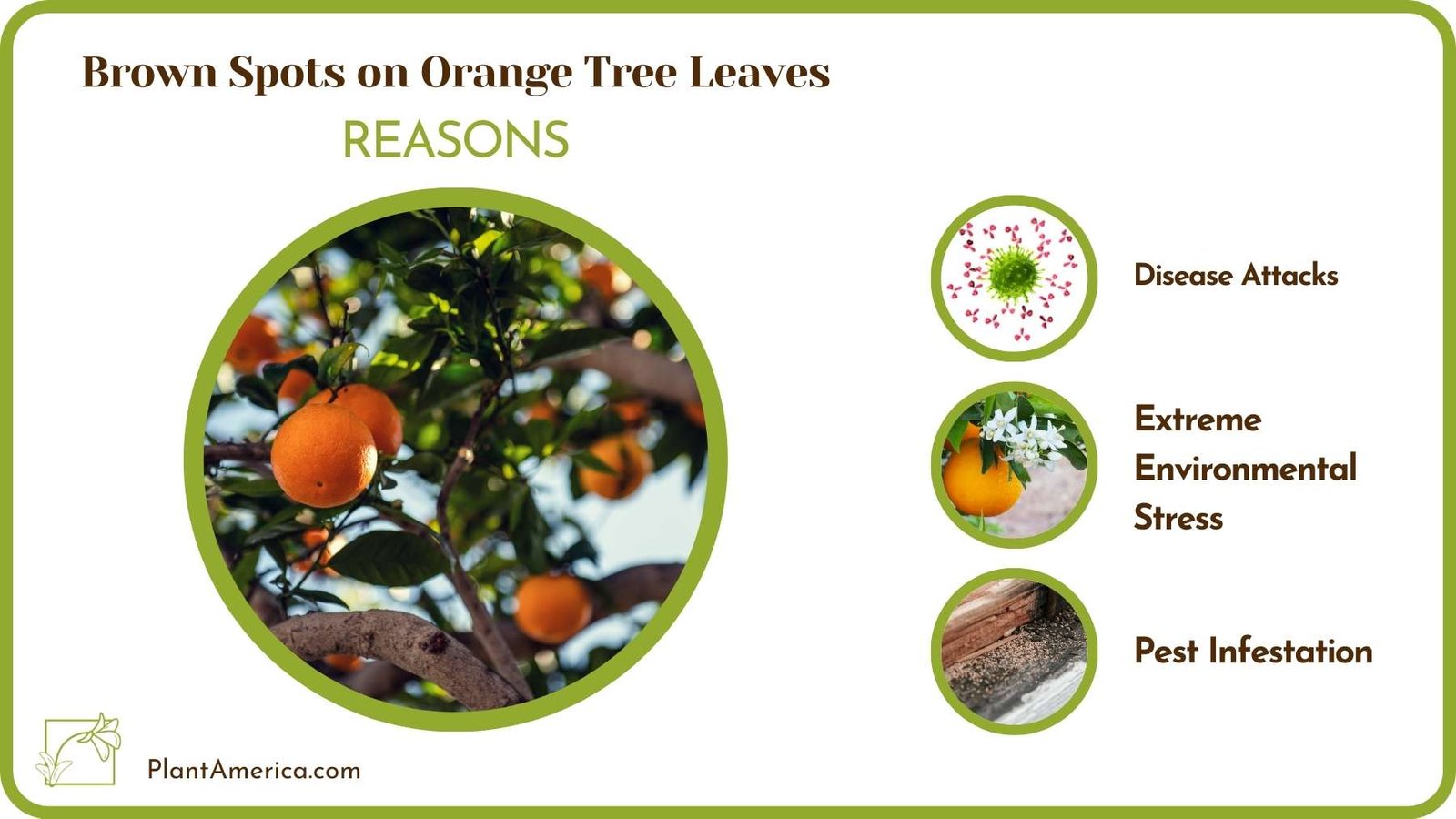
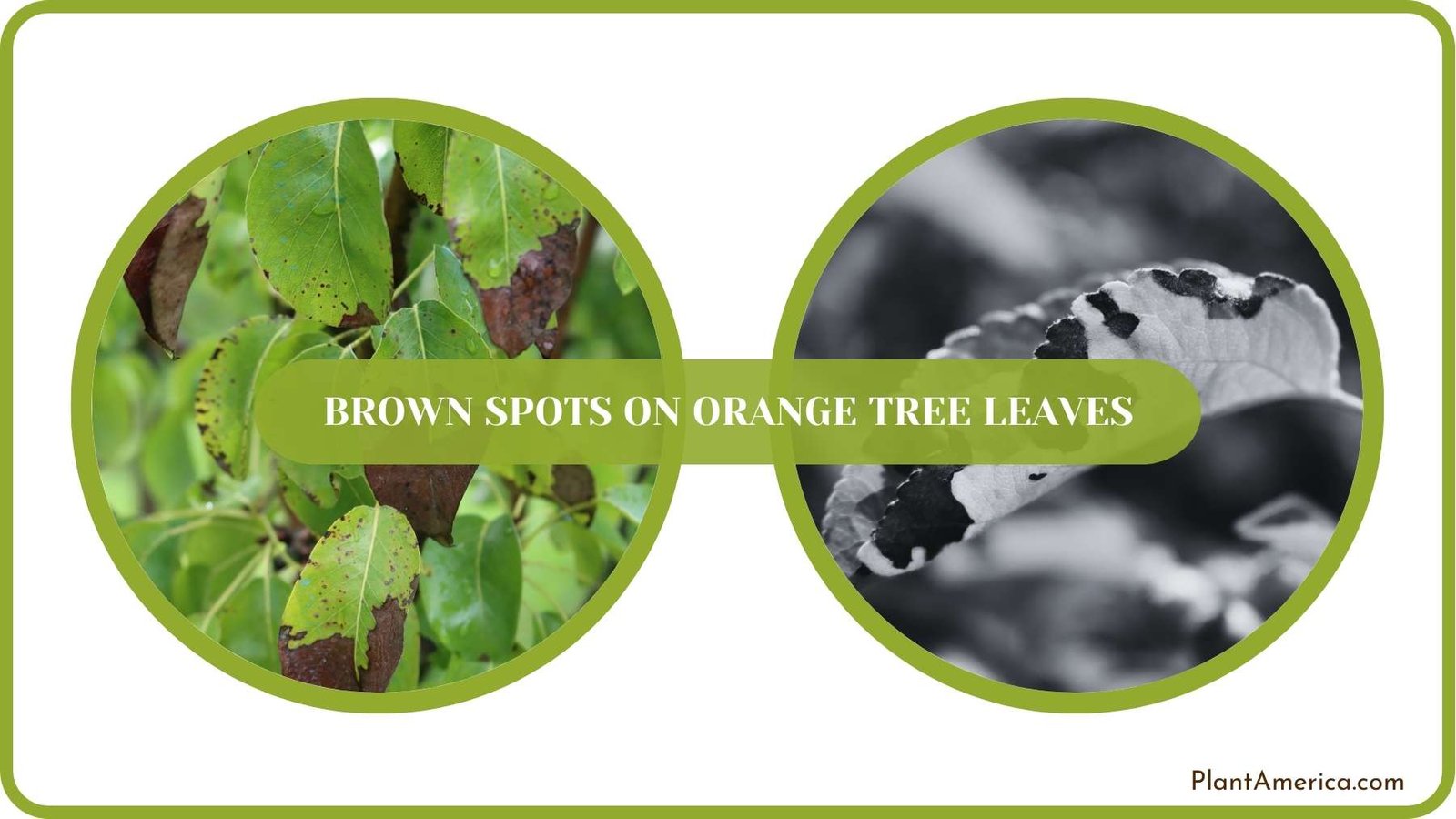
To confirm the disease, refer to the brown spots on the orange tree leaves pictures for comparison. Additionally, consulting with local agricultural extensions or nurseries can provide further insight.
Furthermore, soil health can also give you a hint. If it appears “unhealthy” and emits a bad smell, it indicates that it’s infested by pathogenic fungi or bacteria.
– Extreme Environmental Stress
When we talk about plants, especially sweet orange trees, it’s vital to remember that they’re sensitive to their surroundings. Extreme environmental conditions can put undue stress on them, leading to various issues, including brown spots on their leaves.

Several environmental stress factors can be at play:
- Temperature Fluctuations: Sudden drops or spikes in temperature can be hard on trees. Freezing conditions or scorching heat can damage the cellular structure of leaves.
- Strong Winds: High winds can cause physical damage. They can lead to leaves tearing or cause abrasions due to airborne particles.
- Excessive Sunlight: While orange trees love the sun, high-intensity UV rays can lead to sunburn. Sunburned leaves often turn brown or white in patches.
How can you be sure that environmental stress is causing the brown spots? Look for other signs. For instance, sunburned leaves might feel crispy. Wind damage might come with broken branches.
– Pest Infestation
Many pests target citrus trees, leading to a range of symptoms. One such symptom is Brown dots or spots on the leaves.
- Asian Citrus Psyllid: This tiny bug feeds on citrus leaves and stems. While feeding, they transmit harmful bacteria, leading to citrus greening disease. Infected trees showcase drooping and yellowing leaves with brown spots.
- Brown Soft Scale: Small, flat, oval insects suck the sap from the trees. Their feeding weakens the plant, leading to the yellowing and browning of leaves.
- Aphids: When aphids feed on the tree, they excrete a sugary substance, which becomes a breeding ground for sooty mold. This mold doesn’t harm the plant but blocks sunlight, leading to leaf discoloration. Moreover, grease results from fungi that grow on the honeydew deposits. Leaves with greasy spots appear shiny and oily with dark brown spots.
- Black Spots: These spots can result from various pests or fungal infections. It’s essential to inspect the tree closely to identify the exact cause.
To confirm a pest infestation, you might want to check the leaves’ top and underside. Some pests are tiny and hide well, so a thorough inspection is crucial. When you detect the problem, act immediately!
How to Save Orange Tree Leaves From Browning
To save orange tree leaves from browning, you should follow multiple approaches. Firstly, ensure proper root growth to combat root stresses. Secondly, establish appropriate environmental conditions to help the leaves stay green. Furthermore, regular hydration, correct fertilization techniques, and eradicating pests are essential, too.
– Keep Trees Hydrated
Water is crucial in “brown spots on orange tree leaves treatment.” The reason is that a well-hydrated tree is immune to diseases and many environmental stresses.

We suggest you water this way:
- Deep Watering: Water deeply, allowing the moisture to penetrate several inches into the soil. This encourages roots to stretch, making the tree more resilient during dry spells.
- Consistency: Maintain a consistent watering schedule. While citrus trees can tolerate some drought, watering them consistently is essential, especially during drier months.
- Avoid Overhead Watering: Watering directly at the base helps avoid fungal diseases from wet leaves. So, avoid sprinklers that wet the foliage.
- Monitor Soil Moisture: Use a soil moisture meter to check the moisture level. This ensures you’re watering the tree only when needed, preventing both over-watering and under-watering.
– Help the Roots Grow
A healthy root system is fundamental for the well-being of any plant, especially when combating issues like discoloration.
Here are seven ways to foster robust root growth:
- Right Planting Depth: Ensure the tree is planted at the correct depth. The top of the root ball should be just above the soil level. This positioning promotes better root growth and prevents rot.
- Well-Draining Soil: Ensure the soil drains well. Waterlogged soil can suffocate roots and promote diseases. Consider incorporating perlite or sand if the drainage is poor.
- Adequate Watering: Deep watering encourages roots to grow deep into the soil. You can also go for a soaker hose or drip irrigation to ensure water reaches deeper soil levels.
- Regular Mulching: Mulch helps to retain soil moisture and regulate temperature. It also prevents soil compaction. You can simply spread 2-3 inches of organic mulch around the base, but keep it a few inches from the trunk.
- Feed with Balanced Fertilizer: Use a balanced fertilizer with essential micro and macronutrients. This nourishes the roots and encourages vigorous growth.
- Root Pruning: For pot trees, occasional root pruning can prevent the tree from becoming root-bound and encourage fresh root growth.
- Check Soil pH: Citrus trees prefer slightly acidic soil. Regularly test the soil pH and adjust it using lime (to raise pH) or sulfur (to lower pH).

– Fertilize the Right Way
Fertilization is essential for citrus trees, but it’s crucial to do it correctly.
Here are some recommendations:
- Balanced Fertilizer: Opt for a balanced fertilizer, preferably one designed for citrus trees. This ensures the tree gets all the necessary nutrients.
- Avoid Over-fertilizing: Excessive fertilization can harm the tree, leading to brown spots and other issues. Always follow label instructions.
- Time It Right: The best times to fertilize citrus trees are late winter, spring, and early summer.
- Application Method: Scatter granular fertilizer evenly around the base, ensuring it’s at least a foot away from the trunk. After application, water thoroughly to help the nutrients seep into the soil.
– Maintain Environmental Stresses
If you suspect that your trees are facing environmental problems, then don’t panic. It’s easier to manage growing conditions than you think.
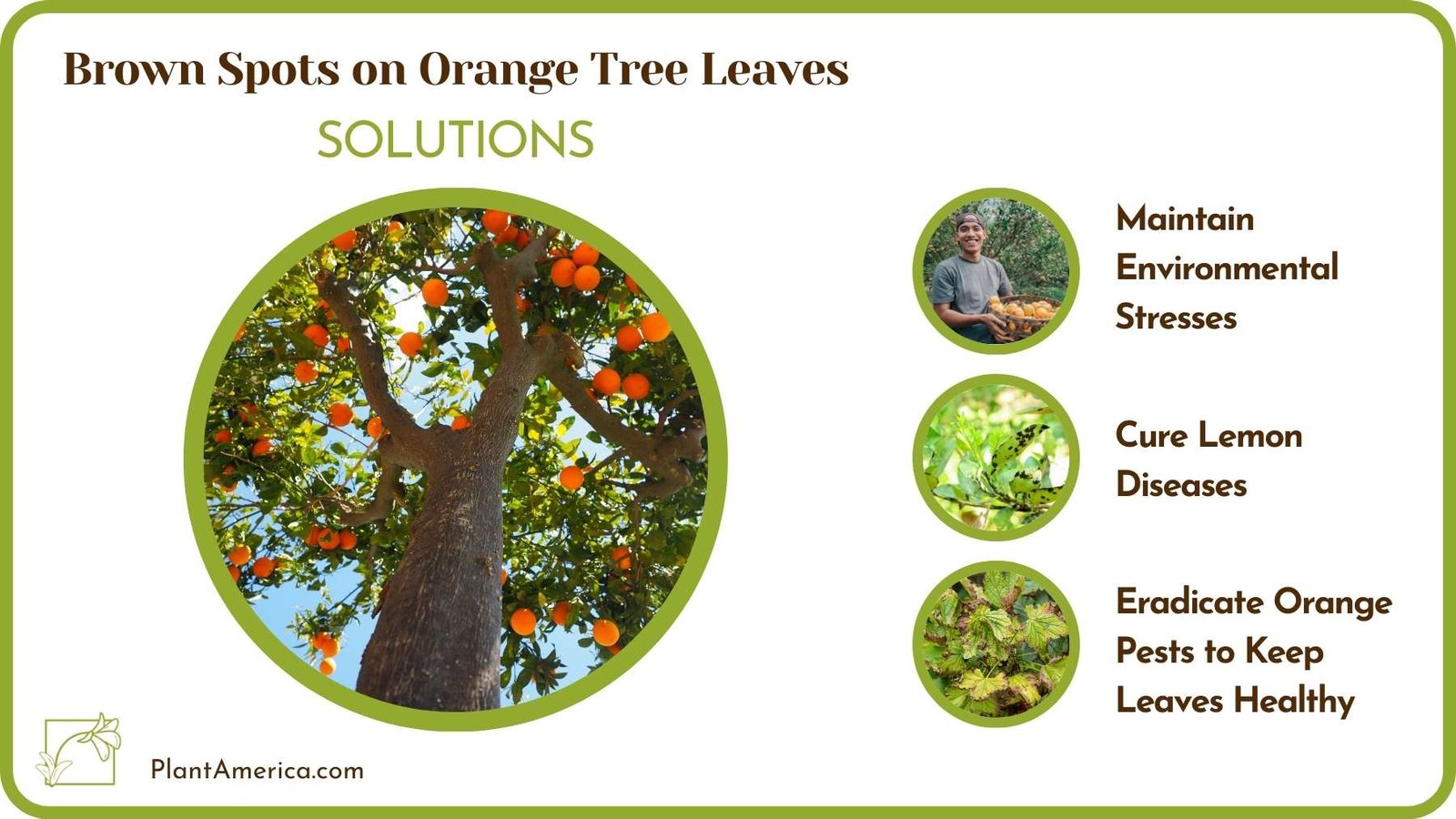
Here’s how to get rid of brown spots on orange tree leaves by controlling the environment:
- Positioning: Place the tree where it receives 6-8 hours of direct sunlight but is protected from the harshest midday rays.
- Temperature Regulation: Protect young trees from frost using frost cloths or moving potted trees indoors. In hot weather, use shade cloths to prevent leaf scorch.
- Watering Routine: Water in the early morning or late afternoon. This prevents rapid evaporation and ensures water seeps deep into the soil.
- Wind Barriers: In windy areas, consider putting up windbreaks or barriers to protect the tree. This can be in the form of a fence, tall plants, or a burlap screen.
- Regular Pruning: Trim away dead or diseased branches. This improves air circulation and focuses the tree’s energy on healthy growth.
- Monitor Humidity: Citrus trees thrive in moderate humidity. Consider misting the leaves or placing a water tray near the tree in a dry area.
- Soil Health: Regularly add compost or organic matter to the soil. This improves soil structure, promotes beneficial microbial activity, and ensures the tree gets essential nutrients.
– Cure Lemon Diseases
People often ask us, “How to treat brown spots on orange tree leaves when diseases attack,” the answer is simple. Here are five treatments:
- Fungicides: Opt for organic or copper-based fungicides to treat several fungal infections. These can also be particularly effective against issues like black patches. Ensure you follow the label’s instructions for citrus black spot treatment.
- Pruning: Remove and discard the infected leaves or branches. This prevents the spread of the disease and improves air circulation, which can deter fungal growth.
- Avoid Overhead Watering: Wet leaves can become breeding grounds for fungi. Water the tree base directly to keep the leaves dry and prevent fungal diseases.
- Quarantine New Plants: Before introducing new plants to your garden, keep them separate for a few weeks. This ensures they don’t bring any diseases to your existing plants.
- Healthy Soil: Ensure the soil is well-draining and enriched with organic matter. Healthy soil can prevent many root diseases and boost the tree’s resistance against infections.

– Eradicate Orange Pests to Keep Leaves Healthy
To ensure the well-being of citrus trees, you should not let any pest roam in the garden.
So, if you see any of the pests we’ve discussed above, do these things:
- Use Neem Oil: This natural repellent is effective against various pests. Mix with water and spray on the leaves, covering the top and underside.
- Release Beneficial Insects: Introducing beneficial insects, like ladybugs and lacewings, can help control pest populations. These insects feed on many common citrus pests.
- Regular Inspections: Regularly inspect your tree for signs of pests. Early detection makes it easier to manage and control the infestation.
- Try Sticky Traps: These traps attract pests, trapping them before they can harm the tree. Place them around the tree, especially during peak infestation seasons.
- Spray Insecticidal Soaps: These are effective against various pests without harming beneficial insects. Spray on affected areas, following label instructions.
By being proactive and following our guidelines, you can help your orange trees stay healthy and vibrant!
Conclusion
Orange tree leaves can show signs of distress due to factors like disease attacks, over-fertilization, pest infestation, and environmental stresses. If you’re keen to protect your trees and keep them in top health, consider the following:
- Assist roots to grow by maintaining soil health, watering properly, and feeding balanced fertilizers.
- Ensure you maintain optimal environmental conditions by using windbreakers, managing humidity, etc.
- When diseases attack, please treat them with fungicides and pruning.
- Address pests by using neem oil, sticky traps, and insecticidal soaps.
We also suggest you stay updated with best practices and treatments. It will help you manage your garden better, ensuring your citrus trees remain vibrant and fruitful.