
The Monstera subpinnata plant of the Araceae family is a lovely variety of the Monstera plant with dainty finger-like foliage. Being part of the Monstera genus, this subpinnata possesses the lush tropical beauty its many relatives have.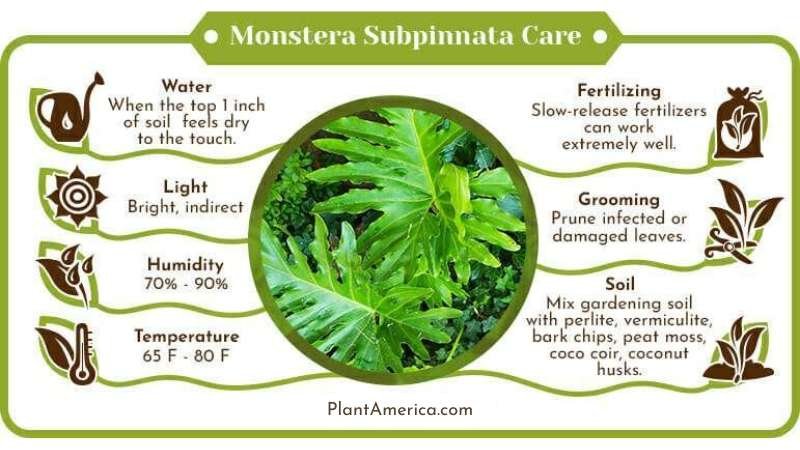
Today, we will discover all that we can about the Monstera subpinnata plant and learn how to easily grow it for ourselves. Keep on reading to discover more.
Monstera Subpinnata Care
 Water Requirements
Watering the Monstera subpinnata plant can seem challenging but it is actually very simple. As a tropical hemiepiphyte plant, it does not require excessive or abundant watering. Ideally, you should only water the plant when the topmost inch of the potting medium feels dry to the touch.
Prior to watering, you should ensure that the potting medium is not compact. This is because the root system of the Monstera subpinnata plant is prone to root rot, which is caused by constant exposure to wet soil. By allowing the root system to breathe, you lessen the chances of root rot from constantly wet soil. Monstera guttation is a state you should really be able to identify to prevent your plant from dying.
Overwatering is often a major concern for many Monstera subpinnata plants as evidenced by yellowing leaves. Underwatering the plant can also cause brown dry leaves.
If you are still unsure about how often you should water the plant, it is possible for you to use commercial moisture meters.
As a general rule, you should water your Monstera subpinnata plant more frequently if you live in warm regions, and only water when the topmost soil is dry. Allow excess water to drain and do not encourage water to pool around the base of your container. Reduce your watering during the colder days of the year as the soil may take longer to dry.
 Light Requirements
The Monstera subpinnata prefers to be in bright indirect light. Similar to the light the plant receives in the tropical rainforest canopy, the levels of bright sun exposure should be quite high but not direct.
Direct sun exposure can cause leaf burns on the Monstera subpinnata plant which could eventually cause it to perish.
The most ideal locations and directions for growing the plant are east- and south-facing places. The gentle morning sun in the east will not burn the leaves while the bright indirect light of the south is ideal for longer light exposure.
If your Monstera subpinnata plant is located in an area that has direct sun exposure, you can relocate it somewhere else. If grown indoors, you can place a curtain to shield your plant from any harsh direct sun exposure.
However, if your plant has less exposure to bright light, you can also use grow lights to increase the level of brightness. Commercial grow lights provide supplementary brightness to many indoor plants and yours could be one of them.
One way to identify if your Monstera subpinnata plant does not have the requisite light levels is when the growth is leggy. This means that the plant has fewer leaves and longer stems or branches. Usually, this is an indication that the plant is trying to look for higher and better sources of light.
 Temperature Requirements
The Monstera subpinnata plant thrives in warm regions, so placing your plant in warm growing conditions is the most optimal method of ensuring its development. Ideal plant temperatures of 65 to 80 F provide the best range for the Monstera subpinnata plant for increased growth since lower temperatures can slow down its development.
When temperatures drop below 60 F, there is a huge risk that your Monstera subpinnata plant could wilt and perish. If you live in regions where colder seasons exist, you should immediately bring your plant indoors and overwinter it. The more consistent the temperature is, the happier your Monster subpinnata plant will be.
Additionally, the Monstera subpinnata is a warm-loving plant, any drop in the temperature can cause it to save its energy from growing.
 Soil Requirements
The ideal Monstera subpinnata soil is quick-draining yet provides enough substance to retain moisture. As a hemiepiphyte plant, the potting soil should reflect the growing habit of this particular Monstera. Aroid soil mixes are the perfect potting medium for the Monstera subpinnata.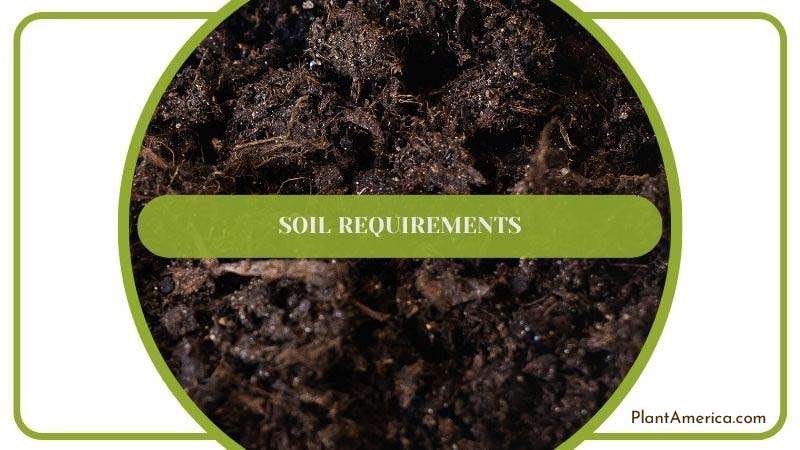
The aerial roots of the Monstera subpinnata plant are vulnerable to root rot caused by overly wet soils. Semi-permeable soil mixtures should be used to prevent soggy soil. Some gardeners amend aroid soil or gardening soil mixed with perlite, vermiculite, bark chips, peat moss, coco coir, and coconut husks.
 Humidity Requirements
High humidity is a prerequisite for many Monstera varieties including Monstera subpinnata. Generally, humidity levels of 70 to 90 percent are the most ideal since the levels mimic the natural humidity of the local habitat of the plant.
If you are unable to provide the high levels of humidity preferred by the Monstera subpinnata plant, you may do one or more by placing your plant in greenhouses or terrariums and misting your Monstera subpinnata as often as you can. Following the latter, you should place a shallow tray with gravel under the plant container and fill the shallow tray with water.
Ensure that the water does not touch the soil or the roots of the plant. As the water evaporates from the tray, humidity in the air is increased. Finally, you can even buy commercial humidifiers to increase your indoor air moisture levels.
 Fertilizer Requirements
The slow growth rate of the Monstera subpinnata plant may surprise some novice gardeners. By giving the plant a monthly organic fertilizer, you can help it grow healthier and bigger. Slow-release fertilizers can work extremely well.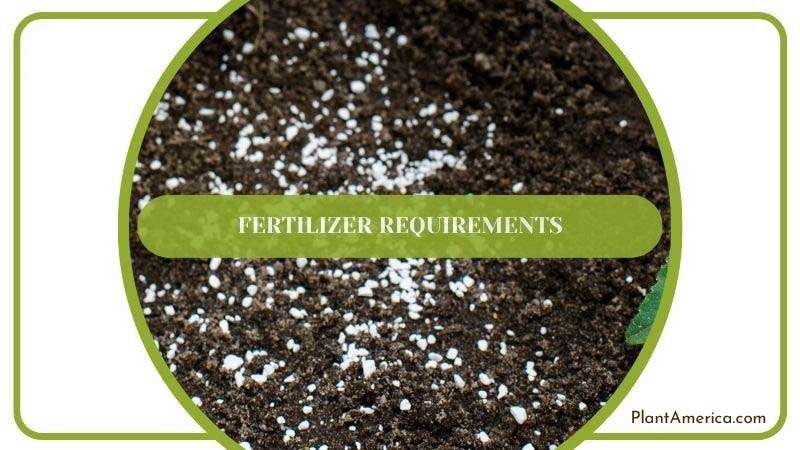
If you are planning to use fertilizers, organic ones are the most ideal. Follow the product directions and apply accordingly. Always remember that fertilizers are best applied when used as directed, or in more diluted solutions to prevent leaf or root burns.
During the colder months of the year, refrain from applying fertilizers to your Monstera subpinnata, it is important to only apply fertilizers during warmer seasons.
 Pruning
It is ideal for you to prune the leaves that have been infected by pests, or damaged, in addition to the old leaves that are yellowish or even turned brown. By pruning, the leaves of the plant will grow in more available space.
Propagation
The Monstera subpinnata plant can be easily propagated through a very simple method. As it is very difficult for them to flower and seed indoors, the fastest way to propagate the plant is through stem cuttings.
Cutting the stem off about four to five inches below a leaf is perfect. Keep at least two or three leaves at the top of the cutting and remove all remaining leaves. Dip your stem cuttings into a rooting hormone, which can be in liquid or powder form. Rooting hormones contain all the essential nutrients to encourage root growth of any stem cuttings.
Place your stem cuttings in a pot or a container filled with your Monstera subpinnata soil mix. Water your soil enough to keep it damp. Ensure your container has good drainage.
Cover the stem cuttings and the container with a clear plastic bag while ensuring that the plastic covers do not touch any part of the stem cuttings. Prop the plastic cover with sticks if necessary.
Place the covered stem cuttings and container in bright indirect lighting similar to your mother plant. Water the soil only when it is dry to the touch. In four to eight weeks, you should be able to see new growth from the stem cuttings. You can then repot each cutting into individual containers.
Problems
– Leaf Spots
Soft brown leaf spots are normally caused by fungal infections. Remove these immediately and refrain from misting the areas near the spots.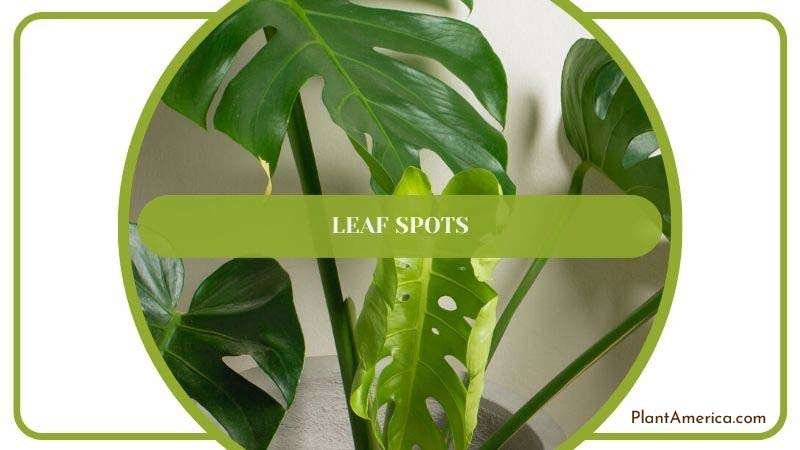
Allow the plant more airflow to reduce the risk of fungal spores infecting other parts of the plant.
– Root Rot
Wilted, curling, and twisted yellow leaves are signs of possible root rot, aside from overly wet soils. Root rot causes the roots to go black and soft and could even easily separate from the top part of the plant when touched.
If you experience root rot, replant the healthy parts of your plant in the ideal soil mixture. Water the soil mixture only when the topmost inch of the medium is dry.
– Pest Infestations
Pests such as spider mites, mealybugs, scale, thrips, and whiteflies can be common for Monstera subpinnata especially when they are already experiencing plant stress from root rot.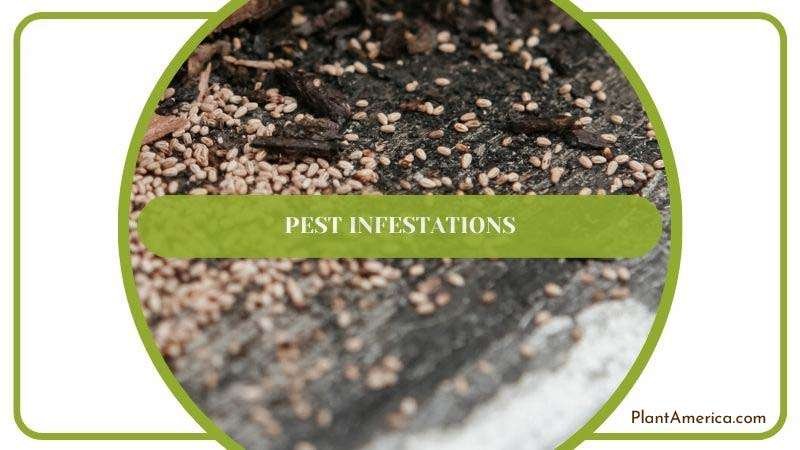
You can use insecticidal soaps or neem oil solutions to keep these pests at bay.
Final Tip:
The Monstera subpinnata leaves are alternate with a leathery texture. The large, dark green leaves can range anywhere from 10 to 15 inches long and seven to 11 inches wide.