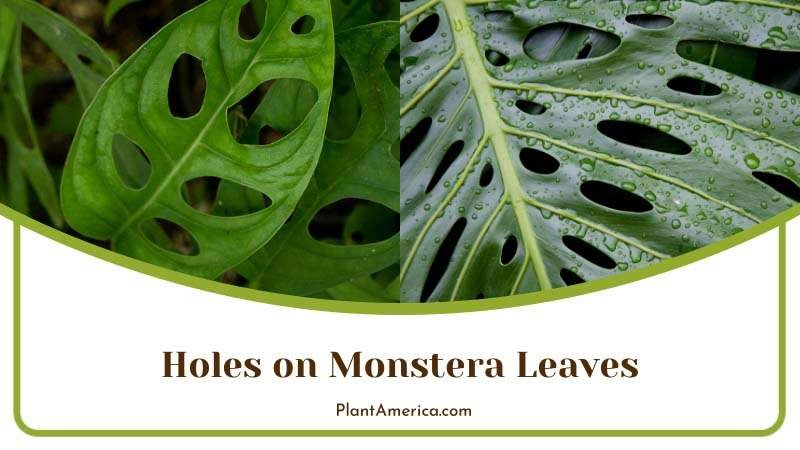
Monstera epipremnoides is a beautiful tropical vine of the Araceae family that is commonly known as the swiss cheese plant because of the shape of its leaves. The foliage of the Monstera epipremnoides is large, glossy, and heart-shaped, and it has natural holes that resemble swiss cheese.
It is an indoor plant that produces flowers and edible fruits. For more information about this beautiful Monstera genus plant and how to properly grow it at home, read this comprehensive guide.
Quick Overview
Here is a quick summary of what Monstera epipremnoides’ care requirements are.

| Requirements | Monstera epipremnoides |
| Light | Prefers bright, indirect sunlight |
| Water | Moderate watering; Overwatering kills it |
| Soil | Well-draining, rich |
| Temperature | Likes to grow in warm weather; Dislikes cold |
| Fertilizer | Organic or synthetic fertilizer |
What Is Monstera Epipremnoides?
Monstera epipremnoides is an evergreen flowering vine from Costa Rica with leaves that resemble cottage cheese as they develop large holes. Aside from its glossy and heart-shaped leves, this indoor plant is also known for its beautiful flowers and edible fruits.
Let’s explore some features of this wonderful vine.
- Genus: Monstera
- Species: Epipremnoides
- Family: Araceae
- Origin: Central America, Central region of Costa Rica
- Other Names: Monstera esqueleto
Genus Monstera comprises more than 45 known flowering plant species. Monstera is a Latin word meaning monstrous, which explains this plant’s unusual or abnormal leaves with holes.
Araceae family consists of over 3750 species of flowering plants with aquatic or terrestrial vines or shrubs. The Monstera plant is perennial.
– Features
-
Leaves
Monstera epipremnoides plants have broad, glossy leaves that are green-colored, elliptical, oblong and pinnatifid. The unique feature of Monstera epipremnoides is the size of its leaves, which grow from 13 to 21 inches in length and 13 inches wide.
-
Stem
The stem of the Swiss cheese plant is thick, long and sprawling. It is a climber and grows well against a moss pole or trellis. The aerial roots of the climbing Monstera epipremnoides work like hooks to grab onto other supporting structures.
-
Flowers and Fruits
The plant produces small green and white flowers. Monstera epipremnoides also produce fragrant fruits, which are aromatic white berries and are edible.
Monstera Epipremnoides Care
Monstera epipremnoides is a slow-growing plant, it takes a month for one leaf to grow when the plant is placed indoors. Growing habits vary in different varieties of Monstera. Some start growing on the ground and some can climb up a tree trunk.
Although it is an easy-to-grow plant, it has its specific needs. If you know what kind of soil it needs, or how much cold or hot weather it can tolerate, you will have a rewarding growing experience.
Let us have a look at its care requirements through our guide below.
 Soil Requirements
Monstera epipremnoides grows fast in a well-draining soil mixture. The plant does not like to stay in soggy or water-logged soil. An aroid soil mix consists of coco coir, perlite and pine bark.
The plant grows well in an acidic growing medium with 5.5 to 6.5 pH.
 Light Requirements
The plant needs bright, medium, and indirect sunlight. It can tolerate direct sunlight only for 2 to 6 hours, and beyond this duration, the leaves start losing their color and get burnt. Place your plant on the east-facing window.
 Water Requirements
Water your plant once a week. Before watering your plant, make sure the soil for Monstera epipremnoides must be slightly damp before you water the plant again. The pot should have an excellent drainage system. If you water the plant when the soil is soggy, it will lead to root rot.
 Temperature Requirements
Monstera epipremnoides need mild and moderate temperatures to grow best. The ideal temperature for the optimal growth of the plant is between 55 to 80 degrees Fahrenheit. They are not very sensitive to colder temperatures.
If you place your plant in a place where the temperature fluctuates, it will destroy your beautiful plant.
 Humidity Requirements
High humidity levels are necessary for monstera plants to grow well. Mist the plant regularly to sustain the required humidity level. If there is less humidity in the room, you can use a humidifier or place a pebble tray below the plant pot.
 Fertilizer Requirements
Monstera epipremnoides fertilizer requirement is basic. The plant does not need a lot of fertilizers. However, you can add some extra food for better growth. Use slow-release, diluted fertilizer and add plant food during the growing season, which is during the spring and summer.
Propagation
Water, soil, division or seeds can be used to propagate the Monstera epipremnoides plant.
Propagation of Monstera epipremnoides is best done in spring because it’s the time when the plant grows actively. Propagation in Monstera epipremnoides takes place by different methods.
– Water Propagation
Here are the steps to follow if you want to use the water propagation method:
- Using a sterilized pair of scissors, cut below the node of the plant. The nodes are points from where new roots sprout from the plant.
- Put the plant cutting in a glass of water, and make sure that at least one of the nodes must be under the surface.
- Place the jar in a location where the plant will get indirect bright sunlight.
- Refill the water as water evaporates and change the water when the water seems murky.
- Check for the development of roots.
- When the roots are 2 to 3 inches big, transfer the cutting to a pot.
- Water your new plant.
– Soil Propagation
This type of propagation is the same as water propagation. Follow our step-by-step guide for the best results.
- Use a potting medium such as perlite or sphagnum moss instead of water.
- Use a pair of sharp scissors and cut the part below the node because new roots sprout from this point.
- Plant the bottom of your cutting into the potting mix.
- Make sure at least one node is covered inside the soil (check out how to propagate your Monstera plant without nodes).
- Place your cutting at a location where your plant will get indirect bright sunlight.
- Keep the potting medium moist.
- Maintain a high humidity level. Place a plastic bag over your plant to maintain humidity, and remove the plastic bag every day for a few hours to let in some fresh air.
- After a month, observe root development.
- Once the roots develop, transfer your new plant to a permanent pot.
– Propagation by Division Method
This propagation method skips cutting the plant and allows you to safely propagate it by dividing your plant into smaller plants.
- Take out your plant from the pot.
- Divide your plant into small bundles.
- Plant each separated monstera into individual pots.
– Propagation by Seeds
You can grow Monstera epipremnoides from seeds. The seeds do not have a long shelf life, so plant them immediately.
- Soak the seeds in water for 12 hours. The seeds will swell a little.
- Plant the seeds in moist soil.
- You can observe plant germination after 10 to 21 days.
 Pruning
Pruning is the best treat that you can give your plant. Prune your Monstera epipremnoides to control the shape and size of the plant.
It can improve the look of the plant by making it fuller and bushier.
– Things To Consider Before Pruning
- Use sharp scissors and remove only dying Monstera epipremnoides leaves from the plant.
- Don’t forget to disinfect your scissors before and after use, because dirt or bacterial residues may harm your plant.
- Pruning is not only for the sake of shaping the plant, it also greatly improves its health. Prune your plant in spring because this is the time for the development of the plant and will result in faster and healthier growth.
Potting
A pot with holes at the bottom is the best potting tool for the plant. These holes in the pot provide the best drainage system for the plant. Use plastic pots as they work great to maintain humidity in the soil and provide a proper drainage system.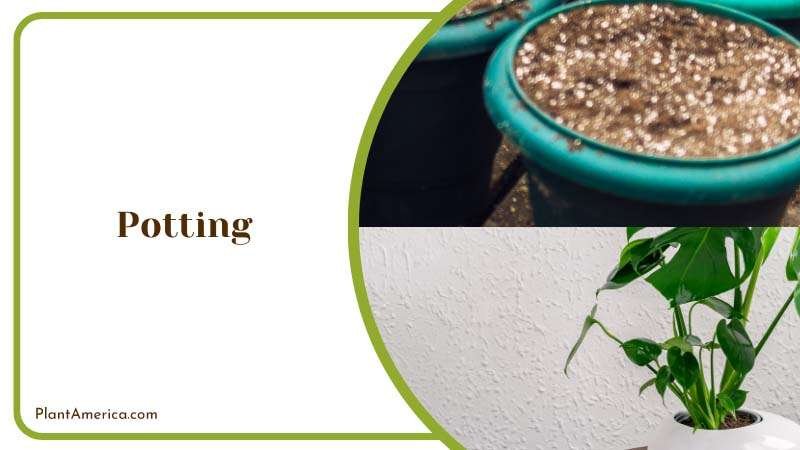
When you water the plant thoroughly, the excess water should drain out of the holes in the pot after the plant absorbs the required amount of water. Monstera is a slow-growing plant and doesn’t need to be repotted before it is two years old. Do it in spring or summer as this is the growth phase of the plant.
– Repotting
After repotting, the plant takes stress, which causes roots to be damaged.
-
Things To Consider Before Repotting
Here are some things to keep in mind when planning to repot your plant:
- Always repot in the growing season. This will reduce the stress on the roots.
- Before repotting, water your plant to make the roots damp and soft.
- Do not pull the plant while holding the stem. Tilt the pot and loosen the soil around the edges with the help of your finger. The plant will easily slide out from the container.
- Remove extra soil from the roots gently to avoid any damage to the roots.
- Closely observe the roots. Trim any damaged or diseased roots.
- Choose a bigger pot than the last one with good-sized drainage holes for repotting.
Problems
Monstera epipremnoides is an indoor plant, so it is prone to some illnesses.
The following problem-solving guide will help you identify them and cure your plants.
– Yellow Leaves
Yellow leaves of your plant indicate that you are overwatering your plant. Always check the potting mix or soil by digging the top of the soil with your finger. If Monstera epipremnoides soil is still wet, wait for some time before you water your plant again.
– Root Rot
When you constantly water your plant without checking the soil, the rotting of the roots begins. Waterlogged soil is the cause of root rot.
Remember, you should always check the soil before watering. Give water to your plant when you feel that the potting mix is dry. Remove the rotten part and transplant the plant.
– Droopy Leaves
The cause of the drooping leaves of your plant is that your plant is not getting the required amount of water. After checking the soil, water your plant thoroughly. Your plant will be back in its perfect shape within a couple of days.
– Brown, Crispy Leaves
Brown, crispy leaves are a clear indication that your plant is dry. It is a sign that your plant is getting too much bright direct light.
Trim the brown edges of the leaves so that the plant can develop well and move your plant to a place where it will get moderate light. Check your potting mix and thoroughly water your plant. If the environment around the plant is dry, use a humidifier or set a pebble to try around your plant.
– Pests
The Monstera epipremnoides plant is susceptible to pest attacks. Pests such as spider mites, mealybugs, scales, and fungus gnats will attack the plant.
To keep your plant away from bugs and pests, you should increase the humidity around your plant. The easy method to remove insects or pests from your plant is to rub the plant with a clean cloth. You can give it a wash with a mixture of mild soap and water. The other way is to use insecticides or pesticides.
Other ways to cure this problem include:
- Insecticides or pesticides
- Neem oil spray
- A cotton ball dipped in alcohol to clean the leaves
Sometimes, your plant will get attacked by fungi. In this case, you can use fungicides.
– Toxicity
Monstera epipremnoides plants are toxic to pets. If your pets chew the leaves, they may get irritation in the mouth, vomiting, abdominal cramps, and hives. The plant contains calcium oxalate crystals, which are known to be toxic to animals.
Varieties of Monstera
The genus Monstera has various beautiful varieties similar to the Monstera epipremnoides.
Some of the varieties are herbs while other varieties are evergreen.
– Monstera Adansonii
It is a small variety of Monstera that is a climber and looks pretty in hanging baskets or trailing. Instead of having holes, the leaves have a lacy or frilly appearance. It can reach up to 60 feet in height.
– Monstera Deliciosa
It is the most popular variety and is also known as the Mexican Breadfruit plant. The leaves are large, leathery, and deeply lobed. It is a climbing plant with vines reaching a length of 30 feet.
– Monstera Siltepecana
It is commonly known as the Silver fox and has solid, lance-shaped foliage with silvery green veins. It is a popular indoor type and grows well in a terrarium.
– Monstera Obliqua
This variety is a unique and rare type. It is also called the unicorn plant. It is a smaller plant with 2 to 10-mm-thick stem leaves. The name Obliqua means oblique leaf base.
– Monstera Dubai
This type of monstera plant has different stages of foliage. A mature plant has scented foot-long leaves. Monstera Dubai is also known as shingle plants.
– Monstera Standleyana
This plant is also known as the Five holes plant. The leaves are oblong and do not have fenestrations. They grow up to 6 to 8 inches big.
– Monstera Minima Madison
The plant has two common names: Dwarf monstera and Monstera jenny. They are fast-growing plants, but the leaves are tiny. The flowers of this plant are smaller than its leaves.
– Monstera Karstenianum
It is also known as Monstera Peru and it is a climber. The leaves are green, leathery and have lacy veins. It can be a variegated Monstera, and they are textured and scaly.