
Mealybugs on snake plants of the Asparagaceae family can transform lush, vibrant greenery into a drooping, lifeless mess. They puncture the tissues and drink the nutrient-rich sap out of them.
But don’t fret; with timely action, you can save your plants and show these uninvited guests the exit. So buckle up because every moment counts in this battle against our little white foes.
What Causes Mealybugs on Snake Plants?
Mealybugs on snake plants are often caused by bringing infested plants. They can live in new environments, as they are experts at surviving even when the growing conditions aren’t great. Ants can also team up with mealybugs, giving them a free ride to new places to feast.
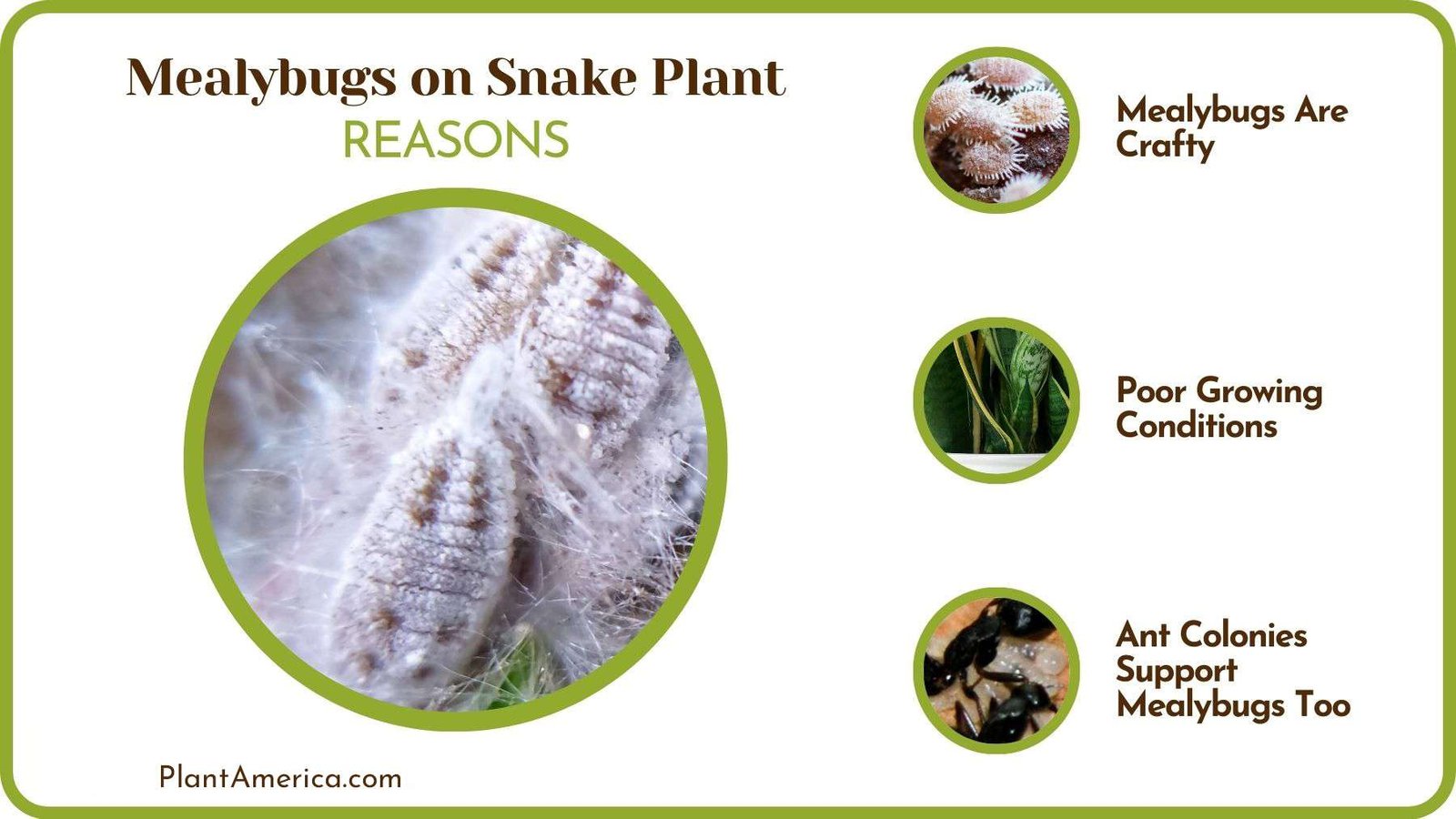
– Mealybugs Are Crafty – The Sneaky Nature of These Pests
If you or your neighbors bring home plants that are already infested, these bugs can be hidden in them. They hide where it’s tough to see, like under leaves or in the soil, making them a real challenge to get rid of. When you buy a new plant, it might look completely healthy, but there could be mealybugs lurking unseen.
When you bring this plant home and place it close to your snake plant, it’s like laying out a welcome mat for the mealybugs. They can easily crawl over to the snake plant from the new plant. What’s worse, they can also travel via the wind, pets, or even our clothes.
So, if you’ve noticed leaves turn yellow or brown and spotted mealybugs around, the new plant could be the culprit.
– Poor Growing Conditions
Plant health also contributes to attracting mealybugs and other plants. Let’s talk about humidity. Now, you may know that snake plants are pretty hardy. They only need a little water, and they can handle different environments. But one thing they don’t love is high humidity.
The same goes for poor ventilation. Stagnant air is like a dream home for mealybugs. It allows them to reproduce quickly; before you know it, your plant can be overrun with these pests.
Additionally, insufficient lighting can stress your plant, making it more vulnerable to mealybug attacks. A weak or stressed plant is an easier target for pests than a healthy, robust one.
– Ant Colonies Support Mealybugs Too
Ants and mealybugs have what scientists call a mutualistic relationship (This means both parties benefit from each other).
Mealybugs produce a sweet substance called honeydew, which ants love. Ants feed on this sugary substance and, in return, protect mealybugs from predators. Ants even carry them from plant to plant. So if you’ve got an ant problem, chances are you’ll have a mealybug problem too.
These industrious little creatures can carry mealybugs right to your plant. And once the mealybugs are settled in, the ants will guard them fiercely.
So, addressing any ant issues in your garden or house is crucial to protect your snake plant from mealybugs. Remember, if left unchecked, a small ant problem can quickly turn into a big mealybug problem.
How To Get Rid of Mealybugs From a Snake Plant?
To get rid of mealybugs from a snake plant, take a multipronged approach. Separate the infested plants and spray water to remove the pests. Then use alcohol, neem seed oil, or soapy spray. For severe cases, you may need to consider using systemic insecticides.
– Isolate Infested Plants First
Mealybugs are pretty social. They move from one plant to another quickly. By isolating the infected plant, you cut off its path.
Isolation means keeping the infected plant away from your other plants. Pick a spot that’s well away from your plant collection. Make sure it’s somewhere you can clean easily. You’ll be dealing with mealybugs, after all.
Remember, even a couple of leftover mealybugs can start the infestation again. So, be thorough. Look at the leaf undersides, the stem joints, and the soil surface.
– Hose Down the Leaves Carefully
Mealybugs have soft bodies, so a stream of water can knock a lot of them off your plant. You can do this using a bug blaster or a garden hose. If you’re dealing with indoor plants, a sink sprayer works too.
Now, don’t just start blasting water. Be gentle. Snake plants are sturdy, but a too-strong jet can damage their leaves. Start from a distance, then move closer as needed.
Focus on the areas where mealybugs gather. Under the leaves, around the stem, and even the soil surface. One round might not be enough. Wait for the plant to dry, then check for leftover mealybugs. If you find some, do another round of spraying. Repeat until there are no visible mealybugs left.
Remember to drain the excess water from the pot after each round. Snake plants don’t like waterlogged soil. Also, note that only use this method for mature plants. Young plants, cuttings, or weak plants might not handle the water pressure well.

– Use Alcohol and Cotton Swabs
A common item that can be a real game-changer: rubbing alcohol. Now, you don’t pour alcohol on your plant. That can harm the plant tissues. What you need are cotton swabs. Soak a cotton swab/soft cloth in rubbing alcohol, then touch it to the mealybugs.
The alcohol dehydrates the mealybugs and kills them on contact. You can take out mealybugs without affecting your plant. You can use not just mealybugs to treat pests like fungus gnats and spider mites on snake plants.
However, this method is best for plants with a few mealybugs. If the infestation is heavy, you might need something potent.
– Apply Neem Oil the Right Way
If you have a persistent mealybug problem, then it’s time to bring out the heavy hitters. One of them is neem seed oil, which is derived from the neem tree’s seeds. It’s well-known for killing many kinds of pests, such as mealybugs, fleas, aphids, fungus gnats, and spider mites.
From feeding to growth and even reproduction, neem oil disrupts it all, making survival difficult for these pesky creatures.
If the sound of this makes you eager to try it out, you can find ready-to-use neem seed oil sprays in garden stores. Or, if you want to make your own spray, you can also do that. Mix 2-4 drops of neem seed oil with water and add a drop of soap to the mixture. The dish soap helps the oil mix well with the water.
Once your mix is ready, spray it generously on your plant. And remember, mealybugs can be crafty hiders, so spray under the leaves and the soil surface too. If you still find mealybugs, don’t worry. Spray again!
– Use Soapy Spray for Sparkling Clean Results
Moving on to our next strategy against mealybugs, that is soapy water. Simple and easy to make, it can handle pest infestation and even help you deal with thrips on snake plants.
For this, you’ll need insecticidal soap. This option is safe for plants but harmful for pests. You can purchase insecticide soap from garden stores or online. To use it, mix the insect-killing soap with water according to the package instructions and then mist it on the plants.
Insect-killing soap works by dissolving the protective coating on pests. Like with neem seed oil, spray all parts of the plant, including under the leaves and the soil.
Reapply the soapy spray every few days until you see no more signs of mealybugs. And as a bonus, regular use of soapy spray can help prevent future infestations too.
– Try Sticky Barriers To Shield the Plants
Sticky barriers are made to catch and get rid of pests. They can be in different forms, like tapes, traps, or paints. Sticky barriers work by trapping pests when they try to crawl over them. Once stuck, the pests can’t move and eventually die. You can use sticky barriers on the pot or near the base of your plant.
Any mealybugs trying to reach your plant will get stuck in the barrier. However, be careful not to get the sticky substance on the plant. Taking it off can be hard and might hurt the plant. And don’t forget sticky barriers work better when you use them to prevent problems. They can stop mealybugs from reaching your plant, but they won’t do much for an existing infestation.
– Use Petroleum Jelly To Capture Mealybugs
Petroleum jelly is a great way to deal with annoying snake plant bugs in soil. It catches them and stops them from moving, which ends up making them die.
Spread a layer of jelly around the rim of your plant pot. As mealybugs and other pests try to cross this barrier to reach the plant, they get stuck. Unable to free themselves, they are prevented from infesting the plant.

Please remember this method is better suited for preventative measures than a full-blown infestation. If your plant is already heavily infested, try some of the earlier-mentioned methods first.
– Use a Systemic Insecticide for Pest-Free Paradise
If your snake plant continues to suffer from mealybugs despite all your efforts, it may be time to try a systemic insecticide. These are things you put on your plant’s soil or leaves, and then the plant takes them in.
Once there, they kill off any pests that feed on the plant, including those sneaky mealybugs, one of the common snake plant pests.
The benefit of systemic insecticides is that they can reach pests in areas where sprays may not, like in crevices or on the underside of leaves. This makes them really useful against stubborn infestations. But remember, use them as a last option because they can affect good bugs. Always follow the product instructions and use them as directed.
– Keep Growing Condition Ideal (Plant Care)
Keeping your snake plant in good shape is super important to stop pests. When your plant is healthy, it’s less likely to get bugs and diseases, like mealybugs.
Ensure your plant has well-draining soil, receives bright indirect light, and is adequately watered (to avoid root rot). If you notice yellowing leaves and white, cottony growth on the soil, you may be dealing with southern blight. If this happens, you have to know how to treat fungus.
Similarly, red or brown spots on snake plant leaves could indicate red leaf spot disease. Treating red leaf spot on snake plants early can stop big harm and keep your plant strong.
And don’t forget, creating the best conditions isn’t just about water and light. It means checking for pests, taking off dead leaves, and giving good food. If you take care of all these things, you can ensure your snake plant stays tough and fights off pests like mealybugs. That’s everything about how to get rid of bugs in snake plants.
Conclusion
To sum up, mealybugs on snake plants can be frustrating to deal with, causing harm and affecting their growth. But you can manage and kill these pests with the right strategy and tools. Remember to:
- Identify and isolate infested plants promptly to prevent the spread of mealybugs.
- Regularly inspect your plant and its surroundings. If you spot an infestation in the early stages, it can be really helpful in controlling it.
- Use a range of methods, such as hosing down leaves, applying alcohol, neem seed oil, soapy spray, or using sticky barriers, depending on the severity of the infestation.
- In extreme cases, consider using systemic insecticides.
- Focus on creating the best-growing conditions for your snake plant. A strong plant is less likely to get infestation or any other disease.
Follow all the above-mentioned steps to ensure your snake plant stays healthy and lively without mealybugs or other pests. After all, a happy plant makes for a happy plant parent!