
Mealybugs on ivy of the Asteraceae family can rapidly transform your lush, green haven into a plant lover’s nightmare. These tiny, cotton-like pests are stealthy, quickly turning your ivy into a sickly, yellowed mess.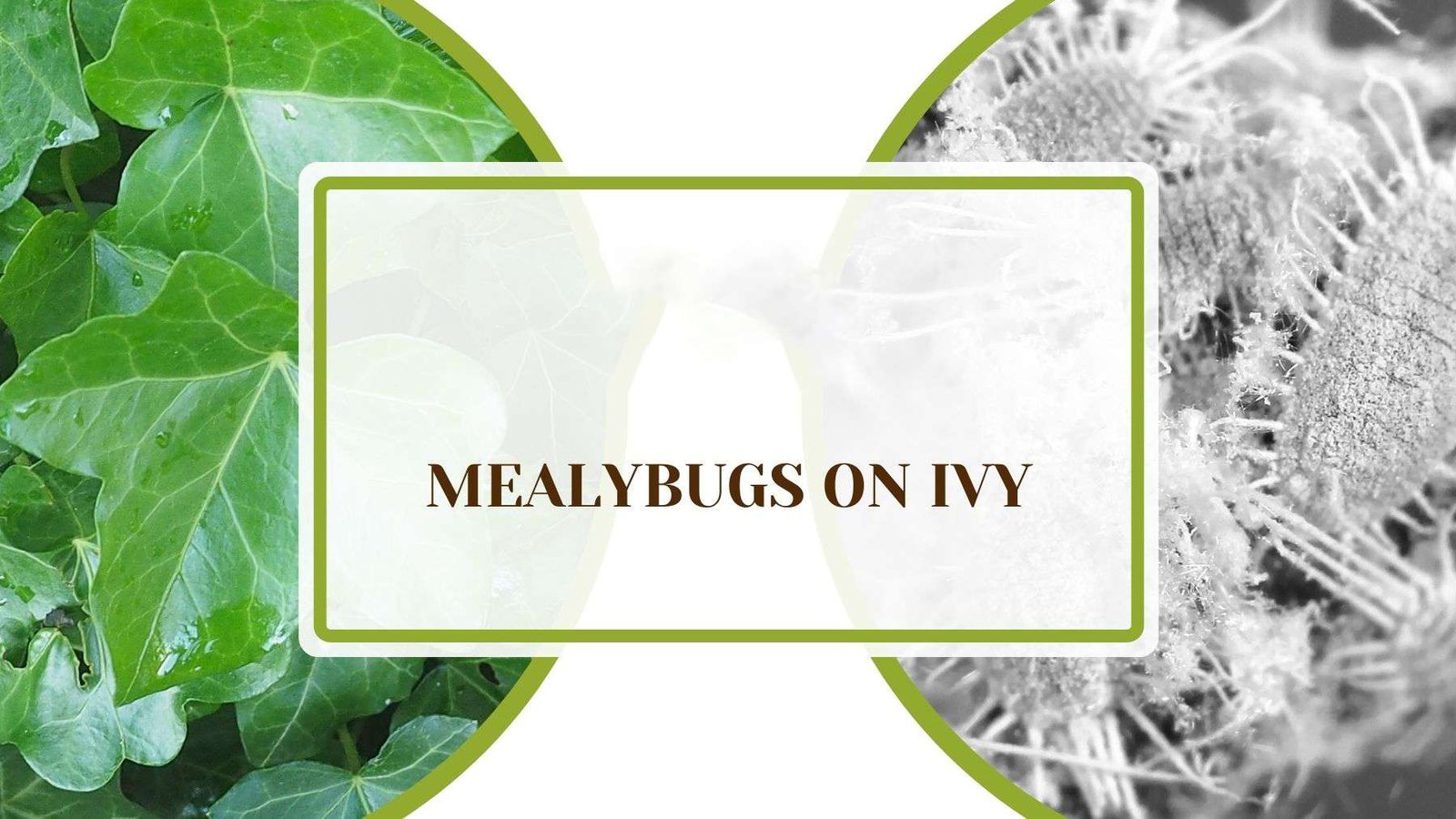
Fighting these harmful invaders is a challenge, and acting quickly is important. Stick with us, as we explore practical ways to save your cherished ivy from these unwelcome visitors.
Why Are There Mealybugs on Your Ivy?
Mealybugs are on your ivy because of its sap, which they feed on. Their presence can be due to overwatering, high humidity, etc. These pests can also be brought in by newly-infested plants or hitch a ride on clothing or pets.
– Attractiveness of Ivy
Let’s start by acknowledging one truth about mealybugs: they know where their next meal is. Ivy, with its lush leaves and stem, is a perfect target.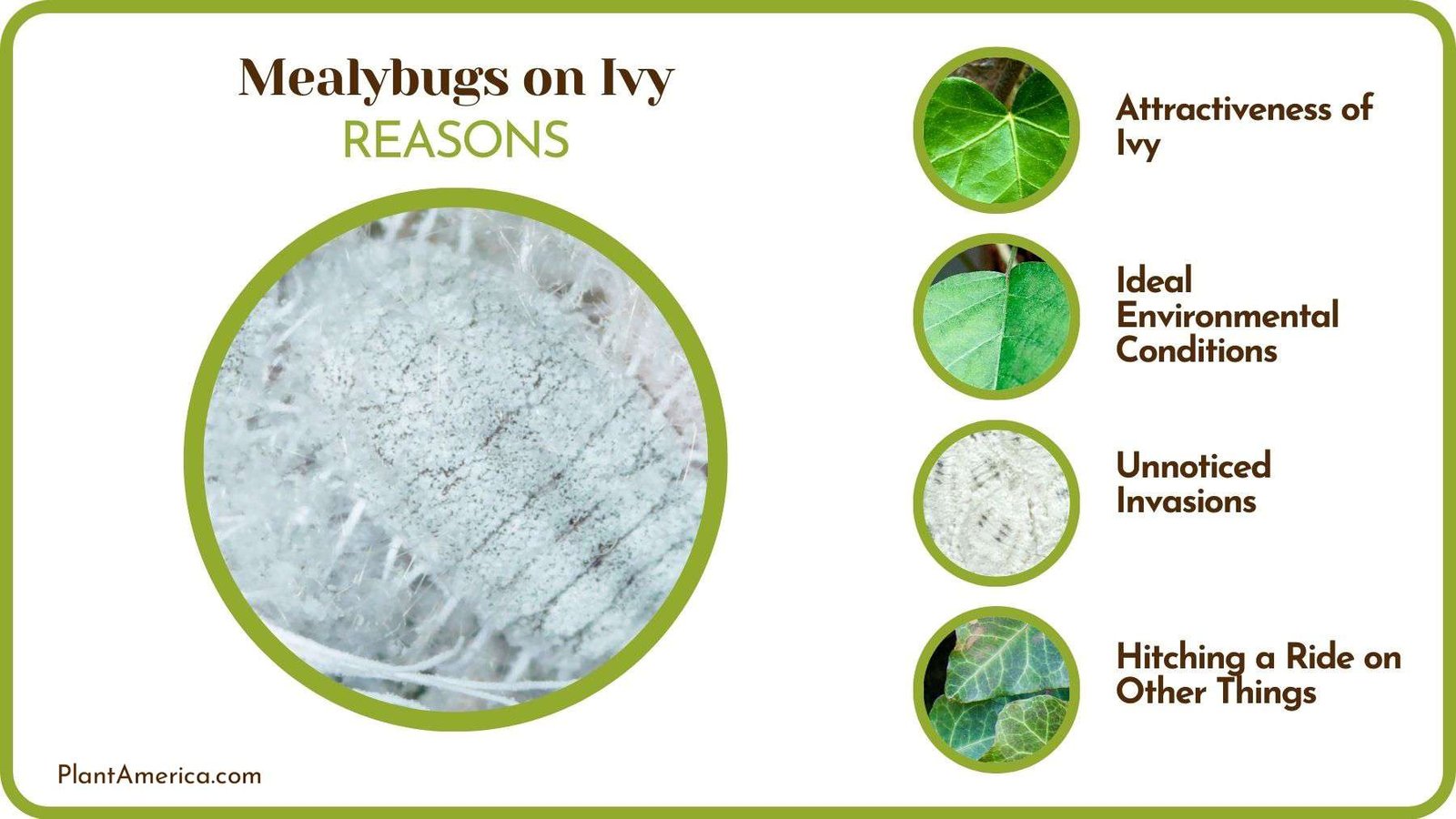
If you’ve ever observed a healthy ivy plant’s rich, glossy green leaves, you’ll understand why mealybugs find them irresistible. They offer a high nutrient content that mealybugs need to grow and multiply. So, to put it simply, your ivy plants are like a mealybug magnet.
– Ideal Environmental Conditions
The presence of mealybugs on ivy also hinges on the environment. You see, mealybugs are big fans of warmth and humidity. So, if your ivy is indoors or in a greenhouse (where the temperature and humidity are managed), you’re essentially rolling out the red carpet for these pests.
Even ivy plants growing outdoors can suffer if conditions are favorable. Warm, moist climates tend to be hotspots for mealybugs. So, if you live in such a region, extra vigilance is needed to protect your ivy from these unwanted invaders.
– Unnoticed Invasions (Hard To Detect)
Mealybugs are pretty sneaky. Unfortunately, when you notice a problem, your ivy could suffer from a full-blown infestation. So, regularly inspect your ivy, paying particular attention to the undersides of leaves and stem joints. Look out for any discoloration or sticky residue – these could be tell-tale signs of a mealybug infestation.
– Hitching a Ride on Other Things
Mealybugs are often transported from one place to another, and your ivy could be their next stop. These pests can hitch a ride on many things, like:
- New plants
- Soil
- Gardening tools.
It could have brought some unwelcome guests if you’ve recently introduced a new plant to your garden or indoor plant collection. The same goes for shared or borrowed gardening tools. Always inspect and clean these thoroughly to prevent a mealybug invasion.
How To Eradicate Mealybugs From Ivy? 8 Easy Methods
To eradicate mealybugs from ivy, start by taking a multi-step approach. Start by using neem oil, insecticidal soap, water spray, or alcohol. Chemical pesticides can be used in severe cases. Lastly, don’t forget preventive actions like keeping your garden tidy and checking your plants daily for mealybug signs.
– Neem Oil: Your Best Green Guardian
If you’ve been searching for a natural yet potent solution to combat mealybugs, consider neem oil for mealy bugs. This oil has a unique component called azadirachtin, which works wonders against mealybugs and other soft-bodied insects.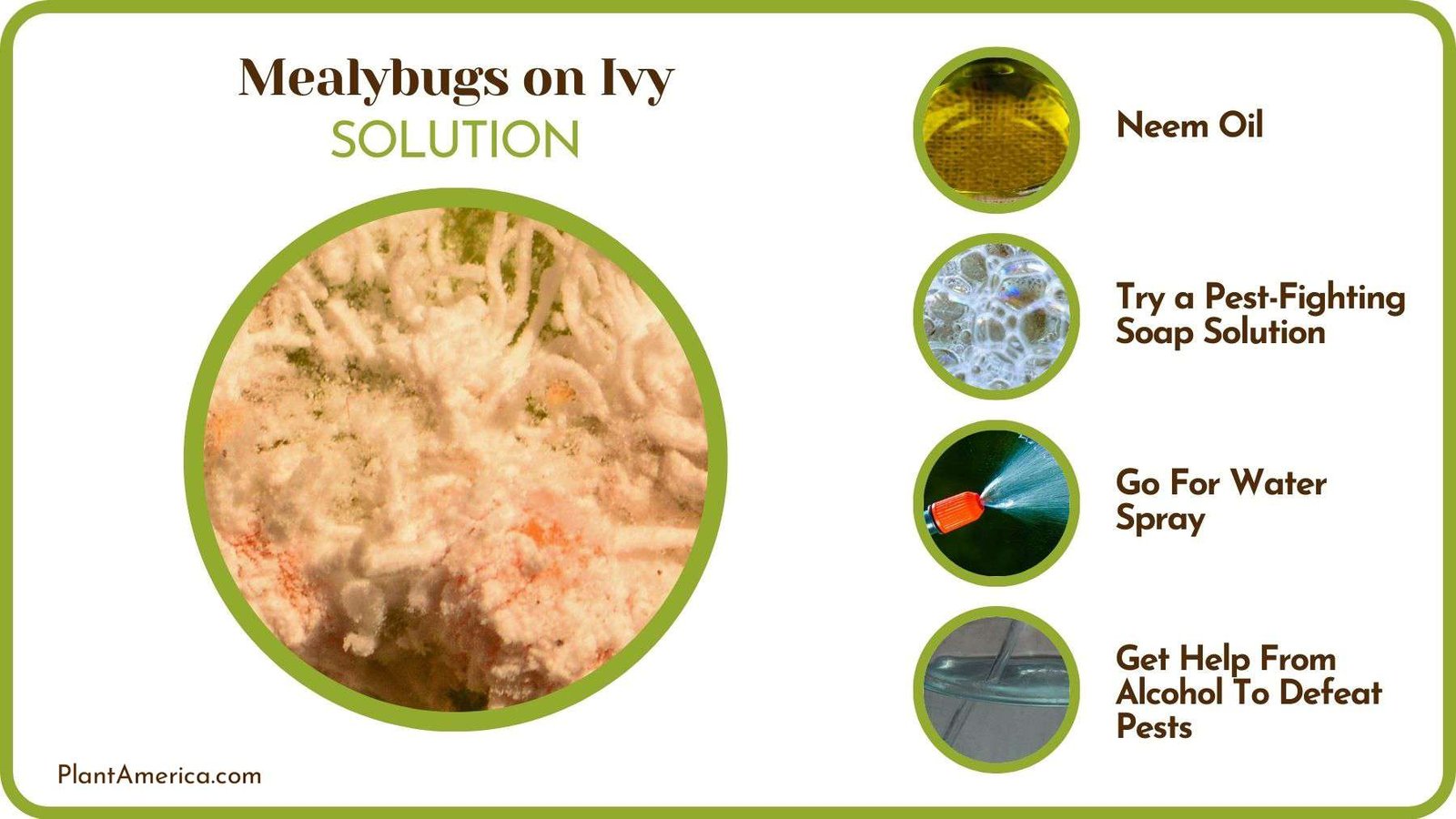
Neem seed oil affects mealybugs in several ways. It first inhibits pests’ feeding and growth, which makes them weak. It also stops them from reproducing, which means there won’t be any future mealybugs. These two actions prevent the bug infestation from increasing. In addition, you can also use neem seed oil as a repellent to make your ivy less attractive to these critters.
To apply, you’ll need to mix the neem seed oil with a bit of mild soap. Then, add some water to make a spray. It’s crucial to thoroughly cover all parts of your ivy plant, paying particular attention to the undersides of the leaves, where mealybugs love to hide.
Consistency is vital with mealybug treatment. You’ll need to reapply the neem oil every seven to fourteen days to break the life cycle of the mealybugs fully.
Another benefit of neem oil, which we really appreciate, because it is safe for beneficial insects. So, it’s an excellent choice for outdoor ivy plants. However, over-applying it can cause complications, which is why you should dilute it in the recommended quantities mentioned in the bottle.
– Try a Pest-Fighting Soap Solution
Insecticidal soaps work by dissolving the waxy coating on the mealybugs’ bodies, causing them to dehydrate and die. As a bonus, they also clean the sticky “honeydew” left by mealybugs, which can lead to mealybug damage on plants if left untreated.
You might be wondering, “Will dish soap kill mealybugs?” Well, it can, but using the right kind is essential. Opt for a pure, mild dish soap without any added fragrances or detergents. Spray your soapy solution onto your ivy plant, covering all surfaces. And like with neem seed oil, you’ll need to repeat this process every week until there are no signs of mealybugs.
However, be aware that pesticidal soaps can harm some beneficial insects. Therefore, try to apply it during the early morning or late evening when these helpful creatures are less active.
– Go For Water Spray
An often underestimated yet effective tool in combating mealybugs is right at our fingertips – water. A high-pressure water spray can dislodge these pests from your beloved ivy as soon as it touches them. Mealybugs, as tiny as they are, aren’t the best swimmers. So, a strong blast of water can easily knock them off the leaves and stems of your ivy.
You’ll want to focus the water spray on the undersides of the leaves and along the stems, which are the mealybugs’ preferred hangouts. Ensure your spray is strong enough to dislodge the pests but not too forceful that it could damage plants.
Remember, the best time to spray your ivy is in the morning. This gives your plant plenty of time to dry off during the day, which helps prevent the development of fungal diseases that thrive in damp conditions.
Water spray is a simple and environmentally friendly way to tackle a mealybug invasion. You don’t have to buy commercial products, as a regular garden hose or bug blaster can do the job.
– Get Help From Alcohol To Defeat Pests
Isopropyl alcohol or rubbing alcohol is also effective against bugs. It does its job by getting inside the mealybugs and drying them out, which ends up killing them. The cool thing is that it goes after these pests without hurting your ivy in any way.
To use this method, mix equal parts of alcohol and water. Then, using a spray bottle, thoroughly mist your ivy plant. It’s important to coat all plant areas, especially the leaves’ undersides, where mealybugs like to congregate.
Alternatively, for a heavy infestation, you can dip a cotton swab in pure alcohol and directly apply it to the mealybugs. However, it can be more time-consuming as you’ll have to reach out to every bug you see manually.
No matter what, consistency is important when dealing with mealybugs. Repeat the process every few days until you’re confident all the mealybugs have been eliminated. Inspect your ivy regularly for any signs of a recurring infestation.
– Place Sticky Traps: Catch and Control
If you’re struggling to eliminate mealybug infestations on your ivy, then sticky traps could be the answer you’re looking for. They are designed to catch and kill flying insects, particularly those in their adult stage.
You see, sticky traps work by exploiting a simple yet crucial part of the mealybug’s life cycle. Many species of mealybugs have a flying stage, during which they move to different indoor plants to infest. By setting up these traps around your ivy, you can catch the bugs as they attempt to spread. Simply put, it reduces their numbers and controls the infestation.
To use sticky traps effectively, place them close to your ivy plant but not touching it. Also, remember to replace the traps regularly as they fill up with bugs or if the adhesive loses its effectiveness.
– Use Vinegar Solution to Fight Pests Off
Vinegar is an acidic liquid that can kill bugs on contact. When diluted with water, it can penetrate the soil and reach mealybugs in soil, which can be hard to tackle with other methods.
We suggest mixing equal water and white vinegar to make a vinegar solution. Then, apply it to the affected areas of your ivy plant, both above and below the soil. Be sure to drench the soil thoroughly, but avoid soaking it, as this can harm your plant. The good news is that bugs won’t lay eggs in such soil, either.
Vinegar can be tough on plants, so it’s wise to test a small area first to ensure your ivy can tolerate it. Also, remember to rinse your plant with water a few hours after applying the vinegar to neutralize its acidity.
– Apply Commercial Insecticides to Defeat the Bugs
If natural remedies are not doing the trick, it might be time to escalate the battle by considering commercial insecticides. These products are specifically for you if you are wondering “how to get rid of mealybugs on houseplants.”
For mealybugs, we recommend a commercially-manufactured mealybug spray. They work by interfering with the bug’s nervous system, leading to its death. The key here is to choose a product labeled for use against mealybugs and follow the instructions carefully.
Thoroughly spray all parts of your ivy plant, but focus on the undersides of the leaves, stems, and where mealybugs typically gather. Also, shake the bottle well before and during use to ensure the ingredients are well mixed.
However, we suggest using chemical insecticides last due to their potential impact on beneficial insects and the environment. Always try to exhaust all non-chemical methods before resorting to chemical insecticides. The popular choices are:
- Bonide systemic insect control
- sns 209 systemic pest control concentrate
- Bonide systemic houseplant insect control
- Bonide insect control systemic granules
- Hi-yield systemic insect granules
- Syngenta 64749 demand duo pesticide.
– Keep the Garden Clean (Plant Care)
Now, you may ask yourself, “What causes mealybugs in the first place?” Well, there are reasons behind the infestation, and one of them is an unhygienic garden. Mealybugs, like all pests, are attracted to weak and unhealthy plants.
Start by regularly inspecting your plants for signs of mealybugs or other pests. Spotting the problem early can decide how fast and straightforward it is to deal with an infestation. Plus, ensure your plants have enough space so air can flow around them.
This makes it challenging for pests to jump from one plant to another and stops the conditions they like, like really humid air, from happening.
Regularly remove and dispose of fallen leaves or plant debris, which can serve as a breeding ground for pests. Also, consider using mulch to prevent mealybugs from laying eggs. Remember to monitor the health of your plants closely.
Water them appropriately, provide the right light, and feed them nutrients on time. A healthy plant is more resistant to mealybugs and can recover more quickly if an infestation does occur.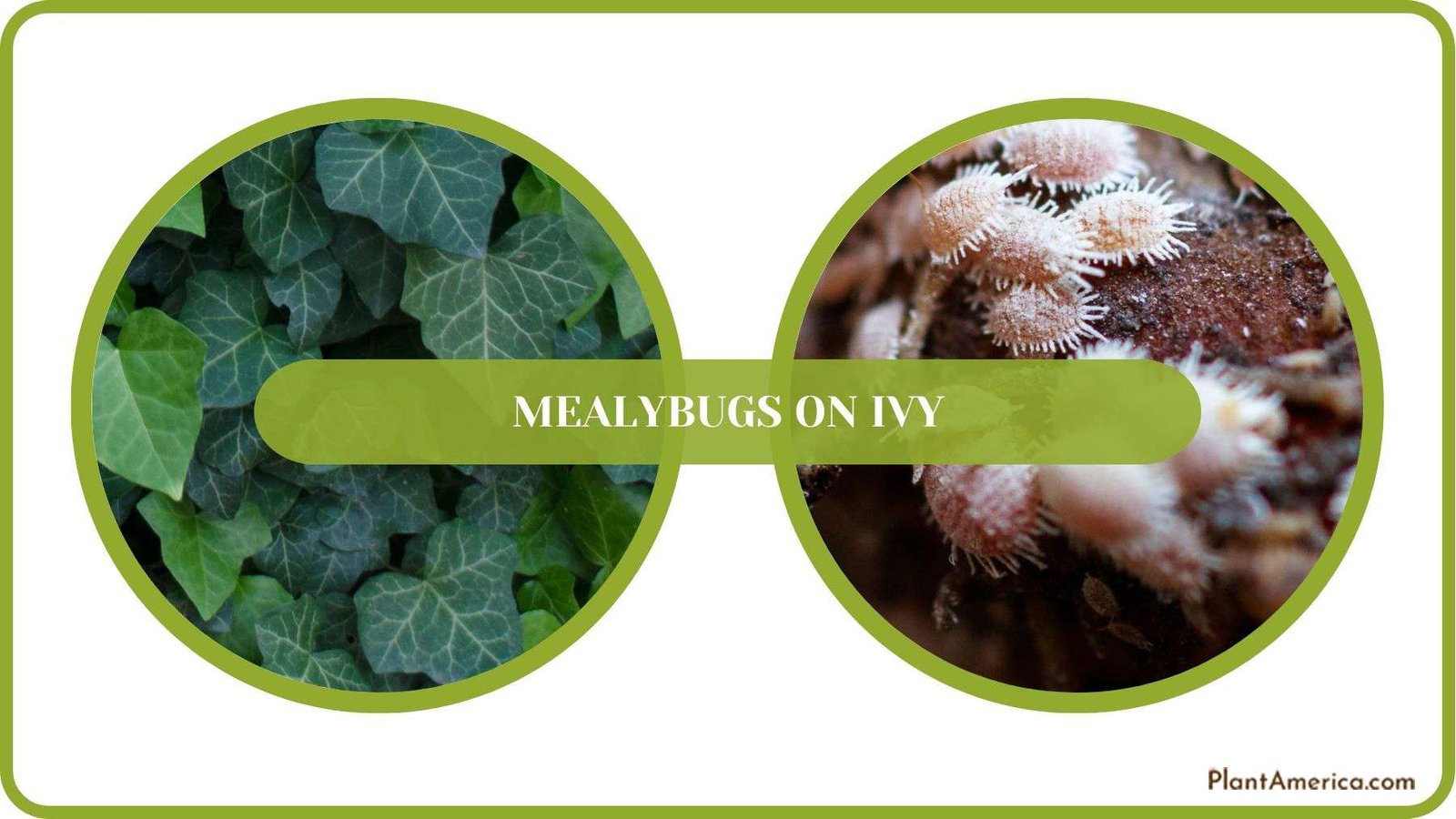
Conclusion
To sum it up, dealing with mealybugs on ivy might be a challenge, but with the right information and some work, you can definitely beat this problem. To maintain a thriving ivy plant free from mealybugs, you should always:
- Utilize a combination of methods like neem oil, soap, water spray, alcohol treatment, and sticky traps to control the infestation.
- You can use a vinegar solution for a more organic approach.
- Resort to commercial insecticides if non-chemical methods fail, but use these cautiously due to their potential environmental impact.
- Keep the garden clean and well-maintained to prevent mealybugs from laying eggs and making a comeback.
- Regularly examine your plants for signs of mealybugs or other houseplant pests to catch any potential infestations early.
Remember, a successful fight against mealybugs relies on you. Following these steps, you can ensure your ivy remains vibrant, healthy, and mealybug-free!