
Mealybugs on sage plants may not be a common sight, but certain conditions can make these valuable companion plants vulnerable to infestations. Although mealybugs are generally not extremely harmful, a persistent infestation can threaten the life of your sage.
 The key to addressing this issue is early detection through the identification of specific signals. In this guide, we will not only help you recognize these signs but also provide effective strategies for managing mealybugs in your sage container.
How To Identify Mealybugs on Sage Plants
To identify mealybugs on sage plants, be on the lookout for the diminutive pink insects measuring no larger than a fifth of an inch. They are cloaked in a waxy coating reminiscent of cotton. There will be a sticky substance around the plant, and ant activity is also common.
Mealybugs and spider mites can sometimes infiltrate your sage plants. The reasons often include over or underwatering, which can weaken the plants. If you spot any white, cottony spots on your sage, it’s a signal that mealybugs may be lurking within.
Closely related to scale insects, mealybugs can wreak havoc similar to their relatives. Adult female mealybugs lay over 200 eggs in their month-long life cycle. These eggs are often in cottony sacs on plants. Longtailed mealybugs retain eggs until hatching.
The number of generations per year varies by environment, with multiple overlapping generations possible in warm or indoor settings. Their impact extends beyond just the leaves of sage and other plants — they will also target the roots.
According to the University of Wisconsin, mealybugs can cause significant harm, including stunted growth, chlorosis, leaf loss, and even the introduction of plant diseases like fusarium wilt.
When mealybugs infest your sage, taking swift action is crucial to prevent potential devastation. However, the key to effective management lies in early recognition, and the following signs will help you identify an infestation!
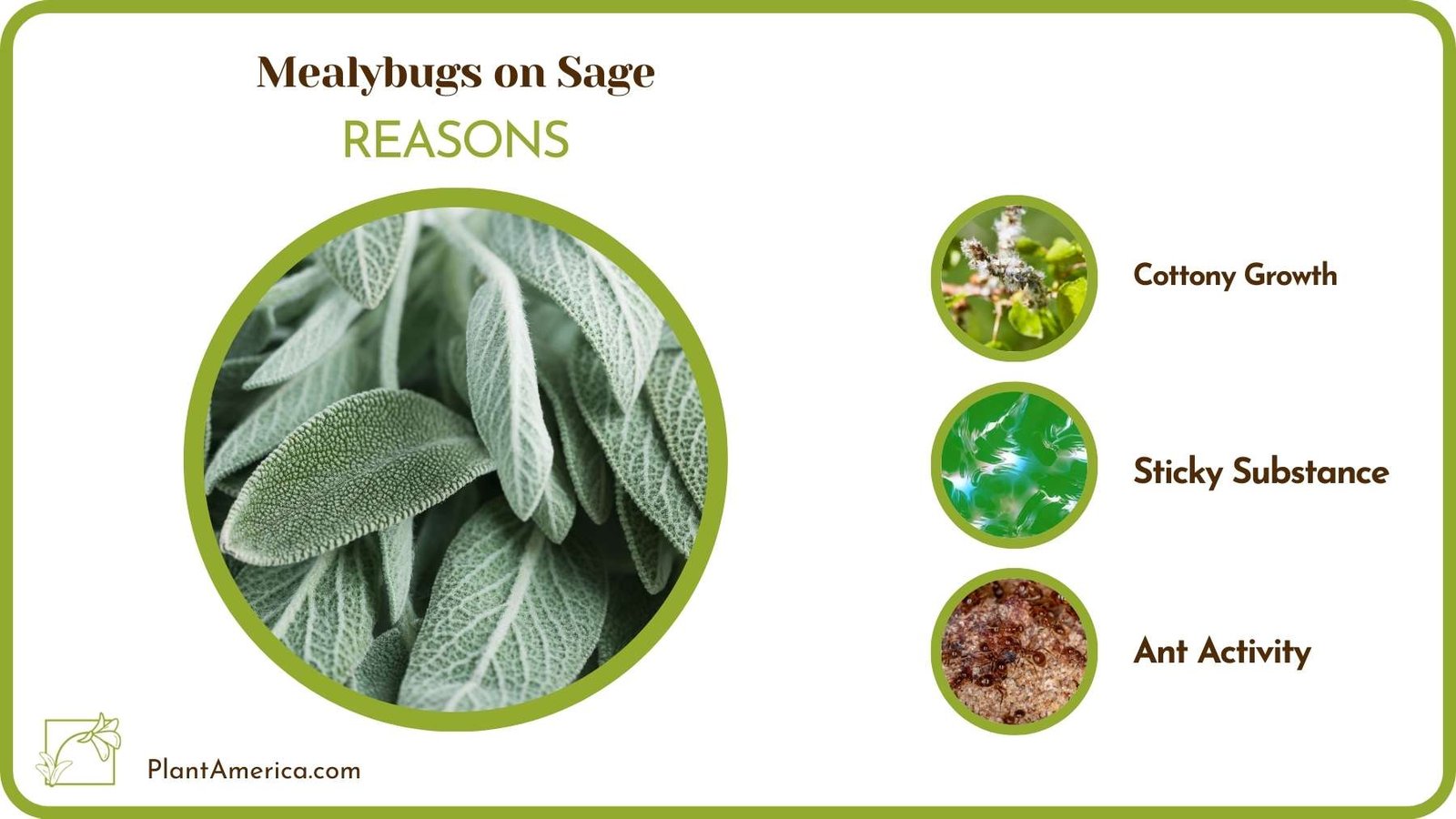
– Cottony Growth
Detecting a mealybug invasion often hinges on identifying distinctive cottony clusters. These clusters, akin to delicate tufts of fluffy cotton or white fuzz, tend to be initially concealed before gradually spreading across the plant. These hidden spots serve as sanctuaries for mealybugs, allowing them to establish a foothold.
Pay close attention to any concealed areas. Run your fingertips gently over the plant’s surface, particularly focusing on stem joints and the areas where roots meet the plant. By adopting this proactive approach, you can stay one step ahead of potential mealybug infestations and take prompt action as needed.
– Sticky Substance
Mealybugs have a peculiar habit of secreting honeydew, a thick liquid discharged as they feed on the sap of sage plants. This honeydew tends to accumulate on the leaves, stems, and their immediate surroundings, leaving behind a noticeable sticky residue.

Focus your attention on the sage leaves, stems, and the soil. Look out for areas displaying a shiny or sticky appearance. A gentle touch of the leaves and stems may reveal a sticky or tacky sensation, a clear sign of the honeydew residue left behind by mealybugs.
It’s crucial to address this residue promptly, as it can serve as a fertile breeding ground for fungal pathogens, ultimately fostering the growth of a dark, sooty mold.
– Ant Activity
Honeydew also becomes a point of attraction for ants, leading to an intriguing symbiotic relationship where ants take on the role of “farmers” for mealybugs. These diligent insects act as protectors, safeguarding the tiny mealybugs from potential threats and predators while ensuring a constant supply of nutrient-rich honeydew.
Maintaining a vigilant watch for the organized movements of ants is crucial. These ants often form distinct lines or trails as they traverse your sage plant. These well-defined pathways frequently lead directly to the mealybugs responsible for producing honeydew.
How To Get Rid of Mealybugs From Sage Efficiently
To get rid of mealybugs from sage efficiently, you can try washing them away using a hose. You can also use alcohol, insecticidal soaps, a neem oil treatment, or a homemade solution. Introducing predatory insects can also be effective, as well as applying pesticides.
When addressing mealybug issues on your sage plants, the strategy will depend on the severity of the infestation at hand.
Light infestations, marked by the presence of a few mealybugs and their distinctive cottony egg masses, are usually more manageable. Swift action is paramount at this stage to prevent the infestation from intensifying.

Heavy infestations, on the other hand, pose more significant challenges. They involve a multitude of mealybugs, eggs, and the accumulation of honeydew, which fosters sooty mold and attracts ants. In some cases, the only viable solution may be the removal of the infested plant to safeguard the others.
– Wash Them Away
In the initial stages, a gentle and natural approach can prove effective. Start by giving your sage plant a thorough rinse under lukewarm running water. Using a shower or a similar setup, carefully cleanse each leaf and stem, aiming to eliminate all visible traces of the insect pests.
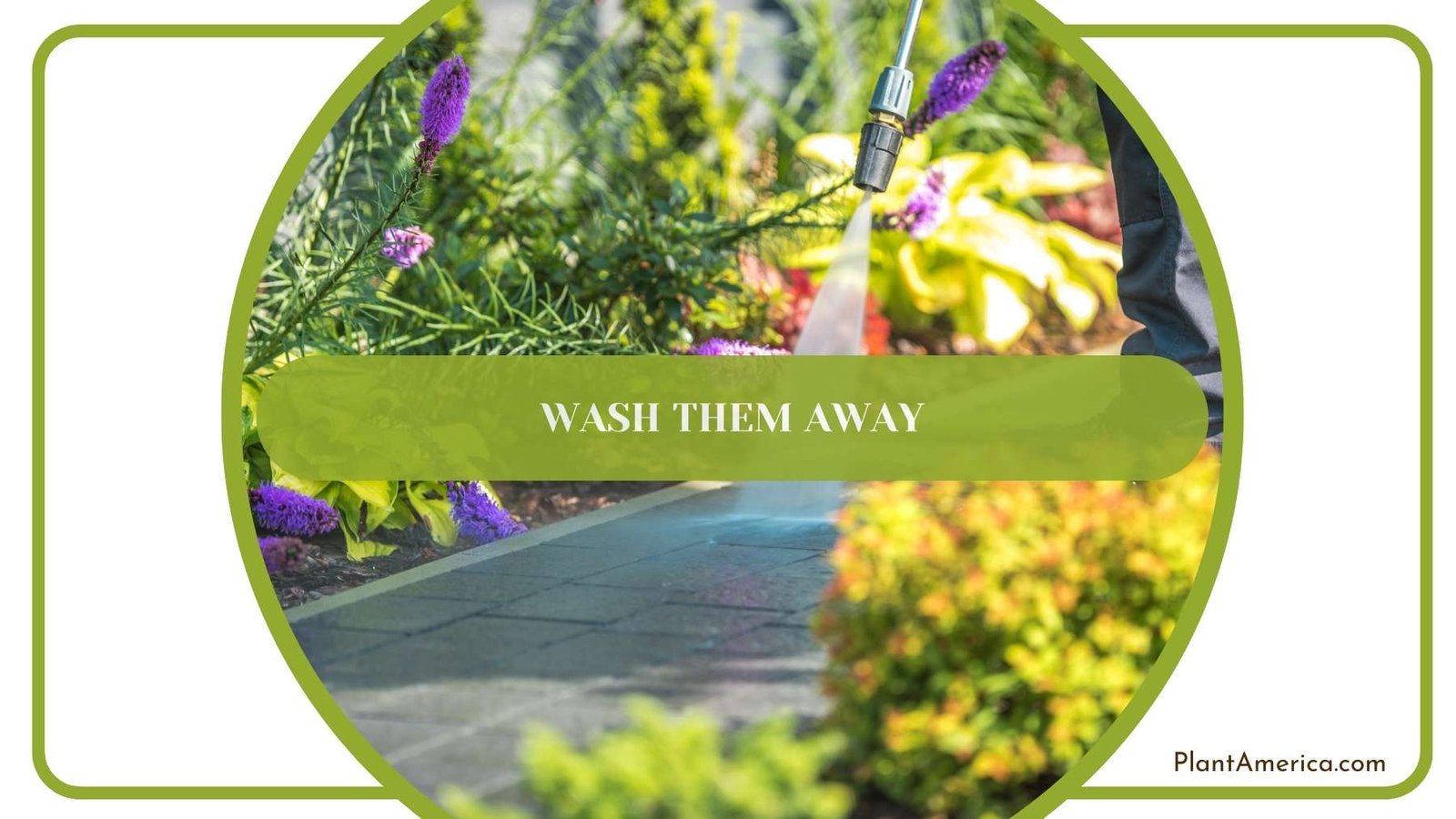
This method works by dislodging and removing mealybugs and their secretions from your plant’s surfaces. By doing so, you hinder their progress and give your plant a chance to recover and restore its health. This gentle intervention can serve as an excellent initial step in mealybug management, preceding more intensive measures if necessary.
– Use Alcohol
When dealing with a relatively contained infestation, you can employ effective tactics such as using cotton swabs soaked in alcohol, as it will kill mealybugs upon contact. Carefully apply the swabs to the visible adult mealybugs and their nests, aiming to dislodge and eliminate them. If the infestation is more extensive, consider simultaneously pruning the affected areas.
Another method involves creating a diluted solution of rubbing alcohol in water. Transfer this mixture to a spray bottle for convenient application. Ensure thorough coverage by generously spraying the entire plant, including both the upper and lower surfaces of leaves, stems, the soil line, and every intricate crevice.
This approach is highly effective at exterminating pests hidden in various recesses and significantly reduces the likelihood of their resurgence.
After a few hours of isopropyl alcohol soak, you can give your plant a nice wash and leave it to dry.
– Insecticidal Soaps
You have a variety of commercial soapy products at your disposal to combat these pests. Opt for fragrance-free ones to avoid potential harm to your plants and pets.
You can craft also your insecticidal soap by mixing a teaspoon of dish soap with a gallon of water. Apply the solution generously by thoroughly dousing the entire plant.
For ongoing treatment, it’s advisable to reapply the soapy solution either every two weeks or weekly, depending on the severity of the infestation you’re dealing with. This approach enables effective management of the situation while preserving the health of your sage plants.
– Neem Oil Treatment
Neem tree oil offers an excellent and environmentally friendly solution for safeguarding your sage plants from mealybugs.
This potent oil disrupts the feeding patterns of the pests, hindering the transition of larvae into adults and suffocating the adult mealybugs, ultimately leading to their demise. To use the oil effectively, it’s advisable to either spray it or gently wipe down the entire plant.
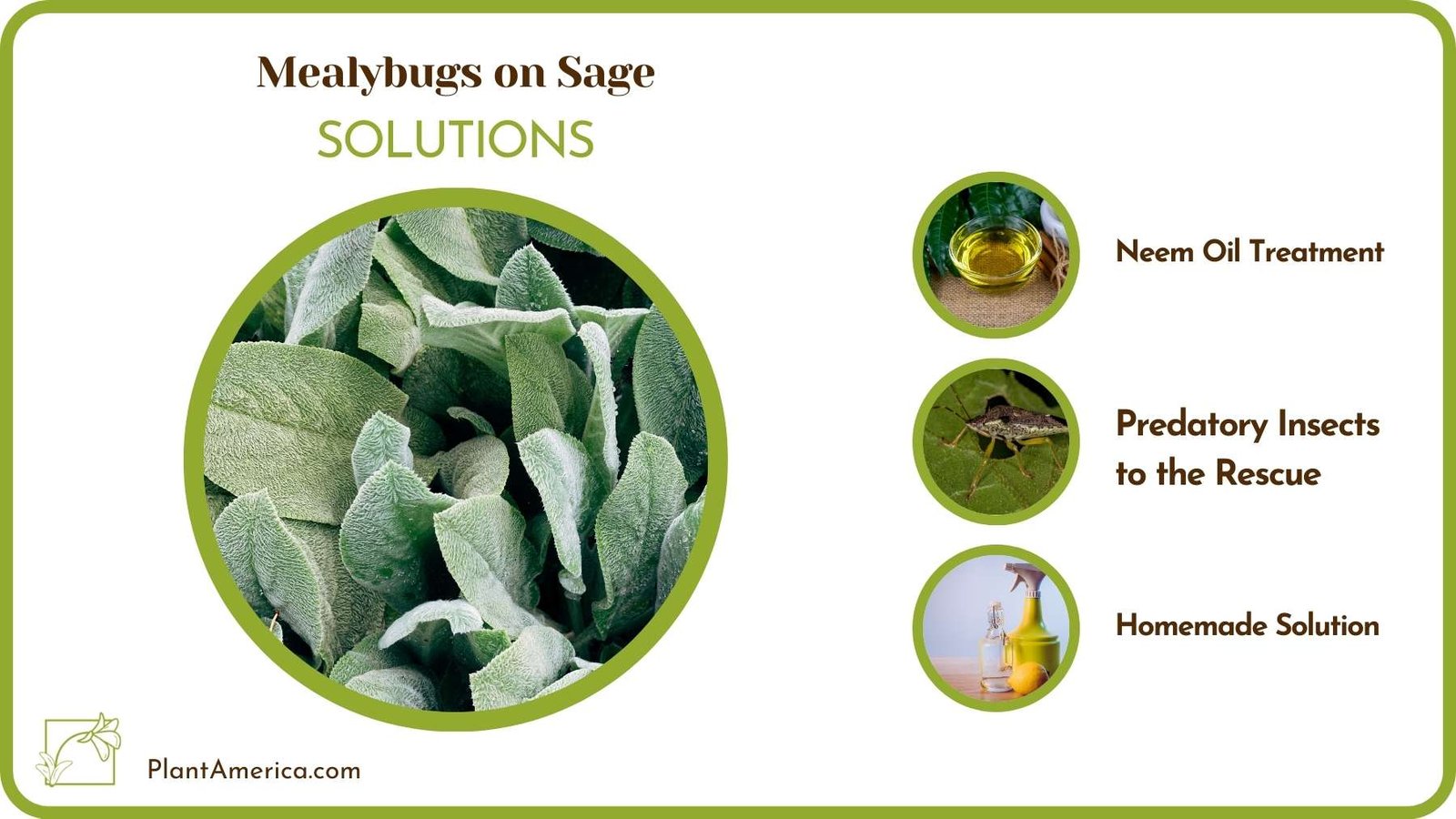
It’s important to note that the effects of these treatments may take a few days to become evident, requiring consistent reapplication to maintain their impact. An additional noteworthy benefit of neem oil lies in its natural anti-fungal properties, which help restrain the development of sooty mold in areas where honeydew tends to accumulate.
– Predatory Insects to the Rescue
A more biological control option to combat mealybugs on your sage plants involves enlisting the aid of beneficial insects. Among these, the standout is the mealybug destroyer beetle, characterized by its brown and black coloration, reminiscent of both ladybugs and Japanese beetles.

During their larval stage, these beetles exhibit a robust appetite for citrus mealybugs and boxwood mites. Astonishingly, a single beetle larva can consume several hundred of these pests each week, highlighting their remarkable effectiveness even in the presence of a severe infestation.
Ladybugs also excel as proficient mealybug and boxwood leafminer hunters. While their appearance might not be as visually captivating, lacewing larvae and parasitic wasps are equally valuable allies in the fight against mealybugs.
The beauty of these insects lies in their accessibility. You can easily obtain them online in the form of larvae and strategically introduce them to the affected plants. By harnessing the assistance of these natural predators, you can establish a balanced and sustainable solution for managing mealybugs on your sage plants.
– Homemade Solution
Creating your homemade garden pesticide is an environmentally friendly and proactive approach. Start by mashing a single garlic bulb, a small onion, and a teaspoon of cayenne pepper into a paste, adding water as needed.
Next, strain the mixture through a cheesecloth and incorporate a tablespoon of liquid dish soap. With your solution ready, proceed to spray it onto the areas of the plant affected by mealybugs.
Be prepared to repeat this process if the mealybug presence persists, which can sometimes happen after a few days. It’s important to note that the solution you’ve prepared remains effective for up to a week when stored in the refrigerator.

– Companion Plants
Sage is a very pest-repellent plant, but even this one could use some sidekicks. Certain companion plants emit scents or chemicals that repel mealybugs and other pests. Placing these plants near your sage can create a protective barrier and offer a fantastic non-chemical treatment for garden invaders.
Diverse plantings can support a healthy ecosystem in your garden, encouraging a balance between pests and their predators. Lavender, rosemary, mint, and chives are fragrant herbs that can help repel mealybugs and other pests.
Marigolds and naustrums are known for their pest-repelling properties and can deter mealybugs.
Remember that companion planting is most effective when used as part of an integrated pest management strategy.
– Best Horticultural Practices
You’ll often see gardeners reaching for one form of the special plant oil or the other to treat the bug condition, but what’s it all about? Horticultural oils, often called dormant oils or summer oils, work by smothering and suffocating mealybugs and other soft-bodied insects. The oil forms a physical barrier over the insects, blocking their spiracles, and leading to their suffocation.
Before applying, ensure that the voil is safe for use on sage plants. Read the product label carefully for instructions and any specific cautions related to your plant type.
Mix the oil according to the manufacturer’s instructions, and using a handheld sprayer, thoroughly coat the sage plant, covering all surfaces, including the tops and undersides of leaves, stems, and any visible mealybugs. Ensure complete coverage to maximize effectiveness.
This is generally not a one-time solution. You may need to repeat applications according to the recommended intervals on the product label. This is because the oil may not kill unhatched eggs or mealybugs that are in a protected location.
– Chemical Pesticide
Synthetic pesticides, typically containing chemical compounds, often struggle to effectively combat mealy bugs on sage plants. A major hurdle lies in the mealybugs’ natural waxy shield, which repels the effects of these chemicals.
Additionally, mealybug populations can adapt, potentially leading to resistance against these pesticide formulations. This resistance becomes more pronounced with repeated infections, even when the same chemicals are used.
Using chemical pesticides on indoor sage plants requires caution due to the potential presence of toxins that could harm both human occupants and any resident animals within the household.

Conclusion
While mealybugs on sage plants may not be common, they can pose a threat under certain conditions. Though not highly destructive on their own, can become a problem if their populations are left unchecked. Early detection is key, and in this guide, we’ve provided insights into identifying these pests and effective strategies for managing them on your sage plants.
- Mealybugs reproduce rapidly, with adult females laying numerous eggs in cottony sacs. Mealybugs can cause significant damage, including stunted growth, leaf loss, and even the introduction of plant diseases.
- To identify an infestation, look for cottony growth, sticky residue, and the presence of ants, which are attracted to honeydew. Managing mealybugs depends on the severity of the infestation.
- Light infestations can often be controlled with natural methods, such as rinsing the plant with water or using alcohol-soaked swabs. For more substantial infestations, consider soaps, neem tree oil, or introducing predatorial insects like mealybug destroyer beetles or ladybugs.
- Homemade solutions, companion plants like lavender and marigolds, and oils are also effective tools in the fight against mealybugs. However, chemical pesticides should be used with caution, especially indoors, due to potential health risks.
Incorporating these strategies into your gardening routine can help you protect your sage plants from mealybugs!