
Types of willow trees have graceful branches that wave in the wind, delicate leaves that dance as they fall, and bark markings that add visual interest all year round.
 Learning about the different willow tree varieties is a great place to start if you want to transform your yard into an arboretum filled with stunning specimens.
In this guide, we’ll cover magnificent willow species you should consider adding to your landscape, from petite dwarf willows perfect for small spaces to towering weeping willows that create a dramatic focal point.
Whether you want cascading branches for privacy, dappled shade, or cheery springtime blooms, one of the unique willows on our list will likely catch your eye and fill you with delight for years to come!
Types of Willow Trees for a Striking Garden Landscape
1. Weeping Willow

- Growing season: Fall, Summer.
- Leaf shape: Narrow, Pointed.
- Specific needs: Space to spread, Sufficient water.
- Common pest: Willow sawflies, Scale insects.
The weeping willow (Salix babylonica) gracefully lines streams and waterways throughout the world with its drooping branches that cascade toward the ground in a weeping formation.
With its wispy branches that sway gently in the breeze, this willow tree type provides an instant sense of serenity and calm to any landscape when planted.
Weeping willows thrive near sources of water, ideally being planted on a water bank or within flood zones so their roots remain partially submerged beneath the surface.
The long, slender branches move fluidly in the wind, creating lush foliage below with a weeping appearance that gives the tree its poetic name.
Its light green leaves shimmer subtly with hints of yellow underneath and glitter magnificently when backlit by the warming sun.
In early spring, the weeping willows erupt in graceful, creamy catkins that dance gracefully on the breeze.
These delicate catkins mature over several weeks, growing into crowded clusters of tiny seeds that help spread and enrich the surrounding soil.
As autumn arrives and summer fades, the long wispy branches take on golden and coppery hues that starkly contrast with the still shimmering leaves clinging below.
The golden branches sway and rustle in the winds, seemingly ready to release their remaining leaves to drift peacefully to the ground.
The weeping willow provides prime habitats for many bird species seeking shelter and food sources.
Their wide-spreading, willowy branches create perfect hollows and nooks for nesting. Additionally, the clusters of seeds left behind in late summer and autumn feed a variety of finches and sparrows through the changing seasons.
With its mystical drooping shape and continual fluid motion on the breeze, the weeping willow has come to symbolize peace, tranquility, and natural elegance — making it an ideal specimen tree for gardens seeking to cultivate feelings of serenity and calm.
Its graceful weeping form lines waterways around the world, a symbol of nature’s beauty and ability to soothe the human soul.
2. Pussy Willow

- Growing season: Fall, Summer.
- Leaf shape: Long, Narrow.
- Specific needs: Moist soil, Full sunlight.
- Common pest: Willow sawflies, Spider mites.
Pussy willow (salix caprea) derives its common name from its furry flower buds that emerge in early spring before the leaves.
These unusual, fuzzy buds covered in silvery grey hairs resemble cats, providing winter interest and early-season color.
Pussy willows typically grow in multi-stemmed thickets and prefer moist, rich soils. They have reddish brown twigs marked with pale lenticels.
The lance-shaped leaves appear at the end of the fuzzy buds’ bloom period, arranging alternately on the young stems.
In late winter or early spring, the pendulous catkins erupt from the buds before the leaves emerge.
As the catkins lengthen and unfurl, they release their furry appearance, exposing the yellow stamens within the catkins. The grey, silky hairs outside the buds flutter attractively in the breeze.
After blooming, the catkins develop into cylindrical seed pods. The pussy willow’s habit of suckering and spreading via rhizomes is useful for stabilizing streambanks and creating natural screens and hedges.
The species offers food for browsers like deer and moose and lays the foundation for diverse insect communities.
Though short-lived compared to other tree species, pussy willows offer early nectar for pollinators and a burst of visual interest during the drab transition between winter and spring. Their furry catkins are a sign that warmer weather is coming.
3. White Willow
- Growing season: Fall, Summer.
- Leaf shape: Long, Narrow oval.
- Specific needs: Sufficient water, Partial shade.
- Common pest: Aphids, Willow sawflies.
The white willow (Salix alba) derives its common name from the silvery white fuzz that coats the undersides of its oval-shaped leaves, visible even from a distance.
When young, this medium-sized tree typically grows in a pyramidal shape.
However, as the white willow ages it will spread into a more rounded and expansive canopy form.
These hardy willow trees show a strong preference for wet soils, thriving along streams, pond edges, floodplains and other low-lying areas where their extensive root systems can constantly access sub-surface moisture sources.
The white willow typically displays stout, zigzag branches clad in grayish-brown bark marked by subtle fissures and ridges.
In early spring before the leaves emerge, small yellow male and female catkins appear dangling from the twigs, their bright color signs of imminent spring.
Soon after, the oval leaves begin to unfold alternately along the new green stems.
Measuring up to six inches in length, the bright green leaves are densely coated in silvery white hairs on their undersides, contrasting vividly with the smooth upper surfaces.
As summer progresses, the green leaves darken slightly while maintaining their silvery undersides as the trees mature. By autumn, the oval-shaped leaves take on vibrant golden-yellow hues before dropping to the ground below.
When fully grown, some white willow specimens can tower over 100 feet tall, their expansive crowns spreading wide in search of sunlight.
Belonging to the fast-growing Salix genus, the white willow typically adds close to three feet in height each year on average. Their hardiness and ability to thrive in wet soils has made white willows an important landscape and habitat tree worldwide.
4. Dappled Willow

- Growing season: Spring, Summer.
- Leaf shape: Long, Narrow.
- Specific needs: Consistent moisture, Full sunlight.
- Common pest: Scale insects, Spider mites.
A unique variegated willow variety originating from Japan, Salix integra ‘Hakuro Nishiki’ is commonly called the dappled willow.
Distinctive for its freckled foliage irregularly splashed with cream, pink, and dark green tones, this small weeping tree adds dramatic accent and visual interest to the landscape as it matures.
Reaching heights between 15 to 20 feet at a leisurely pace, the dappled willow forms an elegant vase shape defined by arching, zigzag branches draping gracefully toward the ground.
In early spring before leaf emergence, pale yellow catkins appear dangling from the ends of weeping twigs swollen with imminent growth.
Shortly after, oval-shaped leaves unfurl in an arrangement along the new stems, but each one is uniquely variegated by strokes of bright cream and pink, contrasting vividly with the deeper green background hues.
As summer progresses, ambient light often tints the leaves with subtle orange overtones, adding further appeal.
Come autumn, the dappled willow spectacle intensifies as its leaves transform to shades of golden yellow, vibrant orange, and shades of deep red before letting go to litter the soil below.
Exfoliating brown bark, vertically furrowed for added texture, provides visual interest even in the dormant months.
Though developing at a leisurely pace, its striking foliage makes the dappled willow a standout choice when planted as a solitary ornamental specimen.
Thriving best with afternoon shade and reliable moisture, these small trees adapt well to most soil types except periods of extended drought. Attracting admiring eyes with each changing season, dappled willows add whimsy and dramatic accent to gardens and designed landscapes.
5. Crack Willow
- Growing season: Spring, Summer.
- Leaf shape: Long, Narrow.
- Specific needs: Wet soil, Full sunlight.
- Common pest: Aphids, Willow sawflies.
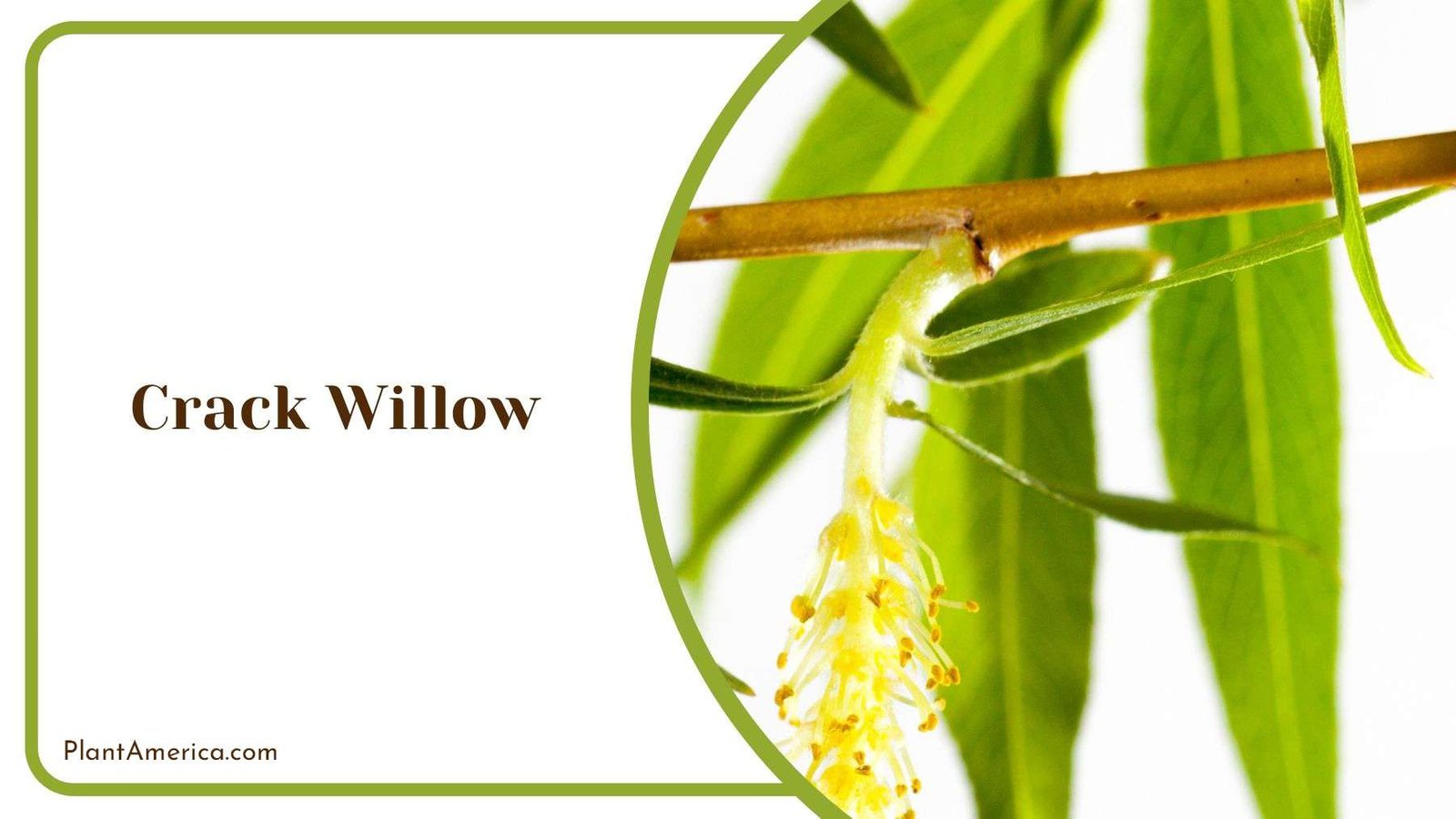
Known by its common name crack willow, Salix fragilis derives this moniker from its propensity to develop deeply cracked and splitting bark as it ages.
These fast-growing trees are well adapted to thrive in wet environments, commonly found on steam banks, floodplains, and other low-lying areas with consistently high water tables or seasonal flooding.
Crack willows produce some of the strongest, most flexible wood within the Salix genus, making it a historically valuable material for uses such as lumber, poles, tool handles, hoops and other bendable applications.
The crack willow displays stout branches that frequently take on a zigzag shape. In maturity, the gray-brown bark becomes deeply furrowed vertically and develops flaky, ragged edges suggestive of its fragile common name.
Dangling broken twigs contribute further to the tree’s somewhat unkempt exterior appearance as aging progresses. Like most willows, yellow catkins emerge ahead of the leaves in early spring, dangling prominently from twig ends swollen with imminent foliage.
The leaves that follow are narrow and lance-shaped, tapering to pointed tips. Bright green atop with paler undersides due to fine silvery hairs, the leaves slowly darken as summer wears on.
Come fall, the leaves abruptly transform to golden yellow before detaching and littering the ground below.
Though capable of towering over 100 feet tall when mature, the crack willow has among the shortest lifespans at only 80 to 100 years on average.
Nonetheless, its rapid growth rate averaging three to four feet per year allows it to outpace many competing trees. Adapted to flourish in wet environments, crack willows have become emblematic inhabitants of streamsides globally.
6. Yellow Willow

- Growing season: Spring, Summer.
- Leaf shape: Long, Narrow.
- Specific needs: Moist soil, Partial shade.
- Common pest: Scale insects, Cankerworms.
The yellow willow (salix alba ‘Chrysocoma’) features bright yellowish green leaves that emerge a vivid gold color in early spring.
These medium-sized trees grow in a narrow, pyramidal habit before developing graceful arching branches and a rounded crown with maturity.
Yellow willows perform best when planted in wet, low-lying areas like streambanks and flood zones where their soil remains constantly moist. The golden hues of the new spring growth stand out against the background.
In spring, slender yellow catkins appear before the leaves. As the egg-shaped leaves emerge, they display an intense golden-yellow color that slowly fades to a yellowish-green tone by mid-summer.
The leaves range from two to five inches in length with finely-toothed edges.
Come autumn, the golden willow turns brilliant shades of yellow, orange, and red before the leaves drop.
The bark is brown and furrowed vertically with age, offering winter interest. Mature trees of this cultivar can reach heights over 40 feet tall with a wide-spreading, vase-shaped crown.
Densely tufted yellow willows provide shelter and food for birds and pollinators. They are fast growers, averaging two to three feet per year. The flexible branches were traditionally harvested for weaving baskets and crafts.
The golden foliage of yellow willows enhances wetland areas, brightening shade gardens and naturalizing beautifully along the banks of ponds, streams, and other wet locations.
Their color and form create a striking visual effect, particularly when reflected in still water.
7. Black Willow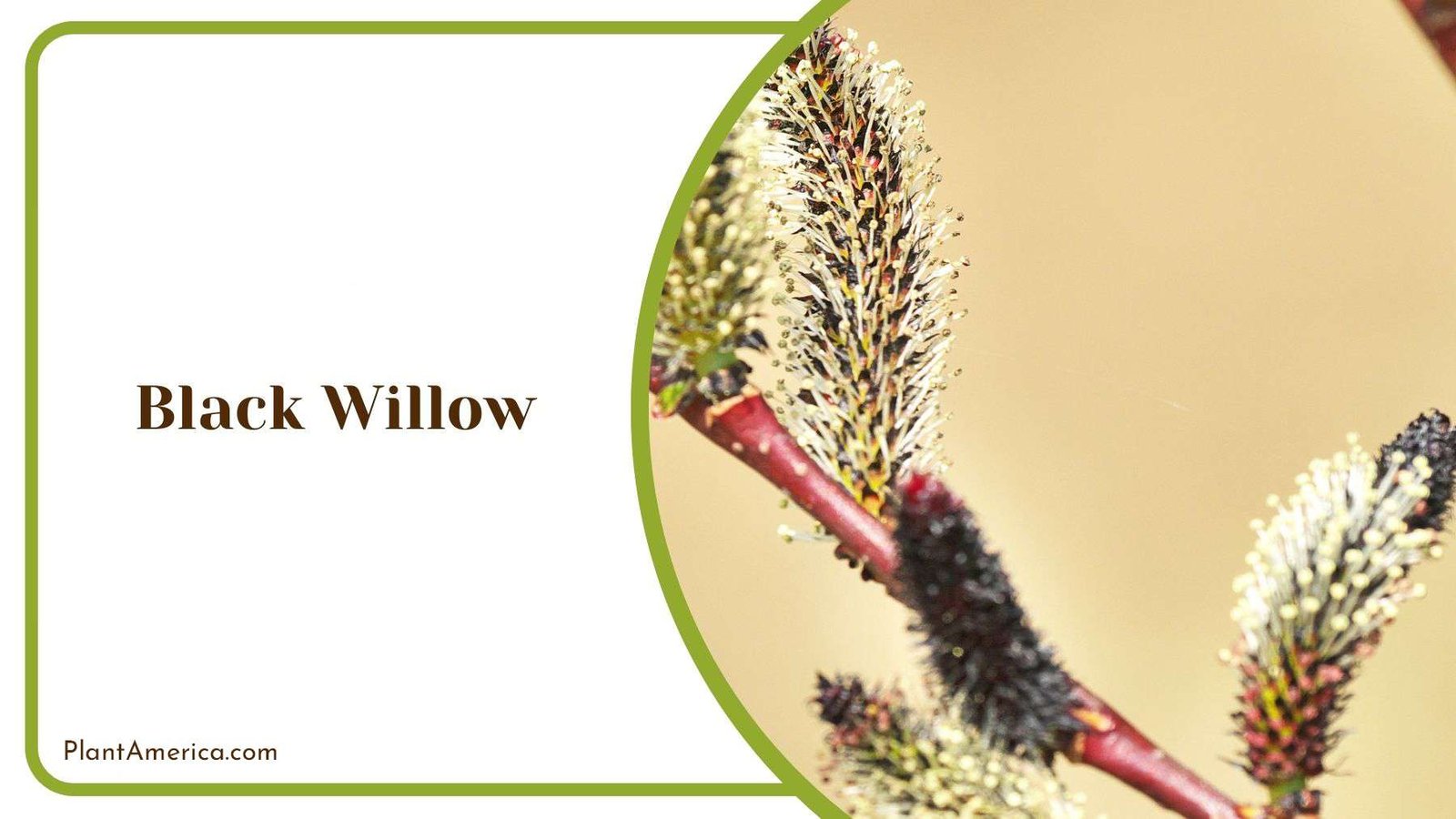
- Growing season: Spring, Summer.
- Leaf shape: Long, Narrow.
- Specific needs: Moist soil, Full sunlight.
- Common pest: Leaf beetles, Willow sawflies.
The black willow (salix nigra) derives its common name from its darkly colored foliage and branches that turn nearly black with age.
Black willows grow rapidly into medium-sized trees, typically favoring wet environments like streambanks, floodplains, and other low-lying areas that remain moist.
These willows have stout branches with furrowed brownish bark that darkens almost to black as they mature. In spring, golden yellow catkins appear before the leaves emerge. The lance-shaped leaves range from three to six inches long, olive green on top and pale underneath. As they age, the leaves take on a bluish cast.
Come fall, the leaves turn yellow before dropping. Black willows can reach heights up to 100 feet tall with wide-spreading crowns when mature.
Their fast growth rate and adaptability have made black willows popular for reforestation projects. The flexible twigs were traditionally used for weaving baskets and crafts.
Black willows provide important habitat and food for various wildlife species. The trees stabilize stream banks with deep, tangled root systems that take up excess water, helping prevent flooding. However, the roots can damage pipes and infrastructure.
Despite some invasiveness concerns, black willows thrive in many environments where their fast growth potentially offsets carbon emissions.
Though short-lived with typically 80 to 100 years of life, black willows adapt readily to poor soils and persist where other species struggle. Their foliage and form impart a natural look to wetland restorations, boosting biodiversity.
8. Arctic Willow
- Growing season: Spring, Summer.
- Leaf shape: Small, Rounded.
- Specific needs: Well-drained soil, Acidic soil.
- Common pest: Aphids, Spider mites.
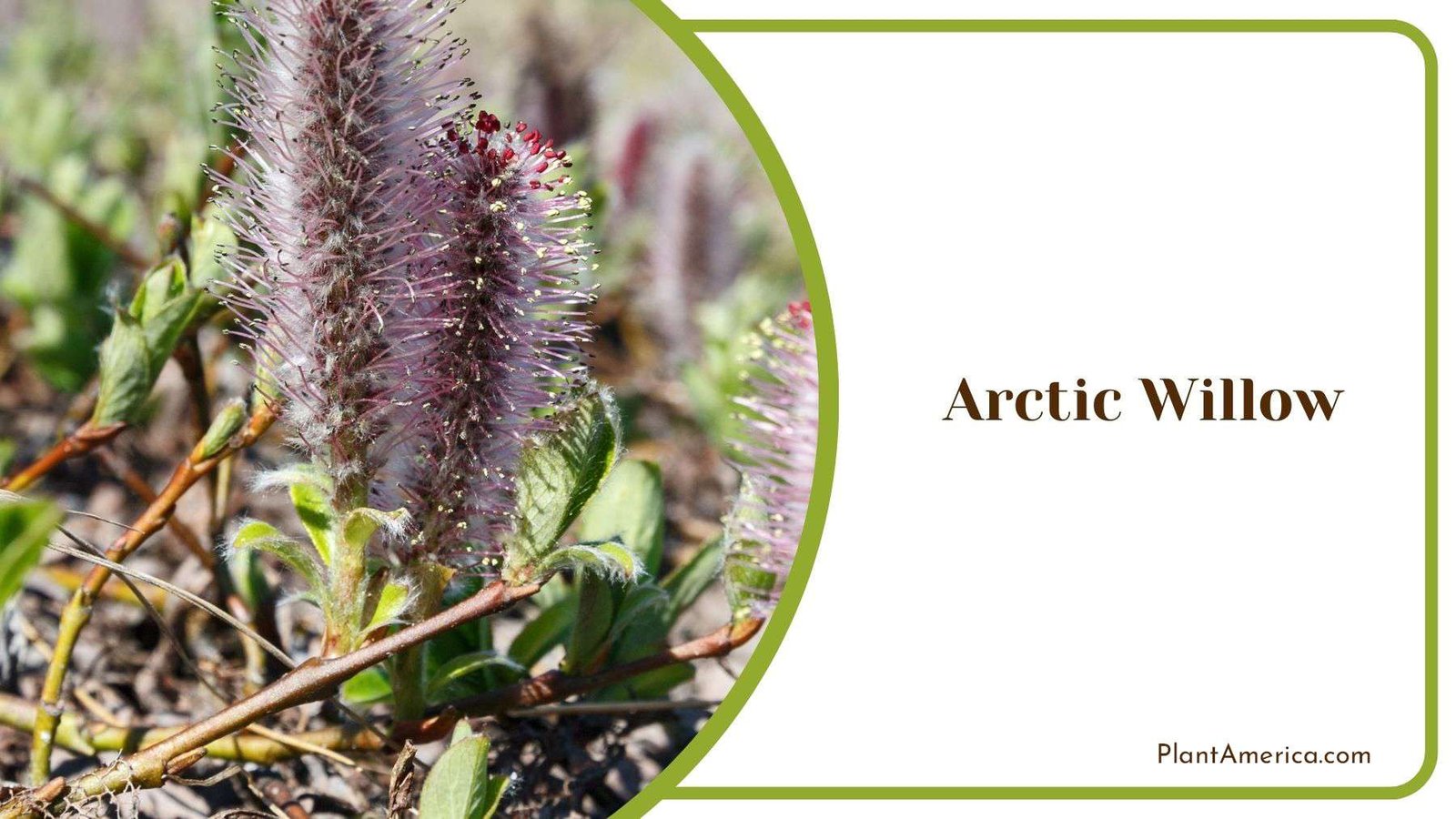
The Arctic willow (salix arctica) is naturally found growing in frigid, windy conditions throughout the Arctic region.
These petite, dwarf willow shrubs only reach heights between one to two feet and form dense mats of foliage.
In their native habitat, arctic willows are evergreen perennials, retaining their leaves year-round. However, in warmer climates, they behave as deciduous shrubs, dropping their leaves in the fall.
Their ability to survive and flourish in harsh, inhospitable conditions makes arctic willows popular for rock gardens, alpine landscapes, and tundra simulations.
The stems of arctic willows are reddish brown in color and densely tangled. The oval leaves are dark green above with dense silvery hairs underneath. Arctic willows emerge slowly from winter dormancy, flowering in late spring with dangling catkins.
These cold-hardy shrubs thrive in nutrient-poor, dry conditions with full sun exposure.
The intricate mats formed by their trailing stems help stabilize soil and prevent erosion. Though slow-growing, arctic willows are long-lived, potentially reaching 200 to 300 years of age.
The dense foliage and creeping habit of arctic willows make them excellent groundcovers for covering large areas.
Their dwarf size, silvery gray foliage, and ability to withstand cold temperatures and nutrient deficiencies impart an alpine charm to rock gardens and tundra-themed landscapes. Arctic willows epitomize toughness and resilience, belying their diminutive stature.
9. Golden Weeping Willow
- Growing season: Fall, Summer.
- Leaf shape: Long, Narrow.
- Specific needs: Consistent moisture, Full sunlight.
- Common pest: Spider mites, Scale insects.
The golden weeping willow (Salix × sepulchral ‘Chrysocoma’) features the graceful weeping habit of willow trees combined with bright yellow foliage that emerges a vibrant golden yellow color in early spring.
As these medium-sized trees mature, they develop a typical vase-shaped crown reaching 30 to 40 feet tall.
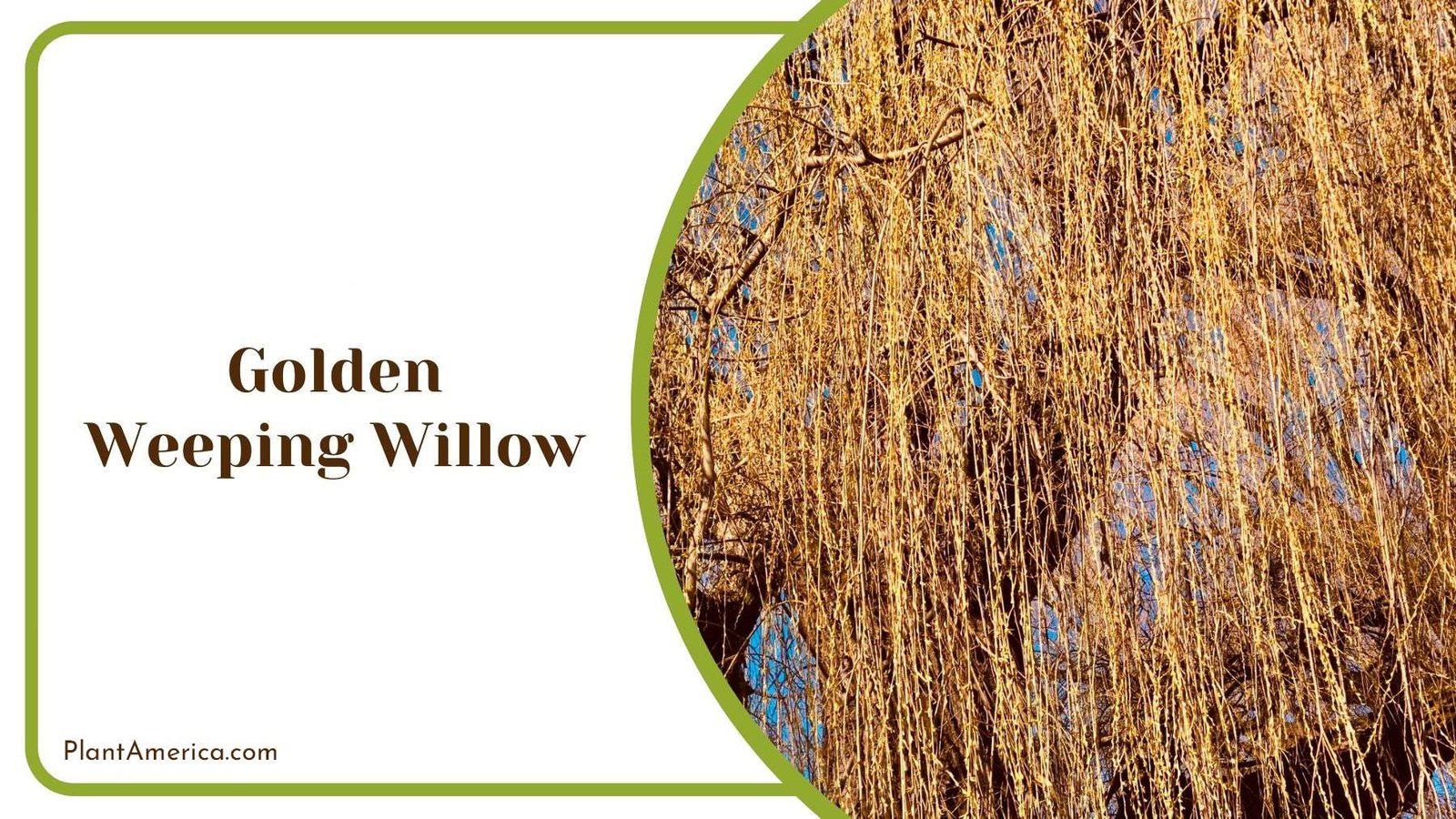
Golden weeping willows perform best when planted in areas with constantly moist soils and high levels of available moisture, such as floodplains, streambanks, and other low-lying locations. Their arching branches droop gracefully toward the ground, draping the soil.
In spring, pale yellow catkins emerge before the leaves. The egg-shaped leaves appear next, coated in a dense golden fuzz that slowly fades to a yellowish-green tone by mid-summer. The new growth stands out against the branches and any background.
By fall, the golden weeping willow turns brilliant shades of red, orange, and yellow before dropping its leaves.
The bark is brown and furrowed vertically. These trees’ pendulous branches and colorful fall foliage lend a weeping appearance that contributes to their common name.
Golden weeping willows provide shelter and food for birds and pollinators. Though comparatively slower-growing than other willow types, averaging two to three feet yearly, their unique golden foliage brightens wetland areas and naturalizes beautifully along pond and stream edges.
The weeping form and brilliant seasonal colors impart a striking visual effect, particularly when reflected in still water.
The golden weeping willow is prized for its golden hues, enhancing wet locations during early spring and complementing shade or moisture-loving plants with its naturalistic form and seasonal interest.
10. Dwarf Willow
- Growing season: Spring, Summer.
- Leaf shape: Long, Narrow.
- Specific needs: Well-drained soils, Full sunlight.
- Common pest: Aphids, Leaf beetles.
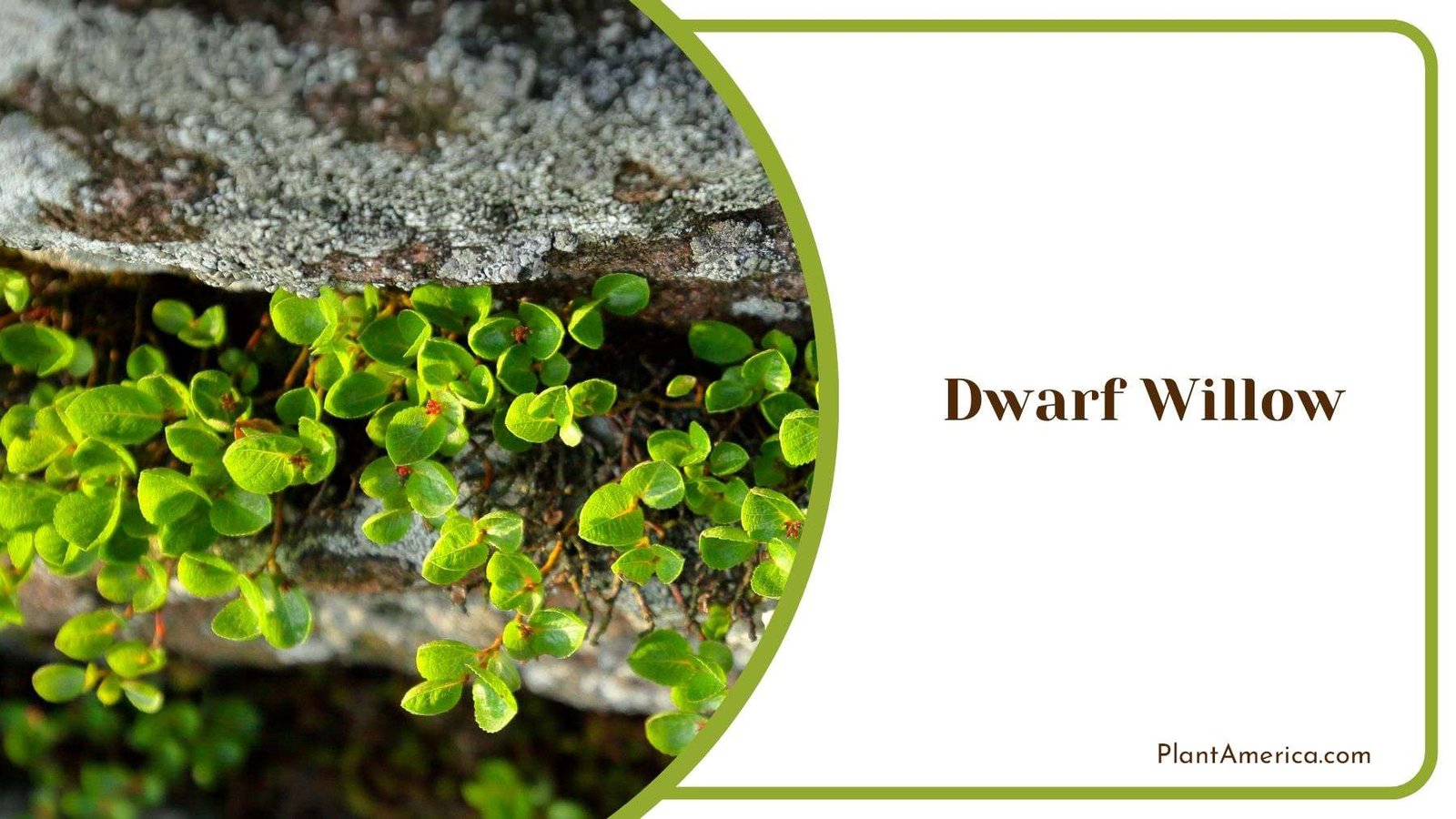
Dwarf willows describe several low-growing shrub willow species that remain under 10 feet tall at maturity.
They exhibit the same graceful, weeping branch habit as larger willow trees on a more compact scale.
Popular dwarf willow varieties include woolly (salix lanata) and Arctic dwarf willow (salix arctica ‘Nana’).
These petite specimens are ideal for creating a weeping effect in tight spaces like rock gardens, hedgerows, and other small landscapes where space is limited.
Dwarf willows thrive in wet, boggy conditions and poorly-drained soil. They have fine, pliable stems that radiate from the crown in weeping tangles.
The leaves vary depending on the variety but are typically oval-shaped with serrated edges.
In spring, dangling yellow catkins bloom before the leaves emerge. Many dwarf willows sucker profusely, spreading via underground stems to form dense thickets.
Their miniature scale and weeping form impart a sense of tranquility and charm to the garden.
The compact size and graceful weeping habit of dwarf willows make these shrubs perfect for creating a naturalistic accent in small, contained spaces.
Though slow-growing, they eventually form bushes under three feet tall with a spreading diameter between three to six feet wide.
Due to their low maintenance and adaptability to neglect, dwarf willows are suitable for naturalizing along ponds and streams.
Their fine, trailing branches mingle beautifully with other moisture-loving perennials in bog gardens and water features. The weeping effect imparted by these petite specimens brings a sense of calm and serenity to the landscape.
11. Golden Willow

- Growing season: Spring, Summer.
- Leaf shape: Long, Narrow.
- Specific needs: Moist soil, Full sunlight.
- Common pest: Spider mites, Willow sawfly.
A unique cultivar within the Salix alba species, Salix alba ‘Vitellina’ is best known as the golden willow for its vivid springtime foliage.
In early spring before leaves unfurl, long slender catkins appear golden yellow hanging from emerging stems. As new growth begins, an intense golden-yellow color overtakes the emerging egg-shaped leaves, standing out brilliantly against any background.
Gradually darkening to a lighter golden tone through summer, the leaves mature to two to five inches in length with finely serrated edges.
During youth, the golden willow develops a pyramidal to rounded shape. Upon maturity, however, arching branches spread outward, carrying peeling yellow bark flaking in small curled sections, which is visually appealing even during dormant months.
Thriving luxuriantly along wetlands, the golden willow ideally grows near streams, ponds, or low-lying saturated soils where roots remain submerged.
There, its vibrant spring and fall foliage colors contrast dramatically against reflective water surfaces. As autumn arrives, leaves transform to shades of yellow, orange and red in a vibrant display before naturally falling.
Attaining heights over 50 feet tall in optimum conditions, the golden willow cultivar offers reliable moisture-loving characteristics, making it a versatile addition to naturalized wetland restorations or designed landscapes.
Its peeling bark and arching silhouette complement water features while radiant new growth signals the arrival of warmer seasons each repetitive cycle.
Its adaptable nature and decorative attributes ensure the golden willow remains a popular streamside beauty.
12. Peachleaf Willow
- Growing season: Spring, Summer.
- Leaf shape: Oblong, Pointed tip.
- Specific needs: Moist soil, Full sunlight.
- Common pest: Spider mites, Scale insects.
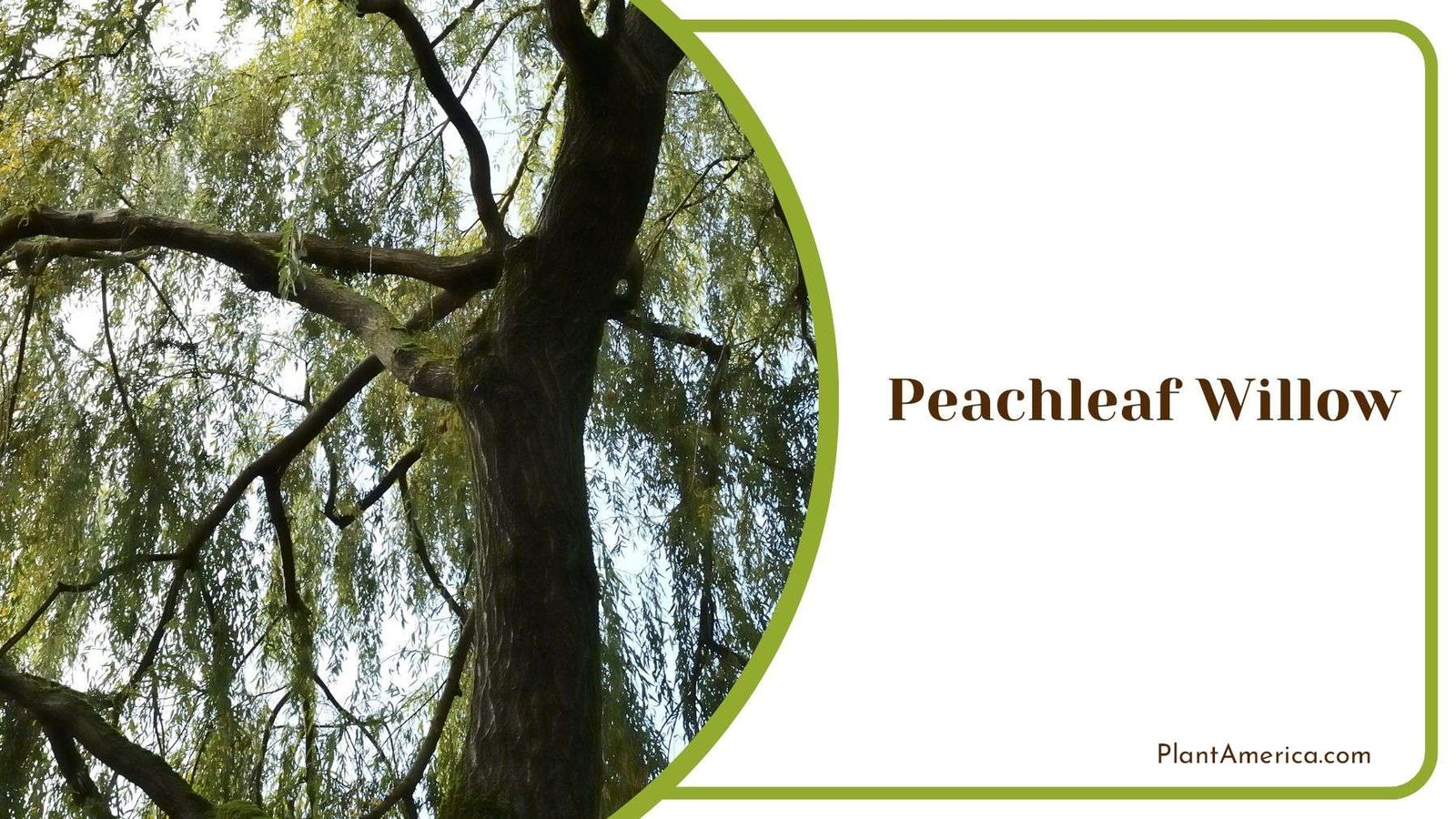
Deriving its common name from the peach-like appearance of its oval-shaped leaves, Salix amygdaloides is commonly called the peachleaf willow.
As these medium-sized trees mature, they form a characteristically broad and rounded canopy shape. Distinctively, the trunks and older branches develop long, ragged strips of shredded bark that curl outward in texture — an appealing aesthetic attribute.
While performing optimally along waterways with constant soil moisture, the peachleaf willow demonstrates remarkable hardiness by also thriving in much drier upland areas with nutrient-poor soils.
This adaptability renders it suitable for larger landscaped settings beyond just wetlands.
In early spring before new leaves, slender yellow catkins emerge prominently from the ends of swelling stems.
The oval leaves that follow range in size from two to four inches, dark green above and paler beneath where fine silvery hairs cover the surface. Throughout summer, they become glossy green tops.
Changing dramatically by autumn, the leaves transform into bright yellows before detaching to enrich surrounding soils. Mature specimens can tower over 80 feet tall, defined by wide-spreading branches holding curved bark strips with age.
Beyond lovely foliage and form, the peachleaf willow cultivates important habitats by providing nesting spots, seeds and pollen sources for various birds and pollinators. Although stabilizing streambanks naturally, their profuse root systems can potentially damage nearby infrastructure if left unchecked. Overall, the adaptable and aesthetically pleasing peachleaf willow has enduring landscape value.
13. Bebb Willow

- Growing season: Spring, Summer.
- Leaf shape: Long, Narrow.
- Specific needs: Moist soil, Full sunlight.
- Common pest: Spider mites, Scale insects.
The Bebb willow (Salix lesbian) derives its common name from American botanist William Bebb, who first formally described the species. These medium-sized trees typically grow in a narrow, pyramidal shape when young before developing arching branches and a rounded crown at maturity.
Bebb willows perform best when planted in wet soils where they gain constant access to moisture. However, once established, they can also tolerate drier conditions. Their bright yellow inner bark has made Bebb willows popular for crafts and containers.
In spring, dangling yellow catkins emerge before the oval leaves, which range from two to four inches in length. The leaves are dark green above and pale underneath with fine hairs. As they mature, the leaves take on a bluish cast.
Come fall, the leaves turn golden yellow before dropping. The bark is gray-brown and furrowed vertically with shallow ridges, offering winter interest. Mature trees of this species reach heights of around 40 to 60 feet tall with a broad crown of arching branches.
In addition to its utilitarian and aesthetic value, the Bebb willow provides habitat and food for birds and pollinators. The roots help stabilize streams and lake banks naturally.
14. Coyote Willow
- Growing season: Spring, Summer.
- Leaf shape: Pointed, Narrow.
- Specific needs: Moist soil, Full sunlight.
- Common pest: Spider mites, Scale insects.
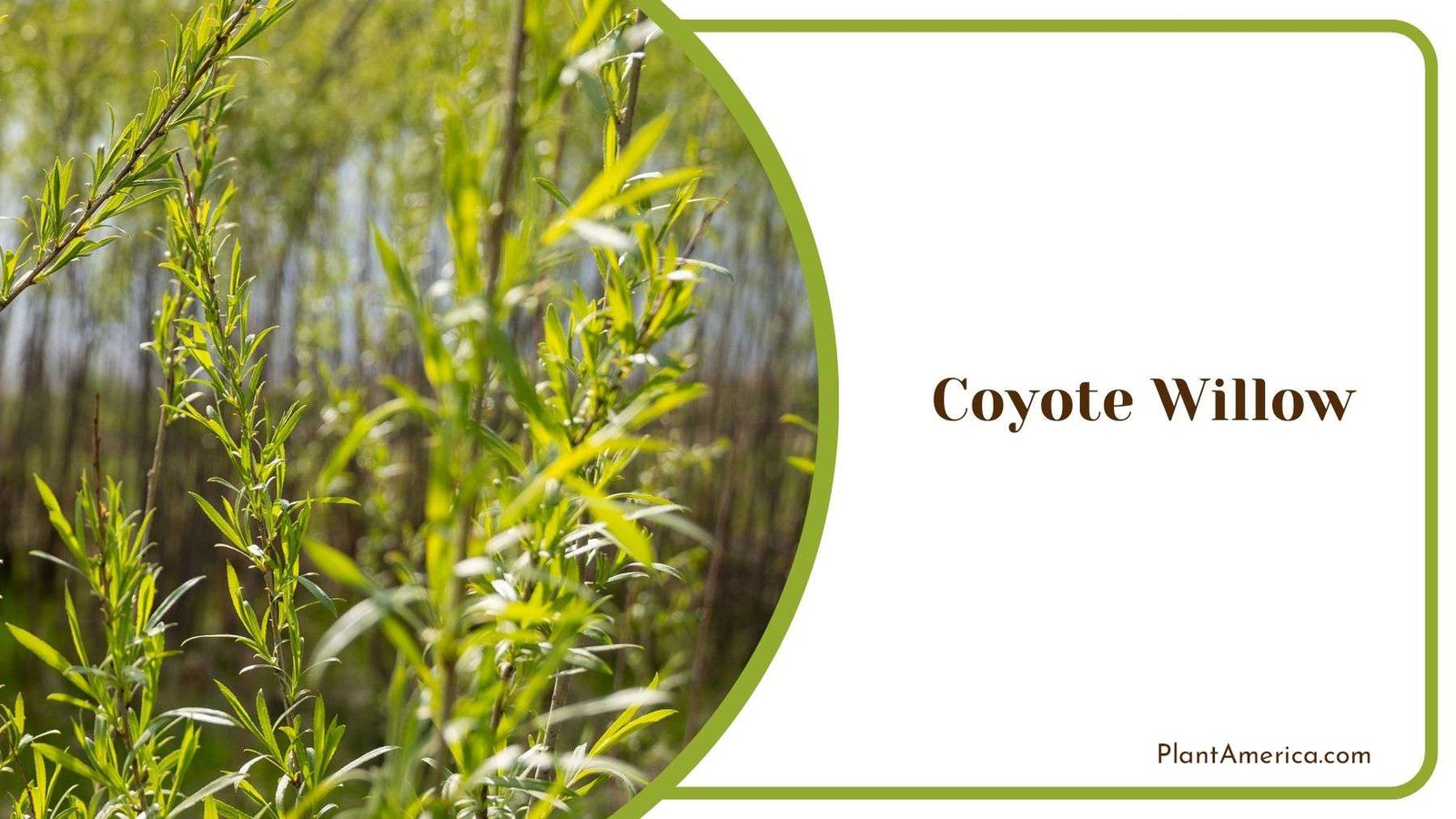
The coyote willow (salix exigua) derives its common name from early American settlers who observed coyotes often using the shelter of coyote willow thickets for resting and hiding from predators.
These medium-sized trees typically grow into a broad, rounded shape at maturity, developing arching branches with age.
Coyote willows can tolerate various conditions, from reliably moist to somewhat dry. They perform best in areas with consistently moist soil though they do not require standing water.
In spring, dangling yellow catkins emerge before the narrow, lance-shaped leaves ranging from two to three inches. The leaves are green above, with two silvery-white bands running lengthwise on the underside.
Come fall, the leaves turn golden yellow before dropping. The bark is gray or brownish-yellow, becoming furrowed and scaly with age. Mature coyote willows reach heights of around 30 to 40 feet tall with an umbrella-shaped crown up to 50 feet wide.
15. Purple Willow
- Growing season: Spring, Summer.
- Leaf shape: Long, Narrow.
- Specific needs: Moist soil, Full sunlight.
- Common pest: Spider mites, Willow sawfly.
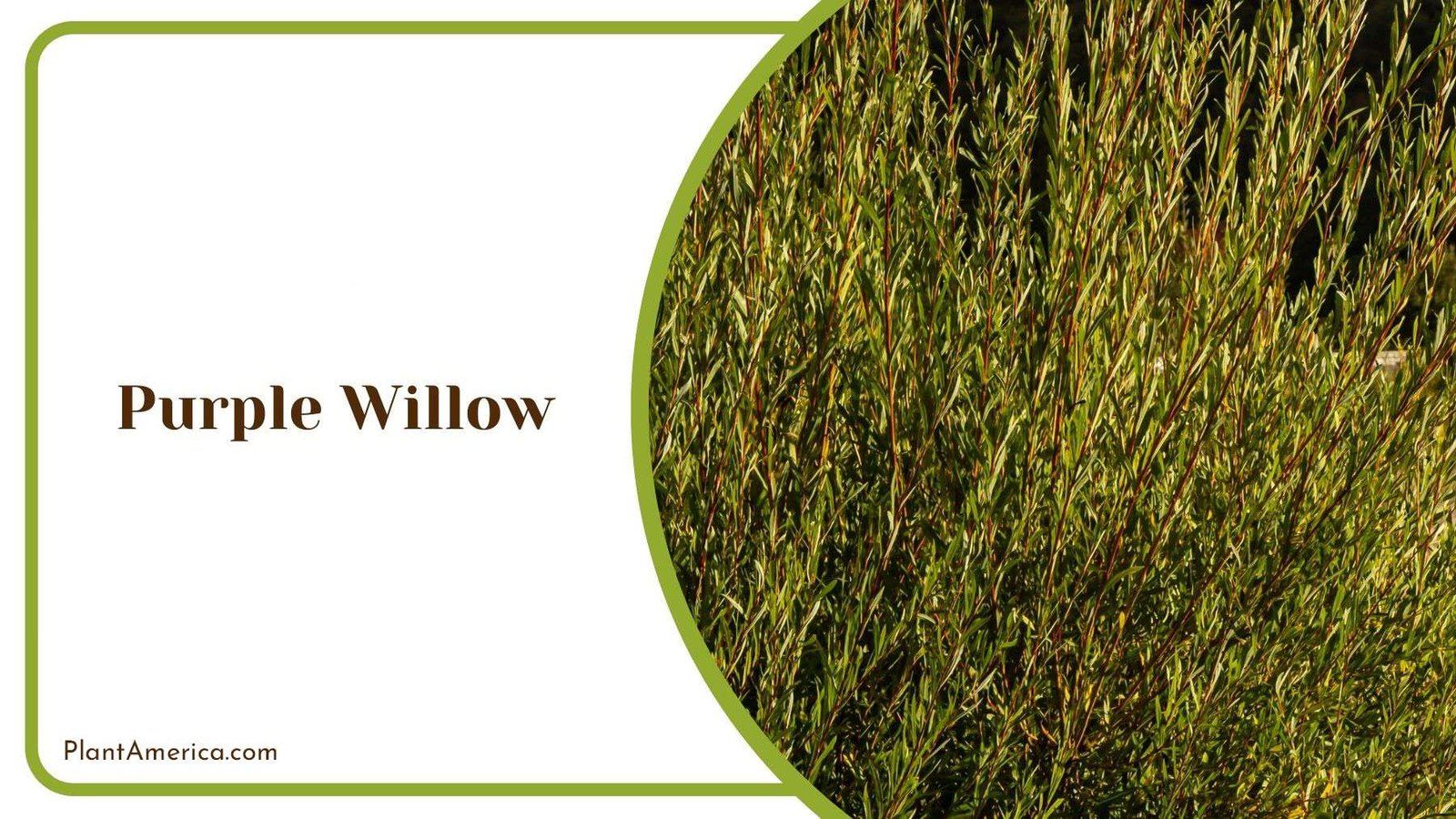
The purple willow (salix purpurea) derives its common name from the slender purple-tinged shoots that emerge in spring alongside its green leaves.
As purple willows age, their bark develops an attractive gray color tinged with purple hues.
These medium-sized trees typically grow in an upright, oval shape when young before developing arching branches and a rounded crown at maturity.
Purple willows perform best when planted in wet soils that remain consistently moist, enabling the trees to showcase their colorful spring display to their fullest advantage.
In early spring, before the leaves emerge, the young shoots appear tinged with purple or red colors that slowly fade as the leaves develop. The oval-shaped leaves with serrated edges range from two to five inches in length.
Conclusion
Many gorgeous types of willow trees are worth considering for your landscape, and here are some options to help kick things off:
- The yellow willow (salix alba ‘Chrysocoma’) features bright yellowish green leaves that emerge a vivid gold color in early spring.
- Pussy willow (salix caprea) derives its common name from its furry flower buds that emerge in early spring before the leaves.
- The white willow (Salix alba) derives its name from the silvery white fuzz that coats the undersides of its oval-shaped leaves.
No matter which variety piques your interest, planting a willow tree means adding graceful movement, inviting shade and a sense of peacefulness to your yard or garden. Whether used as solitary specimens or within a loose grove, willows can elevate any space they inhabit and provide sanctuary for birds, bees, and our souls.