Raised rows vs flat rows are one of the most common discussions among gardeners. Each method has its own advantages as well as disadvantages, as raised row gardening is very popular and can be an interesting project to take on.

When you make raised rows in a garden, you’ll have to make sure they are well-built raised beds.
In this article, we will explore the differences between the two gardening techniques so you can make informed choices as to which one suits you best.
Comparison Table
| Features | Flat Rows | Raised Rows |
| Soil | No need for additional soil | Soil warms up faster |
| Cost | Cost-effective | Can be a little costly |
| Water | Not water effective | Efficient water system |
| Work | Less work needed | Requires additional work |
What the Difference Between Raised Rows and Flat Rows
A raised row is exactly what it sounds like – a row of plant materials raised from the garden soil level. The raised row is higher than the ground surrounding it. A flat row is also how it sounds like—a row of plants that is flat on the ground.
What are Flat Rows Best For?
Flat rows can be used for any type of gardening layout. The flat rows method involves less effort, lower cost, and is generally easy to start and finish as a project. This technique can be used for ornamental plants, vegetables, and crops.
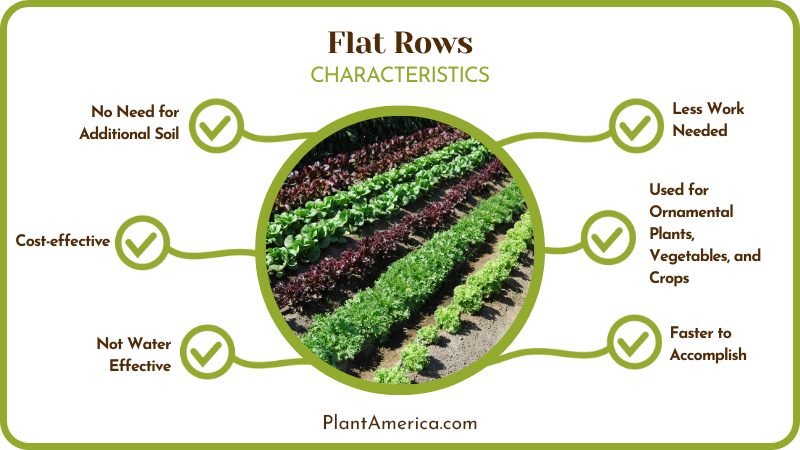
Flat rows are typically made by new gardeners who have yet to fully master the art. This is because this method is faster to accomplish, with an instant visual appeal. This is even more obvious when flowering plants and ornamental bushes are placed in single flat rows.
What are Raised Rows Best For?
Raised row gardening provides better drainage, utilizes a better watering system, and lessens the chances of weed infestation and soil contamination. This method is better suited for gardeners who prefer to raise and harvest crops. Advanced techniques such as row planting can be done in single rows or through wide rows in conjunction with raised rows.
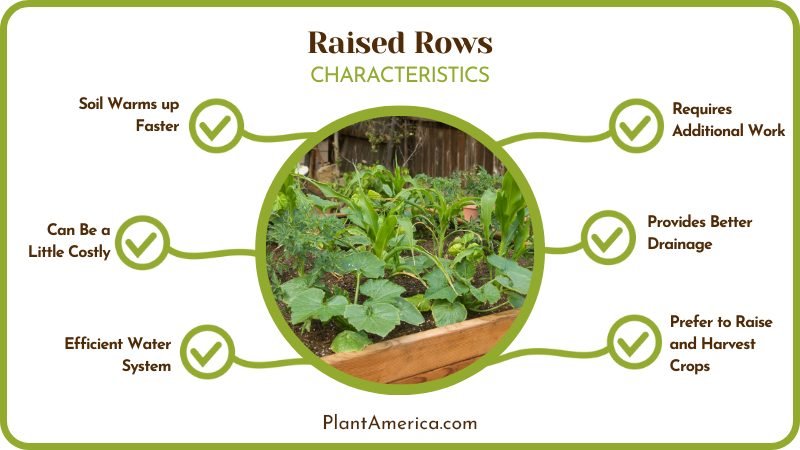
Raised rows are often made by more skilled gardeners. Since the technique requires more effort, gardeners often rely on experience to plan and implement the raised row design for the garden.
Raised rows make excellent garden structures for crops, especially big plants such as corn, cucumbers, squash, and carrots. These types of plants have long vines and extensive roots that need adequate space to grow freely.