
Mealybugs on pine trees. Are they turning your majestic pines into a weak, withering mess? If yes, note that these tiny pests can damage the trees faster than you think. Let’s explore how to identify, fight, and prevent these insects from taking over your beautiful pine trees.
Why Are There Mealybugs on Pine Trees? Causes of Infestation
There are mealybugs on pine trees due to a combination of environmental and biological factors. Favorable climatic conditions, especially humid environments, are breeding grounds for these pests. Additionally, overfertilization of trees can make them more susceptible. Finally, the lack of natural predators can also lead to mealybug attacks.
– Warm and Humid Environments
Mealybugs thrive in warm and humid conditions. Much like many other pests, they are cold-blooded creatures. This means their metabolic activities and growth rates are influenced by the surrounding temperature.
Additionally, high humidity provides the perfect environment for egg laying. Female mealybugs lay their eggs in a waxy, cotton-like substance, which keeps them protected. A humid environment ensures that this protective layer doesn’t dry out, enabling the eggs to hatch successfully.
– Overfertilization of Trees: The Allure of Lush Green Pines
Fertilizers are meant to boost the health of plants and trees, providing them with essential nutrients. However, moderation is key. Over Fertilizing, especially with nitrogen-rich fertilizers, can result in pine trees producing soft, lush new growth. This type of growth is particularly appetizing to mealybugs.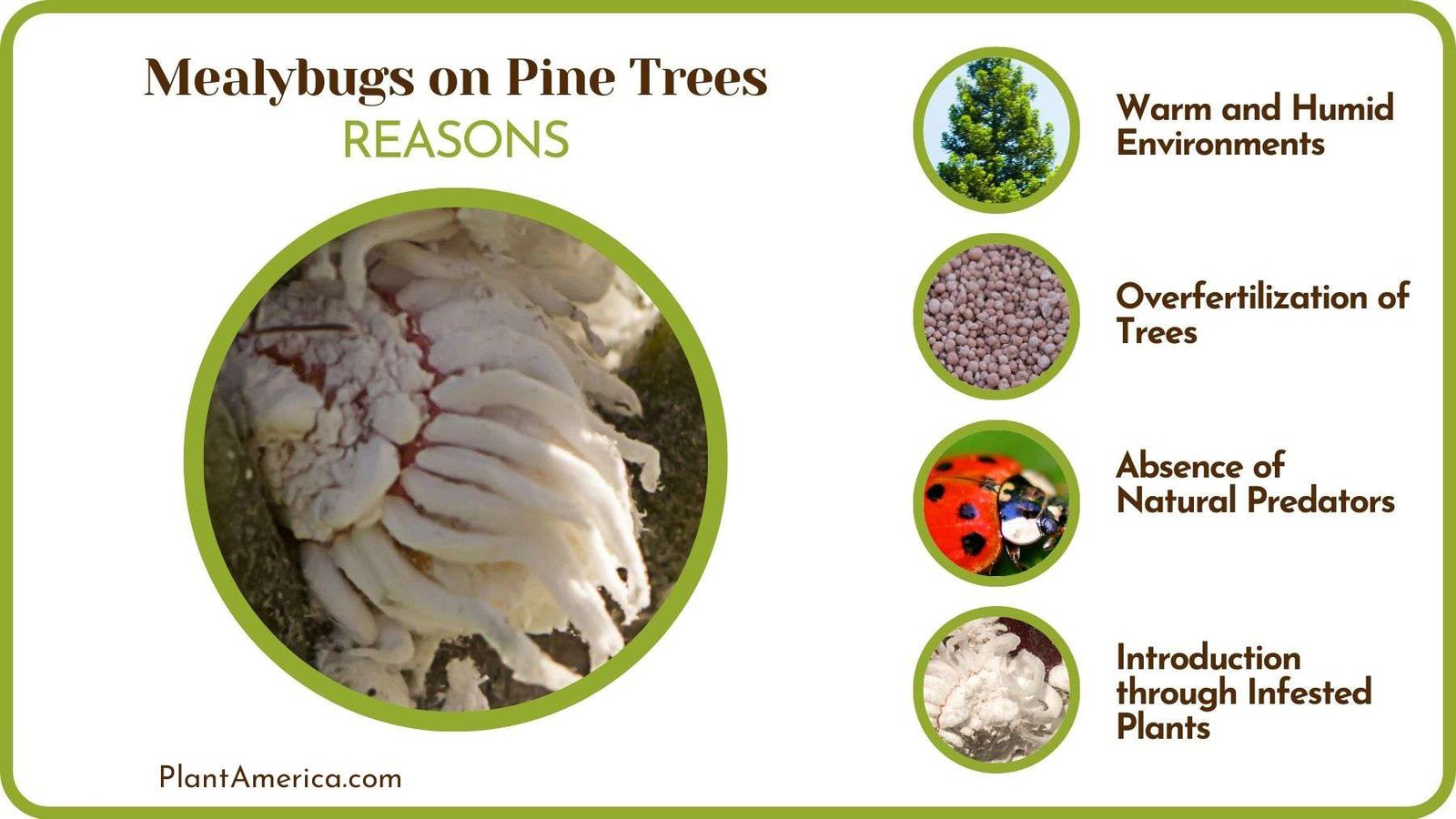
– Absence of Natural Predators: A Skewed Balance in the Ecosystem
Nature has its own way of maintaining balance. For every harmful pest, there’s often a predator. In the case of mealybugs, their natural enemies include ladybugs, lacewings, and parasitic wasps. These predators keep the mealybug population in check by feeding on them.
However, if there’s a decline in the number of these natural predators in a particular area, it can lead to an unchecked growth of mealybug populations. Reasons for a decline in predator numbers can vary – it could be due to the use of broad-spectrum pesticides, which not only kill the target pests but also beneficial insects, or it could be because of changes in the local ecosystem that makes it inhospitable for these predators.
In the absence of their natural enemies, mealybugs can proliferate without any significant challenges, leading to infestations that are difficult to manage.
– Introduction through Infested Plants: Unknowingly Welcoming the Pests
Mealybugs are sneaky. They hide in the crevices, under the leaves, or even in the soil. If a plant is infested, and it’s introduced to a new environment, it can lead to the spread of mealybugs. Pine trees, being large, offer numerous hiding spots for these pests, making it easier for them to establish themselves.
So, while the initial intent might have been to beautify the garden or landscape with a new plant, it might inadvertently lead to a mealybug infestation in other pine trees and plants.
What To Do When You Spot Mealybugs on Pine Trees?
When you spot mealybugs on pine trees, the first thing to do is control their movements. After this, implement mechanical control, use horticultural oils, and consider biological control with natural predators. Citrus peel spray and chemical control may be required for severe infestations.
– Control the Movement: Your First Step
Mealybugs are sneaky and can quickly move from one plant to another. Controlling their movement is crucial to prevent them from infesting other garden areas, especially if you have white pine or different susceptible varieties. You can regulate mealybug activity in three ways:
- Quarantine potted-infested trees: If you spot mealybugs on one or more of your pine trees, you should immediately isolate them from the rest of the garden. It’ll prevent the bugs from migrating to other healthy plants.
- Monitor nearby plants: Keep an eye on the plants surrounding the infested area. Mealybugs can easily crawl or be carried by the wind to neighboring trees.
- Use Petroleum jelly: Mealybugs don’t like to cross petroleum jelly. So, add some around the pine.
- Dust cinnamon powder: If you sprinkle the cinnamon powder around your pine tree, mealybugs won’t go near such plants. It is because these pests hate the cinnamon scent. However, they will approach the trees when the wind removes the powder.
- Keep your garden tools clean: Tools can be a carrier for mealybugs. Always clean them thoroughly with soap and water or a solution containing isopropyl alcohol after working on an infested tree.
Doing these things will restrict the movement of mealybugs, making it easier for you to remove them.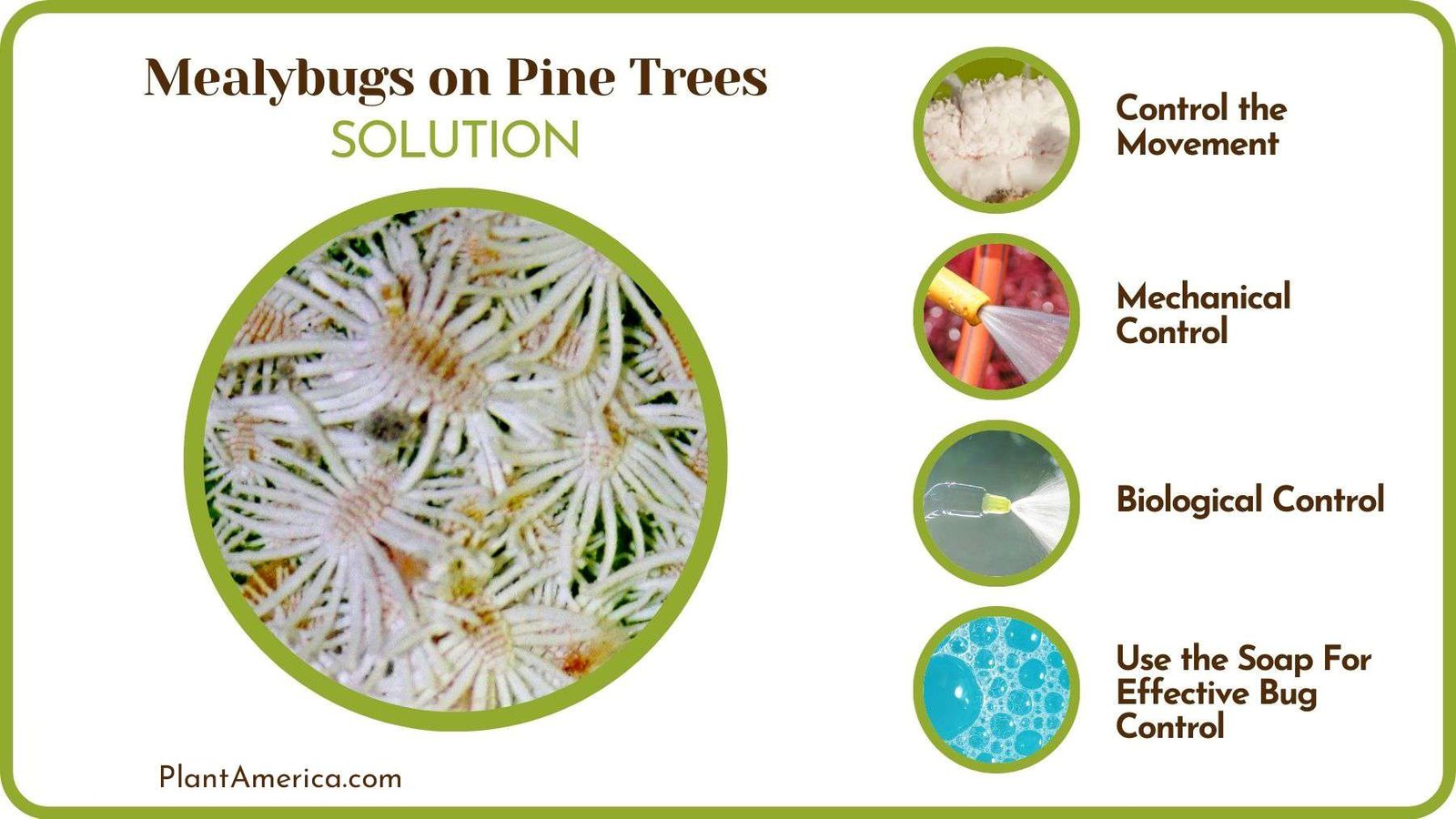
– Mechanical Control: Using the Potent Forces
Mechanical control is all about physically removing or killing the mealybugs. A direct, hands-on method can be remarkably effective, particularly for light to moderate infestations.
- Hand-Picking: It might sound surprising, but manually removing the mealybugs can be a practical way to manage the problem. You can wear gloves and remove the insects by hand, especially if you spot them on the pine needle or branches.
- Water Spraying: A strong blast of water from a hose can dislodge mealybugs from their hiding spots. Wet bugs can’t climb back on the pine, so your trees will be safe.
- Using rubbing alcohol: Now, you might be wondering, what kills mealybugs instantly? A solution of rubbing/isopropyl alcohol and water can be your answer. Mixing equal parts of alcohol and water and spraying it on the infested areas can be a highly effective way to kill mealybugs on contact.
- Insecticidal Soaps: Insect-killing soaps are specially formulated to break down the waxy coating on mealybugs. It leads to dehydration and eventually kills them. You can find these soaps at garden stores or at home.
- Vacuuming the Bugs: A small vacuum cleaner can suck up the mealybugs from the infested areas. It can be an unconventional yet effective method for controlling mealybugs, especially on larger trees.
– Biological Control: Get Insects To Kill Insects
When it comes to tackling mealybugs on trees, nature itself offers a fantastic solution. The idea of biological control is to use natural enemies of mealybugs. These are:
- Ladybugs
- Lacewings
- Predatory beetles
Understanding and encouraging these predators in your garden can create an environment where these helpful insects thrive. They naturally reduce the mealybug population without the need for chemicals or labor-intensive methods.
There are two ways you can have beneficial insects in your garden:
- You can introduce these predators manually from garden centers.
- You can create a garden that attracts them naturally. It involves growing flower plants and ensuring the proper temperatures for them. However, getting them this way will take months, so we suggest you purchase predatory insects from a gardening store.
– Use the Soap For Effective Bug Control
In the battle against mealybugs, soap can be your unexpected ally. Many people ask, will dish soap kill mealybugs? And the surprising answer is yes, it can! A mixture of dish soap sprayed onto the affected areas can be enough to get rid of these pests. It breaks down their waxy outer layer, leading to dehydration and death.
If you prefer a commercial option, insecticidal or pesticide soap is designed for this purpose and is equally effective. Remember- regular monitoring and reapplication may be necessary until the problem is entirely under control. So whether you make your solution or buy insect-killing soap, the power to control these garden pests is within your reach.
– Try Horticultural Oil (But Choose the Right One)
Horticultural oil is a well-known method for managing various garden pests, and it’s a fantastic option for those wondering how to get rid of mealybugs outside. These oils are designed to suffocate and kill insects without harming plants or trees.
Using horticultural oil is a relatively straightforward process. You must follow the package instructions to mix the oil with water. Then, spray this blend on the affected sections of the plant. We suggest you use neem seed oil, which is highly effective against pests like mealybugs.
You can get:
- Bonide neem oil concentrate.
- Southern ag triple action neem oil.
- Natria neem oil.
- Dyna-gro pure neem oil.
- Harris neem oil, 100 percent cold pressed and unrefined for plant spray
It’s essential to coat the insects thoroughly so they are entirely covered with the oil. It might require several applications, especially in more severe infestations. Moreover, horticultural oil is often derived from natural sources. Therefore, it doesn’t leave harmful residues that can affect other organisms in the garden.
Furthermore, it’s effective against mealybugs and other pests like scale insects, spider mites, and pine sawfly nuisances. The oils coat the insects and their eggs, effectively suffocating them and preventing further infestation.
It’s essential to exercise caution when utilizing horticultural oil, particularly during periods of intense heat. It can sometimes cause damage to plants in summer if not used correctly.
– Go For Citrus Peel Spray
Citrus peel spray is a homemade insecticide and repellent made from the peels of citrus fruits. The oils in citrus peels contain toxic compounds to many insects but are generally considered safe for humans and pets. Making citrus peel spray is simple, and you likely have all the necessary ingredients right at home:
- Save the peels from oranges, lemons, limes, or grapefruits. The citrus type doesn’t matter much, so use what you have on hand.
- Chop the peels into smaller pieces and place them in a container.
- Add water to the container.
- After this, let the peels soak for a few days. Doing this will help to extract the oils from the peels.
- Strain the liquid to remove the solid peel pieces after soaking. You can mix the liquid with a small amount of dish soap, which helps the spray to stick to plant surfaces.
- Pour the strained liquid into a spray bottle, and it’s ready to use!
- If you see visible pests on your plants, spray the citrus peel solution directly onto them.
Regularly spraying your plants with a lighter concentration can help deter pests from residence in the first place.
– Chemical Control: Your Last Action
Sometimes, a more robust approach is needed, especially when dealing with stubborn infestations of mealybugs on plants. In these cases, chemical control might be the only option.
Chemical control involves using specially formulated insecticides designed to target mealy bugs. These chemicals can be highly effective, often working quickly to reduce or eliminate the mealybug population.
While chemical control can be highly effective, using these products carefully is essential. Insecticides can sometimes have unintended effects on other organisms in the garden, so following the instructions on the packaging is vital.
Additionally, some chemicals might leave residues that can last in the environment for some time. Being mindful of this and choosing products designed to be as environmentally friendly as possible can mitigate these risks.
– Do the Cultural Care To Deter Further Pests
Cultural care is all about understanding how to prevent mealybugs in the first place and managing your garden in a way that discourages them from taking up residence. Firstly, understanding what causes mealybugs can be a massive step toward prevention.
Mealybugs are often attracted to over-fertilized plants that produce soft, succulent growth. So, avoiding over-fertilization can go a long way in preventing mealybugs from finding your garden appealing.
Additionally, practicing good garden hygiene can help. Regularly cleaning up dead leaves and debris and keeping the garden well-pruned and ventilated can make it less inviting for mealybugs to settle in.
Integrated Pest Management (IPM) can be another essential part of cultural care. It is all about using a combination of methods, including biological control, mechanical control, and careful monitoring, to manage pest problems sustainably and environmentally friendly.
Conclusion
Mealybugs can be a persistent problem but can be managed successfully with the proper knowledge and tools. Here’s what you need to remember:
- Diagnose the Infestation: Recognize the signs of mealybugs and identify the stage of infestation.
- Mechanical Control: Utilize methods like alcohol or manual removal, especially for minor infestations.
- Chemical and Biological Control: Understand when and how to apply insecticides or introduce natural/beneficial enemies like ladybugs.
- Utilize Horticultural Oils and Soaps: These are both effective and eco-friendly.
- Cultural Care and Prevention: Know the reasons behind the mealybug attack and fix the issues to prevent future infestations.
That’s it! With these strategies, you can ensure the health and vigor of your pine trees, maintaining a beautiful and pest-free garden.