
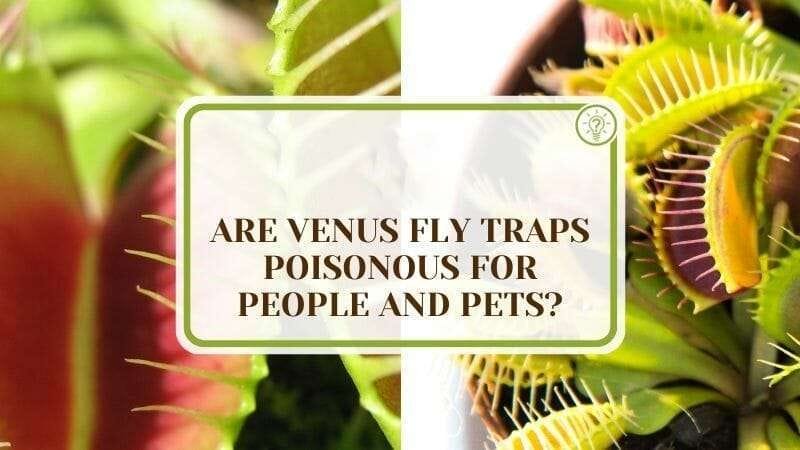
Are venus fly traps poisonous? If you have children or pets, are unsure whether to get a venus flytrap for your house this is a question you would have to think through.
By the time you’ve finished reading this article, we’ll have addressed your questions about venus flytraps, and you’ll be going to the store to buy one for yourself. Also, it is important to be able to identify if a plant is a Venus fly trap plant and not a similar one.
Are Venus Fly Traps Poisonous?
💥 No, venus flytraps are not poisonous plants; beyond discomfort, there are no substantial dangers associated with plant consumption. These plants are known to eat insects because they are carnivores. The plant does, contain substances that are toxic to pets if consumed, but it will not cause anything severely dangerous.
Are Venus Fly Traps Poisonous to the Human Touch?
No, the venus fly traps is not poisonous to humans, you won’t get hurt, but you might hurt the plant. The flytrap’s trap part comprises leaves that can only close so many times before they die. Therefore, overstimulating them will only expedite their death. Springing the plant’s leaves closed also prevents them from being used for photosynthesis.
– Venus Flytraps Bite
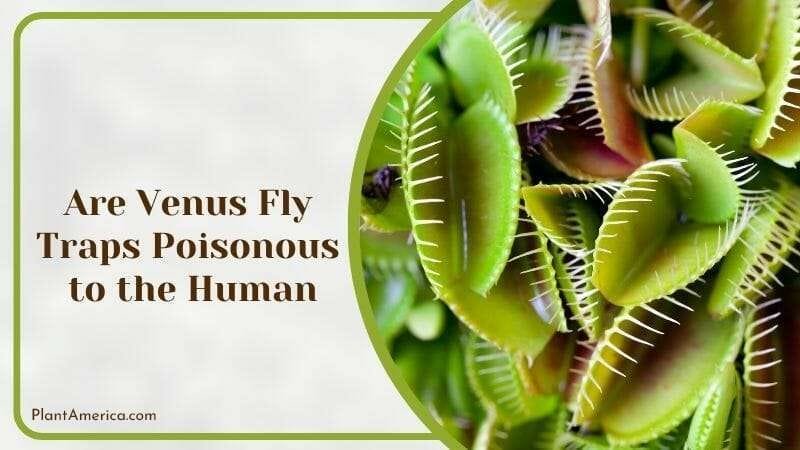
The flytraps can consume human flesh; however, they cannot bite into people and remove portions of flesh. Venus flytraps bite because they seal their mouths when something lands on them. Children and dogs won’t be harmed by it, though. Flies are the ones at risk from the plant. This is because the plant secretes nectar in its mouth, which attracts insects.
The flytrap’s bug-eating mouth will swiftly close if you stick the tip of your finger inside of it, but it won’t hurt at all. Because its “teeth” are more like eyelash strands than teeth, they will just slightly tickle you.
Keeping Venus Flytraps from Poisoning Pets
Pets pose more of a threat to Venus flytrap plants than these plants pose to pets! The plant’s life ultimately depends on keeping it safe.
– Keep Out of Pet’s Reach
The Venus flytrap should be kept out of reach of pets, just like any other indoor plant. The plant should be elevated to prevent damage from cats and dogs since it is advised to position them close to the window. You can also transplant your Venus Fly Trap to a safer place where none can reach it.
Putting the flytrap in an area of the house where pets are not permitted is advisable. This reduces the possibility of the plant being injured because the animals know it is off-limits to them.
Growers might also decide to hang pots around the house to put the flytraps. Since the pets can’t get to the higher plant, this will secure their safety and that of the plant.
Another crucial aspect of the plant’s safety is enforcing appropriate conduct in pets like dogs and cats. The ability to teach pets that the flytraps shouldn’t be damaged by playful behavior will help them live indoors.
– Using Pet Repellents
This is also a very good way to keep your pets away from your prized Venus flytraps. There are a lot of organic and aftermarket options that you can search for and apply in order to keep your beloved pests away from your unique garden ornaments.
– Place in Terrarium
To prevent their animals from constantly reaching for it and digging in the ground, owners can also decide to terrarium the Venus flytrap. As it will be simpler to maintain a humid terrarium, this will also make it easier to control the atmosphere of the plant.
The plant will have its little habitat in the terrarium. Due to the terrarium’s confined design, the plants won’t need to be watered regularly.
Final note:
The life of this carnivorous plant depends on knowing the ideal soil and water conditions and the suitable prey to feed it. Although it might not be simple, nobody ever finds their first experiences simple.