
Mealybugs on jasmine of the Apocynaceae family result from improper gardening practices and using contaminated soil or tools. The problem is, these tiny pests suck the life out of your jasmine, turning vibrant leaves into wilted ones.
Fortunately, there are many things you can do to eradicate mealybugs, but we’re only discussing the easiest ones here. So, let’s jump in to learn how to rid your jasmine of these unwelcome invaders.
Why Are There Mealybugs on Jasmine?
There are mealybugs on jasmine primarily due to conditions that favor their survival and reproduction. These include improper gardening practices, using contaminated potting soil, placing houseplants outside during summer, or introducing new plants without adequate inspection.
Mealybugs can also come from fresh produce or flowers from the grocery store.
– Not Following Proper Gardening Practices
Knowing what causes mealybugs is crucial if you want your jasmine garden to stay free from bugs. The first reason mealybugs might infest your jasmine is not following the proper gardening practices.
We all know plants need these things to survive- water, sunlight, and nutrients. But when we overwater or underwater plants, it can stress them out. This stress can make your jasmine more attractive to mealybugs.
For example, overwatering can cause your plant’s roots to become waterlogged and rot. This can make your plant weaker and a prime target for mealybugs. Also, if your jasmine is not getting enough light, it may become weak and attract mealybugs.
– Using Contaminated Potting Soil
Another common reason for mealybugs on jasmine is using contaminated potting soil. Mealybugs can live in the soil and then move to the plant when planted. So, if you’re using soil from a bag sitting open for a while, it might already be infested with mealybugs.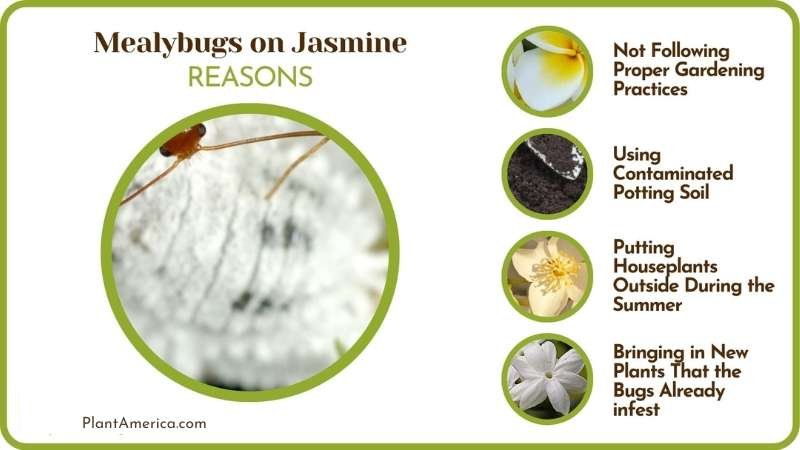
Buying fresh, sterilized potting soil is a good idea when planting. You can also sterilize your potting soil at home if that’s impossible.
– Putting Houseplants Outside During the Summer
Mealybugs are everywhere in the outdoor environment. When you put your houseplants outside, mealybugs can easily find their way onto your plants. So, if you plan on placing your jasmine outside, check it regularly for mealybugs. If you spot any, take action immediately to eliminate them.
– Bringing in New Plants That the Bugs Already infest
You could also bring mealybugs whenever you bring new plants into your home or garden. Mealybugs can hide under any plant part they want. If you don’t spot them when buying the plant, you might bring them into your home without realizing it. Once the new plant is in your home or garden, the mealybugs can move from the new plant to your existing plants.
Always examine new plants before you bring them home to avoid this. Look for signs of mealybugs, like white, cottony masses on the leaves or stems. It’s best to pass on that plant if you see anything suspicious.
– Bringing Fresh Produce or Flowers From the Grocery Store
Finally, mealybugs can even hitch a ride on fresh vegetables or flowers from the grocery store. If you bring home fruits, vegetables, or flowers with mealybugs on them, the bugs can quickly move to your houseplants.
It is more common than you might think, especially with produce or flowers that have been outdoors. So, we recommend examining the plants before putting them next to jasmine.
How To Get Rid of Mealybugs From Jasmine? (8 Ways)
Getting rid of mealybugs from jasmine involves changing the contaminated soil, pruning the infested leaves, and applying a soapy solution. You can also try hydrogen peroxide spray, hot pepper wax, or dust cinnamon powder. Apply horticultural oil, and use tools like the Bug Blaster in a severe infestation.
– Change the Infested Soil
Changing the infested soil is one of the first steps to eliminate mealybugs on your jasmine. Mealybugs don’t just stay on the plant. You may also see them lurking in the soil, and when you do, you’ll have no choice but to replace the soil. Here are the steps to change the soil:
- Remove your jasmine from its pot gently. Try not to disturb the roots too much.
- Shake off as much old soil as you can from the roots.
- Fill a fresh, sterilized pot halfway with new, sterile potting soil.
- Place your jasmine in the new pot and add more soil to cover the roots.
- Water the plant carefully, ensuring the new soil is damp but not soggy.
After this, throw away the old soil far away. If you don’t, these bugs will re-infest the new soil and start their life cycle again.
– Prune the Infested Leaves for Picture-Perfect Plants
Another effective way to control a mealybug infestation on your jasmine is by pruning the infested leaves. Mealybugs love to hide in leaf axils, where leaves join the stem or on the underside of leaves. Here’s how to prune your plant:
- Get a pair of clean, sharp pruning shears.
- Look for leaves that have mealybugs or their white, cottony residue.
- Cut these leaves off, getting as close to the stem as possible.
- Dispose of the cut leaves immediately. Don’t compost them, as this can spread the mealybugs.
- Clean your shears with rubbing alcohol after pruning to avoid spreading the bugs.
Remember, you should do pruning carefully. Over-pruning can stress your plant, so only cut off the heavily infested leaves.
– Use Soapy Solution to Get Rid of Bugs
Another simple yet effective remedy for removing mealybugs from your jasmine involves using a soapy solution. Were you wondering, “Will dish soap kill mealybugs?” Well, the answer is yes. Dish soap contains surfactants that can penetrate the waxy coating of mealybugs and cause them to dehydrate and die.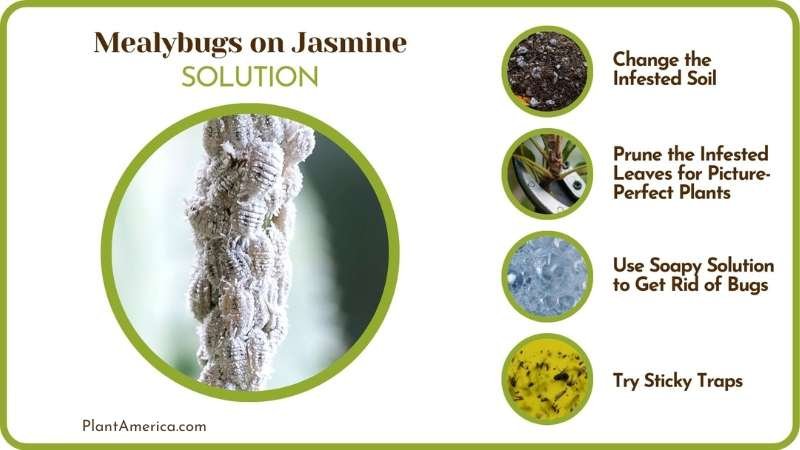
Mix two to three drops of mild liquid dish soap with a full cup of water to prepare the solution. Then, use a spray bottle to apply the soapy solution to your jasmine, focusing on areas where you see mealybugs or their residue.
This method is especially effective for tackling mealybugs on outdoor plants. The reason is that an open environment allows for better drying and less risk of over-soaking.
After applying the soap solution, wait a few hours, then rinse your plant with clean water to remove the soap residue. Repeat this process every few days until you see no more signs of mealybugs.
– Try Sticky Traps (But Do It Correctly)
Sticky traps are sheets or strips coated with an adhesive substance that captures insects attracted to their surfaces. They are usually colored yellow or blue, as these colors tend to attract many types of pests, including mealybugs.
- Choose traps that are specifically designed for the type of pests you are targeting. Yellow sticky traps are commonly used for mealybugs.
- Place the traps near the infected plants. It is better to put them where you think most bugs are residing.
- Regularly check the traps for captured mealybugs. It will also give you an idea of the infestation level.
- Replace the sticky traps when they gets covered with insects or lose their stickiness. Keeping them fresh ensures they remain effective.
Here are the top three benefits of sticky traps that you should know:
- Non-toxic and safe for beneficial insects if used correctly.
- Let you know about the intensity of the bug infestation.
- Super easy to set up and maintain.
– Apply Hydrogen Peroxide Spray the Right Way
Jasmine gardeners use hydrogen peroxide whenever they spot gray pineapple mealybug. It’s because this mealybug species can hurt plants in no time, so a strong solution is a better choice.
Mix one part or one cup of 3 percent hydrogen peroxide with four parts or four cups of water to prepare a hydrogen peroxide spray. Spray this solution on the affected areas of your jasmine.
But be careful while using hydrogen peroxide, as it can potentially damage your plant if used excessively or at high concentrations. Always test a small portion of your plant before applying the solution everywhere. If you see no adverse effects after a day, you can proceed to spray the entire plant.
– Use Hot Pepper Wax Spray for a Fiery Defense
Hot pepper wax spray is an effective mealybug control home remedy that makes the plant unappealing to these pests. This remedy, made from cayenne peppers, coats the plant with a slight wax layer, deterring the mealybugs and causing discomfort when they try to feed on the plant’s sap.
To prepare the spray, you can purchase hot pepper wax in a gardening store and follow the instructions on the packaging. Mix a small amount of water and spray it onto your jasmine. Remember to apply the spray regularly, particularly after rain or watering your plant, as it can wash off.
– Dust Cinnamon Powder: An Effective Mealybugs Treatment
Another natural and effective way to deter mealybugs is by using cinnamon powder. If you’re wondering how to prevent mealybugs, sprinkling cinnamon powder on your jasmine can significantly help.
To apply, dust a light coating of cinnamon powder on the surface of your plant’s soil and along the stems and leaves where you spot mealybugs. Remember to reapply the cinnamon powder every week or after watering your plant, as it can wash away.
– Apply Horticultural Oil Correctly- Organic Pesticide For Mealybugs
For a more targeted approach, consider horticultural oil as a solution for mealybugs on plants. You can purchase horticultural oils from your local garden store or online. To apply, mix the oil with water according to the package instructions.
After this, spray it on your jasmine, paying special attention to the old leaves and other areas where mealybugs like to hide.
Please note that horticultural oils are not selective and can harm beneficial insects. So, it’s essential to use them only when necessary.
Horticultural oils are beneficial for controlling specific mealybug species, including citrus mealybugs (Planococcus citri), cassava mealybugs (Phenacoccus manihoti), and other insects of the Pseudococcus genus. By targeting these pests, you are protecting your jasmine garden from many complicated problems.
– Use Bug Blaster
A Bug Blaster is a powerful water sprayer that you can purchase from any gardening store. It’s affordable, so we suggest it to those looking for a cheap way to eradicate these pests. Bug blasters work by washing away mealybugs from your plants without using chemicals.
This tool works well for crawling insects because it can reach all plant parts. The best part? You can knock off many pests with it in a short time.
Attach the Bug Blaster to your garden hose and spray your jasmine, targeting the undersides of leaves and other hiding spots. The force of the water will dislodge the mealybugs. Such bugs won’t be able to breed and shortly perish.
Remember that while the Bug Blaster can remove many mealybugs, it may not eliminate all of them, particularly those hiding in crevices or under the soil. Therefore, using this method with other treatments for maximum effectiveness is best.
Conclusion
All in all, mealybugs can multiply quickly and damage your plant if not managed promptly. However, there are several steps you can take to control these pests effectively:
- Change the infested soil to eliminate mealybugs and their eggs at the source.
- Prune the infested leaves to reduce their hiding spots and population.
- Utilize home remedies like a soapy solution, hydrogen peroxide spray, hot pepper wax, and cinnamon powder.
- Apply horticultural oils to suffocate mealybugs and disrupt their life cycle.
- Use tools like the Bug Blaster to remove mealybugs from your plants physically.
These are the simple steps that can help you protect your jasmine plants from mealybugs. We suggest doing at least two of them at once for faster results. Mealybugs can infest the Orange Jasmine, the Asian Jasmine, and in general, any Jasmine plant, which means that it is very important to know how to get rid of them.