
“What causes mealybugs on plants?” is a common question, and the answer lies in a combination of environmental, cultural, and outdoor settings. But never take these bugs lightly- these tiny, cottony invaders can quickly turn a vibrant garden into a withering battlefield.
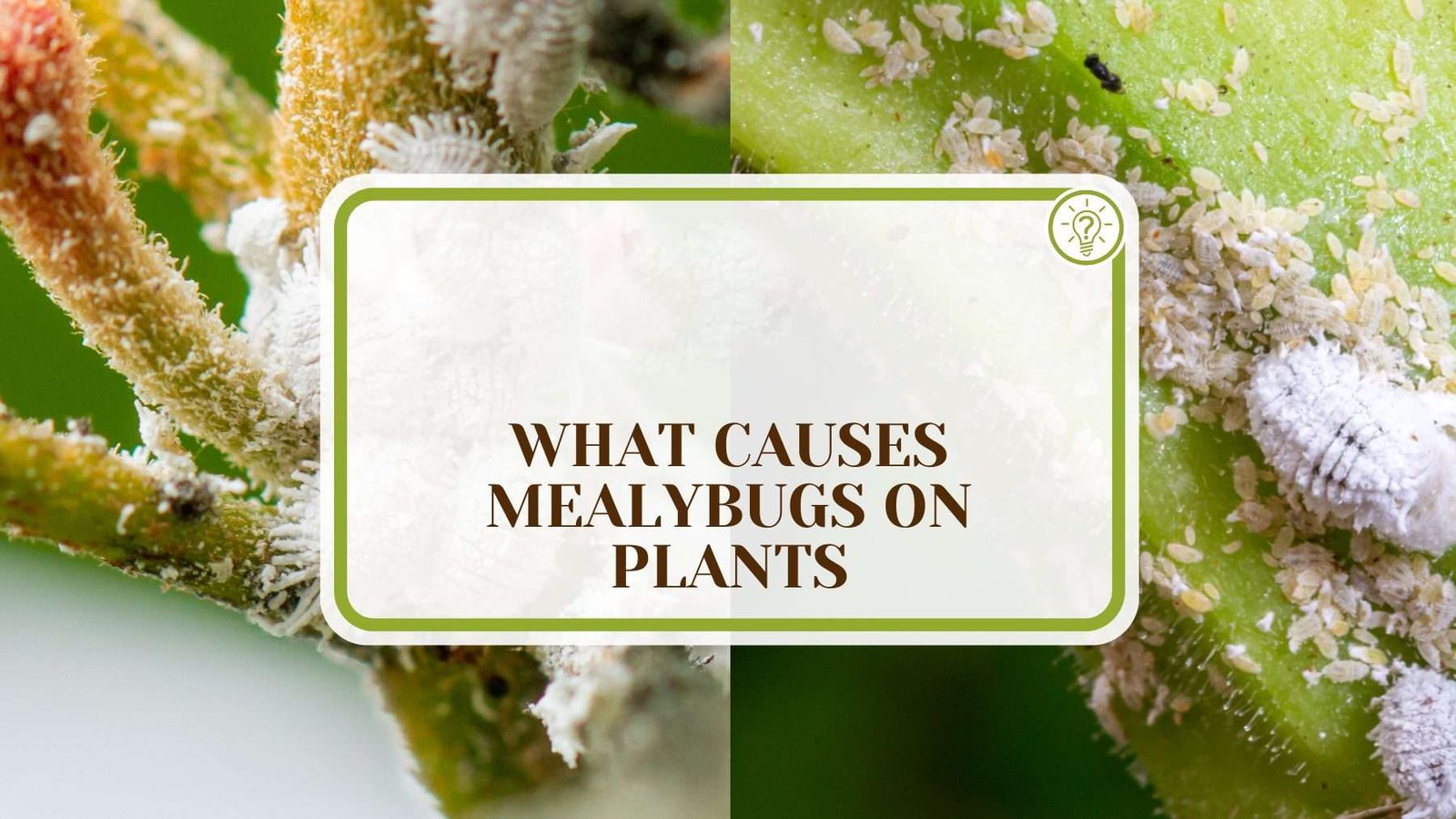
So, don’t roll out the welcome mat for them. Check out the details of reasons/causes of mealybug attacks so that you can prevent them in the future.
What are the Leading Causes of Mealybugs on Plants?
️⚡ The leading causes of mealybugs on plants are the favorable environmental factors. High humidity and warm temperatures are the two most important points here. Some other reasons behind the mealybug attacks are overwatering, poor hygiene, and overall incorrect cultural practices.
– High Humidity
When we think of the environments where mealybug damage the most, high humidity often comes to mind. Plants usually thrive in humid conditions because it helps keep them hydrated and aids in the opening and closing of their stomata (tiny pores on leaves) for essential processes like photosynthesis.
However, this favorable condition for plants is also a magnet for mealybugs. When it’s humid, these bugs can have babies like crazy. The moisture in the air helps them live and lay eggs, and their numbers shoot up super fast. High humidity also helps them move around on the plant quickly, going from one spot to another and spreading their takeover.
– Warm Temperatures
Another major environmental factor that attracts mealybugs is warm temperatures. Just as plants have optimal temperatures for growth, pests like mealybugs also have their preferred temperature ranges. When the mercury rises, mealybugs become more active, seeking plants to feed on and reproduce.
Warmth accelerates their metabolism, so they eat more, grow faster, and reproduce more rapidly. This rapid life cycle can quickly cause a minor problem to escalate into a full-blown infestation. In more excellent conditions, mealybugs tend to be less active.
Their movements are slower, and their reproductive rate drops. However, when the temperatures are consistently warm, especially with high humidity, it creates the perfect storm for a mealybug population boom.
Moreover, heated plants have weakened defenses (which opens the door for pests). Their natural defenses might be lowered, making it easier for mealybugs to settle in and start feeding. It’s like a double problem: the plant is already struggling with the heat, and then bugs come knocking.
– Overwatering
Do you know what causes mealybugs on plants indoors? One significant reason is excessive watering. When we overwater our indoor plants, we unknowingly lay down a welcome mat for these pests.

Overwatered plants have softened stems and leaves, which makes it easier for mealybugs to pierce through and feed on the sap. Also, when the soil around the plant gets too soggy, it gets humid. And as we’ve talked about, mealybugs love that kind of environment. The excessive moisture and the indoor setting where temperatures are more controlled sets the stage for a mealybug party.
– Overfertilization
Excessive use of fertilizers, mainly those high in nitrogen, rapidly produces soft, succulent, and new plant growth. This tender new growth is highly appetizing to mealybugs. They prefer these parts because they can easily penetrate and feed on the sap.
Using too much fertilizer can make plants make too much sugar and amino acids. Mealybugs like high levels of sugar, so if a plant is overfertilized, it’s like a buffet.
Also, their natural protections get weaker when plants get stressed out – like when their nutrients are all messed up from too much fertilizer. That’s when pests like mealybugs can quickly come in and start causing trouble.
There’s more- Healthy soil has a balance of beneficial microbes that can act as natural deterrents to some pests. Overfertilization can upset this balance, reducing the number of beneficial microbes and giving harmful ones, including those that favor mealybug survival, a chance to flourish.
– Poor Garden Hygiene: Another Leading Reason
Poor garden hygiene can invite mealybugs and other pests like thrips, aphids, whiteflies, and cottony cushion scale insects. Leaving dead leaves, stems, or fallen fruits around the plants can attract pests. Similarly, using the same tools for infected and healthy plants without cleaning them is like hand-delivering the pests to a new home.

Always clean and, if possible, disinfect tools, primarily if you’ve used them on a plant you suspect might be diseased or infested.
– Not Isolating New Plants
Before you put new plants with your others, keeping them separate for a while is crucial. This is because the potting soil used for many plants might harbor pests, and overlooking this step can inadvertently introduce mealybug infestations to your existing plant collection.
New plants can carry mealybugs or their eggs hidden in the soil or under their leaves. When such a plant is placed next to healthy plants without prior isolation, it can result in a rapid spread of these pests. The white, cotton-like appearance of mealybugs can often go unnoticed, and by the time they’re identified, they might have already colonized other plants.
– Neglecting Pruning
Pruning/trimming is more than just an aesthetic exercise for plants; it’s essential for their health and vitality. Neglecting pruning can lead to dense foliage, reduced airflow, and dead or decaying leaves and stems. These conditions are prime real estate for mealybugs.
Places with many plants growing close together without any trimming can become good hiding spots. This makes it tough to see and deal with an infestation. Furthermore, weakened or dead parts of a plant are more accessible for mealybugs to feed on, giving them a stronghold within the plant. So, if you’re wondering how to get rid of mealybugs, regular pruning is a proactive step.
Regularly removing dead or weakened foliage reduces the places where mealybugs can hide and thrive. By ensuring that your plant has good airflow and isn’t too dense, you also ensure it dries appropriately after watering, reducing the humidity around the plant – an environment mealybugs love.
Trimming your plant by hand helps you catch the first signs of an infestation before it worsens. If you find mealybugs while pruning, remove them immediately. Depending on the severity, you should prune off the plants’ heavily-infested parts to prevent the bugs from spreading.
– Outdoor Settings: They Also Cause Infestations
Being outside can lead to mealybug troubles for a few reasons. Things like ants guarding them, wind carrying them around, jumping onto other bugs, and a drop in the number of bugs that eat them can all play a part. These conditions make it easy for mealybugs to travel and spread.

– Ant Protection
Ants and mealybugs have this interesting relationship where they help each other, but it’s not great for your plants. Mealybugs produce a sugary substance known as honeydew, which ants are fond of. Ants protect mealybugs from their enemies in return for the sugary stuff they make. This protection often makes it challenging to kill mealybugs in an outdoor setting.
When ants shield mealybugs, they do so in multiple ways. Firstly, they transport them to various parts of a plant, ensuring that mealybugs have a fresh area to feed upon. This movement accelerates the rate of plant damage as the feeding grounds for mealybugs increase substantially.
Secondly, ants fend off predators that naturally control mealybug populations. Predatory insects like ladybugs, lacewings, and hoverflies are natural enemies of mealybugs. In a garden free from interference, these predators can keep mealybug populations in check. However, these beneficial insects are deterred from feasting on mealybugs in the presence of ants.
Once the ant population is under control, it becomes much easier to figure out how to prevent mealybugs naturally.
– Spread Due to Wind
When you see mealybugs on outdoor plants, winds can be the reason. As mealybugs are so light and their eggs are sticky, the wind can easily carry them from one plant to another and even from garden to garden.
In windy conditions, especially during specific seasons, the risk of mealybug spread becomes heightened. Once they’re in the air, these pests can land on a new plant and get ready to start their life cycle all over again. Often laid in a cottony, waxy substance, their eggs can stick to plant surfaces. Upon hatching, these nymphs immediately begin feeding on the plant sap, marking the beginning of a new infestation.
Apart from the direct transportation of mealybugs, the wind also aids in dispersing their eggs. The cotton ovisacs that female mealybugs produce are designed to shield their eggs from predators. However, when detached, these same structures can quickly become airborne. As they settle on new plants, they bring forth a new generation of mealybugs ready to cause damage.
– Hitchhiking on Other Pests
Mealybugs, though tiny, are pretty crafty when it comes to ensuring their survival and spread. One lesser-known but highly effective method they employ is to hitchhike on other pests. This technique is one of the ways mealybugs spread from plant to plant.
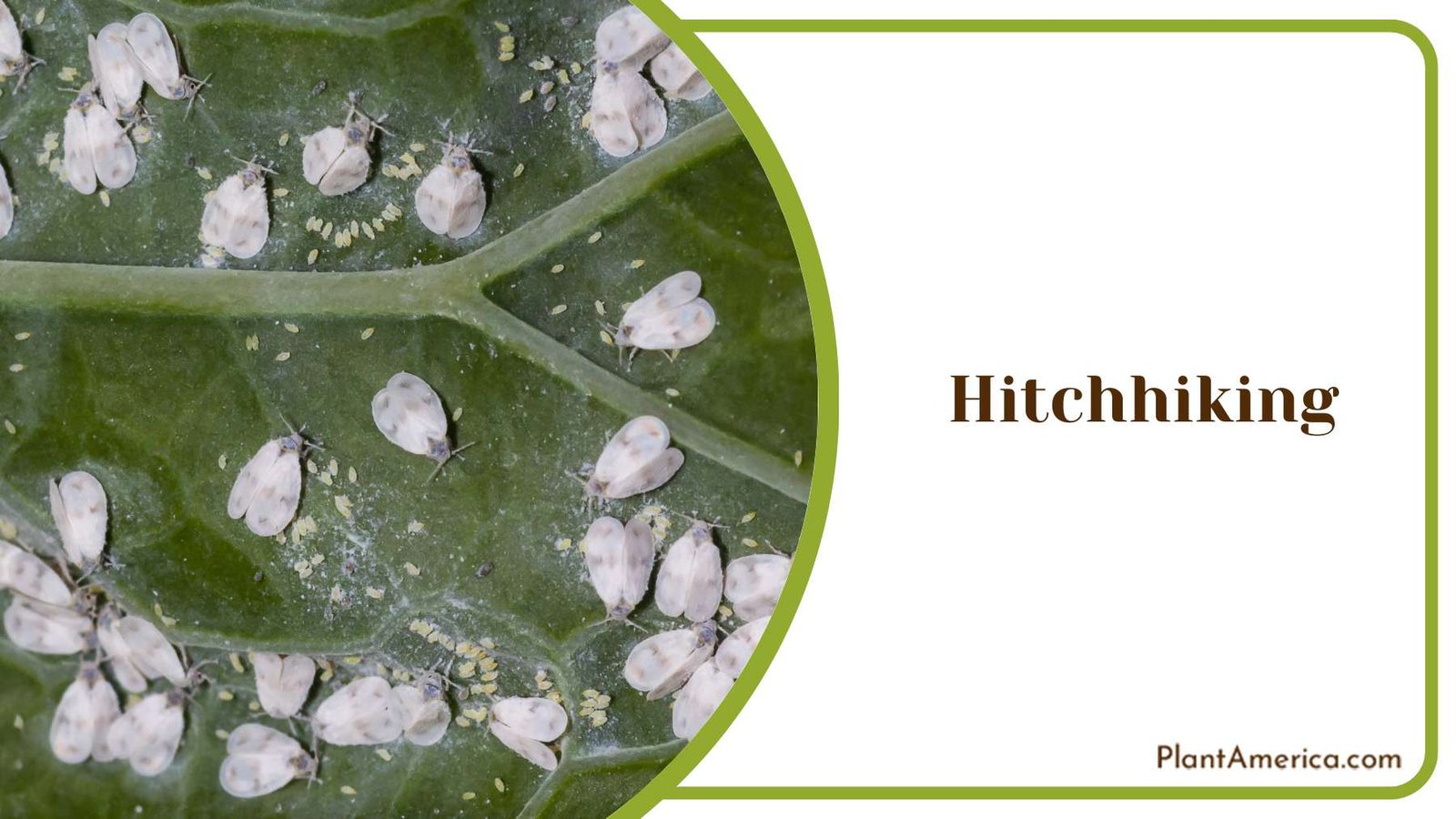
More giant insects like beetles, mites, or even non-pest insects can unintentionally become carriers of mealybugs or their eggs. As these insects move from one plant to another, they unknowingly transport mealybugs, facilitating their spread across various plants.
This phenomenon is not limited to adult mealybugs alone. Their tiny nymphs and the cottony ovisacs containing their eggs can easily get attached to these insects. When they move to a new plant, the babies (larvae) and eggs find a new place to live and quickly take over more space.
The hitchhiking continues with insects. Birds, with their wide range of movement, can also contribute. Feathers can trap mealybug nymphs or eggs, and as these birds flutter from one plant to another, they inadvertently deposit these pests.
– Natural Predators Disrupted
Just like every bad guy has enemies, mealybugs have bugs that like to eat them. Ladybugs, lacewings, and parasitic wasps are known adversaries of mealybugs. However, the delicate balance between pests and their predators can easily be disrupted, leading to an unchecked growth of the former.
Using too many products, like rubbing alcohol/isopropyl alcohol, insecticidal soap, neem oil, etc., are effective against mealybugs, but they can also inadvertently harm beneficial insects. When natural predators are affected by these products, it creates a void in the garden ecosystem, allowing mealybugs to increase without any significant challenges.
For instance, a gardener might spray insecticidal soap or neem oil to combat a mealybug infestation. While this might kill many mealybugs, it could deter or harm ladybugs or lacewings. With their numbers reduced, there’s little to stop the next generation of mealybugs from taking over.
Plus, some pest control stuff can mess up bugs that help your plants reproduce or even kill their babies. This further skews the balance in favor of pests like mealybugs.
When dealing with mealybugs, relying solely on strong pest control measures might offer short-term relief but can exacerbate the problem in the long run. Instead, encouraging the growth and presence of natural predators in the garden can provide a sustainable solution.