
Mealybugs on jade plant can catch anyone off guard, but there’s no need to panic. There are some techniques to get rid of these white bugs from your garden, like a water stream, soap spray, etc.

However, it is crucial to apply them the right way if you want them to remove bugs quickly. Worry no more; stick to the end to know how to eradicate mealybugs and keep your garden thriving.
Why Are There Mealybugs on Jade Plants? Top Reasons
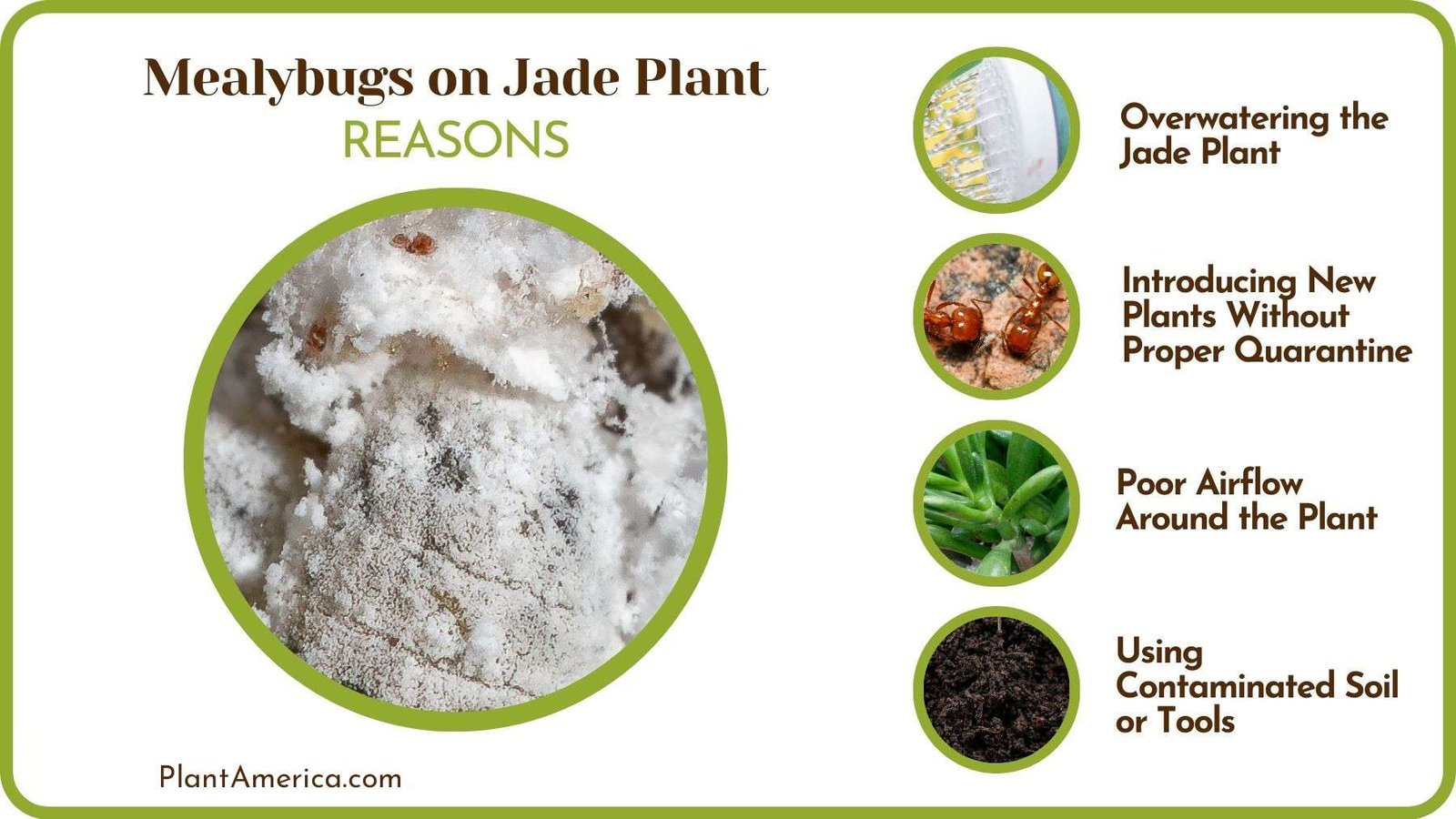
There are mealybugs on jade plants because of several factors, but the top one is overwatering, as it creates a damp environment which attracts these pests. Also, introducing new plants without proper quarantine can bring in mealybugs. Furthermore, poor airflow around the plant makes it a conducive habitat for them.
– Overwatering the Jade Plant
Water is essential for jade plants (crassula ovata), but too much of it is detrimental. Overwatering doesn’t just harm the plant’s roots; it also creates a moist and welcoming environment for pests, including mealybugs.
Mealybugs prefer moisture as it provides them with the hydration they need. Moreover, damp soil also leads to root rot, which stresses out roots. As a result, the jade plant weakens, which makes it more prone to mealybug attack.
– Introducing New Plants Without Proper Quarantine
If a newly purchased jade plant is infested with mealybugs, it can quickly become a source of infestation for other nearby plants. The importance of quarantining new plants can’t be emphasized enough. During the quarantine period, the plant should be isolated and observed for any signs of pests or diseases.
It’s a proactive measure to ensure that the new addition doesn’t inadvertently introduce mealybugs or any other potential threats.
– Poor Airflow Around the Plant
In the absence of proper ventilation, conditions can become stagnant, creating a comfortable environment for pests. For mealybugs, poor airflow means a less disturbed environment where they can settle, reproduce, and thrive.
– Using Contaminated Soil or Tools
The tools and materials we use for our plants play a significant role in their health. For example, if the soil used for repotting a jade plant has been previously infested with mealybugs or their eggs, it can become a direct source of infestation.
Similarly, garden tools, when not cleaned or sanitized between uses, can carry mealybugs or their eggs from one plant to another. It’s essential to be mindful of the sources of soil and to regularly clean and disinfect gardening tools.
How To Eradicate Mealybugs on Jade Plants?
Eradicating mealybugs from a jade plant requires a multifaceted approach. Isolate the infested plant first and then use a high-pressure water spray to knock them off. Soapy water solution, vacuuming, and garlic sprays are also effective in reducing bug population.
– Isolate the Bug Infested Jade Plant
First, you’ll want to identify the infested jade plant and then isolate it. By separating the infested plant, you are cutting off their route to the rest of your garden.
Doing this lets you concentrate on treating the affected plant without stressing about other plants. It’s also a great way to watch closely how well your treatment works without any extra distractions.
Do these steps to isolate your plant:
- When moving the jade plant, be very gentle to avoid shaking off the mealybugs onto other nearby plants.
- Choose the right location. Place the infested plant in a location away from other plants. A separate room or a well-contained area works best if you’re treating it indoors.
Consider using plastic sheets to create a special zone around the plant, ensuring those bugs don’t accidentally move around. And remember, watch the plant closely while you’re treating it. Checking regularly helps you see how well your work is going and lets you make changes if needed.

– High-Pressure Water Spray
The “Water stream or spray” is a highly effective method, especially when dealing with many mealybugs.
Here’s how you can use a high-pressure water spray to get rid of these pests:
- Select the Right Equipment: You don’t need anything fancy; a standard garden hose with a spray attachment will do the job.
- The Right Pressure: You want enough pressure to remove the bugs but not so much that you harm the plant. Practice on a hard surface first to get a feel for the proper pressure.
- Spray at Different Angles: Mealybugs hide in crevices and under leaves. Make sure to spray from various angles to reach all parts of the plant.
- Repeat as Needed: One spraying might not be enough. You need to do this repeatedly if the bug problem is severe. Also, keep an eye on the plant in the days and weeks after treatment to be sure you got rid of all the mealybugs.
– Try Soapy Water
If mealybugs are still bugging your jade plant, don’t sweat it! One fantastic way to deal with these pesky bugs is soapy water. You might be curious why plain old soap works, but it does the trick.
Just grab some insecticidal soap or neem oil. Mix it with water and spray, especially where you see those bothersome flying bugs on jade plants or mold. Like all other methods, this isn’t a one-time fix. You must repeat it a few times, but your plant will thank you soon. Remember, don’t go too heavy on the soap; we aim for clean, not drenched!
– Use Sticky Traps
Moving on to another nifty trick: sticky traps. You know, those brightly colored traps that look out of place in a garden? They’re not just for show. They’re like a bug’s worst nightmare.
Place these traps near your jade plant, but be careful not to stick them right on it. You want the bugs to get stuck, not your plant. Check the traps every day, and replace them when they’re full. If you’re feeling crafty, you can even make your traps.
– Rubbing Alcohol Bath
Don’t get sad if you’ve tried other methods and those stubborn common jade pests like fungus gnats, spider mites, and black aphids on jade plants still hang around. You’ve got another trick up your sleeve, and it’s called the rubbing alcohol bath.
You might be thinking: “Alcohol? On my plant?” But trust us; isopropyl alcohol can be a plant’s best friend during a pest crisis. It’s simple and surprisingly effective. Here’s what you do:
- Mix one part isopropyl alcohol with one part water.
- Wet a cotton ball or soft cloth into the solution.
- Gently rub the affected areas of the jade plant.
You’ll want to be gentle, as the alcohol can be slightly harsh if overused. And keep this treatment away from the eyes, especially your own. Regularly repeat this process until you see those pests start to disappear. Remember, consistency and patience are key here. And don’t forget to give your plant a little pep talk; it’s been through a lot!
– Petroleum Jelly Barrier
Let’s face it; the battle against bugs is never-ending. Those jade plant bugs in soil can be relentless. But there’s something else you can try, something a bit unconventional but highly effective: a petroleum jelly barrier.
Carefully apply a layer of store-bought petroleum jelly around the base of the plant’s stem and the top layer of the soil. The sticky texture creates a barrier that bugs find tough to cross. Think of it as putting up a “No Trespassing” sign but for bugs.
Keep an eye on the barrier, and reapply the petroleum jelly as needed. And if you’re wondering if it’ll hurt the plant, don’t worry; the jade plant is tougher than it looks.
– Vacuuming
If you’re dealing with mealybug infestations on indoor plants, sometimes you’ve got to think outside the box. So, do the following:
- Grab a hand-held vacuum or use the smallest attachment on your regular vacuum cleaner.
- Carefully vacuum those bugs right off the plant.
- Be gentle, and don’t press too hard; you don’t want to harm the plant.
It’s like a spa day for your jade plant, but it’s getting a much-needed bug removal treatment instead of a facial. Repeat as needed, and remember to clean your vacuum thoroughly afterward. Those bugs don’t belong there!
– Garlic Spray
A garlic spray is another unconventional but effective way to deal with Jade plant pests like mealybugs, scale insects, etc. Luckily, making garlic spray is a piece of cake. Here’s how:
- Crush a few garlic cloves and let them soak in water overnight.
- Strain the water, and add a drop of dish soap.
- Spray it directly on the affected areas of the plant.
The scent of garlic is something these insects (including the tiny black bugs on jade plants) can’t stand. The best part? It’s completely natural, so there is no need to stress about harsh chemicals. And it’s made from garlic, so you can count on that extra power punch.

– Hot Water Treatment
Dealing with root mealybugs can be pretty tricky. These sneaky bugs hide in the soil and go after the plant’s roots, which makes them a tough nut to crack. Here’s where the hot water treatment comes into play:
- Carefully unpot the plant and shake off as much soil as possible.
- Immerse the root ball in hot water (not boiling, around 110 degrees Fahrenheit) for approximately 15 minutes.
- Inspect the roots and rinse them thoroughly with cool water.
This method disrupts the life cycle of the mealybugs and can eliminate them from the roots. Monitoring the plant’s reaction and providing proper aftercare, including repotting in fresh, pest-free soil, is crucial.
– Insect Growth Regulators (IGRs)
Insect Growth Regulators, or IGRs, are a more scientific approach to tackling mealybugs. These specially designed compounds interrupt insects’ growth and development, halting their reproduction.
Using IGRs is a task best approached with careful consideration and proper knowledge:
- Choose the right IGR for the specific type of pest. Consult with a local garden expert or follow the instructions on the product label.
- Apply the IGR as directed, ensuring complete coverage of the affected areas.
- Monitor the plant’s progress and reapply as needed, following the manufacturer’s guidelines.
IGRs can be highly effective but must be used responsibly per all relevant regulations and recommendations.
– Manage Growing Conditions (Plant Care)
Managing the growing conditions can also help you prevent and treat a mealybug infestation. The best part is that it can resolve problems like powdery mildew and brown scale on jade plants. Plus, you can adjust growing conditions easily.
Proper Watering and Humidity Control: Watering your jade plant too much or too little can lead to diseases such as powdery mildew. Ensuring the correct balance of humidity and water can keep this at bay. Hydrate the plant only when the soil is dry to the touch, and consider using a humidity meter to monitor the environment.
Light and Soil Requirements: Jade plants need bright but indirect sunlight. More shade or the wrong soil type can lead to many issues. Ensure to provide suitable soil with proper drainage and light to maintain the plant’s health.
Regular Inspection and Quick Action: Inspecting your plant regularly is crucial. Quick action is essential if you notice any disease or pest infestation signs. Identifying and treating jade plant diseases early on will prevent them from spreading and causing further damage.
General Care and Maintenance: Remember, a well-cared-for jade plant is more resilient and can withstand attacks from common pests. Just remember to watch how your plant looks and how it’s growing. When your plant is healthy, it’s better at fighting off bugs and diseases.

Conclusion
To sum up, if you see mealybugs on a jade plant and are now concerned about your plant’s health, don’t be! There are some targeted strategies to cope with these bugs. Here are the key takeaways to keep your plant thriving:
- Isolate and Treat Infested Plants: Act quickly to contain and eliminate infestations.
- Take strict measures for severe infestations: Try methods like alcohol baths and soapy water spray when the mealybug population goes out of hand.
- Embrace Preventive Measures: Utilize techniques like hot water treatment and insect growth regulators to fend off potential issues.
- Maintain Optimal Growing Conditions: Focus on proper lighting, watering, and soil type to prevent common pests and diseases.
Stick to these methods/techniques to keep your jade plants healthy and free from mealybugs and other common problems.