
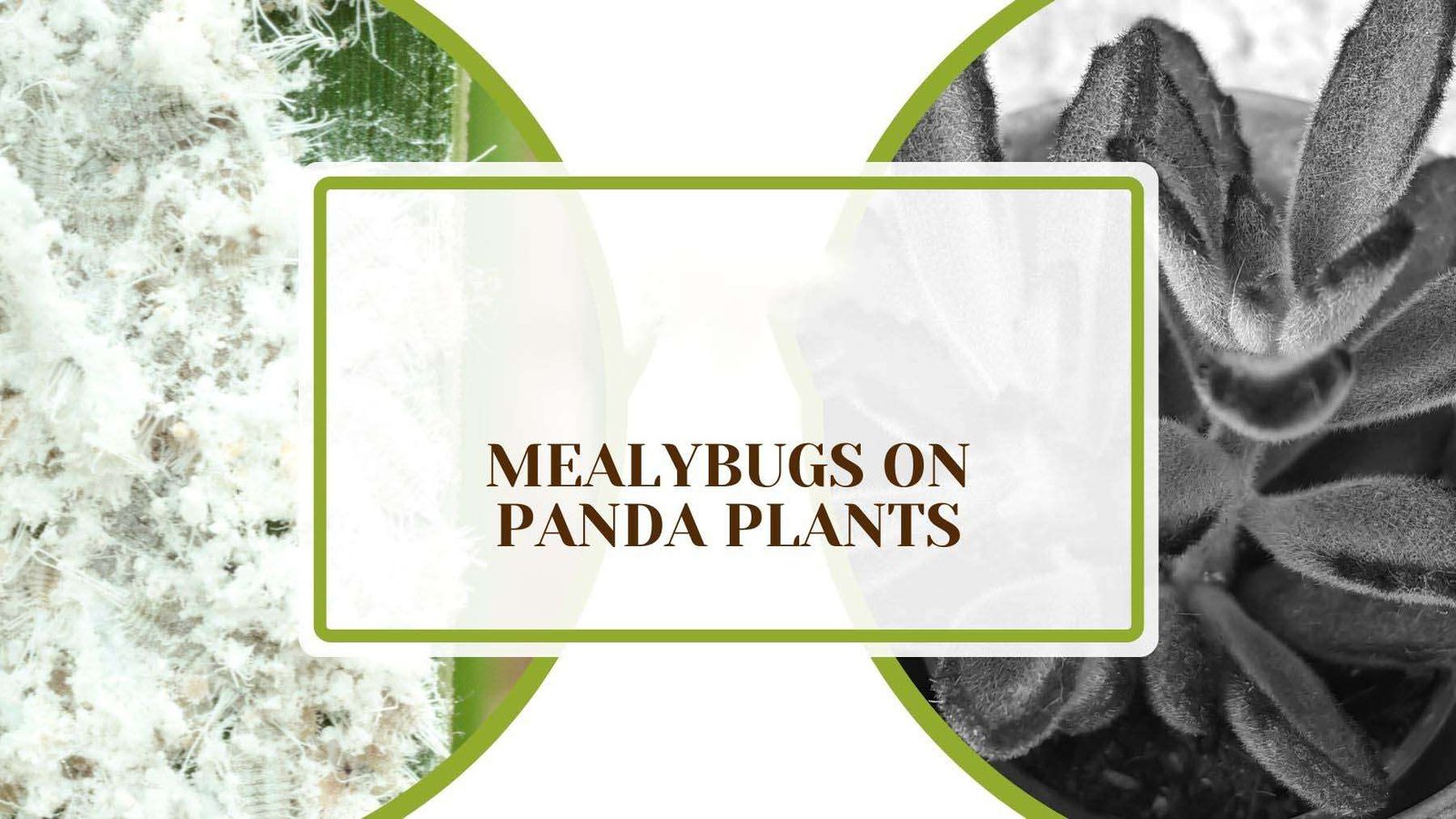
Mealybugs on panda plants is not a small problem, as these white pests can do significant damage, like discoloration, wilting, and even death. Luckily, we know how to eliminate these bugs from any garden quickly.
Please stick with us as we guide you through simple steps to send those mealybugs packing.
What Are the Reasons Behind Mealybugs on Panda Plants?
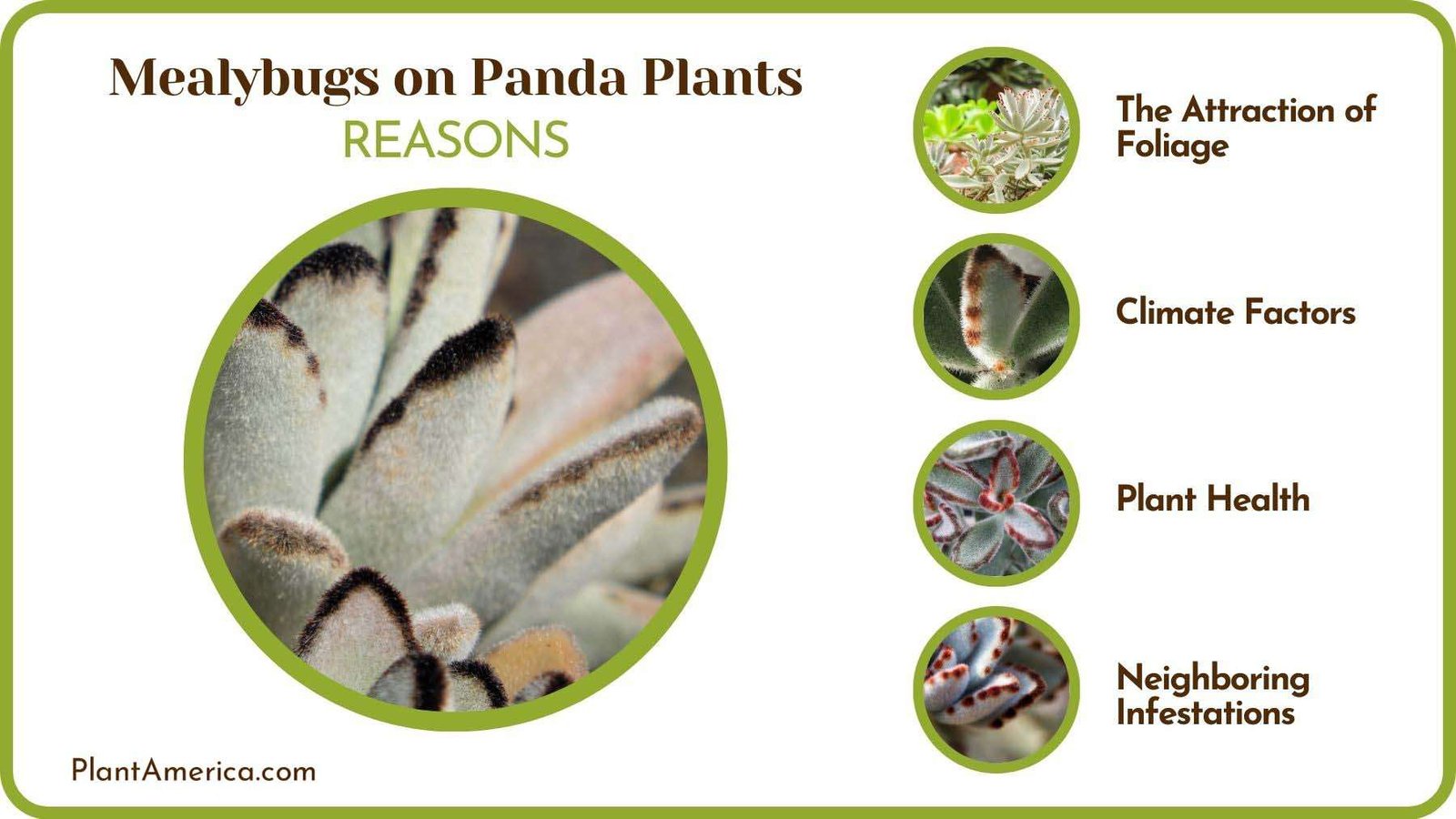
The reasons behind mealybugs on panda plants include an unclean growing environment, overwatering, using contaminated soil, and introducing infected plants. Mealybugs are attracted to the soft tissue where they can feed, and a lack of proper care and inspection can lead to an unnoticed infestation.

– The Attraction of Foliage: Mealybugs Love Juicy Plants
Mealybugs are small insects known to invade various types of plants, but pandas or Kalanchoe tomentosa seem particularly susceptible. They have a distinct set of characteristics that attract mealybugs. These features include:
- The leaves texture
- The plants’ unique scent
- Nutritious sap that mealybugs feed on.
These things tempt mealybugs to come and attack your Panda garden.
– Climate Factors: Grow Panda Plant at Right Temperature
Unfortunately, the climate you live in also plays a role in mealybug infestation. Remember that these white pests thrive in warm and humid conditions. Regions experiencing such weather patterns usually report higher instances of mealybug infestations.
When the weather is warm, mealybugs become more active, reproducing faster. This rapid population growth can turn a minor problem into a significant infestation.
– Plant Health: Weak Plants and Their Susceptibility to Mealybugs
The overall health of plants can make them more or less susceptible to mealybugs. Weak or stressed plants are more likely to become infected. Plants that are not well-taken care of, lack essential nutrients or are already battling other diseases become easy targets for mealybugs. Note that these bugs have the sense of spotting fragile plants.
– Neighboring Infestations: How Nearby Plants Can Spread Mealybugs
If nearby plants are infested with mealybugs, the chances of your panda plant getting infested increase dramatically. Mealybugs can quickly move from one plant to another, especially if they are close.
Even indoor plants can be affected if neighboring outdoor plants are infested. Regularly inspecting surrounding plants and taking preventive measures can keep mealybugs from spreading to your garden plants.
How You Can Get Rid of Mealybugs on Panda Plants?
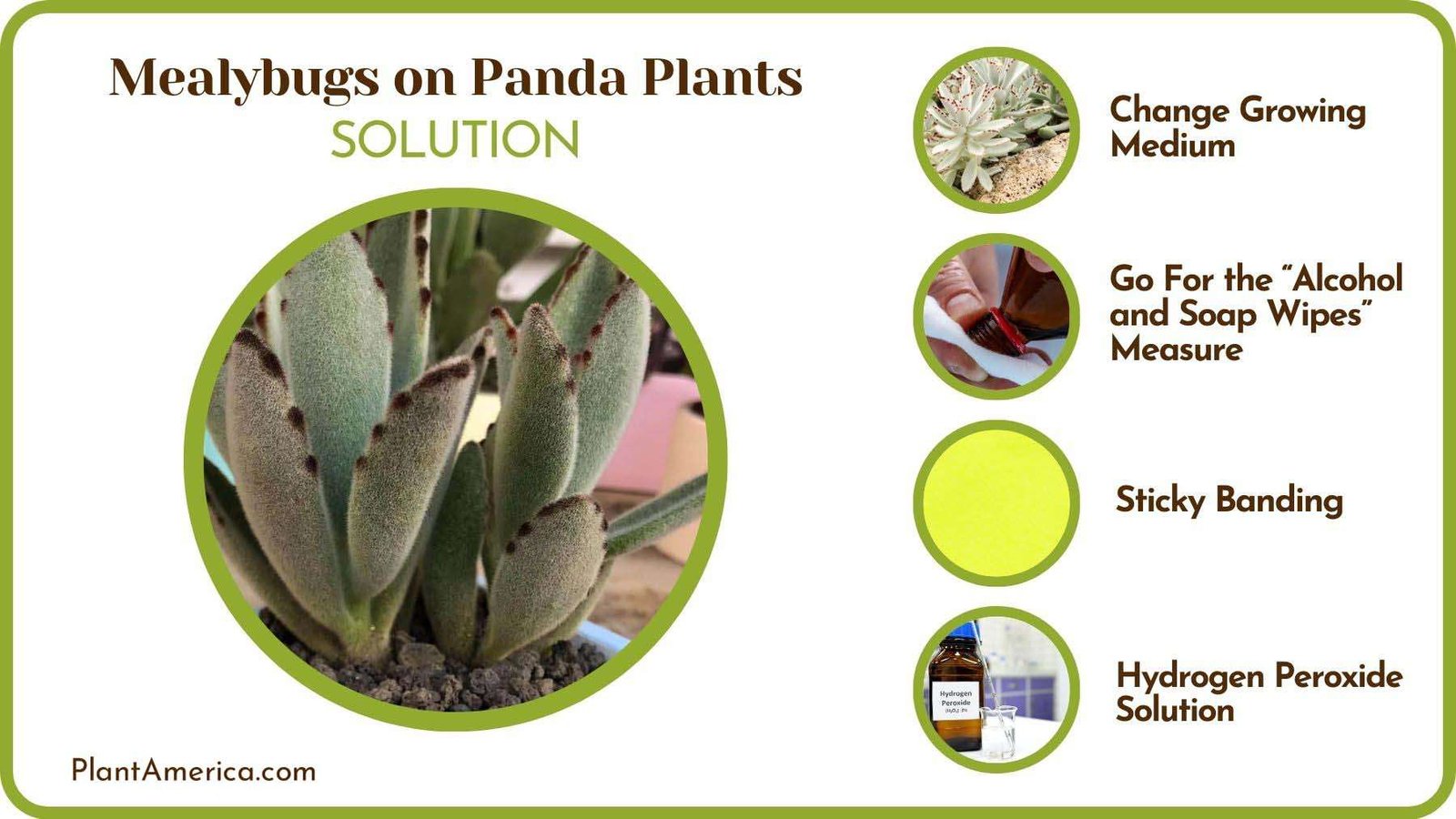
To get rid of mealybugs on panda plants, start by changing the growing medium, and using the “rubbing alcohol and soap wipes” method immediately. You can also apply sticky banding, use hydrogen peroxide solution, and try pepper spray. Cinnamon stick application, and proper garden management can work too.
– Change Growing Medium
The first thing we suggest you do when you spot mealybugs near the stem is to change the growing medium. But do it correctly.
- Identify the Problem: First, correctly identify the presence of mealybugs in the soil. Look for telltale signs such as sticky residue or actual bugs.
- Remove the Plant: Carefully unpot the plant and shake off as much infected soil as possible. Handle the plant gently to avoid causing stress or damage.
- Please dispose of the Infected Soil: Place the infected soil in a sealed bag and dispose of it properly.
- Clean the Pot: Thoroughly wash the pot with soap and hot water to eliminate any remaining mealybugs or their eggs.
- Repot with Fresh Soil: Fill the clean pot with fresh potting soil, ensuring it’s suitable for your panda plant. Carefully repot the plant and water it as needed.
Then, monitor the Plant for the next few weeks to ensure no mealybugs reappear. Regular checks can help you catch a potential reinfestation early.
– Go For the “Alcohol and Soap Wipes” Measure
If you see mealybugs on leaves and the upper part of the stem, then you should go for the “Alcohol and soap wipes” method.
- Prepare the Solution: Mix equal parts of rubbing alcohol and water in a spray bottle. We also suggest adding three drops of liquid soap to enhance the solution’s effectiveness.
- Inspect the Plant: Carefully inspect your panda plant, identifying all areas where mealybugs are present.
- Spray the Infested Areas: Spray the rubbing alcohol mixture directly on the infested areas, covering all visible mealybugs.
- Wipe the Plant: Gently wipe the leaves and stems using a soft cloth or tissue. The alcohol will break down the protective coating of the mealybugs. Due to this, they won’t survive for long.
- Avoid Overuse: Be cautious not to overuse the rubbing alcohol solution, as it can potentially harm the plant if applied excessively.
- Monitor the Plant: Continue to monitor the plant for signs of mealybugs, repeating the treatment if needed.
Rubbing alcohol and soap wipes is a straightforward, cost-effective method to eliminate mealybugs without harsh chemicals.
– Sticky Banding
Sticky banding is an eco-friendly way to handle mealybugs. The best part is that it works on other tiny pests like fruit flies and spider mites. Here’s a simple guide on using sticky banding to keep your plants safe:
- Know the Issue: First, look at your plants to determine how bad the mealybug problem is.
- Choose the Right Band: Purchase a sticky band designed for garden use, or make one at home using non-toxic materials.
- Apply the Band: Wrap the sticky band around the stem of the panda plant at a height that would catch the mealybugs as they crawl up. Make sure it’s secure but not so tight that it restricts growth.
- Monitor the Band: Check the sticky band regularly to see if it’s trapping the mealybugs. Replace it as it gets filled or loses its stickiness.
- Protect Beneficial Insects: Be mindful of beneficial insects that might also get trapped. Choose a time of year when these insects are less active.
- Consider Complementary Methods: While sticky banding is effective, using it with other methods may be beneficial, especially if the infestation is severe.
- Monitor the Leaves Regularly: Monitor the leaves for any signs of mealybugs or other pests.
Sticky banding is effective against mealybugs and safe for the environment. Moreover, it’s a method that gardeners of all experience levels can try easily.
– Hydrogen Peroxide Solution: The Most Effective Strategies Against Bugs
A hydrogen peroxide solution is another powerful weapon against mealybugs. Mix a small amount of hydrogen peroxide with water. Please follow a 1-part hydrogen peroxide ratio to 10 parts water. Furthermore, ensure you’re using a 3 percent hydrogen peroxide solution, which is generally safe for plants.
Then, spray the solution directly onto the panda plant leaves, covering all surfaces. Focus on areas where you’ve noticed mealybugs.
– Cold treatment
The cold treatment method involves exposing the infested plant to low temperatures lethal to mealybugs but not to the plant itself. The procedure is simple:
- Begin by identifying the areas of the plant that are infested with mealybugs.
- Next, prepare a cold environment where you will place the plant. It could be:
- A refrigerator set to a specific temperature
- A cold room
- An outdoor space if the weather is cold enough.
Then, place the plant in a cold environment for a specific period, usually a few hours. Once the treatment is complete, gradually bring the plant back to its typical environment. An abrupt temperature change can shock the plant, so this transition should be done carefully.
– Onion and Garlic Spray
Using an onion and garlic spray is a more natural and aromatic way to deal with mealybugs. It also doesn’t cost much, so most people prefer to use it instead of buying commercial pesticides. To make an onion and garlic spray, do these steps:
- Start by peeling and finely chopping a few cloves of garlic and one onion. The exact quantity can vary, but a general guideline is to use equal parts of both.
- Then, put the chopped garlic and onion into a bowl.
- After this, pour water. Allow this mixture to soak for several hours or even overnight.
- Once the soaking is complete, strain the mixture to remove the solid pieces, leaving only the liquid.
- If you want, you can also add a small amount of liquid soap to increase the spray’s effectiveness. We suggest you go for it, as the soap helps the spray stick to the plant’s leaves.
- Spray the affected parts of your panda plant, covering the mealybugs thoroughly.
- Reapply the spray as needed, usually every few days, until the mealybugs are gone.
We also highly suggest using neem oil mix for your mealybug problem.
– Glue Traps: Don’t Let Bugs Move
Glue traps offer an easy and successful solution for dealing with mealybugs on different plants, like the jade plant or chocolate soldier. These traps work by luring the bugs to a sticky area. When bugs go there, they get stuck. You can then throw away the traps to control the bug infestation.
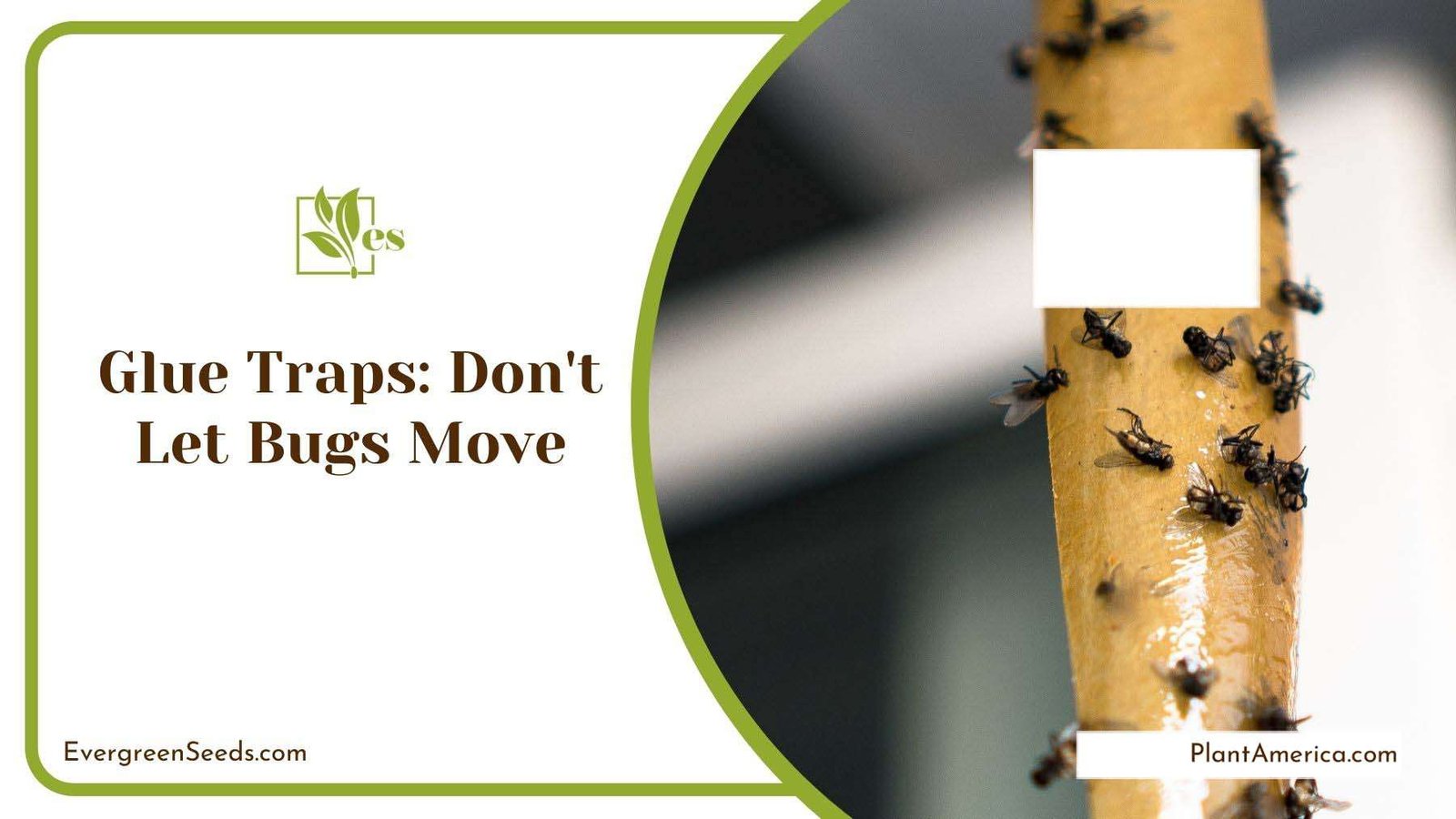
You’ll want to put the traps close to the infected plants but in a way that won’t disrupt the growth or appearance of the plants themselves. Depending on the type of trap, you might hang it, stake it into the soil, or set it on a surface nearby.
Note that you should get those for crawling pests, as mealybugs also move via crawling.
After placing traps, check them regularly to see how many mealybugs they catch and replace them as they fill up or lose their stickiness. One thing to be aware of when using glue traps is the potential to catch non-target organisms.
Most people have reported capturing a few beneficial insects and other creatures (like mice). So, be mindful of where you place them and what you’re catching.
– Hot Pepper Spray
Hot pepper spray is a spicy solution to the problem of mealybugs on plants. The reason it works is that it has fiery compounds that mealybugs hate. Here’s how you can whip up and use this unique insecticide:
- Begin by selecting the hot peppers you’ll use. Most types will work, but the more potent the spray is, the hotter the pepper.
- Next, chop the peppers and place them in a container, seeds and all. A handful of peppers is sufficient for a small batch in most situations.
- Pour boiling water over the chopped peppers and allow the mixture to steep. This process extracts capsaicin, the compound that gives hot peppers their heat and that’s toxic to mealybugs.
- Strain the mixture, leaving only the liquid. Add mild liquid dish soap to help the spray stick to the leaves.
- Next, spray the affected parts of the plant or chocolate soldier, covering the mealybugs thoroughly.
Reapply the spray as needed, usually every few days, until the mealybugs are gone. Be sure to store any leftover spray in a cool, dark place, clearly labeled, to prevent accidental consumption.
– Try Cinnamon Stick
The “Cinnamon stick” method is for those who want to try a cost-effective strategy to remove mealybugs. However, it works on small infestations, so we don’t recommend relying on it when mealybugs increase.
Here’s how you can apply cinnamon to fend off these pests: First, you need to identify the infected areas of the panda plant.
Look for:
- Black spots
- Sticky residue
- Any unusual changes in the appearance of the leaves.
Once you locate the mealybugs, it’s time to use the cinnamon.
Using a mortar or coffee grinder, you can grind cinnamon sticks into a fine powder. This powder is then sprinkled directly onto the affected areas of the plant. If you don’t want to make powder, insert a few cinnamon sticks in the soil. It will act like a barrier that mealybugs will find repelling.
Monitoring the plant for any signs of improvement or further issues is crucial in this stage. Regularly inspect the treated areas and reapply the cinnamon powder if necessary.

– Manage Your Garden Well To Help a Panda Plant Grow
Managing your garden well is the cornerstone of healthy plants, and this principle applies to the panda/Kalanchoe tomentosa just as much as any other species. Remember- a strong plant offers more resistance to bugs than a weaker one!
Let’s start with watering. A Panda plant prefers a drier environment, so overwatering can lead to mushy leaves, root rot and create a breeding ground for mealybugs. Monitoring the moisture level and adjusting your watering routine accordingly is vital.
We also suggest pruning to improve air circulation. It will maintain plants’ structure and reduce the chances of mealybug infestation (as bugs don’t like air). Moreover, fertilize your plants at least once a month to ensure their immunity stays strong against different problems.
When you follow this panda plant care guide, your panda plant (kalanchoe tomentosa) will keep thriving!
Conclusion
Mealybugs can cause severe damage to panda plants, but you can stop their attack by following the measures we have discussed in this article. Here are some key takeaways to help you on your gardening journey:
- Embrace Natural Solutions: From cinnamon sticks to onion and garlic sprays, natural remedies can be incredibly effective and environmentally friendly.
- Adopt a Proactive Approach: Regular inspections, changing growing mediums, and watching for common problems will help you address issues before they escalate.
- Utilize Unconventional Methods: Be bold in trying something new. Creative methods such as sticky banding can provide surprising results.
- Focus on Care and Upkeep: Knowing what your plants require, including the proper watering and trimming, is vital to keeping them lively and robust.
That’s all. By implementing these methods, you’re on your way to eliminating mealybugs from your garden. We’re sure plants will appreciate your efforts, and they will reward you with fast growth.