
Landscaping with liriope of the Asparagaceae family can be the best decision you can make because this plant is an easy-to-grow evergreen perennial. Different designs can be achieved using this ground cover plant.
You can also benefit from the liriope plant as it has medicinal properties. This article will help you to get more information about how to landscape this lilyturf and give your spaces that unique feel.
Different Types of Landscaping Using Liriope
Landscaping with liriope can brighten your place up a lot if you know the possible designs available. Liriope can be confused with mondo grass as they have similar features. Please note that the liriope is also known as the monkey grass.
1. As Lawn Alternatives

| Varieties that can be used |
|
| Advantages |
|
| Specific care needs |
|
| Planting options |
|
The Liriope is usually used as a lawn alternative or as a covering for the ground because it is a creeping plant. The plant care is easy because it produces a low-growing edge that is always green and does not require mowing.
You can use the Liriope spicata to outline paths, control temperature extremes, and as edging in gardens, depending on your preferences.
2. Establishing a Transition Zone in a Pool or Stream

| Varieties that can be used |
|
| Advantages |
|
| Specific care needs |
|
| Planting options |
|
Planting liriope on a transition can make the place more beautiful as it produces purple flowers that resemble grape hyacinths. The plant is always green, thereby making the transition zone attractive all the time.
This liriope can be the best plant on a transition because of its easy maintenance. Like the landscaping hardy hibiscus, the liriope muscari is not easily affected by pests and diseases thereby making it great for use as a border grass.
3. Dry Shade
| Varieties that can be used |
|
| Advantages |
|
| Specific care needs |
|
| Planting options |
|
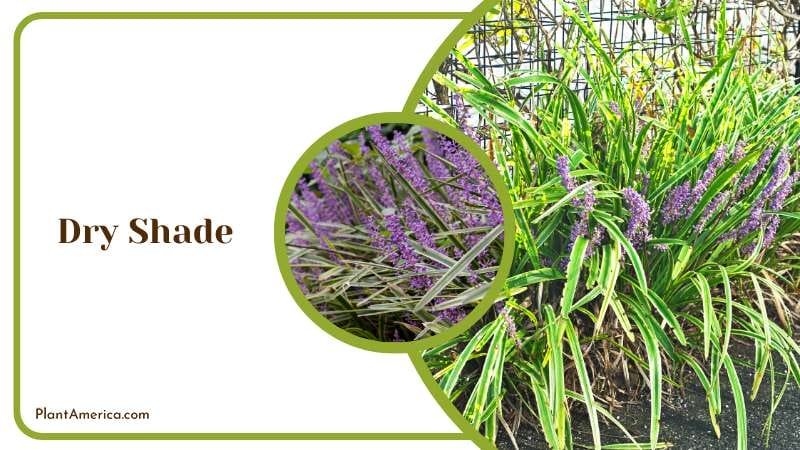
It can be difficult to grow the Liriope in dry shade as they lack sunlight. Dry shade can be changed to a better look if you use the correct varieties that grow well in full shade.
The liriope companion plants like the Lamium can be used to make an amazing landscape in a dry shade. You should trim the brown leaf tips of the liriope so that new foliage can develop.
4. Backyard Fences

| Varieties that can be used |
|
| Advantages |
|
| Specific care needs |
|
| Planting options |
|
Backyard fencing is one of the liriope landscaping ideas that serves many purposes. The backyard fence adds market value to your home and also makes it look so beautiful.
Using plants in the landscape and the backyard can also cover the ugly artificial fence.
5. Edging Border

| Varieties that can be used |
|
| Advantages |
|
| Specific care needs |
|
| Planting options |
|
Edging borders is essential as it helps in defining a certain area in your garden or yard. The walkways and other special areas within your premises are clearly defined.
Boundaries are marked perfectly and your landscape is transformed into a friendly environment. Edging borders can be tiresome but they are worth considering as they give the final touch to your place.
6. Creative Cover On Open Spaces

| Varieties that can be used |
|
| Advantages |
|
| Specific care needs |
|
| Planting options |
|
Landscaping can act as the surface cover on spots that are open and difficult to maintain. The liriope does not require too much attention so it won’t interfere with your schedules and duties.
The planted liriope needs to be monitored so that it will not cover other wanted plants surrounding the spot that needs to be covered.
References
- https://plants.ces.ncsu.edu/plants/liriope-spicata/
- Liriope muscari. Missouri Botanical Garden.
Retrieved from https://www.missouribotanicalgarden.org/PlantFinder/PlantFinderDetails.aspx?kempercode=l100 - How to grow liriope. RHS.
Retrieved from https://www.rhs.org.uk/plants/liriope/growing-guide