
“How to transplant a cherry tree” is a skill query we often get from cherry owners on our blog. These trees should ideally be planted in a place where they won’t need frequent moving. Sometimes, a tree must be moved for one reason or another.
In this article, we will be discussing how to transplant a cherry blossom tree, along with all the critical factors that need to be considered.
What Are the Factors to Consider While Transplanting a Cherry Tree?
💥The factors to consider while transplanting a cherry tree are to choose a brightly lit spot, water it thoroughly both before and after, and maintain temperatures around 60 to 70 degrees Fahrenheit. It is best to carry out cherry repotting in early spring, preferably.
– Best Time to Transplant
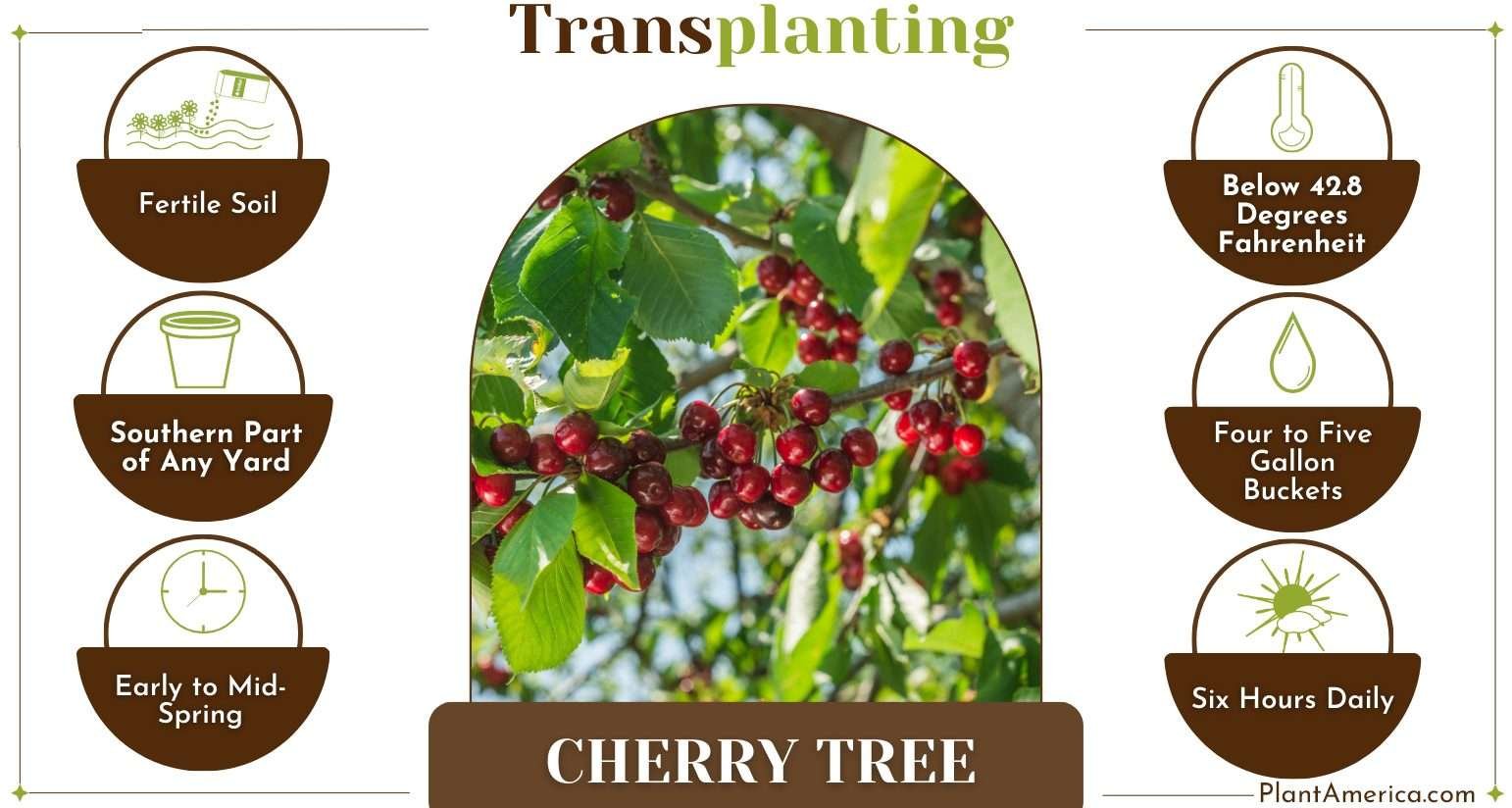
The best time to transplant any fruiting tree-like sweet cherry is early to mid-spring. This is usually when the trees come out of their winter dormancy and are beginning to grow again. In late spring, these trees start producing cherry buds, so they should not be transplanted.
The rule of thumb with fruit-producing trees is that they should not be transplanted during their fruiting season. Transplanting cherry-producing trees in late spring and summer will significantly reduce the yield of cherries produced that year. These trees can also be transplanted during dormancy in winter but with great care, as the chances of a transplant shock are high.
– Fertilization
These trees love to grow in fertile soil that is slightly neutral to acidic in pH. Mix a teaspoon-sized soil sample with water and put a litmus paper in it to gauge its pH. If the pH comes between 6.5 and 6.7, then this is ideal for growing most cherries like east asian cherry and black cherry.

Having a rich and loamy soil type is essential for a successful transplantation in another spot. The soil needs to have the right mixture of sandy loam, pumice, perlite, moss, and bark. The tree will establish roots quickly in a soil that is fertile as well as well draining.
Preparing the ideal cherry soil in the lawn before transplanting this tree in it is best. If that is not possible, adding moss, perlite, bark, etc., will help improve the soil quality. Soil compaction should also be enhanced by using either manual or machine aerators.
– Watering
These trees prefer to keep their roots dry rather than be overwatered. However, watering them copiously both before and after transplantation is essential. Watering before transplanting serves the vital purpose of softening the soil and making it easy to dig the roots out.
A single tree will need about four to five standard-gallon buckets to properly moisten its soil. Once the tree has been repotted in a new spot, abundant watering with about five gallons of water will be needed. Still, it is better to pour only some water at a time Rather than take some time with it.
After repotting, the following year is significant for any cherry fruit tree. The correct frequency and style of watering will help the tree survive better and for a long time. Water the roots deeply every day the first week and every other day the next week. Then, shift to watering once a week for the rest of the upcoming summer fruiting season.
– Temperature
This tree has particular temperature needs for different times of the year. Taking care of these temperatures helps them adjust better during and after an episode of repotting. Allow the tree to undergo a period of dormancy properly at temperatures below 42.8 degrees Fahrenheit. This period of chill and dormancy is essential for the formation of flower buds in the upcoming spring.

Allow the winter dormancy to be over at around 65 degrees Fahrenheit in spring. This is the ideal time to dig the tree out of its old spot and plant it elsewhere. Cherries don’t grow well in areas with boiling springs and summers, so regions with summer temperatures above 88 degrees should be avoided.
– The Proper Place to Be Transplanted
You want to select a place that the cherry fruit tree will love and take roots in easily. These trees love to grow under full, bright sun all day, so choosing a sunny spot on the lawn should be your first priority. The southern part of any yard is the perfect place to transplant these trees.
Cherry fruit trees grow strong and long roots in an extensive system underground. They need to be transplanted at a respectable distance from other nearby trees and shrubs. The proper distance between two of these trees should be at least 25 feet. Do not grow them near large trees like apples and pears that might shade them from the sun.
There are some trees and plants that these trees need to be compatible growing next to. Plants like gooseberry, honeysuckle, and raspberries have a direct negative impact on the growth of cherries. They also cannot be grown next to common vegetables like tomatoes, peppers, and eggplants.
– Light Requirements
A cherry growing tree’s light needs an average of about six hours daily. Any less than this, and the tree will not take root in its new spot after transplantation. A healthy tree will soon begin to die when it is transplanted from a bright spot to a shady spot.

If the plant is transplanted from an area that receives more sunlight to an area that receives less light, it will take some time to acclimatize. The best light for these trees is 12 hours of direct, bright light from the sun over the course of a single day.
How to Transplant a Cherry Tree by Yourself?
To transplant a cherry by yourself, dig a hole in the new spot and plant the tree upright. Backfill the hole using the topsoil from the hole with new soil and some coir. Soak the roots in water if there is some time before planting the tree.
– Gather the Right Tools for Transplanting
Every tree can be transplanted with the right-sized shovel at hand. Using a shovel with a wooden handle is better for a solid and improved grip. While using a shovel and other gardening tools, always wear thick rubber gloves and boots for protection.
Sometimes, a square-shaped spade and a shovel are all you need to transplant cherry trees. Occasionally, the soil needs to be more compacted and easier to dig around in, even with a shovel. A pick ax is the tool of choice to help you pick apart particularly tough soil. A spading fork can also be used under challenging soils instead of a pick ax.
Having an iron sheet drag makes it easy to move the tree from one place to the next. A sharp and large-sized pair of pruning shears should be at hand in case any of the roots need pruning before repotting. A water hose with adjustable pressure to water the tree before and after transplantation is also essential.
– Choosing and Preparing the Right Site
The new hole for these trees should be dug out about one to two months before transplantation. This helps the soil to settle down properly but is not always possible because of winter thaw. Still, it is strongly recommended to have a root hole dug out ahead of time to keep the roots from drying.
Remove the topsoil and keep it aside because it is nutritious and will be helpful later on. Soil testing at this stage helps identify modifications that are needed. A pH test is a must because almost all cherries, like sweet and sour cherry, need 6.5 to 6.7. If the pH is too low, it is made alkaline by adding lime, dolomite, or chalk to the soil.
For planting cherry trees of an average size, a 1.6-foot-deep hole is usually enough. The width of the hole should be about two to two and a half feet long. Place small stones, broken sticks, or bark pieces at the bottom of this hole for improved drainage.
– Add Some Fertilizer
Once the right-sized hole has been dug, add the topsoil at the bottom, as it helps nourish the soil. To loosen up this topsoil, it helps to mix certain soil modifiers to it at this stage. The best manures that help prevent cherry tree transplant shock are aged manure, coco coir, or peat moss.
Both granular or sphagnum moss can be used in the case of peat. However, peat tends to acidify the soil, so using coco coir is better. Don’t stress if none of these are available at the moment because ordinary garden compost works just as well. Add two inches of homemade or store-bought compost to the soil, and you are good to go.
– Dig the Tree Out
Digging a fully mature tree can be a tricky business for first-time beginners. Make sure you have help at hand because this is not a one-person job. Measure the size of the tree crown and start digging a hole that is approximately the same width as the crown.

Dig about two feet deep around this periphery and leave most of the root mass in the middle. Push the sharp edge of the spade or the shovel perpendicular to the soil and use your foot to pull the soil out. If the tree is out, but the new site is unprepared, then it is possible to soak the roots in water for up to six hours.
– Planting the Tree in Its New Spot
While moving a cherry tree in summer or spring, check out the conditions of the roots. Roots that are damaged or very old are better off pruned using shears. If the cherry roots are dehydrated, they must be soaked in water for two to three hours.
Carefully place the entire cherry-producing tree in the hole dug out upright. Once the plant has been placed vertically within the hole, spread its holes further around. Some people prefer adding topsoil after the tree has been replanted.
Have someone hold the tree steady while you backfill the hole with soil. After pouring down each layer of soil, press on it firmly with the flat side of the shovel to get rid of potential air pockets. When transplanting this tree on a slope, make a raised rim of about two inches of soil all around the tree. This will help hold the water for the tree without contributing to soil erosion.
Conclusion
Let us conclude our guide on how to plant cherry trees by looking at the most pertinent points discussed so far:
- The best time to move a cherry blossom tree is early to mid-spring when temperatures are just beginning to rise.
- Water the soil around the tree with about five gallons to help dig the roots out easily.
- Dig the new hole to receive the tree before digging the tree out, as this keeps the roots from drying out.
- Scrutinize the roots once the cherry blossom tree is out and trim whenever necessary.
After reading our comprehensive guide, you are ready to transplant the cherry blossom tree whenever the need arises successfully.