
Mock orange varieties can add lovely winter and spring color to any garden. In this post, we’ll explore some of the most popular mock orange varieties for home landscapes. From the fragrant Southern Charm to the colorful Jean’s Gold, mock oranges offer a range of blooming times, sizes, and flower colors to suit different garden needs.

Whether you want a mounding shrub for foundation planting or a small tree with loads of white flowers, we’ll break down the key traits of top mock orange varieties to help you choose the right ones to bring more beauty and charm to your outdoor space.
Top Mock Orange Varieties to Consider for Your Garden
1. Belle Etoile

- Growing Season: Spring, Summer
- Feeding habit: Broad, Ovate
- Specific Needs: Well draining soil, Full sun
- Common Pests: Aphids, Leafhoppers
The Philadelphus ‘Belle Etoile’ is a nice choice for gardens. It grows into a bush shape about one to two meters tall and wide. In summer, it produces very pretty flowers. The flowers are white and very fragrant. They are shaped like small stars, so this variety’s name means “beautiful star” in French. The star flowers cluster together on the branches.
Each individual flower is about three to five centimeters wide when open. There can be many flowers on the bush at the same time from late spring through early summer. This mock orange variety likes sun or partial shade. The soil should drain well but stay moist.
‘Belle Etoile’ is very easy to care for. It only needs pruning sometimes after flowering to keep its shape. Otherwise, it grows well with little other care. The flowers attract bees and butterflies. Also, birds will sometimes eat the berries that form after flowering.
This Philadelphus makes a nice addition for landscape borders or as a small ornamental tree. Its white star flowers and sweet smell create a pleasant sight and smell during its flowering months. It is low maintenance, hardy, and provides visual interest as well as wildlife habitat in the garden..
Its low-maintenance needs mean minimal fuss, freeing more time simply appreciating nature’s gifts. Whether admiring from inside through an open window or outside on a garden bench, ‘Belle Etoile’ brings delicate joy and relaxation to those gardening alone.
2. Blizzard
- Growing Season: Spring, Summer
- Feeding habit: Elliptic, Two-three inches long
- Specific Needs: Well draining soil, Full sun
- Common Pests: Slugs, Leafhoppers
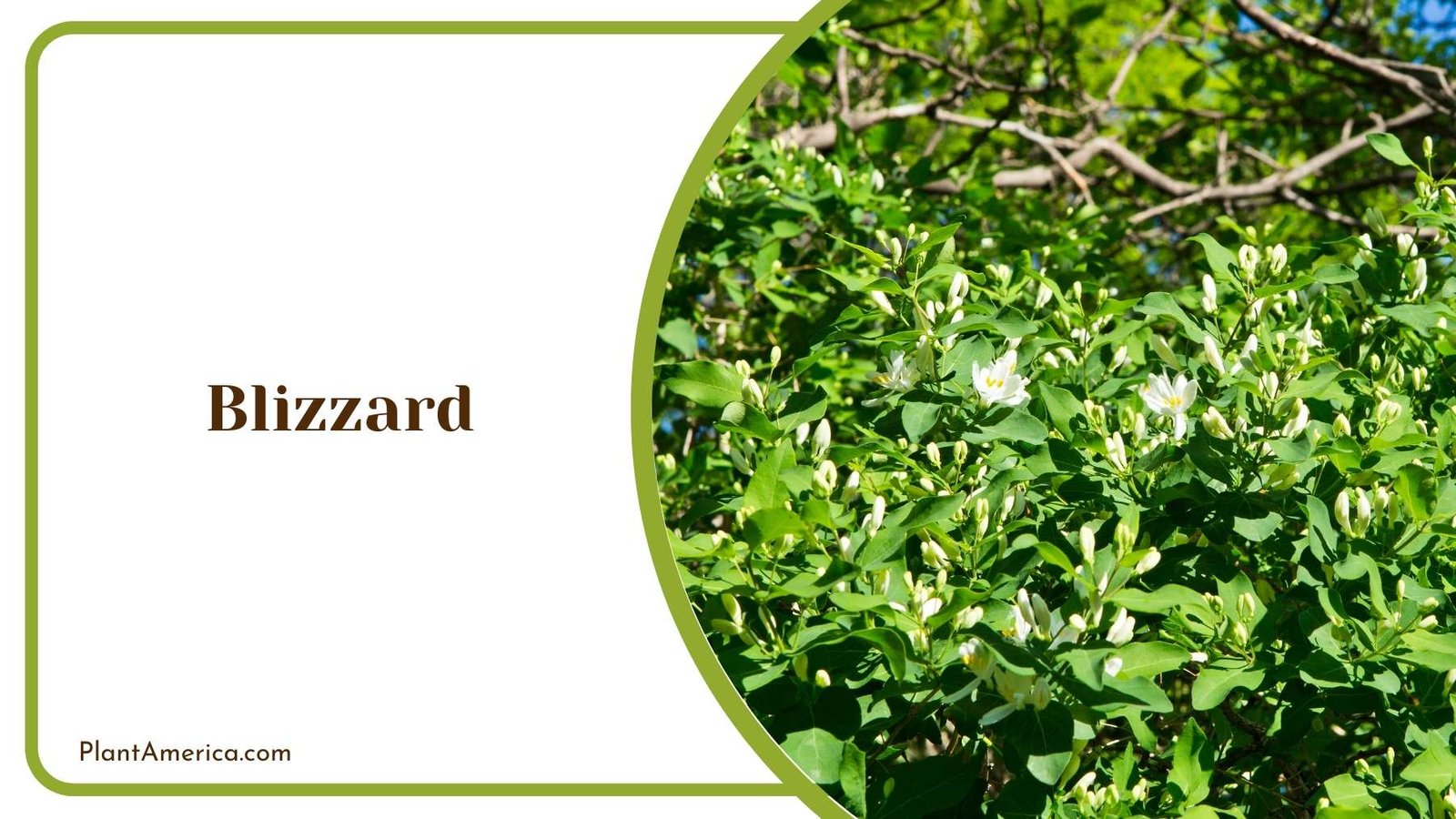
Philadelphus ‘Blizzard’ is a beautiful flowering shrub known for its large clusters of white blossoms. Native to North America, mock oranges make very nice ornamental plants. The ‘Blizzard’ variety has green leaves on branches that form a rounded bush about 1.5-2 meters tall.
In early summer, the branches are covered in big groups of very sweet-smelling flowers. Each individual flower is small, with four white petals in a cross shape. But together in large bundles, they produce a stunning display of pure white color.
These mock orange blossoms attract many helpful pollinator insects like bees and butterflies. They bloom for several weeks, filling the air with a lovely aroma. After flowering, small seed capsules may form. Through the growing season, ‘Blizzard’ maintains a full, dense shape that is decorative even without blooms.
Philadelphus ‘Blizzard’ thrives with at least 6 hours of sunlight each day and soil with good drainage. It tolerates different conditions like full sun or partial shade. These hardy shrubs are not fussy and do well in gardens or as low hedges. Pruning is not required but can encourage more blooms.
With profuse white flowers and pleasant fragrance, ‘Blizzard’ mock orange makes an excellent accent plant among other shrubs, perennials and roses. It adds beauty during the important transition from spring bulbs to summer blooms. Low maintenance and reliably floriferous, this variety is a superb choice to delight the senses in early summer gardens..
Leafhoppers, snails, and slugs may issue occasional minor feeding damage but do not pose serious threats. ‘Jean’s Gold’ is generally carefree once established, requiring pruning only for shaping and size control. Its year-round ornamental value and vibrant golden color make this mock orange a prized addition to brighten many garden landscapes.
3. Boule d’Argent

- Growing Season: Spring
- Feeding habit: Glossy, Lance-shaped
- Specific Needs: Well draining soil, Full sun
- Common Pests: Aphids, Leafhoppers
Philadelphus ‘Boule d’Argent’ is a beautiful variety of mock orange well-suited for ornamental gardens. As the name suggests, it produces large rounded clusters of white flowers resembling balls of silver. Native to forests in southern Europe and western Asia, this deciduous shrub grows to approximately 1.5 meters tall and wide.
In late spring or early summer, just as the green leaves are fully opened, dense trusses of sweetly fragrant blooms appear all over the branches. Each individual flower is small at one to two centimeters across, with four white petals forming a star shape. Numerous flowers cluster together in large bouquet-like globes up to 10 centimeters in diameter.
These large floral displays last for several weeks, attracting many beneficial pollinators to the garden like bees and butterflies. After flowering, seed pods form which some birds enjoy eating in autumn. The smooth green leaves then slowly change beautiful colors like yellow and red before dropping for the winter.
‘Boule d’Argent’ is very hardy, resisting most pests and diseases. It prefers full sun but will also grow in partial shade. The soil should be well-draining but otherwise not too fussy. Minor pruning may be done after flowering to keep the compact, rounded shape.
This mock orange variety makes an excellent choice for borders, beds, or as a low hedge. Its long-lasting blooms and neat habits require little care. Both the delicious fragrance and round silver flowers decorating the branches are sure to delight garden visitors throughout the warm seasons..
4. Burfordensis
- Growing Season: Spring, Summer
- Feeding habit: Lance-shaped, Ovate
- Specific Needs: Well draining soil, Full sun
- Common Pests: Spider Mites, Leafhoppers
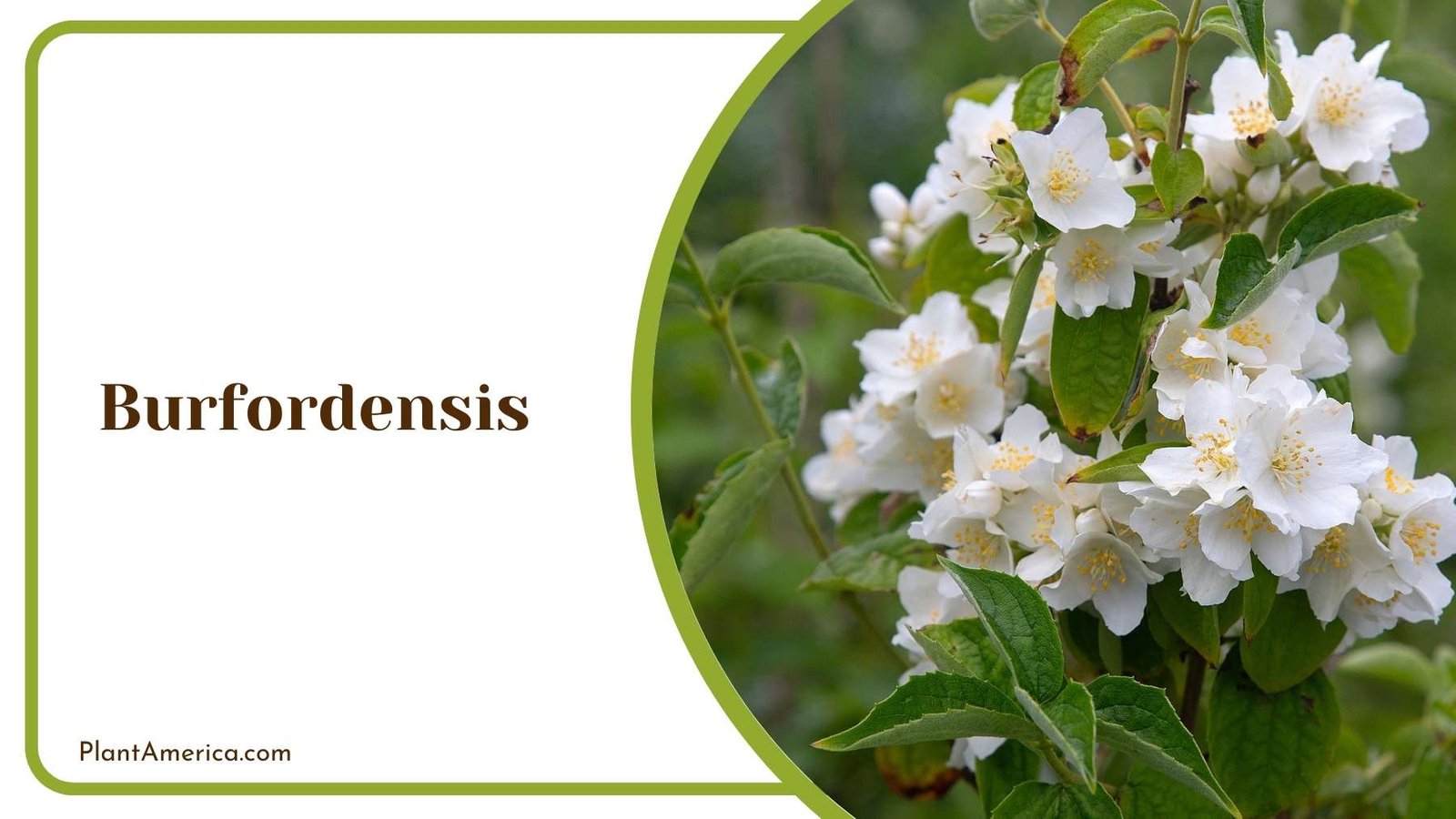
Philadelphus ‘Burfordensis’ is a variety of mock orange bush prized for its sweetly fragrant summer flowers. A member of the Hydrangeaceae family, it grows into an attractive rounded shrub reaching two to three meters tall and slightly wider at maturity.
‘Burfordensis’ has leathery oval leaves that emerge bright green in spring. As summer progresses, they darken to a glossy deep emerald color. The leaves hold their dense foliage well through the fall months before dropping for winter dormancy. This hardy variety withstands heat, cold, and changing conditions better than many other ornamental bushes.
In early summer, ‘Burfordensis’ bursts into bloom with clusters of pristine white flowers. Each ruffled bloom has 4 rounded petals that open like a star. Their antique beauty hints at old-fashioned English country gardens. But the real delight is the heady fragrance emitted throughout the day. A sweet yet mild perfume wafts from the blossoms, reminiscent of lemon drops or creamy vanilla.
At the peak of flowering in July, large masses of flowers completely cover the compact shrub. Their appealing scent can be enjoyed from nearby patio seating or further into the garden. Honeybees and butterflies flock to feed on the abundant nectar, adding lively motion and more beauty to the scene.
By August, the blooms begin to fade, giving way to tiny green seed pods. Most do not fully mature, instead drying to tan husks through the end of summer. Come autumn, the leaves change to shades of burgundy before dropping off for winter dormancy. Evergreen stems remain, anticipating the return of charming flowers the following year.
5. Dame Blanche
- Growing Season: Spring
- Feeding habit: Broad, Ovate
- Specific Needs: Well draining soil, Full sun
- Common Pests: Japanese beetles, Leafhoppers
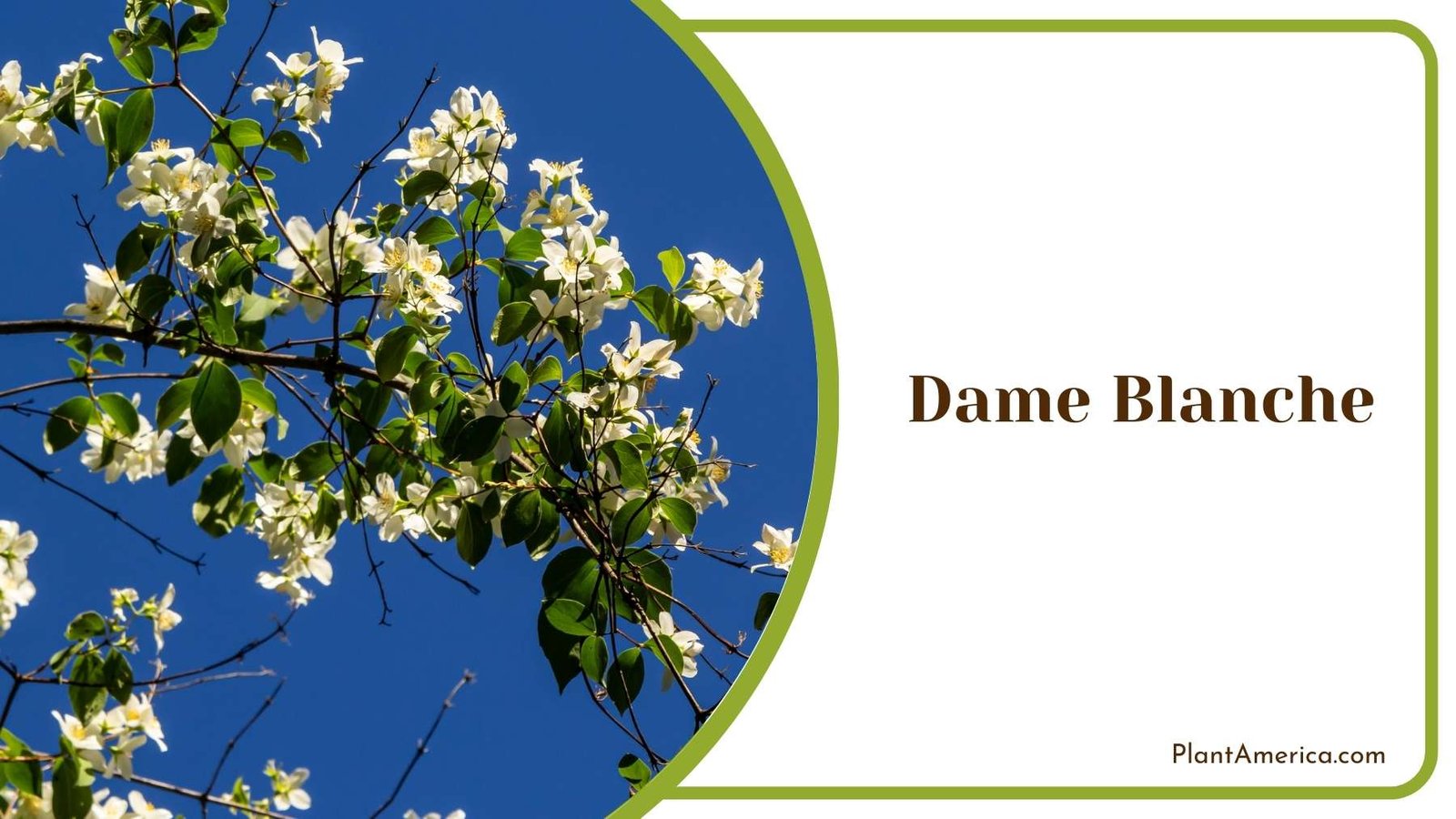
Philadelphus ‘Dame Blanche’ is a non-toxic shrub that boasts an abundance of fragrant white flowers, creating a stunning focal point in any garden. This cultivar produces large, single blooms with a prominent yellow center, surrounded by pristine white petals. The flowers emit a delightful citrus fragrance that wafts through the air, attracting pollinators like bees and butterflies.
‘Dame Blanche’ grows to a height of 6 to 8 feet (1.8 to 2.4 meters) and has an upright, bushy form, making it ideal for borders or as a standalone specimen. Its dark green foliage provides an attractive backdrop, and in autumn, the leaves turn a warm shade of yellow. With its non-toxic nature, this Philadelphus cultivar can be safely enjoyed in gardens where children and pets play.
6. Desert Snow
- Growing Season: Spring, Summer
- Feeding habit: Elliptic, Oval
- Specific Needs: Well draining soil, Full sun
- Common Pests: Spider mites, Leafhoppers
Philadelphus ‘Desert Snow’ is a beautiful flowering bush that does well in hot, sunny places. It grows into a compact shape about one to two meters tall and almost as wide. This variety is very drought tolerant once established, making it a good choice for low-care gardens in warm regions.
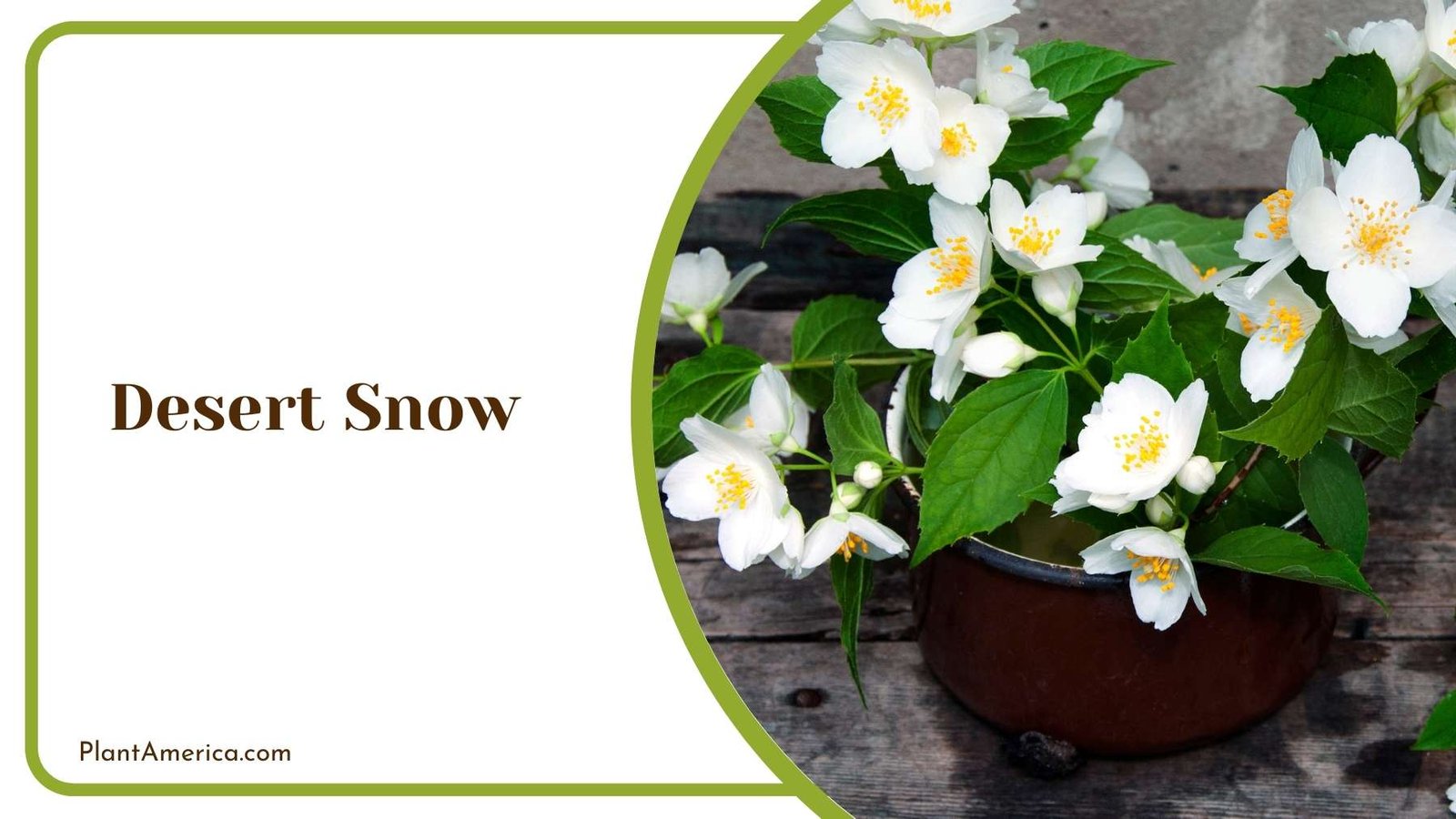
‘Desert Snow’ has white, very fragrant flowers that bloom nonstop from early to late summer. The individual flowers are small and star-shaped, clustered together on the branches in large groups. Due to the large number of flowers, the entire bush looks like it is covered with snow from a distance during bloom time. This heavy flowering is unusual for mock oranges grown in places with little water.
The white blooms of ‘Desert Snow’ attract many pollinators to the garden, including bees, butterflies, hummingbirds and more. Birds also enjoy eating the berries that form after flowering. This makes it a plant that benefits both aesthetic beauty and local wildlife habitat. It is a low-maintenance ornamental that can withstand tough conditions with little water once established..
7. Ernest Wilson
- Growing Season: Spring, Summer
- Feeding habit: Broad, Ovate
- Specific Needs: Well draining soil, Full sun
- Common Pests: Aphids, Leafhoppers
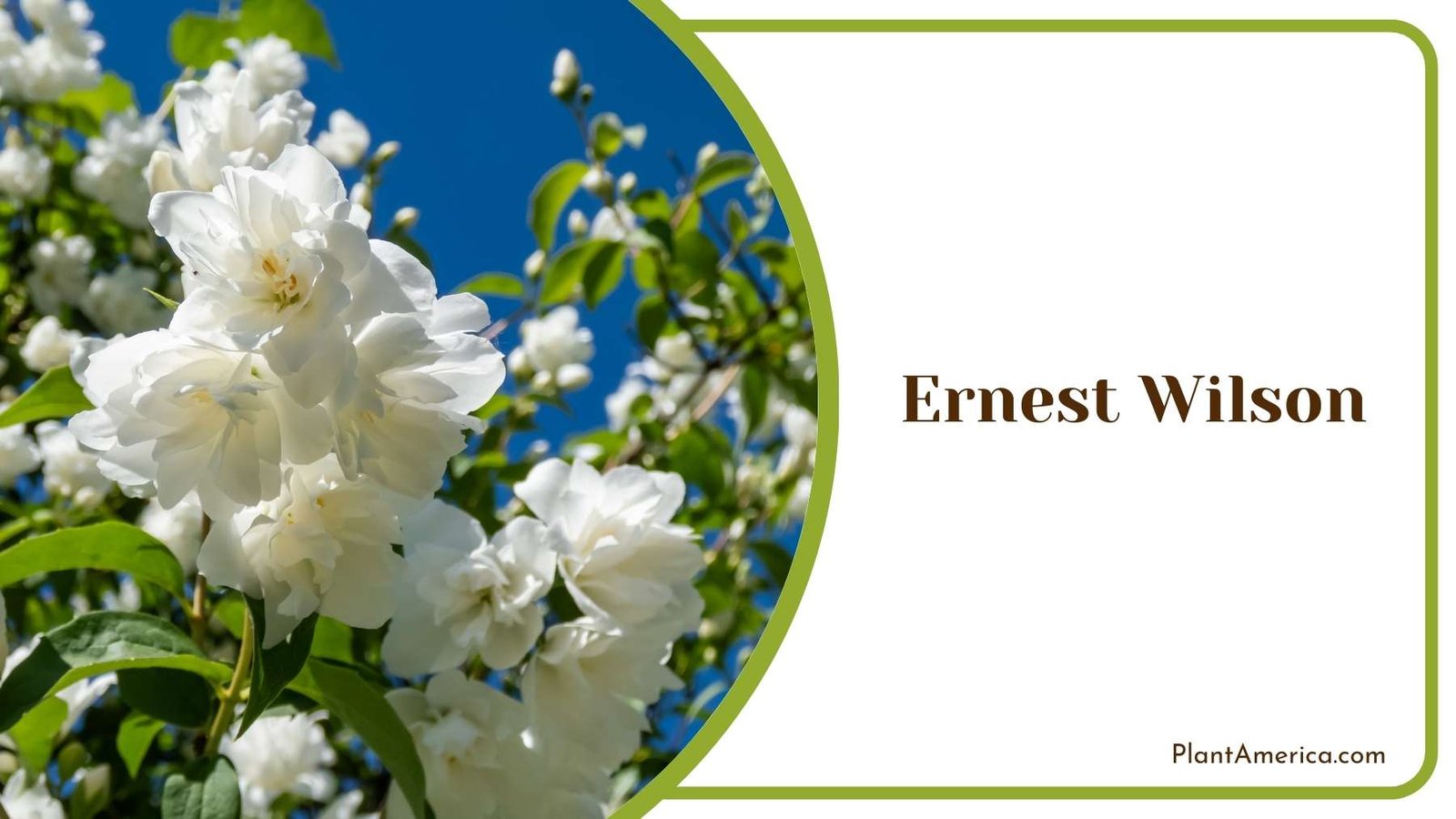
Philadelphus ‘Ernest Wilson’ is a vibrantly flowering variety prized for its striking double-blossoms. Originating from England in the early 1900s, it grows into an upright, vase-shaped shrub reaching 1.5 to 2 meters tall.
In mid-summer, clustered along the stems appear rounded pom-pom blooms nearly 10 centimeters in diameter. Closer inspection reveals each ball-like flower comprises numerous tightly packed petals in shades of pale pink to soft rosy red. Their unique structure resembles crepe paper flowers bundled together.
The abundant doubles bloom for several weeks, delicately scenting the garden with their sweet fragrance. Bees and butterflies enjoy collecting nectar from the flat-faced blooms. Additionally, some songbirds relish the seed pods that follow.
Unlike some competitors, ‘Ernest Wilson’ displays resilience in varied climatic conditions. It withstands heat, cold, and drought periods fairly well once established. Full sun is preferable, but partial shade also suits this hardy variety.
Well-draining soil and minimal annual pruning is typically all the care it requires. Occasional fertilizer or compost tea applications further encourage flowering. Further, it takes insect pests or disease infestations in stride.
8. Girard’s Dwarf
- Growing Season: Spring, Summer
- Feeding habit: Oval, Lanced shaped
- Specific Needs: Well draining soil, Full sun
- Common Pests: Japanese beetles, Leafhoppers
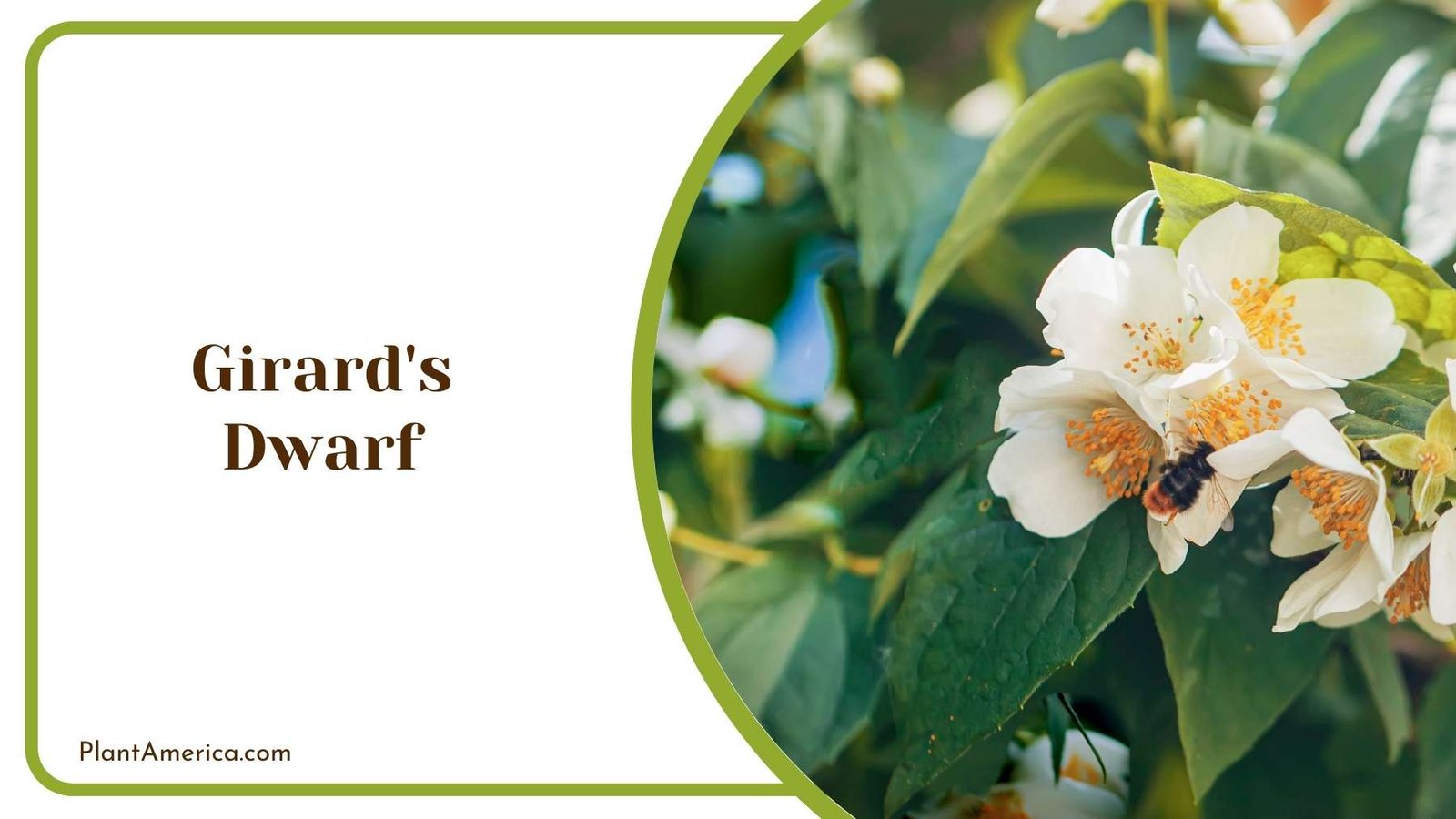
Philadelphus ‘Girard’s Dwarf’ is a charming compact selection prized for its miniature size and prolific flowering habit. As the name implies, it matures into a gracefully mounded shrub reaching only 60-90 cm in height. Its delicate appearance belies remarkable floral abundance in summer.
Bloom time occurs in June and July, creating a lovely vignette perfectly suited to cultivated landscapes. Flowers attract beneficial bees, hoverflies and butterflies in droves. Low maintenance needs require mainly sun or partial shade with average soil. Shearing after flowering encourages a neat shape if desired.
The miniature stature of ‘Girard’s Dwarf’ makes it ideal for lining low borders, spilling over walls, or even container growing. It adds lively movement and grace to smaller garden spaces. Where other mock oranges may overpower, this cultivar provides floral delight without dominating surrounds. Its impact belies diminutive size for truly superior ornamental qualities.
9. Lemoinei
- Growing Season: Spring
- Feeding habit: Broad, Ovate
- Specific Needs: Well draining soil, Full sun
- Common Pests: Spider mites, Leafhoppers
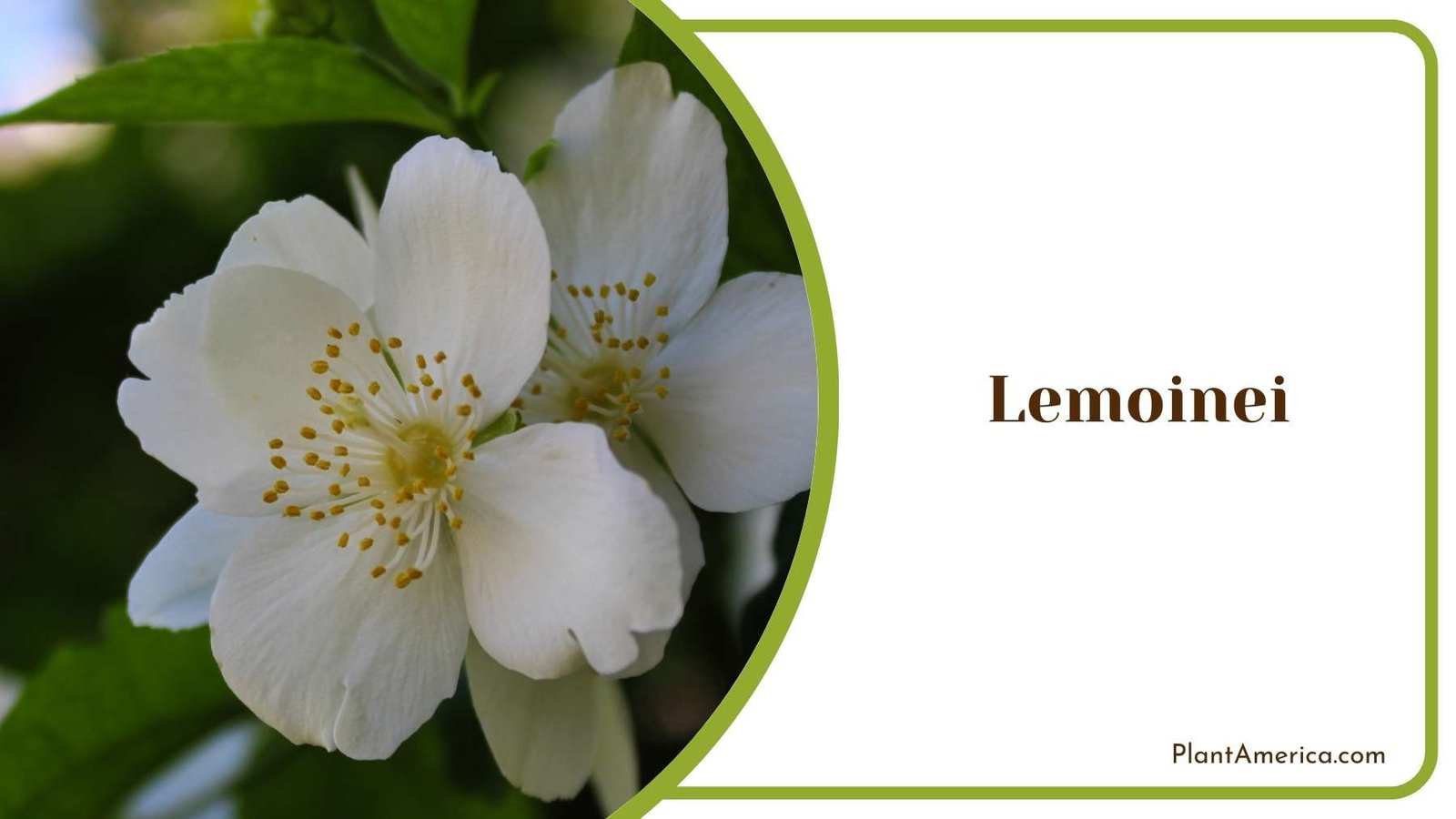
Philadelphus ‘Lemoinei’ is a stately mock orange shrub prized for its handsome foliage and mass displays of highly fragrant flowers in mid-summer. Growing four to six feet tall and almost as wide, it has a naturally dense, vase-shaped form. Gorgeous dark green leaves provide an attractive backdrop for the showy bloom time.
Each leaf of ‘Lemoinei’ is oblong in shape, reaching three to four inches in length. Their surfaces are an exceptionally rich, leathery texture unlike other varieties. Through the warm months, the foliage maintains a lustrous semi-evergreen appearance. Even in fall and winter the shrub retains most of its leaves, adding visual interest when not in flower.
From July through August, large panicles of pure white blooms smother the branches. Individual flowers have a ruffled, double form with up to 12 narrow petals. Their mild yet intoxicating fragrance is strongest in the heat of the day, carrying sweet scents of vanilla and honeysuckle on the breeze for several feet.
Hovering bees and butterflies signify the abundance of nectar contained within each blossom. This extended bloom period provides crucial late-summer forage for pollinators. Sets of dry seeds follow, enclosed in fuzzy balls that ornament the shrub into fall.
Philadelphus ‘Lemoinei’ is extremely hardy and tolerant of various conditions. Once established, it demands little care other than pruning immediately after flowering to encourage another round of blooms. Its rounded structure, appealing texture, and heady floral display give this mock orange variety year-round beauty and benefit in the garden. Suitable for framing patios, walkways or standing alone as a specimen, it is certain to become a favorite.
10. Manteau d’Hermine
- Growing Season: Spring, Summer
- Feeding habit: Broad, Ovate
- Specific Needs: Well draining soil, Full sun
- Common Pests: Spider Mites, Leafhoppers
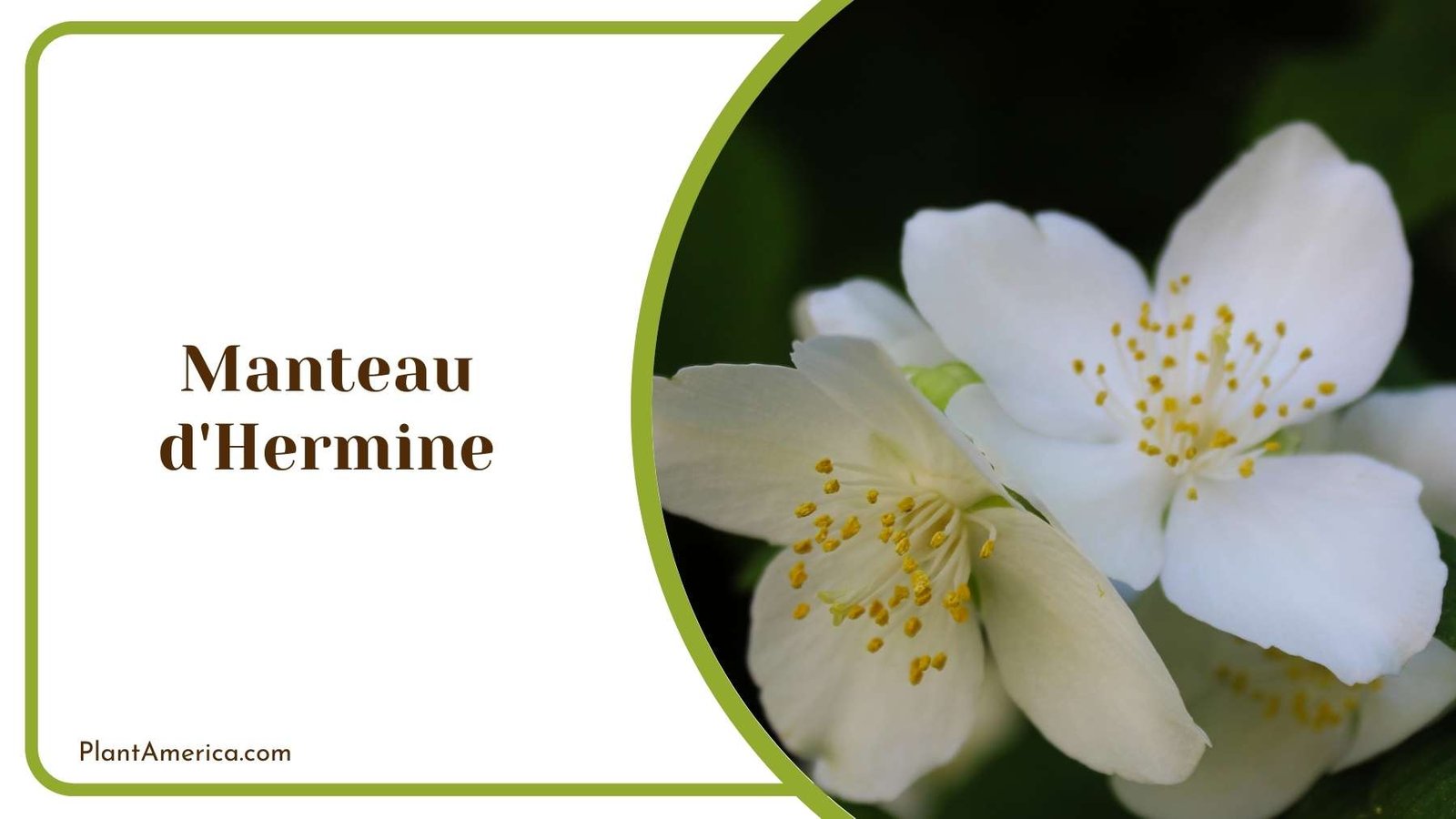
Philadelphus ‘Manteau d’Hermine’ is a non-toxic shrub that delights with its profusion of fragrant white flowers. This cultivar features clusters of single blooms with a yellow center, creating a charming display.
The flowers emit a sweet fragrance that fills the garden with its delightful scent. ‘Manteau d’Hermine’ typically reaches a height of six to eight feet and has an upright, arching form, adding elegance to the landscape. Its dark green foliage provides an attractive backdrop, and as autumn arrives, the leaves turn a warm shade of yellow. With its non-toxic nature, this Philadelphus cultivar is a safe choice for gardens where children and pets play.
11. Snow White Sensation

- Growing Season: Spring
- Feeding habit: Broad, Ovate
- Specific Needs: Well draining soil, Full sun
- Common Pests: Aphids, Leafhoppers
Philadelphus ‘Snow White Sensation’ is a superior selection valued for its abundant clusters of very large, ultra-white blooms. Developed in the 1990s, this bush produces masses of fragrant flowers sure to dazzle.
Growing into an upright, spreading shrub 1-1.5 meters tall, ‘Snow White Sensation’ quickly establishes an eye-catching presence in the landscape. Its lush green foliage remains healthy throughout summer. But the true spectacle arises in early to mid-summer when cascades of blooms emerge.
Individual flowers measure a substantial 3 centimeters across, nearly doubling the size of other philadelphus. Their pristine white petals form a true cross shape smothering long arching branches. Blooms seem to glow almost luminous against the verdant backdrop. Numerous blossoms congregate densely to completely blanket the shrub for several weeks of fragrant beauty.
Where to situate this variety? ‘Snow White Sensation’ thrives best in full sun but tolerates partial shade too. Average garden soil suits its roots well. Due to robust nature, it serves nobly lining patios, walkways and foundations—perfect for enjoyment up close. Deadheading spent blooms encourages rebloom until first frosts arrive.
With enormous blooms borne persistently, ‘Snow White Sensation’ outshines all relatives for sheer floral impact. Utterly gorgeous and carefree in culture, this exceptional mock orange variety never fails to impress onlookers in summertime gardens bountiful with sweet perfume and snowy cascades of flowers..
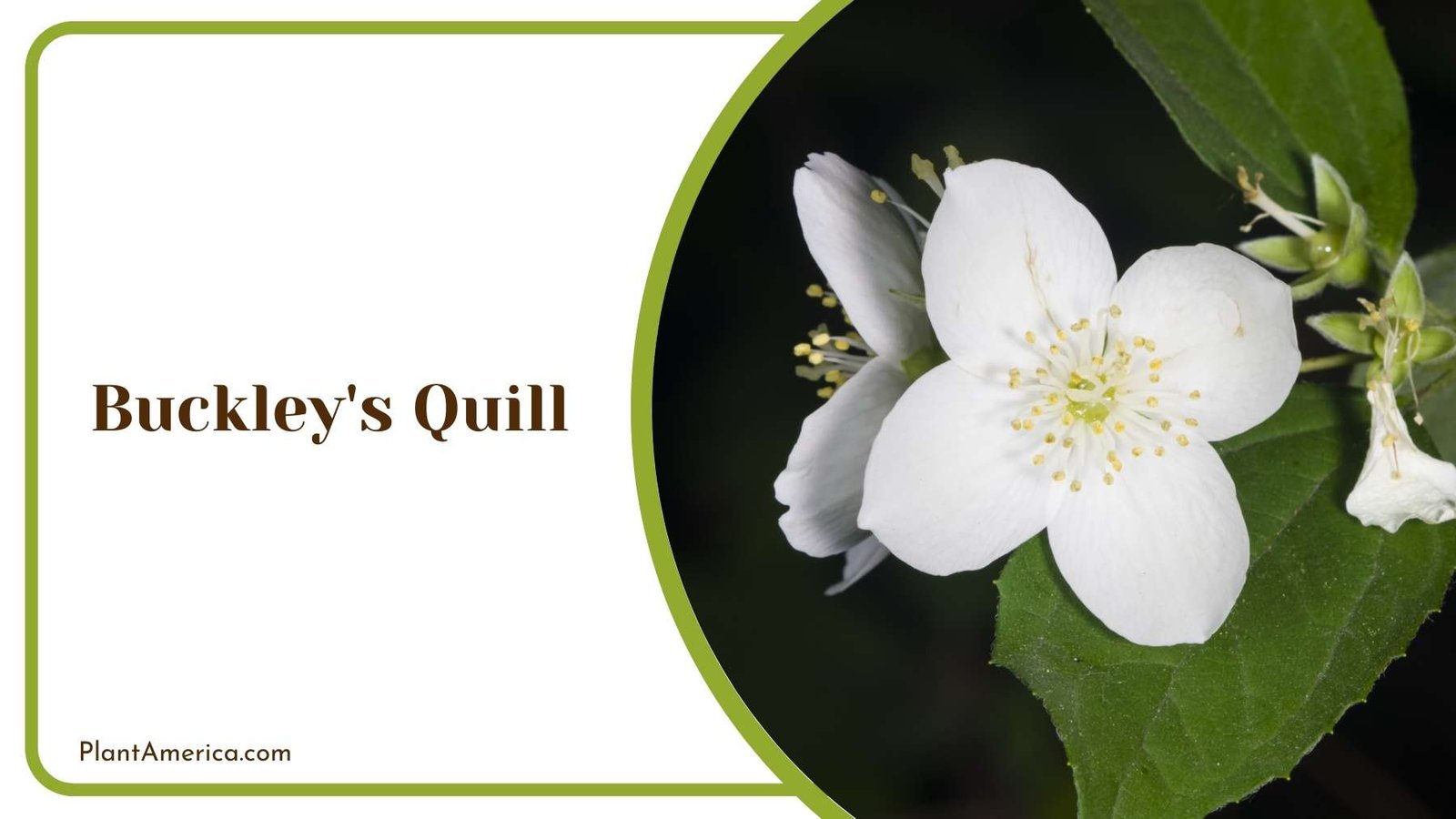
12. Buckley’s Quill
- Growing Season: Spring, Summer
- Feeding habit: Broad, Ovate
- Specific Needs: Well draining soil, Full sun
- Common Pests: Spider mites, Japanese beetles
Philadelphus ‘Buckley’s Quill’ stands out from other mock oranges with its elegant elongated flowers. Originating from England in the 1960s, it forms a tidy upright shrub reaching 1 to 1.5 meters tall.
In early summer, clusters of very fragrant white flowers appear along the branches. Distinctively, each individual bloom displays four slender petals twisting narrowly upwards into a quill-like shape. Their cylindrical form resembles vanilla pods or twirling soft-serve ice cream cones up to five centimeters in length.
The plentiful single blooms completely cover the shrub for several weeks, attracting hummingbirds, bees and butterflies with their sweet nectar. After flowering, seedpods follow which some birds enjoy through fall. The glossy dark green leaves provide ornamental texture and may turn yellow in autumn.
This mock orange variety demonstrates greater disease and pest resistance than other cultivars. It prefers full sun but will also grow in partial shade, with well-draining soil. Minor trimming can shape the compact habit or maintain a smaller size..
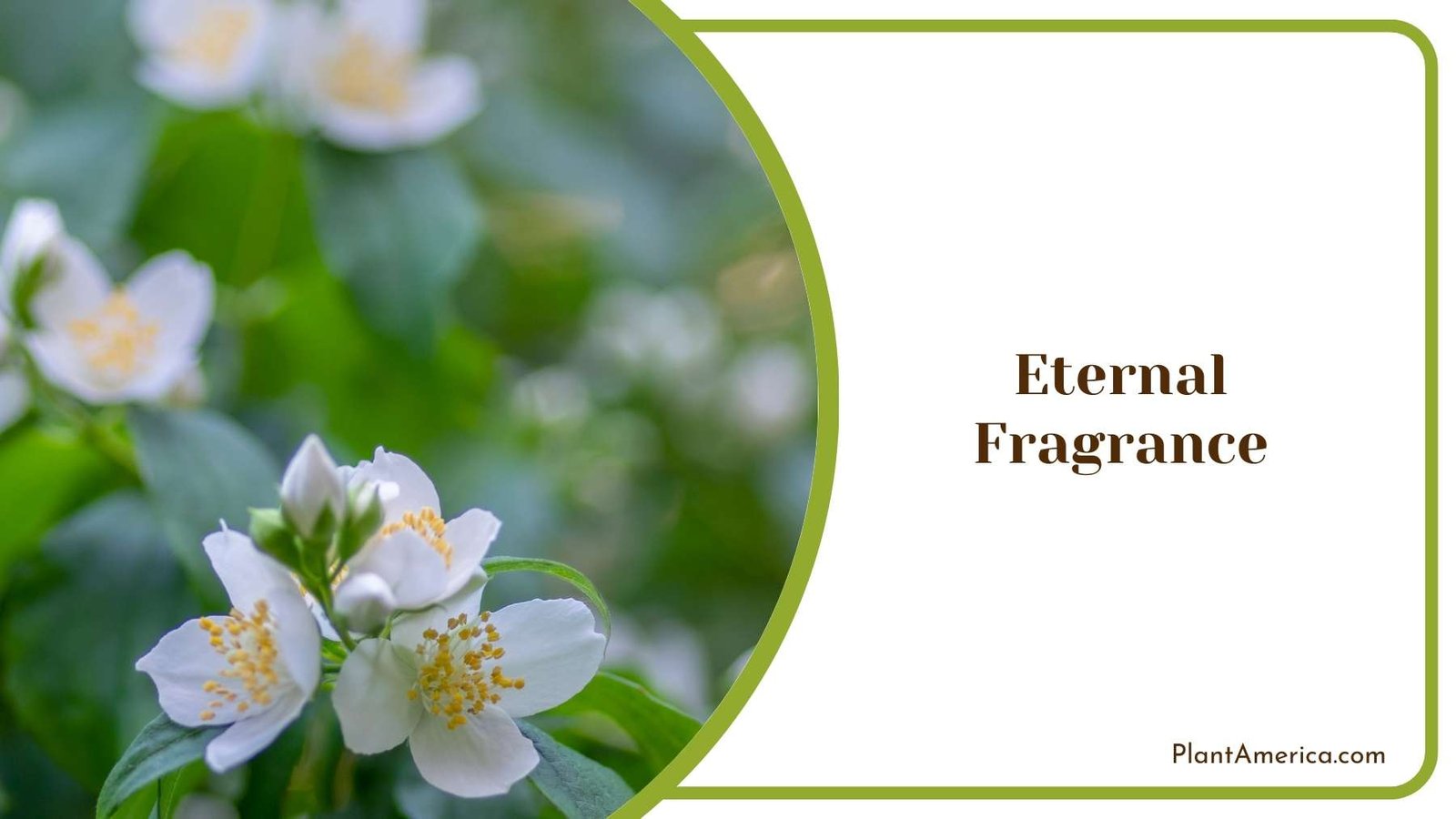
13. Eternal Fragrance
- Growing Season: Spring, Summer
- Feeding habit: Broad, Ovate
- Specific Needs: Well draining soil, Full sun
- Common Pests: Spider mites, Japanese beetles
Also known as ‘Fragrant Delight,’ ‘Eternal Fragrance’ is renowned for its sweetly perfumed blooms. In late spring, this mock orange erupts in plumes of small white flowers, their gentle fragrance permeating the air. Flowers emerge over a lengthy period, living up to its name with constant blooming into early summer.
Afterward, ‘Eternal Fragrance’ develops into a multi-stemmed, vase-shaped shrub reaching six to eight feet tall. Broadly ovate leaves open a fresh green and stay attractive without burning in either full sun or partial shade. Vibrant fall foliage tones of yellow and orange add seasonal interest before leaf drop.
Thriving in zones five through nine, ‘Eternal Fragrance’ demonstrates reliability where space allows. Minor issues seldom affect its ornamental qualities. Especially along patios or walkways where its alluring aroma can be enjoyed, this mock orange adds scenic beauty all season and for many years to come.
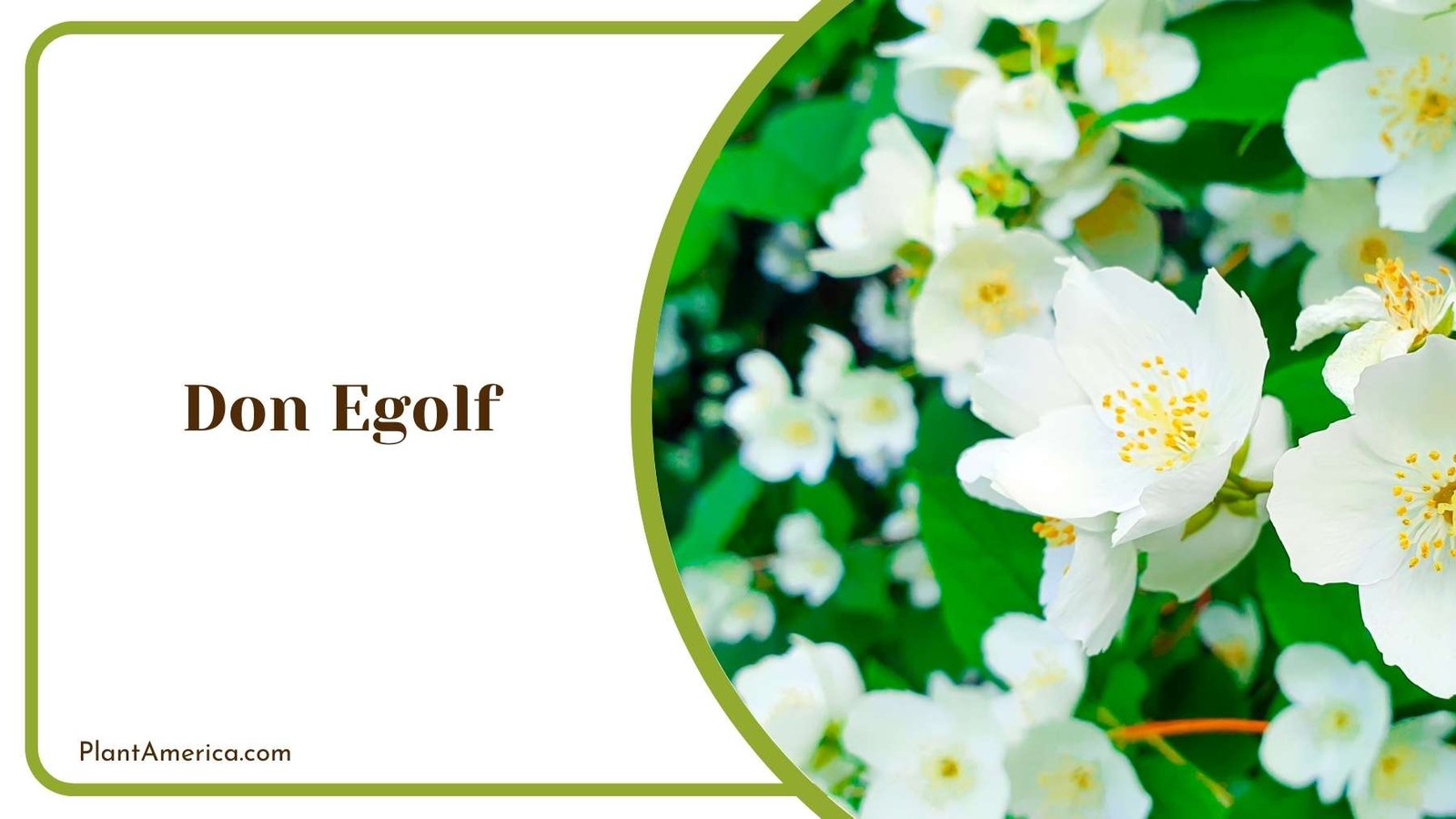
14. Don Egolf
- Growing Season: Spring, Summer
- Feeding habit: Broad, Oval
- Specific Needs: Well draining soil, Full sun
- Common Pests: Spider mites, Leafhoppers
Selected for its profuse flowers and sturdy constitution, ‘Don Egolf’ mock orange reliably delivers seasonal beauty. In late spring and early summer, panicles of small white blooms emerge thickly along branches. Individual flowers unfurl as creamy white trumpets, their mild fragrance pleasing to people and pollinators alike.
After blooming concludes, ‘Don Egolf’ develops into a hardy, upright shrub growing six to eight feet tall. It maintains a neat, vase-shaped form without pruning due to robust branching. Broadly oval leaves open fresh green and stay attractive without burning or browning in hot sun. Vibrant fall tones of orange, red and purple add color before leaf drop.
Thriving in USDA zones four through eight, ‘Don Egolf’ shows resilience in diverse climates and soil types with its only needs being full sun and good drainage. Minor pests may cause occasional spotting but do not impede this sturdy variety’s dependable performance season to season. Long-blooming beauty with structural longevity make ‘Don Egolf’ a top choice for sun-bathed borders and foundations requiring reliable performance.
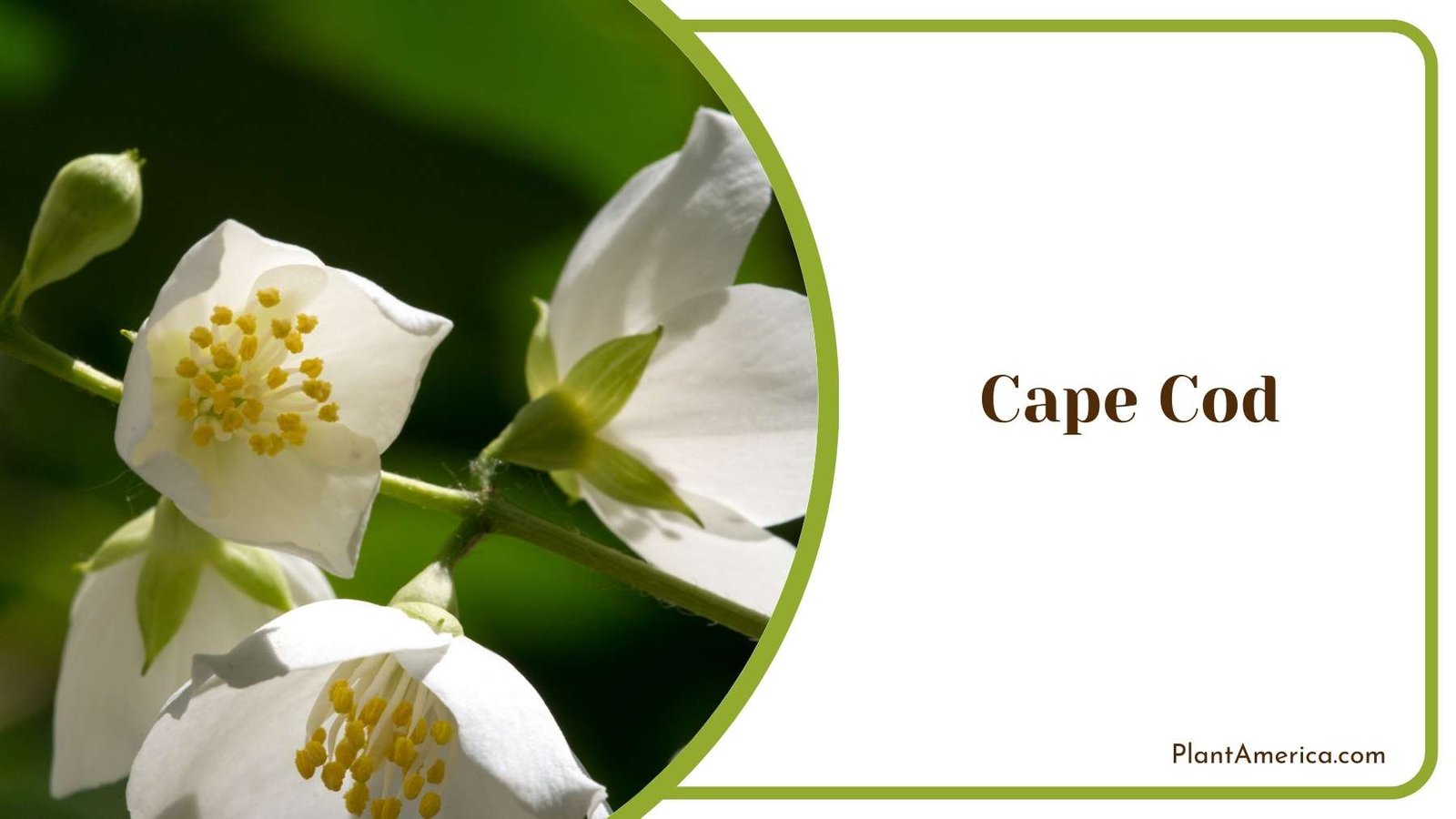
15. Cape Cod
- Growing Season: Spring
- Feeding habit: Broad, Elliptical
- Specific Needs: Well draining soil, Full sun
- Common Pests: Spider mites, Leafhoppers
Named for its place of origin on Cape Cod, Massachusetts, ‘Cape Cod’ mock orange brings traditional New England charm. In late spring it erupts in large panicles of frilly white flowers, intermingling cheerfully among English roses and yarrow. Individual blooms feature the typical four-petaled fusion characteristic of mock orange.
Maturing to finish five to seven feet tall with a vase-like habit, ‘Cape Cod’ develops a sturdy yet fine-branched structure. After blooming, broadly elliptical olive-green foliage emerges. Holding color well without scorching, leaves offer vibrant fall hues of oranges and reds before returning to dormancy.
Thriving in USDA zones four through eight, this variety shows resilience against minor pests and soil variations with its only needs being full sun and good drainage. Beyond seasonal flowers, ‘Cape Cod’ adds lasting grace and color to traditional perennial gardens, backgrounds and shrub borders year-round with low-maintenance reliability.
16. Baldwinii
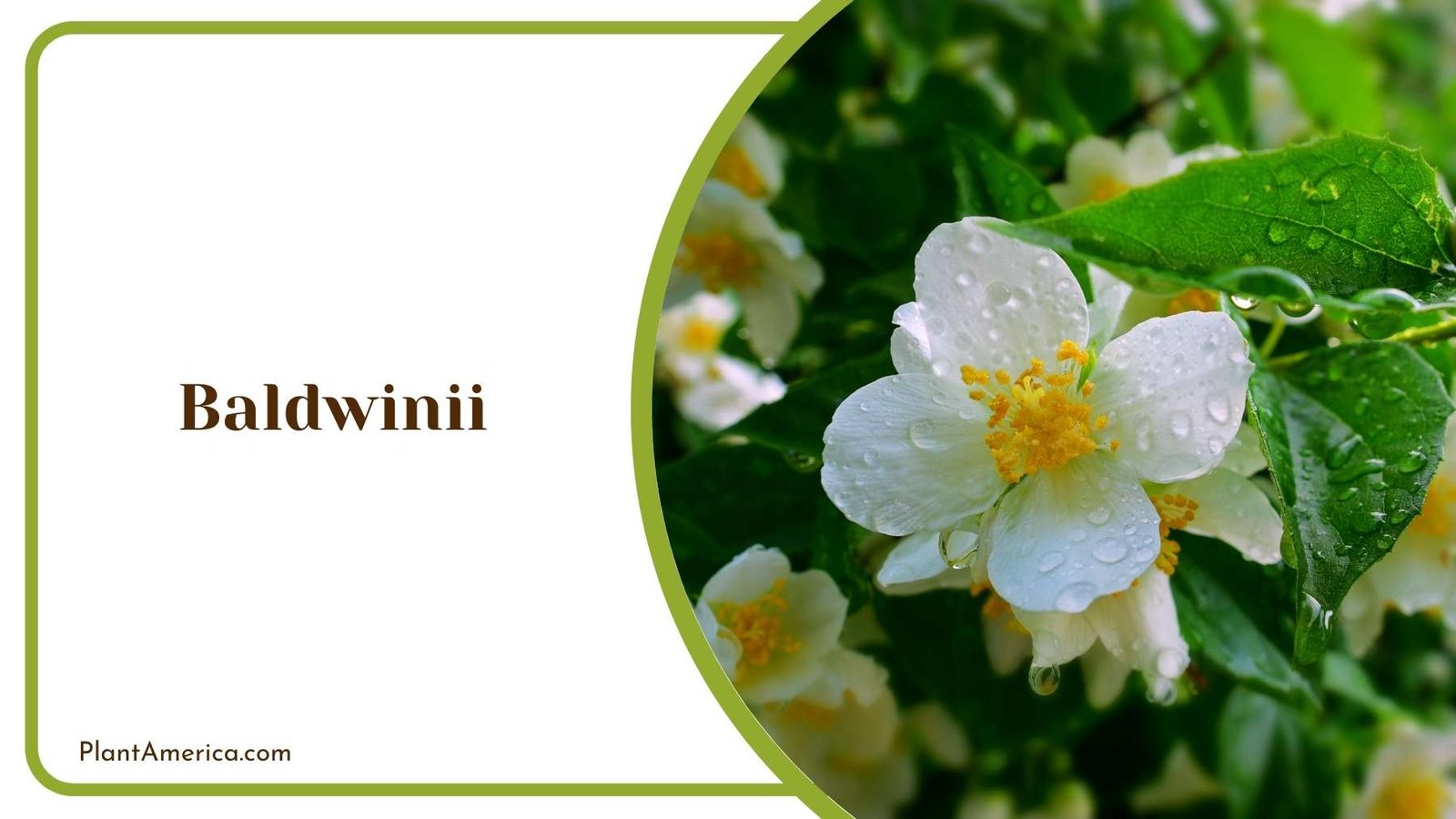
- Growing Season: Spring, Summer
- Feeding habit: Broad, Elliptical
- Specific Needs: Well draining soil, Full sun
- Common Pests: Spider mites, Leafhoppers
Philadelphus ‘Virginal’ is a classic and elegant mock orange variety renowned for its profusion of fragrant, double white flowers. This deciduous shrub blooms abundantly, creating a stunning visual display in the garden. ‘Virginal’ thrives in full sun and adapts well to various soil conditions.
Its arching branches and lush green foliage provide an attractive backdrop for the showy blossoms. With its timeless beauty and intoxicating fragrance, ‘Virginal’ is a favored choice for adding elegance and romance to any landscape. The abundant blooms and sweet scent make ‘Virginal’ a wonderful addition to garden borders or as a focal point in the garden.
17. Snowflake
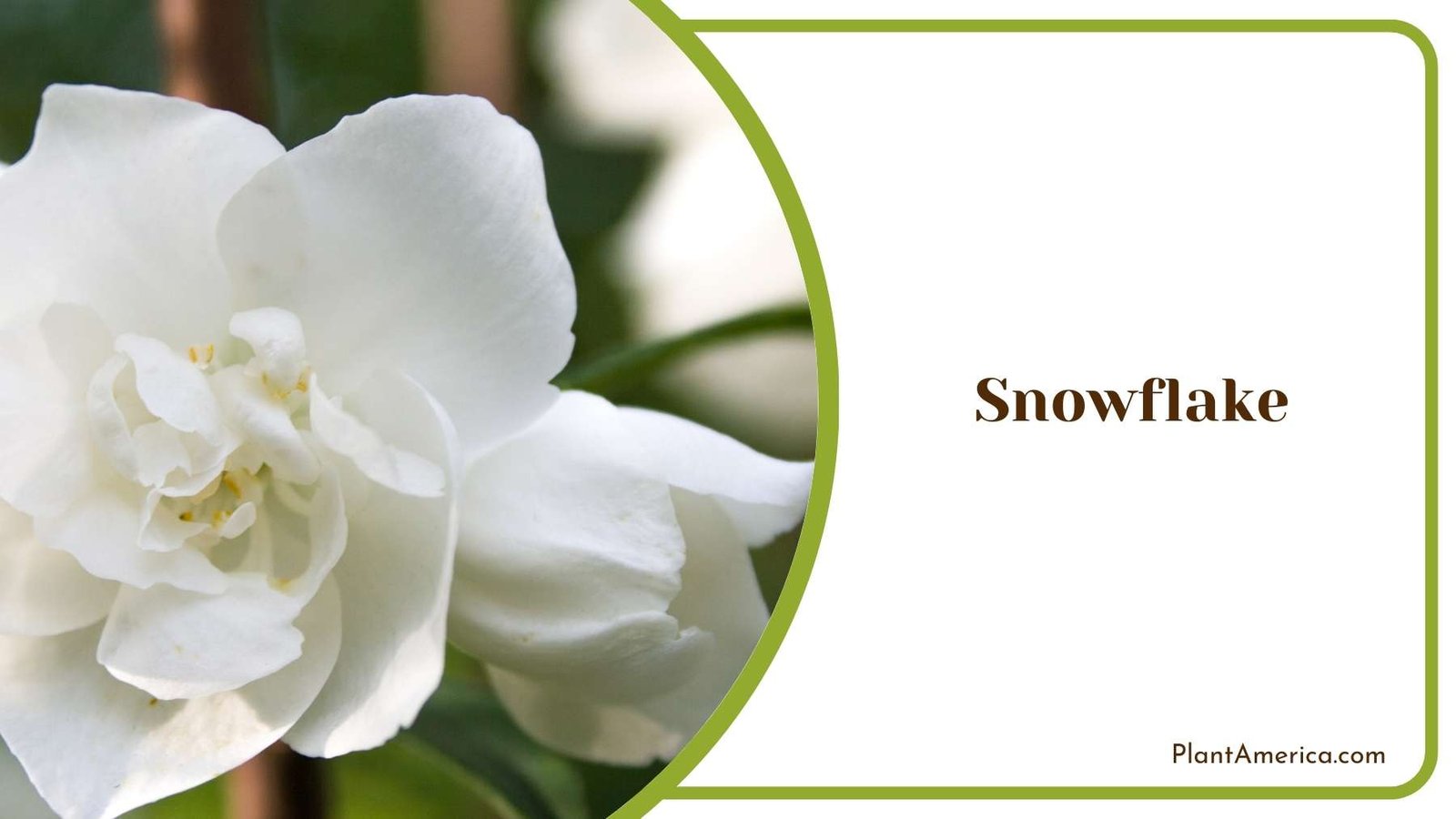
- Growing Season: Spring
- Feeding habit: Broad, Elliptical
- Specific Needs: Well draining soil, Full sun
- Common Pests: Spider mites, Leafhoppers
‘Snowflake’ mockorange gets its common name from the pristine white coloration of its blooms, which appear as if freshly fallen snow dotted along the branches. Each individual flower has a four-lobed star shape, with a pleasing mild fragrance. In late spring and early summer, large panicle clusters completely blanket the shrub in a blanket of white.
After flowering, ‘Snowflake’ takes on an upright form, developing broad elliptic leaves that remain dark green throughout the growing season. In autumn, the foliage changes to shades of yellow, orange and red before dropping for winter. This variety is hardy in USDA zones five -eight. It can thrive in full sun and could also tolerate partial shade, requiring only well-draining soil.
Minor pest issues may occasionally affect the leaves but do not typically threaten the health of the plant. ‘Snowflake’ is valued in ornamental gardens for its profuse spring blooming habit as well as its upright form and autumn leaf color. It adds seasonal beauty as well as elegant structure whether used as an individual shrub, in groupings, or as a hedge plant in the landscape.
Conclusion
This here provides landscapers and home gardeners a helpful overview of top mock orange varieties to consider for beauty and durability in gardens
- With its cream and green variegated leaves providing eye-catching foliage from spring through fall, ‘Variegated’ mock orange is a gorgeous landscape shrub
- Named for its place of origin on Cape Cod, Massachusetts, ‘Cape Cod’ mock orange brings traditional New England charm
- ‘Legend’ mock orange brings notable character and charm to gardens from late spring onwards.
Whether you seek fragrant flowers, vibrant foliage tones or just reliable seasonal interest, mock oranges offer outstanding value and performance season after season. Even minor pests pose little threat to their good health and good looks. For natural beauty from spring well into fall, and years of beauty regardless of changing trends, mock oranges remain beloved classics that enhance any garden landscape with their abundant charm.