
Berry trees produce some of the most delicious and nutritious berries you can grow in your garden. We’ll explore unique berry tree varieties with luscious fruit that will make the most of your limited space and bring you years of harvest joy.

From classic blackberries and raspberries to mysterious gooseberries and hardy Indian currants, we aim to help you decide which unexpected berry trees will best suit your growing conditions and taste preferences.
Berry Trees Types and Varieties You Should Consider
1. Elderberry Trees

- Growing Season: Spring
- Leaf Shape: Triangular, Oval
- Specific Needs: Full sun, Mineral-rich soil, Acidic soil
- Common Pests: Rust mites, Spider mites
The elderberry tree is a versatile and hardy plant that deserves a place in every home garden. While it may not be the most showy tree, the elderberry offers significant benefits to gardeners because of its durability, biodiversity support, and low maintenance needs.
One of the most significant advantages of the elderberry tree is that it thrives with very little care. It grows well in various soil and light conditions, from part shade to full sun. Once matured, elderberry trees require minimal water, even during dry periods, due to their deep roots. Their thick bark also makes them resistant to temperature fluctuations and pests. This toughness means elderberries are practical for gardens with limited time for upkeep.
Beyond being low-fuss themselves, elderberry trees attract a diversity of other garden life. Their fragrant white springtime blooms draw in bees, hummingbirds, and butterflies in abundance. Come fall, clustered dark berries provide crucial food for migrating songbirds. By hosting elderberry trees, gardeners actively support local pollinator populations and biodiversity.
The elderberry is also an excellent choice for small gardens or yards, as it grows into a gracefully rounded tree reaching 20 feet tall. Its abundant flowers and fruits mean it packs beauty and function into a compact footprint. And should pruning or space become needs, elderberry trunks and canes readily propagate from cuttings for new plantings.
With toughness, wildlife support, low care demands and versatility in small spaces, the elderberry tree has much to offer home gardens. Don’t overlook this hardy multi-tasker – consider giving elderberry a permanent place in your landscape for years of natural beauty and ecological benefits.
2. Seaberry Bushes

- Growing Season: Spring, Summer
- Leaf Shape: Fan-shaped, Oval
- Specific Needs: Full sun, Well-draining soil, Acidic soil
- Common Pests: Root weevils, Aphids
Along remote coastal beaches, a unique fruit grows wild on beach rose bushes – the hardy seaberry. Despite their nutritional bounty and naturally salt-tolerant nature, sea berries remain relatively unknown. But with remarkable antioxidant concentrations far surpassing blueberries and cranberries, their cultivated potential is gaining interest.
Sea berries resemble small, deep red cranberries that cluster on rosehip-like branches near the sea spray zone. Naturalizing along North American Atlantic coastlines after originating in Europe, they thrive where regular saltwater inundation deters plant diseases on brushy coastal dunes.
Between late summer and fall, the berries slowly blush from green to vibrant crimson as they ripen. Crunchy but tender inside, sea berries offer a sweet-tart taste of the sea due to their sandy coating. Compared to other fruits, antioxidant levels in sea berries are exceptionally high, rivaling acai and providing concentrated doses of vitamin C plus cancer-fighting anthocyanins for immunity, heart health and anti-aging benefits.
Being highly salt-tolerant allows sea berries to prosper where few other species survive along isolated, nutrient-poor beaches. They funnel crucial vitamins to shorebirds, seabirds and mammals residing in otherwise barren coastal habitats, particularly valuable during migrations and harshest winter months when food sources dwindle elsewhere. Naturally tucked into rose rosettes, the berries enduringly nourish local wildlife as long as gulls cannot pluck them all.
While sea berries grow wild near protected coasts, some innovative gardeners have successfully incorporated domesticated cultivars as far as 30 miles inland by approximating ideal seaside conditions. The key is soil amendments like regularly top-dressing with kelp meal to mimic beach sands while keeping pH balanced with trace minerals. A gritty, free-draining potting soil combined with afternoon sea breezes through an open lattice similarly replicates windswept coastal exposure.
With patience and TLC, tended sea berry bushes can fruit modest harvests for unique superfood celebrators. Come harvest, homemade jams, sauces or fresh eating may more intensely concentrate nutrients compared to foraged versions. Meanwhile, coastal pollinators continue being supported along with erosion control and wildlife provisioning through the bushes’ ecological role.
Where possible, sampling wild sea berries from beaches at peak seasons remains the most ecological option. But cultivation trials show promising potential to foster this specialized fruit’s virtues and nutrition more accessibly while bolstering community resilience to climate change impacts altering coastlines.
3. White Mulberry Tree

- Growing Season: Spring, Summer
- Leaf Shape: Triangular, Oval
- Specific Needs: Full sun, Well-draining soil, Support
- Common Pests: Japanese mites, Spider mites
While imports now dominate the global silk industry, the hardy white mulberry tree has nourished civilizations for centuries beyond silkworms alone. As a fast-growing shade tree tolerant of diverse climates, soils, and pollution, it offers shelter and environmental benefits, making it an asset for home landscapes.
Thriving from USDA zones 5-10, mulberries tolerate drought once established and suffer minor damage from ice or snow thanks to honeycombed bark. Both full sun and partial shade suit these adaptable trees.
During early summer, fragrant white clusters of edible fruits emerge after beautiful floral displays attracting pollinators. The deep rose, or purple berries ripen by late June on some cultivars, with others fruiting biennially. Unlike invasive red varieties, native white mulberries self-pollinate without dispersing seeds widely.
Nutritionally, mulberries rival blueberries with antioxidants, vitamins, and minerals in every sweet-tart berry. Their bursts of flavor shine in homemade pies, sauces or eaten fresh off the tree. Dried mulberries develop a chewy texture ideal for trail snacks. As a historic famine food, their starches generate sustaining energy when little else grows. Berries soothe sore throats, while medicinal leaves control diabetes.
Historically, mulberry wood crafts essential tools, baskets, and paper. Today, it remains suitable for preservation for furniture, flooring, veneer, or smoking meats and fish. Most notably, mulberries naturally restore depleted soils as a nitrogen-fixing pioneer, eliminating costly soil amendments. Allelopathic leaves further suppress weeds and pests without herbicide use.
Cultivating mulberry trees nurtures holistic and perpetual abundance for personal landscapes. Beyond silkworms, their ecological, nutritional, and industrial virtues have sustained civilizations for generations when introduced. As climate pressures intensify, reviving this regionally-adapted heritage offers sustainable solutions. With each spreading root, white mulberries invite renewed appreciation for native species continually serving communities for centuries.
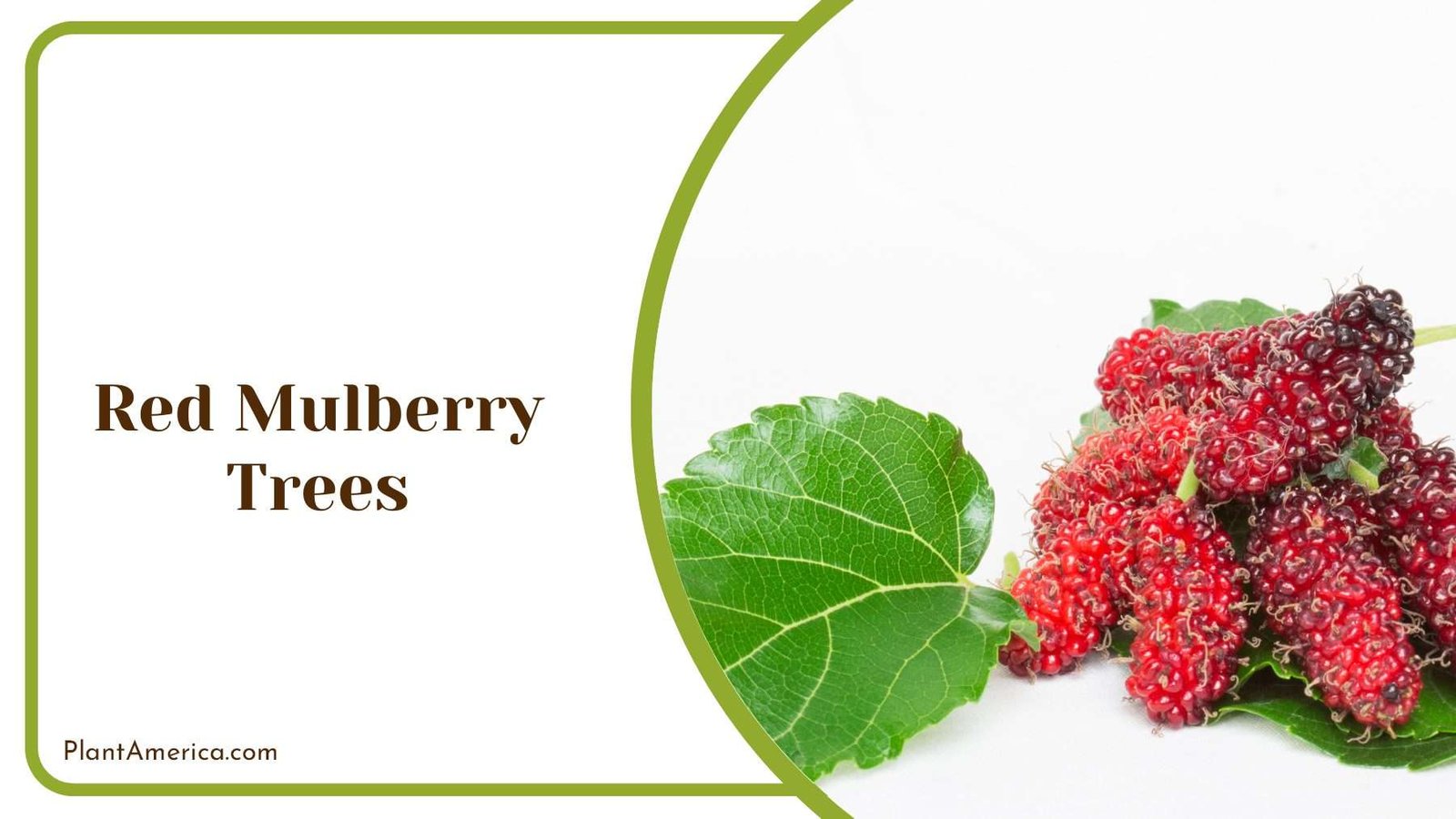
4. Red Mulberry Trees
- Growing Season: Spring
- Leaf Shape: Oblong, Oval
- Specific Needs: Full sun, Fertile soil, Support
- Common Pests: Aphids, Fungal
Red mulberry trees emerge in spring from persistent root systems, sending up multiple sturdy trunk branches that arch outward forming a vase-shape. During the following summer, lateral buds along these branches produce leaves as well as clusters of small white to green flowers that will eventually develop into the tree’s sweet fruits.
For maximizing mulberry yields, perform routine structural pruning and maintenance throughout the growing season. In late winter or early spring before buds break dormancy, prune out older, overcrowded branches to improve airflow and encourage new growth. Also thin excess laterals at this time to increase light penetration and air circulation around developing fruits. Mulch around the base of trees annually to retain soil moisture and suppress weeds.
Monitor red mulberry trees for common pests like Japanese beetles that feed on foliage, and mulberry pyralid moths whose caterpillar larvae chew leaves causing dieback. Watch also for aphids and scale insects that feed on sap and secrete sticky honeydew promoting sooty mold issues. Control minor infestations promptly using organic or biological treatments to prevent widespread damage.
Red mulberries thrive in full sun and require deep, fertile, well-drained soil that retains moisture. They tolerate a wide range of soil pH but perform best in slightly acidic conditions. Placing stakes or trellises below fruiting branches helps maximize yields by preventing heavy crops from breaking stems.
Choose mulberry varieties adapted for your climate and grow them for specific harvest windows. ‘Hardy Red’ bears large red fruits from mid-summer through early fall. ‘Illinois Everbearing’ yields multiple crops over three months. ‘Brown Turkey’ produces deep purple berries in mid-late summer.
Enjoy freshly picked mulberries for their abundant antioxidants and sweet flavor. Store-bought versions lose nutritional value, so harvesting your own ensures maximum levels. Preserve extras as jams, juices or syrups to enjoy the superfruit benefits all year. With diligent care, red mulberry trees can produce ample harvests for decades to come. Their superior nutrition profiles make them well worth the small effort required.
5. Bayberry Tree

- Growing Season: Spring, Summer
- Leaf Shape: Elliptic, Oval
- Specific Needs: Full sun, Fertile soil, Acidic soil
- Common Pests: Spider mites, Leafhopper
Along eastern woodlands, the vibrant red bayberry stands out come fall for its colorful display and versatile array of uses. Growing 15-30 feet tall with an umbrella-like canopy spreading nearly as wide, this small multi-purpose tree proves a treasure for homesteads and wildlife alike.
Beyond vibrant crimson and maroon autumn foliage, bayberry gifts include fragrant white flowers in spring giving way to beads of bright scarlet berries ripening from August through the first frosts. Small yellow flowers yield to these nutrient-dense fruits critical for over 90 species of migrating and resident songbirds, mammals, and game birds during winter. Their essential oils also naturally repel ticks and fleas on wildlife while supporting supple skin and joints through colder seasons.
For people, bayberries provide sustenance beyond ornamentation. Fallen berries dry on bundles fragrantly smoldered as potpourri, perfumes, or teas prized for their soothing scents. Ducks, chickens, pigs, and other homestead animals happily forage dried berries through winter. Most notably, ritual bayberry candle-making furnished centuries of light from coastal indigenous communities wherever the trees spread.
Coastal peoples mainly turned to red bayberry for versatile medicinal usages. Applying wax soothes skin ailments, while internal preparations treat indigestion, kidney ailments, and more severe conditions when alternatives are few. Today, natural health advocates seek antiviral and anti-inflammatory virtues from this hardy native.
With conscious propagation from local seed stock or cuttings, red bayberry spreads valuable ecosystem services through informed selection and planting. Their environmental fortitude suits roadsides, riparian buffers and other disturbed areas requiring minimal inputs once established.
Planted at homes, farms and public landscapes for fall attraction nourishing wildlife, bayberry trees offer bounty through harvested berries, fragrant waxes and more. Their deep roots spread harmony across communities ecologically, culturally and beyond with each passing season. Reviving this hardy eastern native merits renewed appreciation for its versatility enhancing landscapes everywhere it takes hold.
6. Juniper Berry Tree

- Growing Season: Spring, Summer
- Leaf Shape: Oblong, Oval
- Specific Needs: Full sun, Hard pruning, Well-draining soil
- Common Pests: Japanese beetles, Trellis
Found across diverse regions from coastlines to mountains, the stately juniper graces North America with unmatched resilience and cultural significance. Blending architectural structure with aromatic beauty, this evergreen tree offers perennial landscape value as well as gifts supporting life for millennia.
Over 50 juniper species vary in form from compact, upright varieties like Eastern red cedar ideal for privacy hedges, to shrubby, loosely spreading types like Utah juniper. Regardless, all share waxy blue-green needles emerging grayish and then darkening with age. Requiring only excellent drainage, junipers demand minimal care once established in sizes from 15 to over 60 feet tall, depending on species and cultivar.
Distinctive red-brown bark adds winter interest, while cone-like structures in spring bear tiny blue-black berries sustaining over 130 bird and mammal species. Flourishing juniper thickets formed by root sprouts house millions of migratory songbirds through winter scarcity. Their flourishing root systems reinforce mountain slopes and coastal dunes, sequestering carbon while mitigating erosion impacts on vulnerable habitats.
For millenia, juniper wood-crafted shelter and utensils was essential to human survival. Fragrant berries seasoned preserved meats and soothed illnesses when modern medicines lacked. Even today, juniper extracts relax digestive upset and relieve respiratory distress through the soothing properties of essential oils.
In gardens, junipers require no chemicals as their berries and leaves naturally repel pests. Orchards utilize allelopathic properties to suppress weeds without herbicides. Indoors, burning branches imbue relaxing aromatic steam. Sustainably harvested wood maintains artistic traditions among indigenous peoples.
As pioneering species, junipers play a pivotal role in stabilizing depleted soils, balancing regional climate, and fostering biodiversity within restored habitats and engineered environments. Their deep roots and drought tolerance enable migration and adaptation as climates change.
By thoughtfully propagating and incorporating junipers’ multi-faceted strengths into future landscapes, their cyclical benefits nurture reciprocal relationships with both nature and humanity for generations to come. Their roots signify the foundations of resilient, sustainable stewardship wherever land is cherished.
7. Serviceberry

- Growing Season: Spring, Summer
- Leaf Shape: Keep soil consistently moist; avoid soggy conditions.
- Specific Needs: Full sun, Fertile soil, Acidic soil
- Common Pests: Spider mites, Leafhopper
Each spring, serviceberry trees erupt in a profusion of white blooms that emerge gracefully before their leaves, signaling the arrival of warmer weather. Commonly called Juneberry as well, these hardy small trees come alive as their flowers give way to glossy red, purple, or yellow berries ripening in early summer.
Sporting a moderate growth rate, serviceberry trees typically reach 20-30 feet tall at maturity, forming an equally rounded canopy. Their leaves then transform into showy shades of red and orange during autumn before dropping for winter dormancy.
Adaptable to many soil and climate conditions, serviceberry trees thrive with minimal pruning or care once established. They grow widely across North American forest edges and clearings due to their environmental fortitude.
Home gardeners can readily incorporate this native small tree, choosing cultivars suited to their hardiness zone. Plant berries 6-10 feet apart in semi-shaded locations with organic, well-draining soil. Mulch annually and water during establishment.
Ripe berries provide a sweet treat for humans and wildlife alike in June, giving the tree its common moniker. However, local birds descend quickly on fruiting serviceberries, so handpick crops regularly as they ripen to enjoy.
Preserve surplus berries by making jams, jellies, pies or syrups to savor their subtle flavor through the seasons. Or allow some berries to persist, ensuring seeds disperse to regenerate future generations of serviceberry shade.
With minimal needs, seasonal color displays and nourishing edible berries, serviceberry trees foster valuable habitat while adding year-round natural beauty to any residential landscape with very little effort required. Their easy care qualities and resilience make these natives well-suited for growing organically.
8. Silverberry Tree

- Growing Season: Spring, Summer
- Leaf Shape: Triangular, Oval
- Specific Needs: Full sun, Well-draining soil, Support
- Common Pests: Japanese mites, Spider mites
Along wetland edges from coast to coast grows the versatile silverberry small tree, distinguished by its silvery foliage and abundant seasonal rewards. Reaching 15-20 feet tall with an equally rounded canopy, this resilient native shrub justifies land protection through ecological services and gifts across seasons.
Emerging silvery-white in spring, silverberry’s edged leaves retain metallic tones through summer heat before transforming shades of brilliant orange and red come autumn. Delicate white flowers give way in late summer to dusty blue berries persisting as a nutrient source from fall through winter.
Over 60 bird and mammal species depend heavily on nutrient-rich silverberry fruits during lean winter months. Waterfowl readily consume the high-oil berries to sustain energy through harshest weather. Ducks and chickens also willingly forage fallen berries into the new year at farms.
Coastal indigenous peoples depended on silverberry as versatile sustenance and medicine. Used externally, bark soothed skin infections and fungal issues. Internally, fermented berries and jams treated indigestion, while steamed leaves provided antimicrobial relief. Studies now link flavonoids to immune and heart benefits with further antiviral potential.
Home gardeners can cultivate clumps of silverberry in partial shade along wetland edges or riparian zones, where their resilience suits sites receiving seasonal inundation. Plant 6-10 feet apart in organic, well-draining soil and mulch annually for low-maintenance growth to 15-20 feet over 10-15 years.
Including silverberry buffers enriches watersheds naturally through carbon sequestration, soil nutrient cycling and runoff filtration by deep root systems. Their wildlife and pollinator supporting habit makes them functional native choices for any property valuing ecological balance and seasonal delights. For unmatched multi-seasonal allure restoring harmony wherever established, silverberry trees promise sustainable rewards to the discerning land steward.
9. Acai Berry Tree

- Growing Season: Spring, Summer
- Leaf Shape: Keep soil consistently moist; avoid soggy conditions.
- Specific Needs: Full sun, Fertile soil, Acidic soil
- Common Pests: Spider mites, Leafhopper
Originating from flooded Amazon forests, the acai berry tree has gained recent renown for densely nutritious purple fruits touted as a superfood powerhouse. Reaching heights up to 26 feet, acai trees form rounded palms with spiny leaves up to 3 feet long along arching stems in tropical wet or rainy climates.
Clusters of tiny grape-sized purple fruits resembling berries emerge throughout the dry season, each containing a large central seed encased in darkly pigmented pulp and skin holding concentrated levels of antioxidants over 25 times higher than blueberries per gram. Compounds like anthocyanins and Omega-9 fatty acids give acai potent anti-inflammatory and free radical scavenging properties linked to decreased cancer and heart disease risks as well as supporting brain, gut and joint health.
Traditionally, riverside communities fermented sun-dried acai berries into juice concentrates to enhance protein-sparse diets lacking key nutrients. Pressed seed oils also treated joint issues, skin ailments and other conditions when modern medicines lacked. Today, consumers globally source processed acai powders and frozen pulps featured in “superfruit” blends, though fresh fruits retain highest nutritional profiles.
While demanding consistent warmth, drainage and humidity, research exploring agronomic adaptations shows acai can thrive as far north as Hawaii and Southern California in greenhouse or raised bed microclimates simulating tropical wet seasons through rainfall collection and irrigation systems. Cultivation holds potential to boost nutrition security in at-risk regions worldwide according to advocates.
At maturity, individual dwarf cultivars suited for container growing can produce hundreds of berries per flushing rainy season, yielding multiple harvests annually. Beyond edible parts, acai seeds merit innovative research unlocking industrial applications like bioplastics and lubricants. With a history of fortifying communities through nutritional scarcity, renewed appreciation seems due this palm tree bearing rainbows of health packaged relatively small.
10. Huckleberry Tree

- Growing Season: Year-round
- Leaf Shape: Irregular rounded canopy
- Specific Needs: Acid woodland soils, Tolerates partial sun when young, Moisture retention near established trees; dappled shade in gardens
- Common Pests: None
Found throughout mountain forests of North America, the huckleberry tree deserves recognition for its ornamental beauty and deliciously nutritious small fruits. Reaching 10-20 feet tall depending on variety, huckleberry forms an irregular rounded canopy ideal for spreading wings in woodland clearings or edges.
Leaves emerge from new growth vivid shades of pinkish-red in spring, maturing medium green through summer heat before unveiling fall hues of yellow, orange and vibrant red. Come late summer, delicate white bell flowers give way to round berries developing from deep green to shades of blue, purple or red depending on species.
Birds and mammals widely consume huckleberries’ antioxidant-packed fruits, dispersing seeds throughout forest ranges. Traditionally, indigenous peoples harvested and processed berries as staples, preserving surpluses through drying, canning or fermenting to sustain communities through lean winter months. Studies show compounds in fresh or dried berries support immunity, digestion, aging skin and cognitive function.
Though adapted to acid woodland soils, huckleberries tolerate partial sun when young if located near established trees retaining moisture well. Plant berries or young transplants 6-10 feet apart, watering weekly until established over 2-3 growing seasons. Mulch annually with bark or compost to retain nutrients while suppressing competition in native woodland or landscape settings.
At home, encourage huckleberry bushes along forest edges or within naturalized gardens. Provide dappled shade using native canopy companions like oaks. Deadhead spent blooms to focus trees’ energies into fruit ripening. Come August, diligent harvesting prevents loss to wildlife while enjoying nature’s colorful superfood. Their seasonal beauty and nourishing fruits well repay land stewards’ efforts wherever established.
With conservation, huckleberry trees regain recognition among coming generations for multi-faceted values uniting nutrition, ecology and cultural heritage. With patience, their widespread habit restores thriving woodland edges throughout wild spaces and community landscapes alike.