
Types of juniper trees of the Cupressaceae family can offer both beauty and versatility for any landscape. In this guide, we’ll cover ten different juniper varieties to consider adding to your yard or garden. Junipers range from narrow upright forms to dense mounds to wide-spreading groundcovers. They come in various greens, blues, and greys, with some offering unique red berries in the winter.

No matter your style or hardiness zone, there is likely a juniper tree perfectly suited for your outdoor space. We’ll explore juniper tree characteristics like size, growth rate, shape, and more so you can narrow in on the types of juniper trees that fit your design needs and care preferences. Also, it is possible to transplant them anywhere you want in your garden.
Distinct Types of Juniper Trees for Gardens
1. Canadian Juniper

- Growing Season: Spring, Fall.
- Leaf Shape: Scale-like, Needle-like.
- Specific Needs: Full sun, Average soil.
- Common Pests: Aphids, Spider mites.
Canadian juniper is a compact, pyramidal evergreen with a moderate growth rate and versatility. It thrives in full sun and average well-draining soil with occasional watering during its active spring through fall growing season. The scale-like, needle-evergreen leaves stay a lush deep-green color year-round, providing decorative texture to landscapes.
Canadian juniper pairs beautifully with creeping or shore juniper as a low ornamental hedge, accent plant, or dense groundcover variety. Prune back overgrown stems after flowering each spring to promote dense branching, control size, and maintain a uniform shape for landscaping design. Canadian juniper is hardy for zones four through eight.
As a compact evergreen shrub, the Canadian juniper grows at around one to two feet per year, making it a moderately fast-growing juniper when young but slowing as size increases. Its size and scale-like foliage make it suitable for smaller landscapes and tighter areas, mixing well with perennials, bulbs, other groundcovers, and smaller ornamental trees.
Canadian juniper can be planted as a foundation planting, border plant, low hedge, or in groupings for an evergreen display. Pruning after flowering each spring helps maintain a dense, compact form and styled shape as it grows. The mature size also works well in medium and larger landscapes, incorporated as an accent plant along pathways or near entrances for fragrant evergreen curb appeal.
2. Blue Pacific Juniper

- Growing Season: All year.
- Leaf Type: Scaly, Needle-like leaves.
- Specific Needs: Full sun, Well-draining soil.
- Common Pests: Aphids, Spider mites, Juniper scale.
Blue Pacific Juniper is a coniferous evergreen with gray-green to blue-green scaly foliage and a rounded to irregular form. It does best in full sun and well-draining soil, occasionally watering during hot and dry periods. Drought and heat-tolerant, the Blue Pacific juniper grows well in hot climates and warm regions.
The dark blue needles make the Blue Pacific juniper a striking accent plant in the landscape, pairing well with soft-leafed and gray-foliaged plants. Use it as a low hedge, border, groundcover, or specimen plant. With a slow to moderate growth rate, Blue Pacific juniper can reach heights of six to eight feet and widths of seven to 10 feet at maturity. Space individual plants five to 10 feet apart depending on the desired effect.
The foliage of the Blue Pacific juniper tends to drop needles when the plant is young. As it matures, there is less needle drop, but some dead interior foliage may develop, so prune regularly to remove this growth and maintain a complete, attractive form. Blue Pacific juniper can become leggy with improper pruning, so only remove broken or crossed branches to shape. Avoid shearing as it leads to unattractive dense growth.
3. Andorra Juniper

- Growing Season: Year Round, Evergreen.
- Leaf Type: Scale-like.
- Specific Needs: Full sun, Drought tolerant.
- Common Pests: Juniper tip moth, Bagworms, Juniper scale.
The statuesque Andorra Juniper shines as an accent plant for smaller landscapes, with its tall, columnar form and textural greyish-green scale leaves. Reaching heights over 15 feet but only three to four feet wide, the narrow silhouette of the Andorra Juniper draws the eye upward, framing views and drawing attention to architectural details.
Being an evergreen, the Andorra delivers year-round structure and visual interest. Even in the harshest winters, its scale-like leaves remain attached, creating a dense vertical column of foliage. Fresh green growth emerges in spring among the older needles, ensuring the plant retains its fullness.
Once established, the Andorra Juniper thrives in hot, sunny exposures with extremely dry soil. This drought tolerance and compact shape make it well-suited for challenging landscapes where water is limited. It can handle USDA zones 4 through 9, from regions with cold, snowy winters to areas with mild temperatures.
While generally low maintenance once established, a few pests can damage the Andorra. Juniper tip moth larvae feed on new growth in spring, bagworms chew on the needles, and juniper scale insects cause disfigured foliage. Keeping up with regular inspections and treating accordingly helps Andorra reach its full vertical potential.
4. Russian Juniper
- Growing Season: Spring, Fall.
- Leaf Type: Scale-like, Needle-like.
- Specific Needs: Full sun, Well-drained soil.
- Common Pests: Aphids, Spider mites.
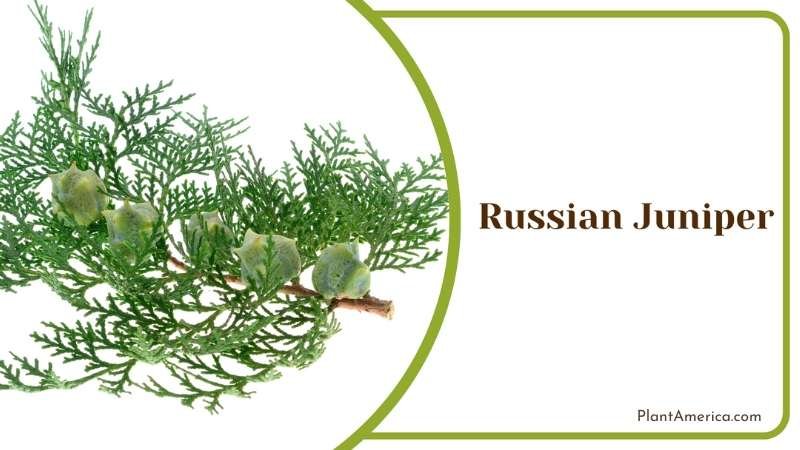
Russian juniper is a conical-shaped evergreen with scale-like, silver-blue foliage and a slow to medium growth rate.
The ornamental beauty of Russian juniper comes from its glaucous blue-green foliage and geometric form. Its uniform, narrow conical shape makes it well suited as an accent plant, screen, hedge, or windbreak.
Prune Russian juniper after flowering each spring up to a quarter of its total size to promote dense foliage and healthy regrowth while maintaining its conical form. Spring pruning also encourages robust new growth. Russian juniper tolerates frequent shearing to maintain a tight-hedged shape and smaller size. Avoid pruning during winter, as freezing and thawing can damage open wounds.
The silver-blue color of the Russian juniper provides an elegant evergreen backdrop during winter months and pairs well with many ornamental plants. Use Russian juniper as part of a drought-tolerant design suited for regions where water conservation is essential.
As an established evergreen tree juniper, the Russian juniper requires little maintenance apart from occasional shaping, pruning, and mulching. Apply an organic mulch in spring to conserve soil moisture and suppress weeds. Monitor for pests like juniper scale, aphids, and spider mites. Avoid overwatering and ensure drainage is adequate to reduce the risk of root rot and decline for Russian juniper trees.
5. Greek Juniper

- Growing Season: Spring, Fall.
- Leaf Type: Scale-like.
- Specific Needs: Full sun, Well-drained soil.
- Common Pests: Aphids, Juniper scale, Spider mites.
Greek juniper is an attractive evergreen shrub native to Mediterranean forests. It has powdery blue-green foliage and a rounded, spreading form. This juniper thrives in full sun and well-drained soil, occasionally watering during dry periods. The blue-toned scale leaves give Greek juniper a distinct appearance, contrasting nicely with soft or gray-green foliage plants.
Use Greek juniper as a low hedge, screen, specimen plant, or to define garden areas. Space individual shrubs three to five feet apart to provide room for spreading growth. As the Greek juniper ages, the lower branches slowly fade away, revealing the trunk with an upward sweep of foliage.
Prune Greek juniper after flowering in spring to maintain shape and size. Frequent pruning when young helps develop a dense, well-branched structure for the plant. As Greek juniper matures, prune mainly to remove dead or damaged wood.
Greek juniper tolerates various soil conditions but prefers slightly alkaline soil with good drainage. It thrives in USDA hardiness zones five through nine. Monitor Greek juniper for pests and treat as needed – control measures work best on young plants or before infestations become severe.
Fertilize Greek juniper in early spring using a balanced, slow-release product appropriate for acid-loving plants. Mulch to conserve moisture, suppress weeds, and maintain soil temperature.
6. Creeping Juniper
- Growing Season: Spring, Fall.
- Leaf Type: Scale-like needles.
- Specific Needs: Full sun, Well-drained soil.
- Common Pests: Aphids, Spider mites.
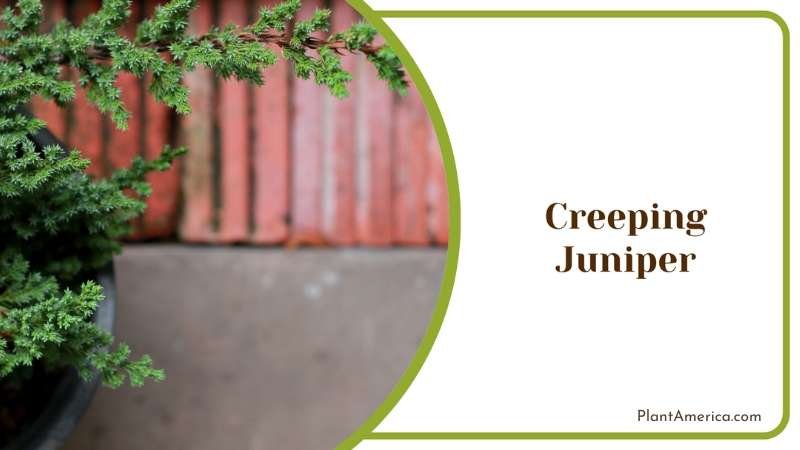
Creeping juniper is a versatile, low-growing evergreen shrub valued for its ability to form a dense, spreading ground cover. Native to Eurasia, creeping juniper has blue-green scale foliage and grows in a prostrate manner. The dense, compact form and slow growth rate of creeping juniper make it well suited for groundcover use. It can reach six to 12 inches tall and spread up to eight feet wide, suppressing weeds and retaining soil moisture well between plantings.
Use creeping juniper to cover slopes, form low foundation plantings, and cover large areas near patios and walkways. Space individual plants about 12 to 18 inches apart and avoid foot traffic when new to allow roots to become established. Once mature, creeping juniper is durable and resistant to foot traffic wear.
Creeping juniper thrives in full sun with occasional summer watering but is drought tolerant once established. It prefers fertile, well-drained soil with a pH between 6.0 and 7.5. Prune creeping juniper only lightly to promote density or to shape mounded parts. Avoid heavy shearing as it removes foliage the plant needs.
Given its low maintenance requirements and hardy nature, creeping juniper is an excellent choice for environmentally sustainable landscapes. It performs best in hardiness zones three through eight and partners well with other low-growing groundcovers like thymes, sedums, and dwarf perennials.
7. Upright Juniper

- Growing Season: Spring, Fall.
- Leaf Type: Scale-like needles.
- Specific Needs: Full sun, Well-drained soil.
- Common Pests: Aphids, Juniper scale, Spider mites.
Upright juniper is an evergreen cone-shaped shrub with narrow, blue-green scale-like foliage and a densely packed, columnar form. Upright juniper prefers full sun and well-draining soil with moderate water needs once established. It grows at a moderate rate when young but slows as the plant matures. Prune after spring flowering for shaping and removing dead wood as needed.
The tightly spaced scale foliage of upright juniper naturally sheds water and resists insect infestations better than other junipers with soft needles. Use it as a screen, hedge, windbreak, or tall accent plant. Space individual plants five to 10 feet apart based on the desired effect and mature size.
Useful characteristics of upright juniper include adaptability and hardy nature. Most upright junipers thrive in USDA hardiness zones three through eight and tolerate various soil conditions. They pair well with perennials, grasses, and spring flowering bulbs, offering evergreen vertical interest during winter months.
Fertilize upright junipers in spring with a slow-release product appropriate for acid-loving evergreens. Water deeply and infrequently during warm months. Avoid overwatering, as excess moisture can cause foliage issues and root rot. Prune out dead or diseased wood as needed to promote air circulation and healthy growth.
8. Sierra Juniper

- Growing Season: Spring, Fall.
- Leaf Type: Needle-like.
- Specific Needs: Full sun, Well-drained soil.
- Common Pests: Aphids, Juniper scale, Spider mites.
Sierra juniper is an evergreen tree native to California and the western United States mountain ranges. It has needle-like foliage that is green to grayish-green and a variable form that can be pyramidal, oval, or irregular. Sierra juniper thrives in full sun and well-draining soil with supplemental irrigation as needed. It grows slowly, typically reaching 10 to 30 feet tall and half as wide at maturity, so space individual trees about 15 feet apart for optimal growth.
Sierra juniper’s prickly, spine-tipped foliage helps it withstand harsh conditions at high elevations. Its variable form makes it a flexible choice as a shade tree, hedge, screen, or windbreak. The blue-toned needles remain throughout winter, providing ornamental interest during colder months.
Prune Sierra juniper only moderately when young to develop a sturdy branching structure and thick base. As the tree matures, pruning mainly involves removing dead or spindly lateral branches to maintain shape and form. Avoid heavy pruning during winter, as this can damage the tree.
Sierra juniper tolerates a wide range of conditions, from hot and dry deserts to cool mountain areas. It prefers USDA hardiness zones four through eight and soils that are slightly acidic and well-draining. While drought tolerant, Sierra juniper benefits from occasional deep watering, especially when young. Monitor for pests and treat them appropriately to maintain health and vigor.
9. Syrian Juniper

- Growing Season: Spring, Fall.
- Leaf Type: Awl-shaped.
- Specific Needs: Full sun, Average soil.
- Common Pests: Aphids, Spider mites.
Syrian juniper is an evergreen shrub native to central Asia and parts of the Mediterranean. It has bright green to blue-green awl-shaped needle leaves and a dense, spreading form.
Syrian juniper prefers full sun and well-draining soil. Once established, it is a reasonably drought-tolerant plant but benefits from supplemental irrigation during dry periods. Use in rock gardens, as a low hedge, or as a ground cover. Space individual plants about two to three feet apart to allow room for spreading growth.
A useful feature of Syrian juniper is its moderate growth rate. As a spreading juniper, it reaches heights of three to five feet and can spread up to six to 10 feet at maturity. Prune regularly to maintain an attractive form and prevent foliage from becoming too thick at the base. Avoid excess fertilizer, as this promotes weak, unnecessary growth.
The awl-shaped leaves of the Syrian juniper give it a spiky texture, distinguishing it from other juniper species. Use it to provide evergreen interest alongside ornamental grasses, perennials, and spring bulbs. Pair Syrian juniper with yellow- and orange-berried deciduous shrubs for winter color.
Syrian juniper tolerates heat, humidity, and light frost once established. It prefers USDA plant hardiness zones five through eight and performs poorly in poorly drained soil. Monitor for pests and control as needed to avoid damage and dieback.
10. Needle Juniper
- Growing Season: Spring, Fall.
- Leaf Type: Awl-shaped.
- Specific Needs: Full sun, Well-drained soil.
- Common Pests: Aphids, Spider mites.
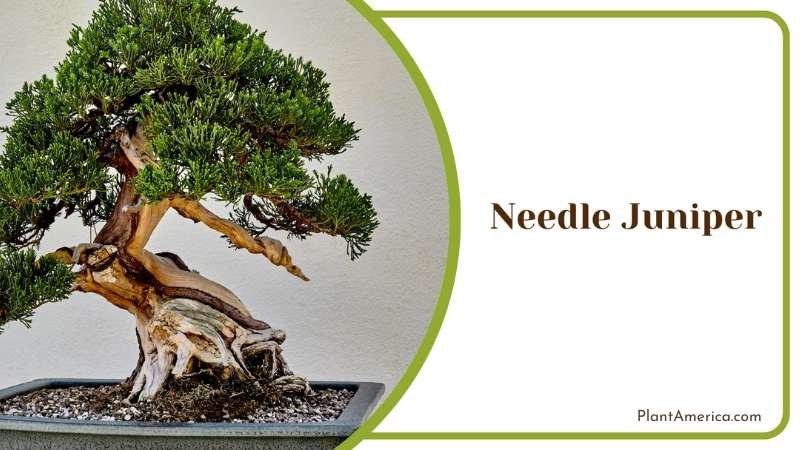
Needle juniper is a shrubby, many-branched evergreen with sharp, needle-like leaves that give it a prickly texture. It has a variable size and form, reaching between six to 15 feet tall and up to 10 feet wide when mature. Needle juniper prefers full sun and well-draining soil with occasional supplemental summer water to maintain vigor. The bright green awl-shaped foliage turns bluish-grey in winter and provides a year-round evergreen aesthetic.
Prune needle juniper when young to develop a thick, bushy habit for use as a specimen plant, hedge, or as part of a mixed border planting. Space individual plants about two to three feet apart to allow for spreading growth. When used as a tall screen or accent tree, prune lower limbs to create trunk clearances up to three feet from the ground.
Regular pruning and shaping keep needle juniper dense and full. However, over-pruning can negatively impact growth and result in frost damage to winter foliage. Opt instead for thinning pruning cuts to promote airflow, light, and healthy foliage production.
Needle juniper is drought tolerant once established, making it a versatile evergreen shrub that pairs well with other low-water plants. It prefers USDA hardiness zones four through seven and does well in average to slightly alkaline soil conditions with occasional fertilizer in spring.
Conclusion
In summary, the following juniper trees would thrive in your landscape:
- Canadian juniper grows upright with blue-green needle-like leaves.
- Blue Pacific juniper forms a narrow column with silvery blue foliage.
- Shore juniper features small dark green scale-like leaves that hug branches.
- Russian juniper grows pyramid-shaped with prickly blue-green foliage.
- Creeping juniper spreads low in zones with a dense mat of green foliage.
Adding durable, low-maintenance junipers to your yard and garden will provide year-round interest with varied foliage, textures, and forms. Choose varieties based on the space, size, and shape you need to be filled. Then enjoy the fragrant evergreen beauty and peaceful ambiance juniper trees are sure to add to your outdoor haven for decades to come.