
Mulberry trees are prized for their sweet, tangy berries as well as the lush canopy shade they provide in summertime gardens. We’ll explore stunning varieties beloved for their deliciously flavored fruits, aromatic white flowers, and ability to grow large enough to offer respite from the heat of summer.
Whether you’re looking to add berry-producing trees, fragrant blooms, or cooling shade to your landscape, mulberry trees have something to offer any garden. By the end of this article, you’ll be ready to choose the perfect mulberry tree to suit your garden.
Stellar Mulberry Trees to Add Fruit, Flowers, and Shade
1. Weeping Mulberry Tree
- Growing Season: Spring, Summer
- Leaf Shape: Lobed, Tooth
- Specific Needs: Sun, Moist Soil
- Common Pests: Aphids, Beetles
The Weeping Mulberry Tree produces pendulous branches cascading down like hair strands. Its large, deeply lobed leaves turn from green to vivid shades of yellow and orange in autumn before dropping off for the winter.
This tree prefers full sunlight for at least six hours daily and consistently moist, well-draining soil. Regular pruning is needed to maintain the tree’s weeping form and to avoid overcrowded branches that may break under heavy fruit or winter snow loads. Proper pruning also ensures good air circulation and pest management.
The Weeping Mulberry grows moderately, eventually reaching heights between 20 to 30 feet with a similar spread. In summer, its pendulous branches dangle enticingly, laden with sweet mulberries that attract both birds and humans. The berries provide abundant food for overwintering wildlife during cold winter months.
The Weeping Mulberry tree has many qualities that make it a desirable choice for smaller yards and gardens. Its arching, cascading branches, and textured leaves give the tree a graceful, weeping form that adds vertical accents and visual drama to the landscape. The Weeping Mulberry’s compact size at maturity makes it suitable for confined spaces where larger trees won’t fit.
The tree’s most distinctive feature is its densely foliated yet pendulous branch structure that sweeps gracefully toward the ground. This weeping habit creates an arbor-like shaded area beneath the branches that are perfect for lounging or eating outdoors. The textured dark green leaves offer seasonal color, first emerging crimson in spring before maturing to their deep green hue.
In addition to its visual appeal, the Weeping Mulberry also provides functional benefits for the garden. The tree abundantly produces sweet, edible berries that sustain birds and other wildlife throughout summer and fall. The generous shade cast by the tree’s low, spreading canopy helps mitigate the heat-island effect and provides natural cooling.
The Weeping Mulberry is relatively easy to grow and care for. The tree thrives in most soil conditions except those that are poorly drained. It also transplants smoothly and establishes quickly. Once mature, the tree requires minimal pruning to maintain its shapely weeping form.
All of these qualities – the tree’s compact, cascading shape; full foliage; abundant fruit; cooling shade; and straightforward care – help explain the continued popularity of the Weeping Mulberry among homeowners seeking attractive small trees for patios, courtyards and limited spaces.
The weeping branches and textured leaves offer a vertical element that softens and enriches any garden setting while providing visual interest year-round.
2. Russian Mulberry Tree
- Growing Season: Spring, Summer
- Leaf Shape: Oval, Palmate
- Specific Needs: Sun, Moist Soil
- Common Pests: Aphids, Mildew
The Russian Mulberry tree features large, glossy oval leaves that emerge an attractive burgundy red in spring before maturing to a deep green hue in summer.
This mulberry thrives in full sun with access to rich, well-draining soil and consistent moisture. Regular pruning is required to balance fruit production with attractive tree structure and form. Proper pruning also promotes air circulation to minimize diseases and pests.
The Russian Mulberry grows rapidly, often reaching heights between 30 to 40 feet at maturity with a similar broad spread. The tree produces many sweet, small, purplish-black fruits in early summer with a distinct mulberry flavor. The abundant berries drop to the ground, sustaining populations of ground-foraging wildlife.
The Russian Mulberry tree has several qualities that make it a good choice for younger landscapes that need shade, fruit, and cover before other trees have fully matured. The tree’s large leaves and fast growth rate enable it to quickly develop a dense canopy that provides ample shade to cool outdoor spaces.
The Russian Mulberry starts producing fruits after only a few years, yielding berries that reliably attract over 70 species of fruit-eating songbirds seeking nourishment for themselves and their young. The berries ripen during the hot summer when other natural food sources are scarce, offering a critical food supply for backyard birds.
In addition to shade and wildlife benefits, the Russian Mulberry also thrives with low maintenance needs. The tree is winter hardy through USDA plant hardiness zones three through nine, tolerating both cold and heat quite well. It adapts to most soil types except those poorly drained or excessively salty. Once established, the Russian Mulberry requires little fertilizing or pruning to maintain its shape.
The consistent foliage, fruit production, and low care requirements combined with the tree’s rapid growth and hardiness make the Russian Mulberry a reliable choice for gardens in need of shade, wildlife habitat, and fruit early on. Within a few years, the tree can develop a full canopy over patios, lawns, and play areas, cooling these outdoor spaces on hot summer days.
The plentiful berries ripening beneath the shade also attract droves of birds seeking to replenish their energy, providing numerous opportunities for children and wildlife lovers to observe nature in action within the garden.
As the Russian Mulberry matures, other larger shade trees in the landscape also become established but the mulberry tree continues to offer reliable shade, fruit, and a habitat oasis long thereafter. The Russian Mulberry’s robust attributes and functional versatility make it an excellent choice for younger gardens seeking to nourish people, wildlife, and the environment on multiple levels.
3. Black Mulberry Tree
- Growing Season: Spring, Summer
- Leaf Shape: Lobed, Palmate
- Specific Needs: Sun, Moist Soil
- Common Pests: Aphids, June Beetles
The Black Mulberry tree features dark green, deeply lobed leaves that emerge an attractive bronze color in mid-spring. The leaves have a fuzzy, velvety texture and slowly turn yellow before dropping off in autumn.
This mulberry prefers full sun and soil that is consistently moist but exceptionally well-drained. Regular pruning is essential to maintain a strong branch structure that can support the weight of heavy fruit production without breaking. Proper pruning also improves airflow, which helps reduce diseases and pests.
The Black Mulberry tree tend to have a slower, more deliberate growth habit than other mulberry species. At maturity, Black Mulberry trees typically reach heights between 30 to 40 feet with a similar broad spread, making them suitable for smaller landscapes with limited space.
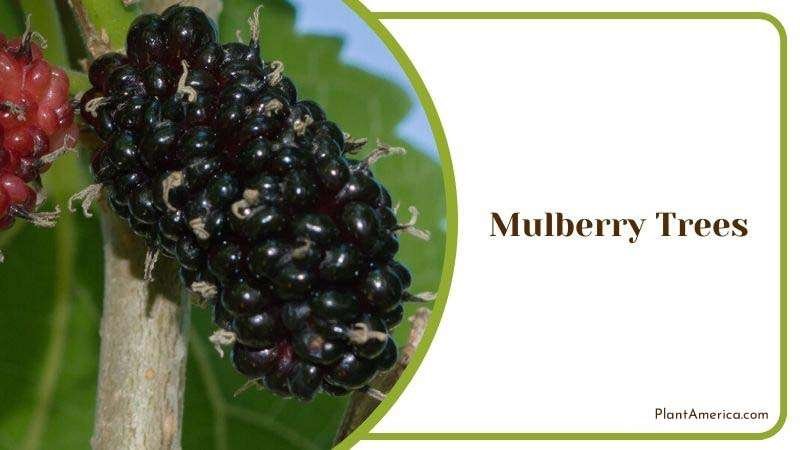
By mid-spring, the tree produces succulent, jet-black fruits that are medium in size, sweet, and bursting with intense mulberry flavor. The distinctive dark fruit color stands out against the foliage and attracts wildlife seeking nourishment, including birds, small mammals, and beneficial insects.
The dark green foliage of the Black Mulberry provides a dappled shade pattern that is well-suited for patios, decks, and lawn sitting areas. The leaves have a textured surface that offers visual interest, especially when rustled by the wind. In early spring, the new foliage emerges with an attractive purplish-bronze color before maturing to its deep green hue.
The Black Mulberry’s manageable size, tasty fruit, and ornamental qualities make it an appealing choice for gardens of all kinds. For smaller yards in particular, the Black Mulberry offers functional benefits, including edible fruit, wildlife habitat, and shade without overwhelming the landscape due to its more deliberate growth.
Regular pruning is recommended to maintain an attractively shaped canopy and optimize fruit production. Black Mulberry trees tend to sucker prolifically from the roots, so excess shoots should be removed annually. The suckers can be rooted and grown as additional Black Mulberry trees, providing a means of propagation.
The unique combination of dark-colored fruit, characteristically flavorful berries, and slower growth habit distinguish the Black Mulberry as an ideal choice for smaller landscapes where balance, ornamental value, and edible yield are priorities. The tree’s low maintenance requirements, aside from regular pruning, enable it to thrive with a minimal investment of care.
4. Red Mulberry Tree
- Growing Season: Spring, Summer
- Leaf Shape: Lobed, Palmate
- Specific Needs: Sun, Moist Soil
- Common Pests: Aphids, Japanese Beetles
The Red Mulberry tree features large, deeply lobed leaves that emerge an attractive bronzy-red color in early spring before darkening to a deep green hue in summer.
This mulberry prefers full sun and rich, consistently moist yet slightly acidic soil. Regular pruning of its vigorous growth is essential to maintain a manageable structure that can support heavy fruit production without branch breakage. Proper pruning also improves airflow to minimize pest and disease issues.
The Red Mulberry tends to grow rapidly at first, potentially reaching heights up to 50 feet tall with a similar broad spread before slowing down in maturity. In early spring, the tree produces massive amounts of sweet, medium-sized red berries that are lower in tannins and astringency than black mulberries, giving them a more pleasing flavor.
The Red Mulberry tree is well suited for more significant landscapes that can accommodate its eventual large size at maturity. Several attractive features make the Red Mulberry an ideal choice for providing shade, fruit, and habitat within expansive yards and gardens.
The tree’s enormous, textured leaves emerge in spring with a vivid red color that gradually fades to a glossy green as they mature. This colorful leaf display adds visual interest at a time when many other trees are still bare. The large leaves provide glorious shade beneath the canopy for patios, decks, and open lawns during the hot summer.
The sweet, flavorful fruits of the Red Mulberry ripen in mid to late summer and attract flocks of migrating birds in spring and fall, seeking a replenishing meal. The abundant berries and cover provided by the expansive leafy branches help the tree sustain large numbers of birds that add color, sound, and life to the landscape throughout the year.
The Red Mulberry is known for its rapid growth habit when young, which allows the tree to develop an impressive size within a relatively short time frame. Within 10 to 15 years after planting, the tree can reach heights over 30 feet and develop a full canopy diameter of over 40 feet wide. This quick growth rate enables the Red Mulberry to provide functional benefits soon after establishment.
However, the Red Mulberry’s eventual large stature at maturity means the tree is best suited for spacious landscapes with sufficient room for its broad spreading branches, extensive root zone, and generous leaf drop during fall. While the Red Mulberry can adapt to many soil and climate conditions, adequate space is necessary for the tree to fully express its ornamental, shading, and wildlife-supporting attributes.
The Red Mulberry’s large leaves, colorful spring display, rapid growth habit, abundant fruit production, and ability to sustain wildlife all contribute to the tree’s merit for more spread gardens. The vivid red color of young foliage coupled with the sweet flavor of fruits helps justify the tree’s space requirements within expansive landscapes where its ornamental appeal, shade, and ecological benefits can be fully realized.
5. White Mulberry Tree
- Growing Season: Spring, Summer
- Leaf Shape: Palmate, Lobed
- Specific Needs: Sun, Moist Soil
- Common Pests: Aphids, Beetles
The White Mulberry tree features palmate leaves that emerge a pale green color in late spring before darkening to a lush dark green in summer. The leaves have a textured, ribbed appearance that adds visual interest.
This mulberry prefers full sun and consistently moist, well-draining soil. It is tolerant of hot, humid climates but requires protection from cold winter temperatures in hardiness zone six and colder. Regular pruning of vigorous growth is essential to maintain a manageable structure that can support heavy fruit production without branch breakage.
The White Mulberry tends to grow quickly at first, potentially reaching heights of 40 to 60 feet tall and a similar broad spread at maturity. In late spring, the tree produces large numbers of oblong, off-white berries that are mildly sweet and flavorful, lacking the astringency and tartness of black mulberries.
The White Mulberry tree is ideally suited for larger landscapes that can accommodate a very large shade tree at maturity. Several attractive features make the White Mulberry an excellent choice for providing shade, fruit, and habitat within expansive yards and gardens.
The White Mulberry grows rapidly when young, attaining immense size and forming an expansive canopy at a fairly quick pace. Within 15 to 20 years after planting, the tree can reach heights over 50 feet tall and develop a crown width spanning 80 feet or more. This rapid growth enabled the White Mulberry to be planted extensively along highways and streets during the last century.
The tree’s palmate leaves vary in size but are generally large and textured, providing dappled shade beneath the spreading canopy during hot summer months. The abundant foliage and the sweet, bountiful off-white berries help sustain high wildlife populations like bees, butterflies, and over 50 species of fruit-eating birds seeking nourishment.
However, the White Mulberry’s immense size, fast growth rate, and expansive root system mean the tree is best suited for spacious landscapes with ample room for its eventual full development. The White Mulberry needs a large contiguous area free of buildings, paved surfaces, and underground utilities to thrive without challenges.
As the White Mulberry ages and attains maturity, its drooping branches sweep the ground, often taking root and sprouting to form ” Champion Trees” with massive trunks and contorted limbs. Large nests constructed by birds within the spacious canopy lend shelter and refuge to resident wildlife. Overall a sense of serenity and refuge pervades the landscape beneath and within the aged White Mulberry’s leafy bosom.
For appropriate locations where adequate space exists, the White Mulberry’s attributes – from its rapid growth and expansive canopy that soon provide generous shading to its abundant fruit that nourishes wildlife all summer long – make the tree an ideal choice for lawns, parks, farms and other sizeable landscapes.
Though demanding in space requirements, the White Mulberry likely compensates many times over for patient gardeners through the cool shade, tranquility, and richness of life it bestows within even the largest garden settings.
6. Teas’ Mulberry Tree
- Growing Season: Spring, Summer
- Leaf Shape: Oblong, Elliptic
- Specific Needs: Sun, Moist Soil
- Common Pests: Aphids, Powdery Mildew
The Teas’ Weeping Mulberry tree features long, graceful branches that cascade down like curtains. The oblong leaves emerge an attractive coppery-red color in mid-spring before darkening to a lustrous dark green hue in summer.
This weeping mulberry prefers full sun and consistently moist, fertile soil. Regular pruning is necessary to maintain the tree’s arching weeping habit and optimize airflow to reduce risks of fungal diseases. Proper pruning also ensures that branches do not grow too heavy with fruit or winter snow loads.
Teas’ Weeping Mulberry tends to grow at a moderately fast pace, eventually reaching heights between 15 to 30 feet tall with a similar broad spread. In mid-spring, it produces abundant amounts of sweet-tart, purplish-black fruits along its pendulous branches that have a distinctive, tangy flavor.
The arching form, vivid red leaf color in spring, and bountiful crops of flavorful fruit offered by Teas’ Weeping Mulberry combine to make it a show-stopping choice for adding visual drama, cooling shade, and wildlife benefits to smaller landscapes.
The weeping branches create a bower-like effect that invites garden visitors to linger and relax beneath its canopy amid flitting birds and humming bees seeking nourishment from the plentiful berries. Overall, the weeping habit, tasty fruits, and picturesque red spring foliage of this mulberry tree add grace, function, and beauty to any small garden.