
Anthurium pallidiflorum has enchanted many gardeners with its beautifully long hanging leaves. The long leaf anthurium belongs to the family Araceae, which has several plants being touted by NASA as extremely beneficial to cleaner air conditions.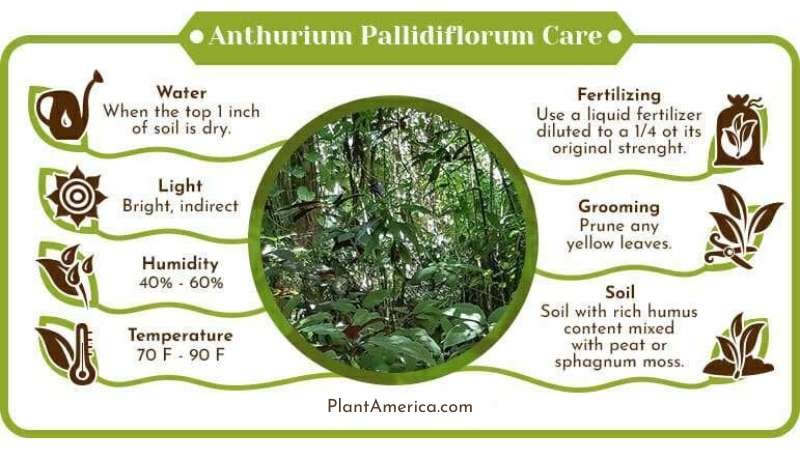
Today, we will explore how to care for one of the many unique cultivars under the Anthurium genus, and discover numerous fascinating things along the way.
What Is the Anthurium Pallidiflorum?
The Anthurium pallidiflorum is a unique plant having gorgeous long leaves that hang gracefully. Grown for its impressive cascade of long dark emerald leaves that can reach up to three feet in length, the Anthurium pallidiflorum plant is a favorite among many collectors and it can last for a very long time.
Anthurium Pallidiflorum Care
The care for Anthurium pallidiflorum section will prove to you how easy it really is to care for the Anthurium pallidiflorum plant by giving you all the important growing information you will need that you can apply to other Anthurium types.
 Water Requirements
Watering the Anthurium pallidiflorum plant is definitely easy once you understand the water needs of this beautiful plant. The root system of the Anthurium pallidiflorum plant can be quite sensitive when it is constantly exposed to wet soil or wet potting medium. These conditions can lead the plant to develop root rot, which can eventually cause the plant to perish if left untreated.
In order to determine the frequency of your watering, you must check the topmost inch of your soil or potting medium. If it is dry, your Anthurium pallidiflorum needs watering, moreover if it is still moist, you can forego one or two days.
You should also keep in mind that temperature and humidity can affect the frequency of your watering. As a general rule, the hotter and less humid your location is, the more frequently you should water.
If you prefer a more precise way, you can opt to use a moisture meter. Furthermore, this is commercially available in many gardening stores so that you can monitor the moisture level of your Anthurium pallidiflorum plant.
Since spring and summer seasons are generally warmer, you will need to water your Anthurium pallidiflorum plant more. Reduce the frequency of your watering once colder seasons arrive. Water your plant only when the topmost inch of the soil or potting medium is dry.
 Light Requirements
The Anthurium pallidiflorum plant grows best in bright indirect light conditions. Having been acclimated to the tropical forests of Ecuador, the plant has grown accustomed to mid to high levels of indirect sunlight exposure.
The most ideal indirect light level is around 40 to 60 percent, although some gardeners prefer slightly higher levels for their plants.
If you purchased your plant from a nursery, you may want to keep the Anthurium pallidiflorum plant away from indirect sunlight for a few days. This can protect your plant from experiencing shock, not to mention any possible stress the plant underwent from any traveling or shipping. You can keep your plant in 30 to 50 percent shade during this period.
Slowly acclimate your Anthurium pallidiflorum plant to indirect light by moving it a few feet every week. Do this until your plant is near the location you desire it to be.
Keep the Anthurium pallidiflorum plant away from direct sunlight just to be safe. Direct sun exposure can burn the leaves of the plant especially when the exposure is harsh. Midday and afternoon sun exposure is the harshest light levels during the day and could harm your plant.
Ideal spots in your garden and yard to place the Anthurium pallidiflorum plant would be in the east and south areas. Eastern locations ensure that the plant receives soft morning light while southern areas are perfect for bright indirect light the whole day.
It goes without saying that your plant should be located near a south-facing or east-facing window. If that is not possible, cover the window with a sheer curtain to filter out harsh sunlight.
 Temperature Requirements
The Anthurium pallidiflorum plant is a native of tropical Ecuador and is therefore used to a lot of warmth. This plant prefers warm temperatures of around 70 to 90 F to thrive well. If you are located in a zone that has these temperatures naturally, then you can easily keep the plant outdoors.
If, however, you live in more temperate regions where cold seasons are present, you may need to bring in your Anthurium pallidiflorum plant to overwinter. While overwintering your plant indoors, ensure that your temperature is at least 70 F to keep the plant warm and alive. If your room temperature goes below 50 F, you may need to use artificial heat sources such as heat pads.
 As the weather gets colder, the Anthurium pallidiflorum plant can reduce its growth and development. This is because they are tropical plants and low temperatures can cause them to go into slight hibernation. In brief, when exposed to low temperatures, the Anthurium pallidiflorum can wilt and eventually perish.
However, the plant will be back to its regular growth rate once the spring and summer seasons arrive.
 Soil Requirements
The Anthurium pallidiflorum prefers to grow in soil that has a rich humus content mixed with peat or sphagnum moss. The ideal Anthurium pallidiflorum soil should be quick-draining yet able to retain a certain amount of moisture.
Anthurium pallidiflorum plants can thrive in a soilless medium, so using just moss, chips, and husks can work incredibly well. Furthermore, the most ideal way to display your Anthurium pallidiflorum plant is to place them into hanging containers. The containers allow the plant to showcase its gorgeous hanging leaves and you get to appreciate the beautiful cascade of green foliage.
Eventually, your Anthurium pallidiflorum plant needs to be repotted, which is usually after two to three years. Nonetheless, when you repot Anthurium pallidiflorum plants, you encourage them to grow bigger. Pick a container that is slightly larger than the current one and your plant should be growing even bigger soon.
 Humidity Requirements
The Anthurium pallidiflorum requires high humidity to grow at its best. The tropical environment of Ecuador has made this plant accustomed to humidity which is around 40 to 60 percent. If your area has an air moisture content of these ranges, then you should have no problems.
If you live in drier parts, you may need to increase the air moisture content for your Anthurium pallidiflorum plant. You can do this through several methods. You can mist your Anthurium pallidiflorum plant more frequently. This increases the humidity around the plant, even for a short period.
If you prefer a longer period of humidity with less physical effort, you can place a wide, shallow tray filled with gravel. Place the tray under the potted plant, taking care that the roots of the plant or the potting medium of the plant do not come into contact with the gravel. Pour water over the shallow tray with gravel and the evaporating water should be able to increase the humidity of the immediate area of the plant.
Commercial humidifiers can also help greatly in adding air moisture content. You can buy humidifiers from many gardening stores.
 Fertilizer Requirements
The Anthurium pallidiflorum plant is not a heavy feeder, although it enjoys feedings every so often. The most ideal time to apply fertilizers to the plant is during the spring and summer months when the growth is at its most optimal.
 You can use liquid plant fertilizers that are diluted to a fourth of the recommended dosage. Apply this fertilizer to your Anthurium pallidiflorum plant once a month and it should respond well. Do not apply excess fertilizers as these could burn the leaves and roots of the plant.
Nonetheless, you must refrain from fertilizing your Anthurium pallidiflorum plant during the colder seasons.
 Pruning
The Anthurium pallidiflorum plant isn’t a plant that needs frequent pruning, nevertheless, it would be ideal to prune the dead leaves or the leaves that look yellow in color, to keep it in a healthy growing environment.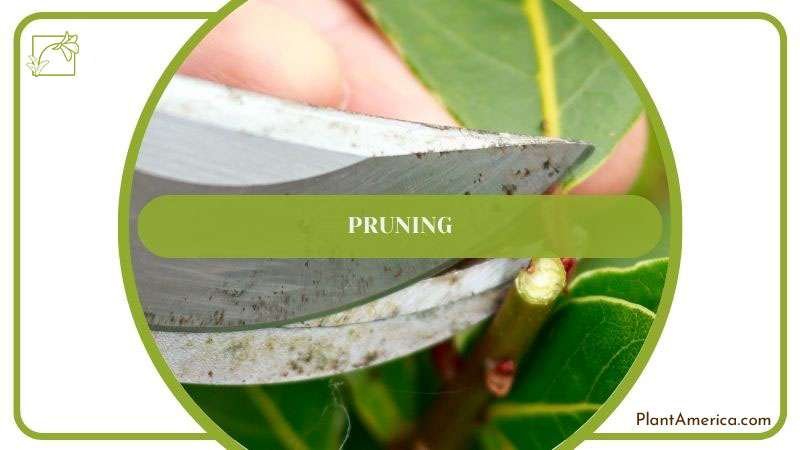
Propagation
To propagate Anthurium pallidiflorum plants, you will need to do very basic techniques. Propagation allows you to expand your plant collection without buying new and additional plants of the same cultivar.
Propagation is best done during the spring season, this allows the cutting enough time to grow as a young plant. Here, we will provide you with the easiest technique for successful propagation.
- Identify clean and healthy stems found in your Anthurium pallidiflorum plant.
- Wrap pre-moistened sphagnum moss around the node of your selected stem, and wrap some clear plastic wrap on the moist sphagnum moss.
- Spray the wrapped sphagnum moss for two to three weeks. This encourages the stem to grow tiny roots.
- Once you spot the roots, open the plastic wrap and remove the sphagnum moss.
- Cut the stem at an angle just below the root formations.
- Place the cutting in soil or soilless medium and water this medium properly.
You can opt to just take cuttings and transplant them into the new soil. However, this method does not always guarantee high viability, though it is easier than growing Anthurium pallidiflorum plants from seed.
Another method is to divide your Anthurium pallidiflorum plant. You must ensure that you take only as much as a third of the mother plant to reduce the risk of stress. Transplant the divided plant and the mother plant into two separate containers and they should be good to go.
Problems
The Anthurium pallidiflorum can have growing issues that can also be easily solved. Here are some common concerns that the Anthurium pallidiflorum plant can experience.
– Water Stress
Overwatering and underwatering are the main culprits of yellow and wilting leaves as well as root rot.
 All you need to do is ensure that the plant is watered correctly and the potting medium allows great drainage and airflow.
– Leaf Burns
You can identify leaf burns by the dry brown spots on the leaves. Keep in mind that this means your Anthurium pallidiflorum plant has been burned by the direct sun. All you need to do is relocate your plant somewhere that has bright but indirect light exposure.
– Bacterial Blight
Identifiable by watery lesions that are v-shaped, bacterial blight can be reduced by immediately removing the infected leaves and safely discarding them.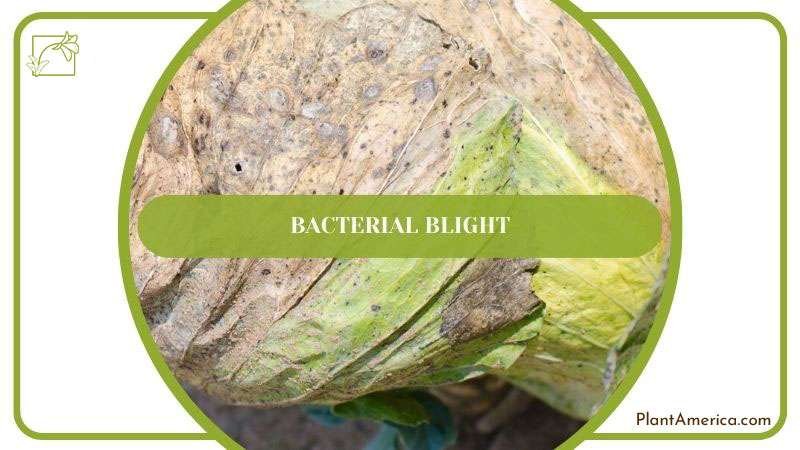
Increase the air circulation around the plant and temporarily lower the humidity and temperature. Remember to water only around the potting medium.